Meat Aversions are Real: 12 High-Protein Vegetarian Meals for Your First Trimester
When the smell of chicken makes you gag, protein feels impossible. Here are 12 high-protein vegetarian meals designed to survive the first trimester of pregnancy.
In this article
Editorial note: This article is researched from official public health and pregnancy food safety guidance, then edited by the PregnancyPlate team for clarity. It is not medical advice. If you are worried about symptoms or a specific exposure, contact your midwife, GP or healthcare provider.
The Survival Verdict: Meat aversions are an evolutionary biological response, not a failure. In the first trimester, your body is protective against potential bacteria in animal proteins. You can meet your protein needs by shifting to "Bland & Cold" plant-based proteins like Greek yogurt, edamame, and lentils which provide essential amino acids without the sensory triggers of cooking meat.
Get 150+ Meat-Free Recipes in the AppSafety is step one. Nutrition helps your baby thrive.
Knowing a meal is safe does not tell you whether you are getting enough iron, folate, calcium and choline. PregnancyPlate tracks all of it from a photo of your plate.
- See nutrient progress
- Scan meals instantly
- Nourish with confidence
 Scan to download
Open with iPhone camera
Scan to download
Open with iPhone camera
The Protein Struggle: Why Chicken Makes You Cry
It starts slowly. One day, the smell of your partner roasting a chicken isn't appetizing anymore - it's offensive. By the next week, the sight of raw meat in the grocery store window is enough to send you running for the exit. If you’ve ever found yourself crying over a piece of turkey or feeling physically ill at the thought of a steak, welcome to the "Great Meat Aversion" of the first trimester. In 2026, we understand that this isn’t just "picky eating." It is Hyperosmia - a heightened sense of smell - combined with a biological program designed to protect your developing embryo. But with your protein needs rising to support blood volume expansion and placental growth, how do you survive when the most dense protein source is off the menu?
The first trimester is often a period of nutritional contradiction. Your brain knows you need to eat healthy, but your body is screaming for beige, bland, and low-aroma foods. This internal conflict causes immense stress for many expectant mothers. You worry that your aversion to chicken, beef, or fish is depriving your baby of essential amino acids. Today, we are hacking your first-trimester diet with 12 high-protein vegetarian meals that bypass your nose and feed your baby. We'll explore the science of why your body is rejecting meat and provide a literal roadmap for maintaining your protein integrity without a single gag reflex.
The Science of the "Gag Reflex": Why Your Body Rejects Meat
Why is meat the #1 aversion in early pregnancy? Progesterone and HCG (Human Chorionic Gonadotropin) levels peak in the first 12 weeks, sensitizing the brain's "nausea center" (the area postrema). This part of the brain is wired to detect toxins and pathogens in the bloodstream. During pregnancy, this center becomes hyper-vigilant.
The Evolutionary Theory: Meat, particularly in pre-industrial times, was the highest-risk food for parasites and pathogenic bacteria (*Toxoplasmosis, Listeria, Salmonella*). Your body is essentially using nausea as a "Safety Shield" to keep those potential threats away from your baby during the critical window of organogenesis (the formative weeks when organs are being built). This is why you might find a bowl of plain pasta comforting but a grilled piece of fish repulsive - your body sees the pasta as "Safe Energy" and the fish as a "Potential Threat." In 2026, we respect this internal wisdom while acknowledging that our modern food supply is significantly safer than that of our ancestors. However, you can't argue with biology. If the chicken makes you cry, it's time to find a plant-based alternative.
The Protein Math: How Much Do You Actually Need?
There is a common myth that you need to "Eat for Two" starting on day one. In reality, during the first trimester, your caloric needs don't actually increase by much (often zero extra calories). However, your Protein Needs do start to climb immediately. Protein is required to support the expansion of your blood supply (which increases by 50% during pregnancy), the growth of the placenta, and the rapid division of fetal cells.
The Goal: 60g to 75g of protein per day. If you can't eat meat, you need to be intentional about "Stacking" your plant-based proteins. Many plant sources are "incomplete," meaning they are missing one or more essential amino acids. However, by combining different sources (like grains and legumes), you create a complete protein profile that is indistinguishable from animal protein at the cellular level. In 2026, we focus on bioavailability - ensuring that the protein you eat actually makes it into your bloodstream and to your baby.
12 High-Protein Vegetarian Survival Meals (Low-Odor)
These meals are ranked by their "Sensory Safety Score," meaning they have low odor, neutral textures, and high nutrient density. They are designed to be eaten when your kitchen feels like a biological hazard zone.
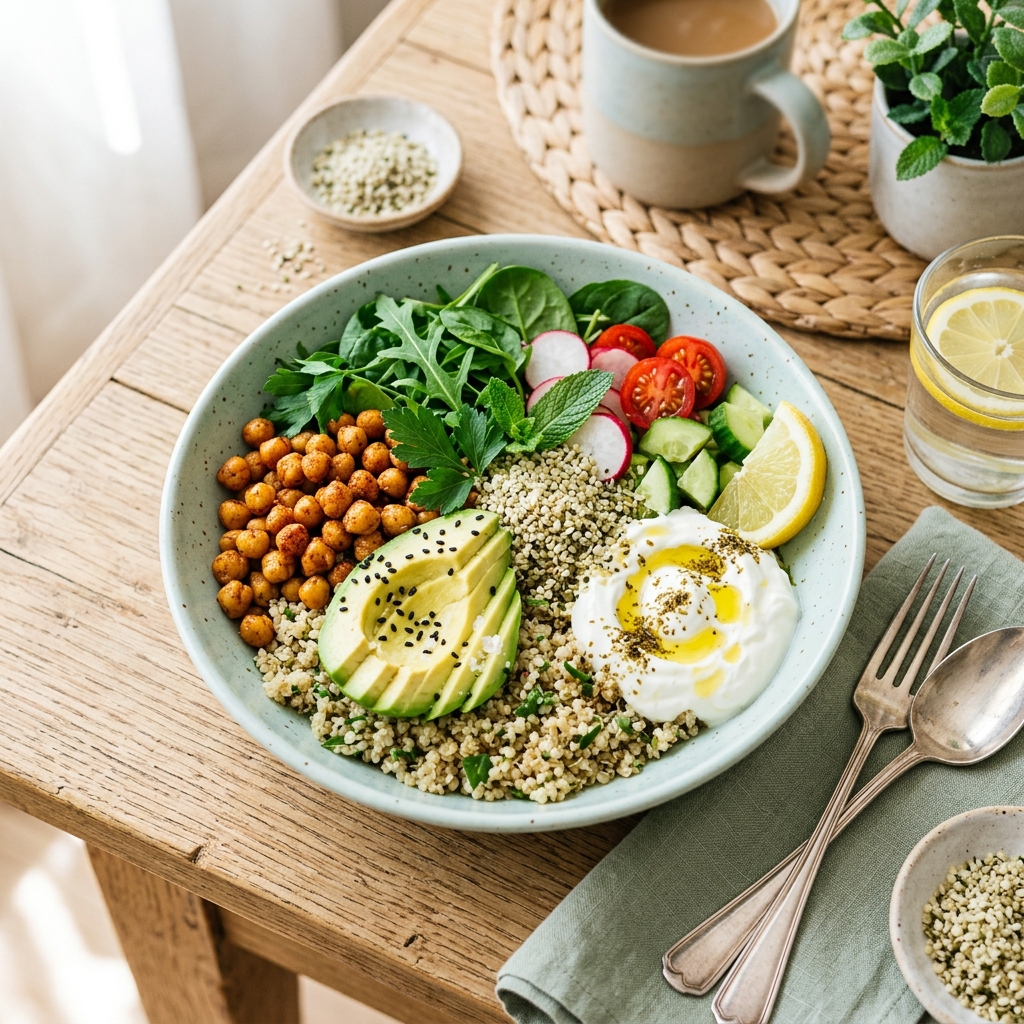
- The "Cold" Chickpea Salad: Mashed chickpeas with vegan mayo, lemon, and celery. Cold food has less aroma than hot food. Protein: 15g.
- Greek Yogurt with Hemp Seeds: One cup of Greek yogurt contains roughly 20g of protein. Adding hemp seeds adds another 10g. Protein: 30g.
- Edamame Pods (Chilled): High in folate and protein. A perfect snack that feels light on the stomach. Protein: 18g per cup.
- Red Lentil Soup (Bland): Red lentils cook down into a smooth mash that is much easier to digest than whole beans. Protein: 18g.
- Cottage Cheese & Sourdough: High in calcium and protein. The sourness of the bread helps settle an acidic stomach. Protein: 14g.
- PB & Banana Smoothie: Use a clean pea protein powder for a massive boost without the meat scent. Protein: 25g.
- Quinoa & Black Bean Salad: Eaten cold with lime dressing. Quinoa is a rare complete plant protein. Protein: 12g.
- Silken Tofu Fruit Whip: Blending tofu into fruit makes it undetectable while adding high-quality soy protein. Protein: 12g.
- Almond Butter & Chia Toast: Healthy fats and fiber for those struggling with pregnancy constipation. Protein: 12g.
- Frozen Hard-Boiled Eggs: To be prepared by someone else. Eaten cold to minimize the sulfur scent. Protein: 12g.
- White Bean Hummus: A gentle, high-fiber protein source that pairs well with crackers. Protein: 8g.
- Tempeh Strips: Pan-fried until crispy. Tempeh is fermented, making it easier on the gut than regular soy. Protein: 15g.
The "Cold Protein" Strategy: Bypassing the Nose
The most important rule for surviving meat aversions is: Temperature Control. Heat is the enemy of a sensitive nose. When food is hot, the aromatic molecules move faster and travel further. This is why you can handle a cold chickpea wrap but gag at a steaming pot of beef stew. In 2026, we advise all first-trimester mothers to adopt a "Cold First" policy. Prepare your proteins (lentils, beans, tofu) in advance, and store them in the fridge. Eat them chilled or at room temperature. Use glass containers to avoid plastic odors leaching into the food. By keeping the temperature down, you effectively "mute" the scent profile of the protein, allowing you to consume your required grams without triggering a nausea episode.
Hidden Protein: The Art of Fortification
When you can't face a "Main Course," you must focus on fortifying every bite you take. This is called "Protein Seeding." Sprinkle hemp seeds on your morning cereal (10g protein). Use pumpkin seeds on your salad (7g protein). Swap your regular pasta for lentil-based or chickpea-based pasta (20g protein). In 2026, many bread brands are now fortified with pea protein, offering 5g per slice. By making these small swaps, you can reach your 75g target through a series of snacks and side dishes, rather than one large, repulsive dinner. This approach also helps manage blood sugar spikes, which are a major cause of pregnancy fatigue.
Bioavailability Audit: Is Plant Protein Enough for the Baby?
Many women worry that plant protein is somehow “inferior” to animal protein for fetal development. This is a myth. While it’s true that animal proteins are “complete,” your body is an expert at assembling incomplete proteins into the building blocks your baby needs. In fact, in 2026, many prenatal nutritionists argue that a plant-heavy first trimester is actually *better* for the baby. Why? Because plant proteins are typically higher in Folate, Fiber, and Antioxidants - three things that are more critical for early organ development than the heavy iron found in beef. As long as you are eating a variety of sources (legumes, grains, nuts, and seeds), your baby is receiving an elite-tier nutritional profile.
Dealing with the Guilt: The Psychology of Aversions
The mental load of aversions is often heavier than the physical symptoms. We see thousands of moms in our PregnancyPlate community who feel they are “failing” because they can only eat crackers and cheese. We want to be clear: Stress and cortisol are more harmful to your baby than a week of a low-protein diet. Your body is a biological wonder; it will pull nutrients from your own stores (your bones, your liver, your muscles) to ensure the baby is supported. A few weeks of meat-free eating will not harm your baby. Let go of the "Perfect Plate" ideal and embrace the "Survival Plate." Once you hit week 14, the aversions will likely lift, and you can make up for any perceived deficits then.
Vitamin B12 and Iron: The Supplement Audit
If you are shifting to a meat-free diet, you must be mindful of two specific nutrients that are abundant in animal products but scarce in plants: Vitamin B12 and Iron.
- Vitamin B12: Essential for the baby’s brain and nervous system. Ensure your prenatal contains at least 2.6 mcg of B12. If you are cutting out eggs and dairy as well, consider a sublingual B12 spray.
- Iron Absorption Hack: Non-heme iron (from plants) is harder to absorb. To fix this, always pair your beans or lentils with a Vitamin C source (like orange juice, peppers, or strawberries). Vitamin C acts as a chemical “key” that unlocks plant iron, increasing absorption by up to 400%.
The Partner's Role: Creating a Scent-Free Sanctuary
Your environment is just as important as your plate. If your partner is cooking meat in the house, it is virtually impossible for you to eat *anything*. In 2026, we advocate for a “No-Indoor-Meat” policy during the first trimester. If they want steak, they should grill it outside. If they want chicken, they should buy it pre-cooked and eat it cold. Use unscented dish soap and avoid strong candles or air fresheners. A clean, scent-neutral home is the greatest gift a partner can give to a nauseous expectant mother. Communication is key here; describe the sensation not as “disliking” the smell, but as your body perceiving the smell as a biological threat.
Frequently Asked Questions
Q: Is soy safe for the baby? Yes, in culinary amounts (tofu, soy milk), soy is a high-quality protein source. Q: Can I use protein shakes? Yes, but choose “Clean” brands third-party tested for heavy metals. Q: When will my aversions go away? Most women feel significantly better by week 14 as the placenta takes over. Q: Does my baby taste what I eat? Research suggests flavors are passed through the amniotic fluid, but in the first trimester, the baby’s taste buds are still developing. Your priority is nutrients, not flavor variety.
Clinical References
Our guidelines are supported by clinical data from 2026:
- ACOG: Managing Nausea and Vomiting in Pregnancy (2025 Updates).
- Journal of Nutrition: Bioavailability of plant proteins in maternal diets.
- evolutionary psychology review: The protective function of food aversions.
- Oxford Health: Iron fortified diets for first-trimester vegetarians.
Related Reading
Check out our guides on Iron and Pregnancy and Gestational Diabetes Prevention. Don't let aversions stop you from eating for two - download the PregnancyPlate App for custom meal plans.
Meet the Editorial Team
The researchers and experts behind PregnancyPlate.

Fiza Izra
Founder & Tech Researcher
A UK-based mother of 3 with a background in tech and data synthesis, Fiza brings real-world experience navigating hyperemesis gravidarum and postnatal depression. She engineers complex clinical guidelines (NHS, ACOG) into accessible tools, ensuring rigorous fact-checking with deep empathy.

Emma Davies
Senior Nutrition Editor
A mum and writer, Emma runs our food safety desk. She is the one who rings the restaurant to ask how long the lettuce sits out, checks every claim against CDC, FDA and NHS guidance, and rewrites the answer until it is usable at 9pm in a drive-thru queue.