Is Salmon Safe During Pregnancy? Cooked, Smoked and Raw Explained
Yes, and salmon is one of the best things you can eat while pregnant. Low mercury, high DHA. The rules for cooked, smoked, tinned and raw, explained simply.
In this article
Editorial note: This article is researched from official public health and pregnancy food safety guidance, then edited by the PregnancyPlate team for clarity. It is not medical advice. If you are worried about symptoms or a specific exposure, contact your midwife, GP or healthcare provider.
The Fast Answer: Yes, and salmon is genuinely one of the best things you can eat while pregnant. It is low in mercury, unlike tuna and swordfish, and it is the richest common source of the DHA your baby's brain is built from. The FDA actively recommends two to three servings a week. The only versions to think about are raw salmon and cold-smoked salmon or lox. Everything else, cook it to 145F and enjoy it.
Track your DHA and omega-3 in the PregnancyPlate AppSafety is step one. Nutrition helps your baby thrive.
Knowing a meal is safe does not tell you whether you are getting enough iron, folate, calcium and choline. PregnancyPlate tracks all of it from a photo of your plate.
- See nutrient progress
- Scan meals instantly
- Nourish with confidence
 Scan to download
Open with iPhone camera
Scan to download
Open with iPhone camera
Most pregnancy food articles are about what to avoid. This one is mostly the opposite, because salmon sits in a small category of foods that pregnancy guidance actively encourages you to eat more of.
The confusion comes from fish being lumped together. "Avoid fish in pregnancy" is advice about mercury, and mercury is a problem in large predatory fish that live a long time. Salmon is neither.
Why Salmon Is Actively Good in Pregnancy
DHA is the headline. Docosahexaenoic acid is an omega-3 fatty acid that your baby's brain and retina are physically constructed from, and demand peaks in the third trimester. Salmon is the most practical common source there is: a single 140g portion of salmon delivers well over the 200mg of DHA a day that guidance suggests, whereas hitting that from a general diet is genuinely difficult.
It is also unusually complete otherwise. Around 25 to 30g of protein per fillet, one of the few natural food sources of vitamin D, plus B12, selenium and iodine. Iodine in particular is quietly one of the most commonly under-consumed nutrients in pregnancy and matters for fetal brain development.
If you are choosing between fish, salmon is close to the ideal pregnancy fish: high omega-3, low mercury, widely available, and forgiving to cook.
The Mercury Question, Answered Properly
Mercury accumulates up the food chain. Big, long-lived predators like swordfish, shark, king mackerel, marlin and bigeye tuna concentrate it, which is why those are the genuine avoid list.
Salmon sits at the opposite end. It is categorised by the FDA as a "Best Choice" fish, the top tier, and the recommendation for pregnant women is two to three servings a week of low-mercury fish, which works out at roughly 8 to 12 ounces or 225 to 340g total.
To put the scale in perspective: you would struggle to eat enough salmon to approach a mercury concern, whereas one modest portion of swordfish can exceed a weekly allowance on its own. If you want the wider picture on fish, our tuna mercury audit covers the fish that genuinely need limiting.
Cooked Salmon: Safe, and the Temperature That Matters
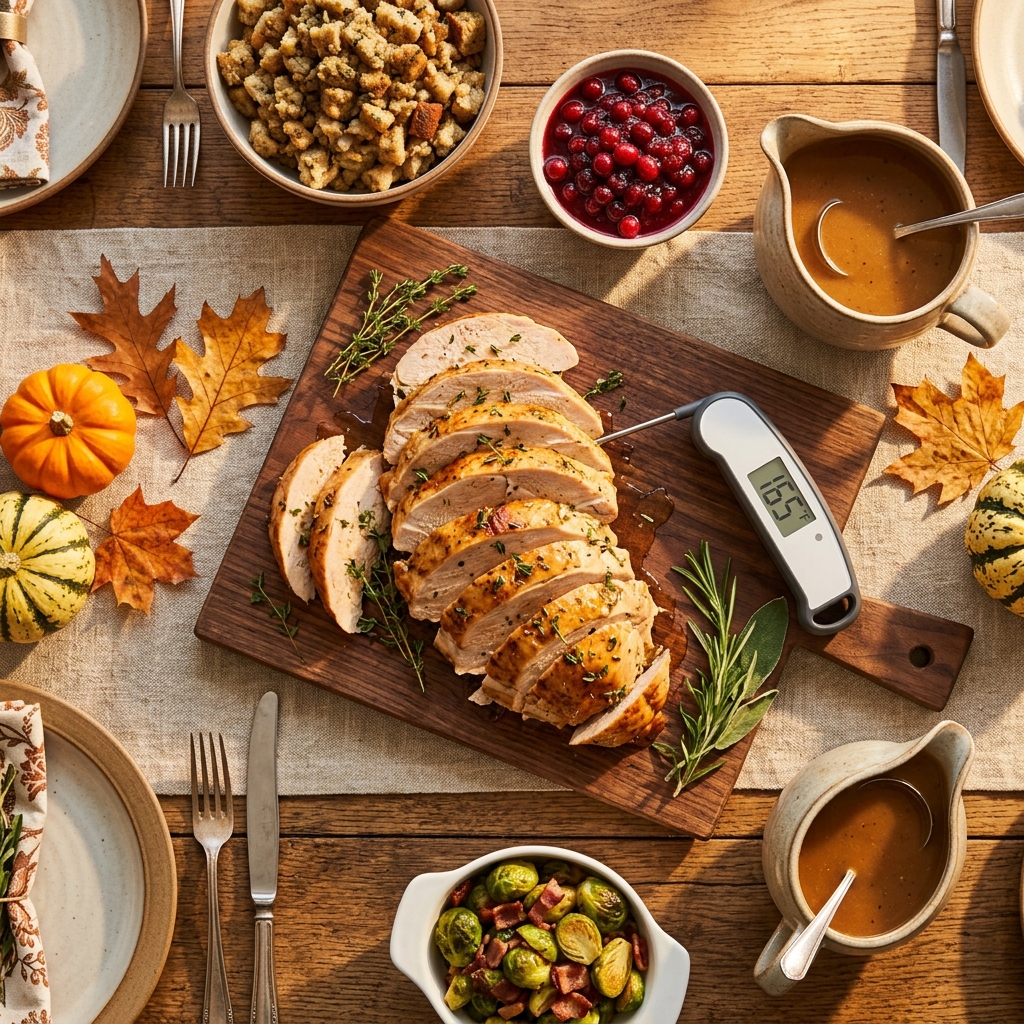
Properly cooked salmon is straightforwardly safe. The target is 145F or 63C, at which point the flesh turns opaque and flakes easily with a fork. If it is still translucent and jelly-like in the centre, it needs longer.
This applies however you cook it: baked, grilled, pan fried, poached, in a fish pie, in a curry. There is no pregnancy-specific cooking method required, just proper doneness.
One note for people who like it rare in the middle: restaurant-style salmon served pink and soft in the centre has not reached 145F. Delicious, and not the pregnancy version. Ask for it cooked through.
Raw Salmon and Sushi: The One to Skip
Raw salmon in sashimi, nigiri or poke is the version guidance advises against, and the reason is not mercury but the standard raw fish concerns: listeria and parasites.
Commercial flash freezing kills parasites and is required for fish served raw in many places, which is why some sources are relaxed about high quality sushi. Listeria is the part freezing does not solve, and that is the pregnancy-relevant risk. Our pregnancy sushi guide goes through what is and is not workable at a sushi restaurant, including the cooked rolls that are perfectly fine.
Smoked Salmon: It Depends Entirely on Which Kind
This is where most of the genuine confusion lives, because "smoked salmon" describes two completely different products.
Cold-smoked salmon and lox are cured and smoked at low temperatures, typically under 30C. They are never actually cooked. That silky, translucent texture is the tell. Because they are ready-to-eat, chilled, and not heat treated, they carry a listeria risk in the same category as deli meat, and guidance generally advises against them cold in pregnancy.
Hot-smoked salmon is cooked during smoking, at temperatures high enough to be genuinely cooked through. It is flaky and opaque rather than silky. This is safe.
And the useful workaround: cold-smoked salmon becomes safe when you cook it. Stirred into a hot pasta, baked into a quiche or tart, or heated until steaming on a bagel that goes under the grill. Heat is the whole answer, exactly as with deli meat. Our guide to cooking smoked salmon safely covers the specifics.
Already Had Some Lox? Read This
Genuinely, do not panic. Listeriosis is rare, and a bagel with smoked salmon is very unlikely to be the exception. There is nothing useful to do preemptively and no test worth requesting while you feel well. What matters is watching for flu-like symptoms, so fever, aches, chills or an upset stomach, at any point over the next few weeks. If a fever appears, call your midwife or OB and mention what you ate. That sentence gets you the right test and effective antibiotics if they are needed.
Tinned, Farmed and Wild
Tinned salmon is safe and underrated. It is heat processed in the can, so it is fully cooked, and it is cheap, shelf stable and low mercury. The bone-in varieties also deliver a genuinely useful hit of calcium, since the softened bones are edible.
Farmed versus wild matters far less than the internet suggests. Both are low mercury and both are safe in pregnancy. Wild tends to have a slightly different fat profile, farmed tends to be higher in total omega-3 because of the feed. Concerns about contaminants in farmed salmon have been substantially addressed by modern farming standards, and the FDA includes farmed salmon in its Best Choices list. Buy whichever you will actually eat twice a week.
Common Questions
Q: Can I eat salmon every day?
A: The two to three servings a week guidance exists partly to spread intake across different fish. Daily salmon is unlikely to cause harm given how low its mercury is, but variety serves you better nutritionally.
Q: Is salmon skin safe?
A: Yes, and it is where a good share of the omega-3 sits. Crisp it up.
Q: What about salmon in a supermarket sandwich or salad?
A: If it is hot-smoked or cooked flaked salmon, fine. If it is cold-smoked in a chilled prepacked sandwich, that is the version to skip, and you often cannot tell from the label. Ask or choose something else.
Q: Does salmon count towards my DHA supplement target?
A: Very much so. Two portions a week of oily fish covers a substantial part of it, which is why some providers are relaxed about supplements for women who eat fish regularly. Our omega-3 timing guide covers supplements.
Q: I hate fish. What now?
A: Algae-based DHA supplements provide the same pre-formed DHA that fish get from eating algae, and are a genuinely equivalent option.
The Verdict
- Cooked salmon (145F / 63C): Safe and actively recommended. Two to three servings a week.
- Hot-smoked salmon: Safe. It is cooked during smoking.
- Tinned salmon: Safe. Cheap, cooked, and bone-in versions add calcium.
- Cold-smoked salmon and lox: Skip cold, safe cooked. Heat until steaming.
- Raw salmon, sashimi and poke: Skip while pregnant.
- Mercury is not the issue with salmon. It is a Best Choice fish.
What Two to Three Servings a Week Actually Looks Like
The guidance is given in ounces, which is unhelpful when you are standing at a fish counter. In practical terms a serving is roughly a palm-sized fillet, about 140g, so the weekly target is two or three of those.
A realistic week might be a salmon fillet with rice on Monday, a tin of salmon mashed into a jacket potato on Thursday, and that is you done. It does not require planning or expense, and tinned counts fully. If you are eating salmon four or five times a week you are still nowhere near a mercury concern, though mixing in other low-mercury fish like sardines, trout or cod gives you a broader nutrient spread.
Salmon When You Cannot Face Fish
Fish aversion is extremely common in the first trimester, and salmon's smell is often the specific trigger. A few things that work when the fillet is unmanageable: tinned salmon eaten cold in a sandwich filling has far less aroma than anything hot from a pan, salmon in a strongly flavoured dish like a curry or a tomato-based pasta masks it well, and cold poached salmon is much milder than grilled. If none of it works, algae oil supplements deliver the same DHA and smell of nothing. Our guide to protein when you have food aversions covers the wider problem.
Clinical Sources & Research
Meet the Editorial Team
The researchers and experts behind PregnancyPlate.

Fiza Izra
Founder & Tech Researcher
A UK-based mother of 3 with a background in tech and data synthesis, Fiza brings real-world experience navigating hyperemesis gravidarum and postnatal depression. She engineers complex clinical guidelines (NHS, ACOG) into accessible tools, ensuring rigorous fact-checking with deep empathy.

Emma Davies
Senior Nutrition Editor
A mum and writer, Emma runs our food safety desk. She is the one who rings the restaurant to ask how long the lettuce sits out, checks every claim against CDC, FDA and NHS guidance, and rewrites the answer until it is usable at 9pm in a drive-thru queue.