Can You Eat Deli Meat While Pregnant? The Complete Guide
Yes, if it is heated until steaming. The listeria rule explained, which meats carry most risk, what to do if you already ate it, and how to order safely.
In this article
Editorial note: This article is researched from official public health and pregnancy food safety guidance, then edited by the PregnancyPlate team for clarity. It is not medical advice. If you are worried about symptoms or a specific exposure, contact your midwife, GP or healthcare provider.
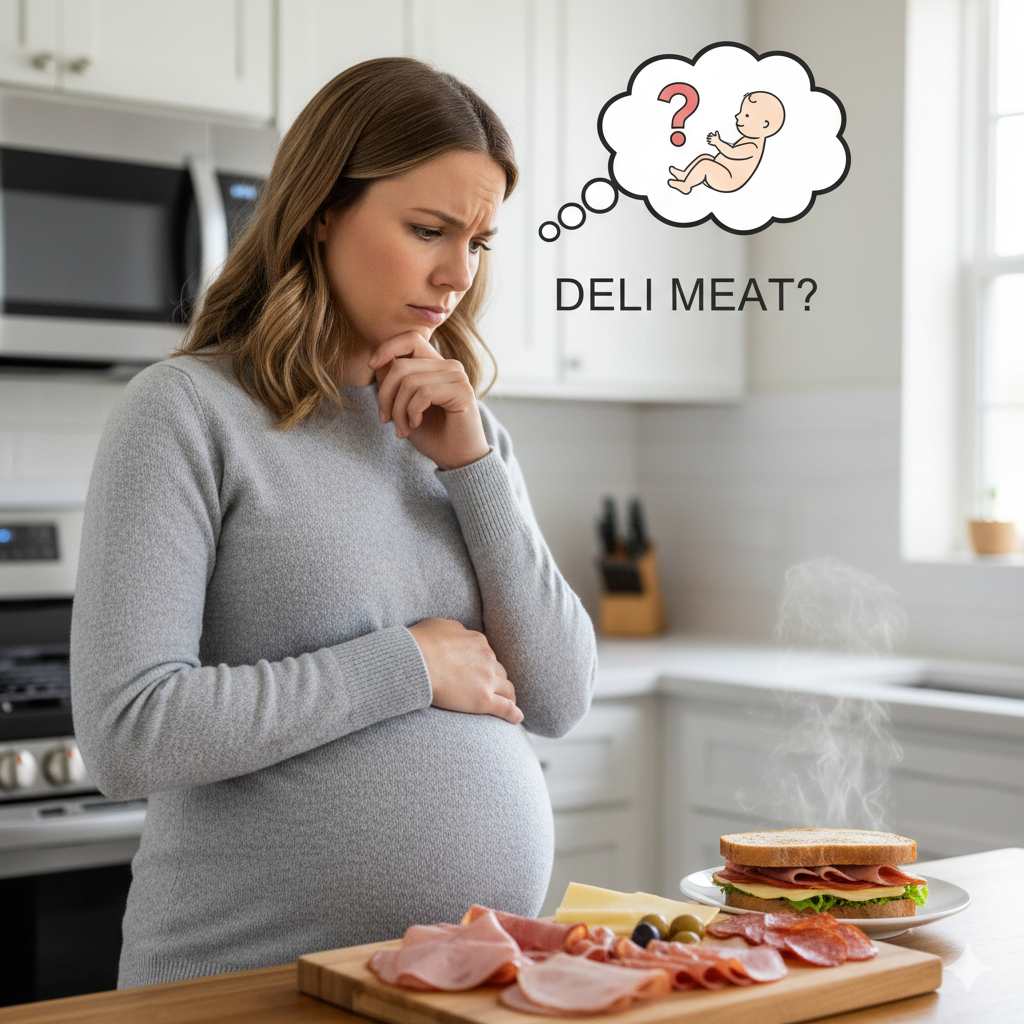
The Fast Answer: You can eat deli meat while pregnant if it has been heated until steaming hot, which means 165F or 74C. Cold from the packet or the counter is the version guidance advises against, because listeria is one of the very few bacteria that keeps growing in a fridge. Heat is the whole answer. Below: which meats carry the most risk, the exact way to order a sandwich, and what to do if you have already eaten some and are now worrying.
Check any food for pregnancy safety in the PregnancyPlate AppSafety is step one. Nutrition helps your baby thrive.
Knowing a meal is safe does not tell you whether you are getting enough iron, folate, calcium and choline. PregnancyPlate tracks all of it from a photo of your plate.
- See nutrient progress
- Scan meals instantly
- Nourish with confidence
 Scan to download
Open with iPhone camera
Scan to download
Open with iPhone camera
Deli meat is the most-asked pregnancy food question there is, and it is also the one where the advice sounds most disproportionate. A turkey sandwich feels like the least dangerous lunch imaginable. So why is it on every list?
The answer is one specific bacterium behaving in one specific way, and once you understand that, the whole rule becomes obvious rather than arbitrary, and much easier to work around.
Why Deli Meat Is on the List at All
The concern is Listeria monocytogenes. Two facts about it explain everything.
First, pregnancy makes you far more susceptible. Pregnant women are estimated to be around ten times more likely to contract listeriosis than the general population, because pregnancy naturally dampens parts of your immune response. And unlike most food poisoning, listeria can cross the placenta, which is why the guidance is cautious in a way it is not for, say, mild salmonella risk.
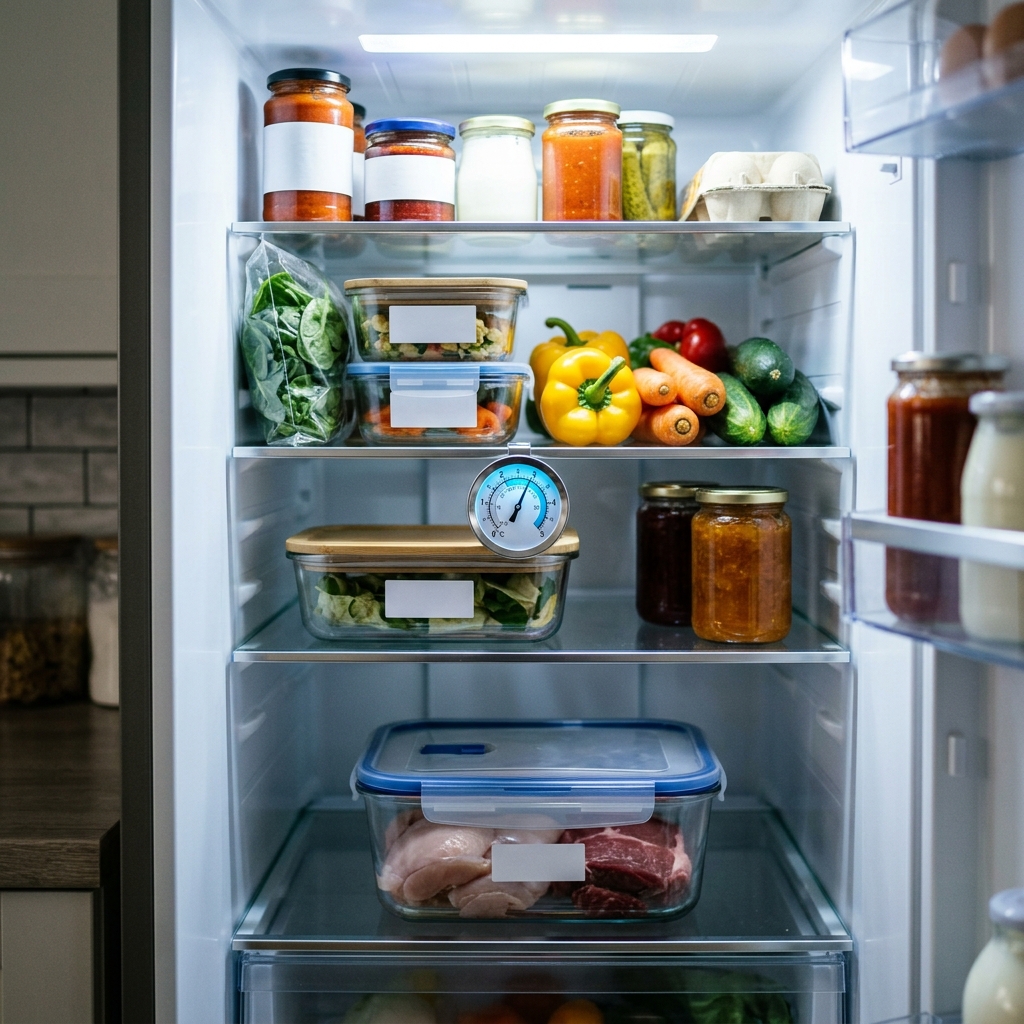
Second, and this is the crucial one, listeria grows in the cold. Almost every other bacterium goes dormant in a fridge. Listeria carries on multiplying at refrigerator temperatures, slowly but steadily. So a pack of ham that was perfectly fine when it was sealed on Monday has had all week to become less fine, even though it never left the fridge and smells completely normal.
That is the entire reason cold cuts are treated differently from cooked meat. It is not that deli meat is dirty. It is that the one bug it might carry is the one bug your fridge does not stop.
The Rule That Solves It: Steaming Hot
Listeria is killed by heat. Properly heated deli meat is not a compromise or a lesser option, it is genuinely safe, and this is where guidance in both the US and UK lands.
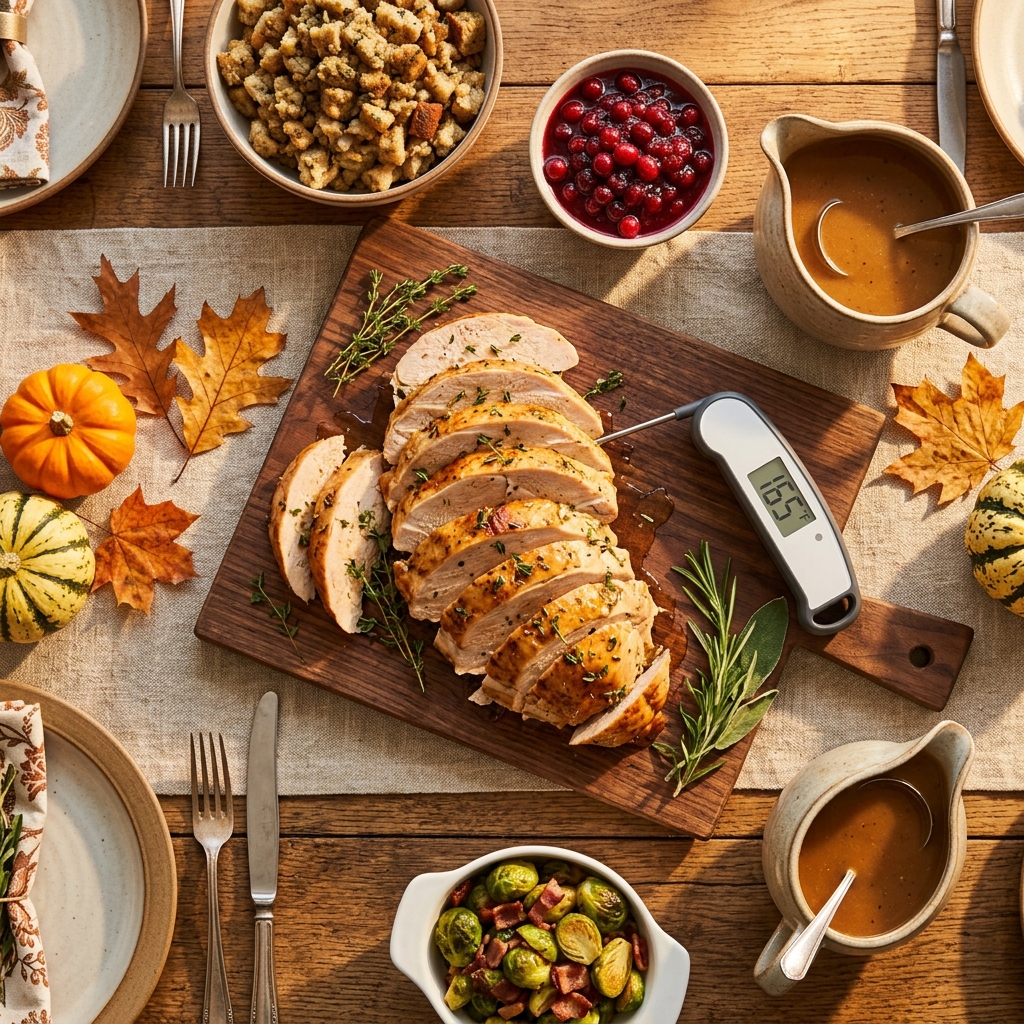
The number is 165F, or 74C, measured in the meat itself. In practice, since nobody is putting a thermometer into a sandwich, the visual test is steaming. Not warm. Not "the cheese has melted". Actual visible steam coming off the meat.
This matters more than it sounds, because half-heating is genuinely worse than not heating. Meat warmed to 40C is meat sitting in the temperature range bacteria most enjoy. If you are going to heat it, heat it properly.
- At home: a pan or the microwave until it visibly steams, roughly 30 to 60 seconds for a portion in the microwave.
- At a sandwich shop: ask for it toasted, then check for steam when you open it. If it is not steaming, ask them to run it through again. Nobody minds.
- In a toastie or panini: generally fine, because the press heats the filling through rather than just the outside.
Which Meats Carry the Most Risk
Not all cold cuts are equal, and the differences are about moisture and processing rather than the animal.
- Sliced turkey, chicken and ham: highest risk. High moisture, low acidity, sliced and handled a lot. These are the ones outbreak reports feature most often. Heat them.
- Roast beef and pastrami: high risk. Same reasoning. Deli counter versions carry the extra variable of shared slicers.
- Salami, pepperoni, chorizo and other dry cured meats: lower risk. Fermented, salted and dried, which creates an environment listeria struggles in. Lower is not zero, and both NHS and FDA guidance still suggest heating them in pregnancy, though many providers are relaxed about a small amount of properly cured salami. Worth asking yours.
- Pate and meat spreads: avoid. Refrigerated pate is one of the few genuinely avoid-entirely items, and this includes liver pate, which also carries a vitamin A concern on top.
Prepackaged Versus the Deli Counter
Given a choice, sealed prepackaged is the better bet, and the reason is time and handling rather than quality.
Packaged meat is sliced in a controlled facility, sealed, and date stamped, so you know exactly how old it is and it has not sat exposed. Once you open it, the clock starts and most guidance suggests using it within three to five days.
The deli counter adds variables you cannot see: how long the block has been open, whether the slicer is shared with other products, how busy the counter is, and how long your portion sat before you got home. None of that is necessarily a problem, and a busy counter with high turnover is genuinely fine, but you can verify none of it. While pregnant, that is the argument for the packet.
Already Ate It? Read This
First, the odds are strongly in your favour. Listeriosis is genuinely rare, and the overwhelming majority of pregnant women who eat a cold sandwich are completely fine. One turkey sub is not an emergency and it is not something to lose sleep over.
What to actually do: nothing, unless symptoms appear. Listeriosis presents like flu, so fever, aches, chills, tiredness, sometimes an upset stomach, and it can show up anywhere from a few days to several weeks after eating. If you develop a fever in the weeks after, call your midwife or OB and tell them what you ate. That one sentence gets you the right test and, if needed, antibiotics that treat it effectively. Worrying is optional. The phone call, if symptoms come, is not.
Ordering a Sandwich Without the Anxiety
The practical version, for a real high street.
The safest orders are anything hot and freshly cooked: a chicken or steak sandwich made to order, a meatball sub from a hot well, a toastie, or a hot roast beef. Freshly cooked, freshly served, no cold storage step in the middle.
The safe adaptation is a normal cold cut sandwich with the meat toasted until steaming. This is completely normal to ask for and you will not be the first person that day.
The one to skip is a cold cut sandwich you cannot get heated, particularly from a display cabinet where it has been sitting made up. Prepacked sandwiches from a chiller are the classic example.
Our chain-by-chain audits go into the specifics if you have a usual: Subway, Jersey Mike's and Jimmy John's, plus the full pregnancy sandwich guide for cheese and topping questions.
What to Eat Instead When You Cannot Heat It
Sometimes heating is not an option, a packed lunch with no microwave being the obvious case. These fill the same sandwich-shaped hole with no listeria question at all:
- Cooked chicken you roasted yourself, chilled and used within three days. Home cooked and properly stored is a different risk category from processed cold cuts.
- Tinned tuna or salmon, which is commercially sterilised. Light tuna, two to three servings a week.
- Egg mayonnaise with fully cooked eggs and commercial mayo.
- Hard cheese and pickle, since all hard cheeses are fine in pregnancy.
- Hummus and roasted vegetables, which also brings iron and folate.
For a full week of options, our pregnancy lunch ideas guide is built around exactly this problem.
Common Questions
Q: Is it safe once it has cooled down again after heating?
A: Heating kills the listeria present at that moment, so a sandwich you heated and ate straight away is fine even if it cooled slightly on the plate. What you should not do is heat it, refrigerate it and eat it cold days later.
Q: Does organic or nitrate-free deli meat change anything?
A: No. Listeria does not care about the nitrate content or the farming method. Those are separate considerations with their own arguments, but they do not affect this rule.
Q: What about deli meat in a cooked dish, like a ham and cheese pasta bake?
A: Safe. If the dish is cooked through and served hot, the meat has been heated well past the threshold.
Q: Why do UK and US guidelines sound slightly different?
A: The NHS is somewhat more relaxed about cured meats like salami than US guidance tends to be, largely a difference in how each weighs a small risk. Both agree completely on the core point: heating removes the concern.
Q: Can I eat deli meat in the first trimester?
A: The same rule applies throughout pregnancy. Listeria risk does not change by trimester, though the consequences are taken seriously at every stage.
The Short Version
- Heated until steaming (165F / 74C): safe. This is the whole rule.
- Cold from the packet or counter: skip it while pregnant.
- Sealed and prepackaged beats the deli counter, and use it within three to five days of opening.
- Turkey, chicken and ham carry most risk. Dry cured salami carries less, pate none at all because it is a no.
- Half-heated is worse than cold. Steam, or do not bother.
- Already ate some? Almost certainly fine. Watch for a fever, and mention it if one appears.
Clinical Sources & Research
- Centers for Disease Control and Prevention (CDC), Listeria Prevention: People at Higher Risk.
- Food and Drug Administration (FDA), Food Safety for Moms-to-Be.
- NHS, Foods to Avoid in Pregnancy.
Meet the Editorial Team
The researchers and experts behind PregnancyPlate.

Fiza Izra
Founder & Tech Researcher
A UK-based mother of 3 with a background in tech and data synthesis, Fiza brings real-world experience navigating hyperemesis gravidarum and postnatal depression. She engineers complex clinical guidelines (NHS, ACOG) into accessible tools, ensuring rigorous fact-checking with deep empathy.

Emma Davies
Senior Nutrition Editor
A mum and writer, Emma runs our food safety desk. She is the one who rings the restaurant to ask how long the lettuce sits out, checks every claim against CDC, FDA and NHS guidance, and rewrites the answer until it is usable at 9pm in a drive-thru queue.