The 100-Gram Protein Pregnancy Challenge: How to Hit Your Macros When You Are Exhausted
Clinical data shows that traditional prenatal protein guidelines are often drastically under-calculated for the third trimester. Discover the exact, meat-free '100-Gram Protocol' that functional dietitians use to optimize fetal growth when severe nausea strikes.
In this article

Editorial note: This article is researched from official public health and pregnancy food safety guidance, then edited by the PregnancyPlate team for clarity. It is not medical advice. If you are worried about symptoms or a specific exposure, contact your midwife, GP or healthcare provider.
The Fast Answer: Most generic pregnancy advice tells you to "eat more protein," but clinical data shows that nearly 50% of expecting mothers are completely failing to hit the baseline requirement for optimal fetal growth. If you are exhausted, nauseous, and the mere thought of eating baked chicken makes you sick, forcing yourself to eat meat is not the answer. Standard clinical RDA guidelines suggest 71g per day, but emerging research heavily advocates for 80g to 100g+ in the second and third trimesters. Scroll down to discover the exact, meat-free "100-Gram Protocol" that functional dietitians use to hit optimal macros without triggering food aversions.
Track Your Protein with PregnancyPlate ProYour next meal, a little less guesswork.
Scan your plate for pregnancy food-safety guidance and a nutrition breakdown. Keep your meals and nutrient progress in one place.
 Scan with your iPhone
to get the app
Tracking nutrition during pregnancy often feels like a full-time job that you never applied for. Between analyzing every ingredient label for hidden risks and trying to manage intense nausea, the simple act of eating becomes a highly calculated clinical exercise.
Of all the macronutrients you need to monitor, protein is undeniably the most critical. It is the fundamental building block of life. Every single cell in your developing baby's body requires protein to form properly. Furthermore, protein is essential for your own body: it maintains your rapidly expanding blood volume, supports the growth of your uterine tissue, and physically builds the placenta that keeps your baby alive.
Yet, despite its critical importance, protein is often the first macronutrient to plummet during pregnancy. Why? Because the most common sources of dietary protein—meat, poultry, and eggs—are also the most common triggers for pregnancy-induced food aversions. When the mere smell of cooking chicken sends you sprinting to the bathroom, hitting your daily protein target feels completely impossible.
We are going to solve that problem right now. We are breaking down exactly how much protein you actually need, why the outdated guidelines are failing you, and how to execute the "100-Gram Protocol" to hit your targets without eating a single piece of meat.
The Great Protein Debate: RDA vs. Functional Targets
If you search for "how much protein should a pregnant woman eat," the standard medical advice usually dictates roughly 60g to 71g per day. This number comes from the classic Recommended Dietary Allowance (RDA) guidelines set decades ago.
However, the field of maternal nutrition has evolved dramatically. Modern functional prenatal dietitians and emerging clinical research are increasingly demonstrating that the baseline RDA is simply a "survival" metric—it is the minimum amount required to prevent deficiency, not the optimal amount required to thrive.
During your second and third trimesters, your baby's growth velocity accelerates exponentially. To support this massive cellular expansion, many functional medicine practitioners and clinical dietitians now heavily advocate for a sliding scale target of 80g to 100g+ of protein per day.
Hitting this 100-gram target provides massive clinical benefits:
- Blood Sugar Stabilization: High protein intake severely blunts the glycemic impact of carbohydrates, which is vital for preventing and managing Gestational Diabetes.
- Amniotic Fluid Maintenance: Adequate protein ensures your body can produce and maintain healthy levels of amniotic fluid.
- Satiety and Nausea Relief: Protein takes longer to digest than simple carbohydrates, keeping your stomach full and helping to ward off the empty-stomach nausea that plagues the first trimester.
The Clinical Verdict: Treat 71g as your absolute, non-negotiable daily minimum. Treat 100g as your optimal daily target for the second and third trimesters. You need a reliable clinical tracker to ensure you are actually hitting these numbers, as guessing is incredibly inaccurate.
The Meat Aversion Crisis
It is one thing to set a 100-gram target; it is entirely another to execute it. The problem is that traditional fitness culture has brainwashed us into believing that protein only comes from grilled chicken breasts, turkey, and steak.
During the first trimester, surging hCG levels severely heighten your olfactory senses (your sense of smell). The sulfur compounds released when cooking meat are often completely intolerable to a pregnant woman. This creates a vicious cycle: you feel nauseous, so you avoid meat; you avoid meat, so your protein drops; your protein drops, so your blood sugar crashes; your blood sugar crashes, which makes you even more nauseous.
The solution is not to force-feed yourself chicken until you are sick. The solution is to completely pivot your dietary strategy and embrace high-yield, meat-free protein sources that bypass your food aversions.
The 100-Gram Protocol: A Meat-Free Masterclass
How do you hit 100 grams of protein without touching a piece of meat? You leverage dairy, legumes, and strategic supplementation. Here is the exact blueprint functional dietitians use.
1. The Dairy Powerhouses (Pasteurized)
If you can tolerate dairy, it is your greatest asset during pregnancy. Unlike meat, cold dairy produces almost zero odor, making it highly tolerable for a nauseous stomach.
Greek Yogurt: A standard serving of plain, unsweetened Greek yogurt contains a massive 15g to 17g of protein. It is incredibly versatile. You can eat it plain, mix it with fruit, or use it as a substitute for sour cream on tacos or baked potatoes.
Cottage Cheese: Do not overlook cottage cheese. A single cup provides an astonishing 25g of protein. If the texture bothers you, you can blend it until smooth and mix it into pasta sauces or smoothies to instantly supercharge the macro profile without altering the taste.
Safety Note: Always ensure your dairy is commercially pasteurized to eliminate the risk of Listeria. In the United States and the UK, virtually all commercial milk and yogurt sold in supermarkets is pasteurized by law.
2. Legumes, Lentils, and Stealth Carbs
When you are struggling with aversions, you usually crave bland carbohydrates like pasta and toast. You can use this to your advantage by switching to "stealth" protein carbs.
Lentil and Chickpea Pasta: Instead of traditional wheat pasta (which is high-glycemic and low-protein), switch to a pasta made entirely from red lentils or chickpeas (like Banza). A single serving of chickpea pasta delivers roughly 14g of protein and 8g of dietary fiber. This means you get to eat the comforting bowl of pasta you are craving, while simultaneously hitting your protein macros and fighting off pregnancy constipation.
Edamame: A cup of cooked edamame contains 17g of protein. It is a fantastic, bland snack that you can lightly salt and eat throughout the afternoon.
3. Strategic Supplementation
Sometimes, eating solid food is just too difficult. This is where high-quality protein powders become essential. However, the supplement industry is completely unregulated, which means you cannot just buy any generic powder off the shelf.
Prenatal Collagen and Whey: You must look for protein powders that are explicitly third-party tested for heavy metals (lead, arsenic, mercury) and certified safe for pregnancy. Brands that specialize in prenatal nutrition (like Needed or Ritual) offer incredibly clean protein formulations.
A single scoop of a high-quality prenatal collagen or whey isolate can add 20g of protein to your daily total. The best part? Unflavored collagen peptides dissolve completely clear in coffee, tea, or oatmeal without altering the texture or taste. It is the ultimate stealth protein.
The Danger of Traditional Fitness Trackers
Once you understand *what* to eat, the next challenge is actually tracking it. This is where thousands of pregnant women make a critical mistake: they download a generic fitness or calorie-counting app.
These apps were engineered for bodybuilders and people trying to lose weight. Their algorithms heavily push you toward caloric deficits, restriction, and weight loss goals. When you input your pregnancy meals into an app that flashes red warnings when you eat too many carbohydrates, it triggers immense dietary anxiety and can easily lead to disordered eating patterns.
Pregnancy is not the time to be in a caloric deficit. It is a time for nourishment, clinical tracking, and safety.
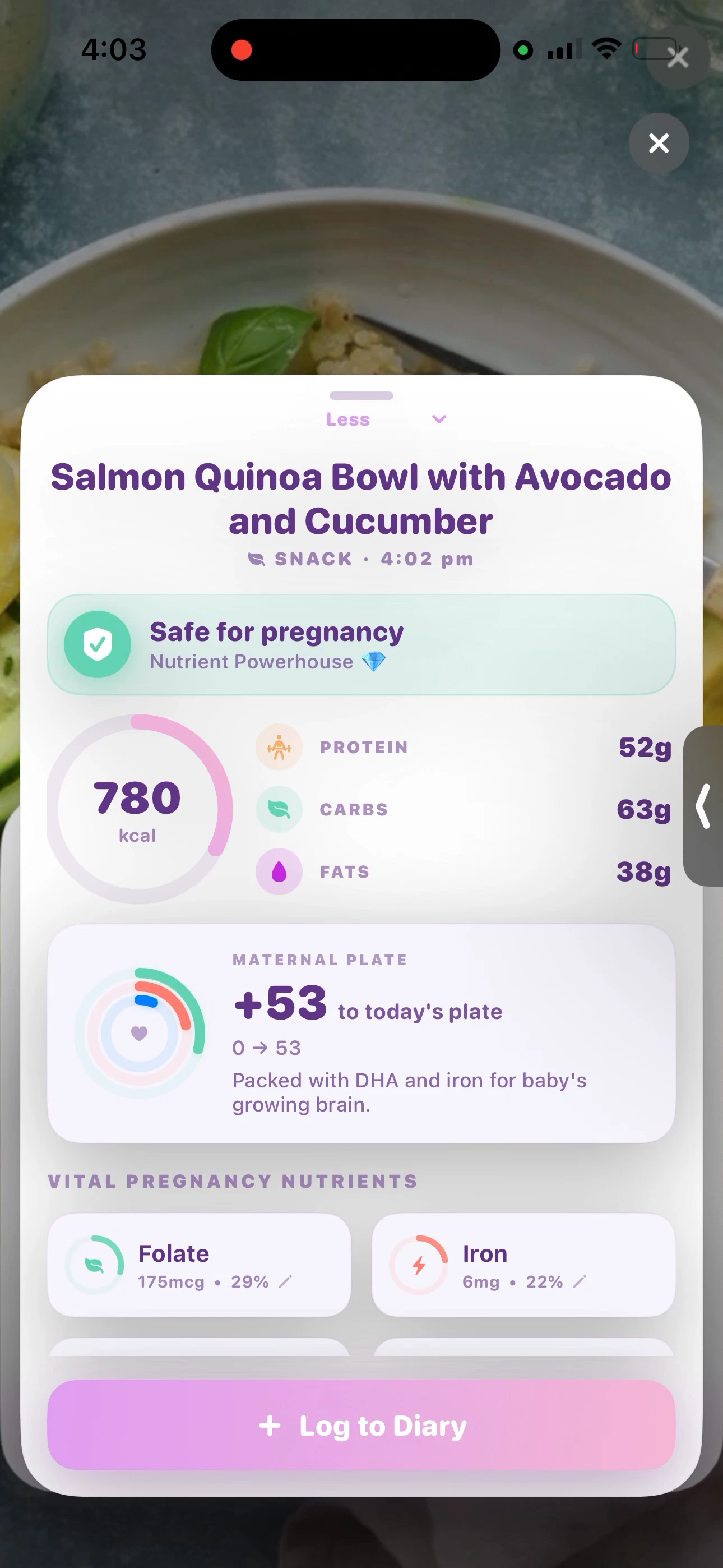
This is exactly why we built the PregnancyPlate Pro App. We designed an advanced macro tracker specifically engineered for the psychological and clinical needs of an expecting mother. It doesn't shame you for eating carbs; it helps you balance them with protein to prevent Gestational Diabetes spikes. It doesn't push weight loss; it tracks your clinical adherence to the 100-Gram Protocol.
More importantly, the AI Menu Scanner allows you to point your phone at any restaurant menu and instantly identify the safest, highest-protein options that avoid your specific food aversions.
Executing the 100-Gram Day
Hitting 100 grams does not require you to eat a massive steak. Here is what a highly tolerable, meat-free 100g day actually looks like:
Breakfast (35g): 1 cup of plain Greek yogurt (17g) mixed with 1 scoop of unflavored prenatal collagen (15g), topped with chia seeds (3g).
Lunch (28g): 2 slices of whole grain sprouted bread (10g) with half a cup of cottage cheese (12g) and a side of edamame (6g).
Dinner (28g): 2 servings of chickpea pasta (28g) with a simple marinara sauce.
Snack (10g): 1 ounce of pasteurized cheddar cheese (7g) with a handful of almonds (3g).
Total: 101 Grams of Protein. No chicken. No steak. No nauseating smells. Just pure, clinical macro execution to ensure your baby has exactly what they need to thrive.
Clinical Sources & Research
- National Institutes of Health (NIH), Protein Requirements During Pregnancy: Reevaluating the RDA.
- American College of Obstetricians and Gynecologists (ACOG), Nutrition During Pregnancy: Macronutrient Guidelines.
- American Diabetes Association (ADA), Gestational Diabetes and Blood Sugar Management (Protein Balancing).
Meet the Editorial Team
The researchers and experts behind PregnancyPlate.

Fiza Izra
Founder & Tech Researcher
A UK-based mother of 3 with a background in tech and data synthesis, Fiza brings real-world experience navigating hyperemesis gravidarum and postnatal depression. She engineers complex clinical guidelines (NHS, ACOG) into accessible tools, ensuring rigorous fact-checking with deep empathy.

Emma Davies
Senior Nutrition Editor
A mum and writer, Emma runs our food safety desk. She is the one who rings the restaurant to ask how long the lettuce sits out, checks every claim against CDC, FDA and NHS guidance, and rewrites the answer until it is usable at 9pm in a drive-thru queue.
Make sense of every plate.
Scan your plate for pregnancy food-safety guidance and a nutrition breakdown. Keep your meals and nutrient progress in one place.
Scan with your iPhoneto get the app