Can You Eat Cold Chicken While Pregnant? Fridge Safety, Reheating and Listeria Risk
Wondering if cold cooked chicken is safe in pregnancy? We audit homemade leftovers, deli chicken, chicken salad, fridge timing, reheating rules and the exact red flags to watch.
In this article
Editorial note: This article is researched from official public health and pregnancy food safety guidance, then edited by the PregnancyPlate team for clarity. It is not medical advice. If you are worried about symptoms or a specific exposure, contact your midwife, GP or healthcare provider.
The Cold Chicken Audit: Yes, cold cooked chicken can be safe during pregnancy, but only when the full chain is clean: cooked properly, cooled quickly, stored cold, eaten within a short window and not left sitting out. The risk changes completely depending on whether it is homemade chicken from yesterday, a deli counter chicken salad or a pre-packed sandwich from a warm display.
Check Your Chicken Meal on PregnancyPlateCold chicken sounds harmless. It is already cooked, it is easy protein, and it can turn a plain salad or sandwich into a proper pregnancy lunch. But once you are pregnant, the question becomes more specific: is this cold chicken safe for me, today, with my immune system working differently and a baby depending on my food choices?
The answer is not a simple yes or no. A piece of chicken breast that you cooked at home last night, cooled quickly and stored in a clean fridge is a very different food safety situation from a chicken mayo sandwich that has been sitting in a shop display, a buffet chicken salad, or leftovers from a takeaway that arrived lukewarm. Pregnancy does not mean you must fear every cold food, but it does mean you need a sharper filter for time, temperature and handling.
This guide is the PregnancyPlate cold chicken decision engine. We will audit homemade cold chicken, pre-cooked supermarket chicken, chicken salad, deli counters, sandwiches, meal prep boxes, picnic lunches and the moment when you realise the chicken has been out longer than you thought. The goal is not panic. The goal is a clear, practical answer you can use before lunch.
Quick Verdict: When Cold Chicken Is Safe in Pregnancy
Cold chicken is usually safe during pregnancy when all of these are true:
- It was fully cooked first: No pink centre, no raw juices, and ideally cooked to a safe internal temperature of 165 degrees Fahrenheit or 74 degrees Celsius.
- It was cooled and refrigerated quickly: It did not sit at room temperature for more than two hours, or more than one hour in hot weather.
- Your fridge is cold enough: The fridge is at 40 degrees Fahrenheit or 4 degrees Celsius, or colder.
- It is still fresh: It has been in the fridge for no more than 3 to 4 days, and for pregnancy we prefer the earlier side of that window.
- It has been handled cleanly: Clean container, clean utensils, no shared board with raw meat, no sitting open in the fridge.
If any of those checks fail, the safer move is to reheat the chicken until steaming hot, or throw it away if time and storage are unclear. Reheating is not a magic rescue for chicken that has been badly stored for days, but it is useful when the chicken was stored properly and you want an extra safety margin.
Why Pregnancy Changes the Risk Calculation
Pregnancy changes how your immune system behaves. It is not that your body becomes helpless, but it does become more tolerant so it can support the pregnancy. That means foodborne infections can hit harder, and some bacteria can be more dangerous for the baby than they are for the mother.
The key cold chicken concern is Listeria monocytogenes. Listeria matters because it can grow at refrigerator temperatures where many other bacteria slow down. That is why pregnancy food safety advice is stricter around ready-to-eat refrigerated foods, deli meats and prepared salads. You might feel only mildly unwell, but listeriosis can be serious in pregnancy, so we build our food rules around prevention.
Cold chicken is not automatically a Listeria food. Freshly cooked chicken that you store well is generally low risk. The risk rises when chicken becomes a ready-to-eat food with a long cold storage life, repeated handling, creamy dressing, deli counter exposure, or uncertain temperature control.
Homemade Cold Chicken: The Lowest-Risk Version
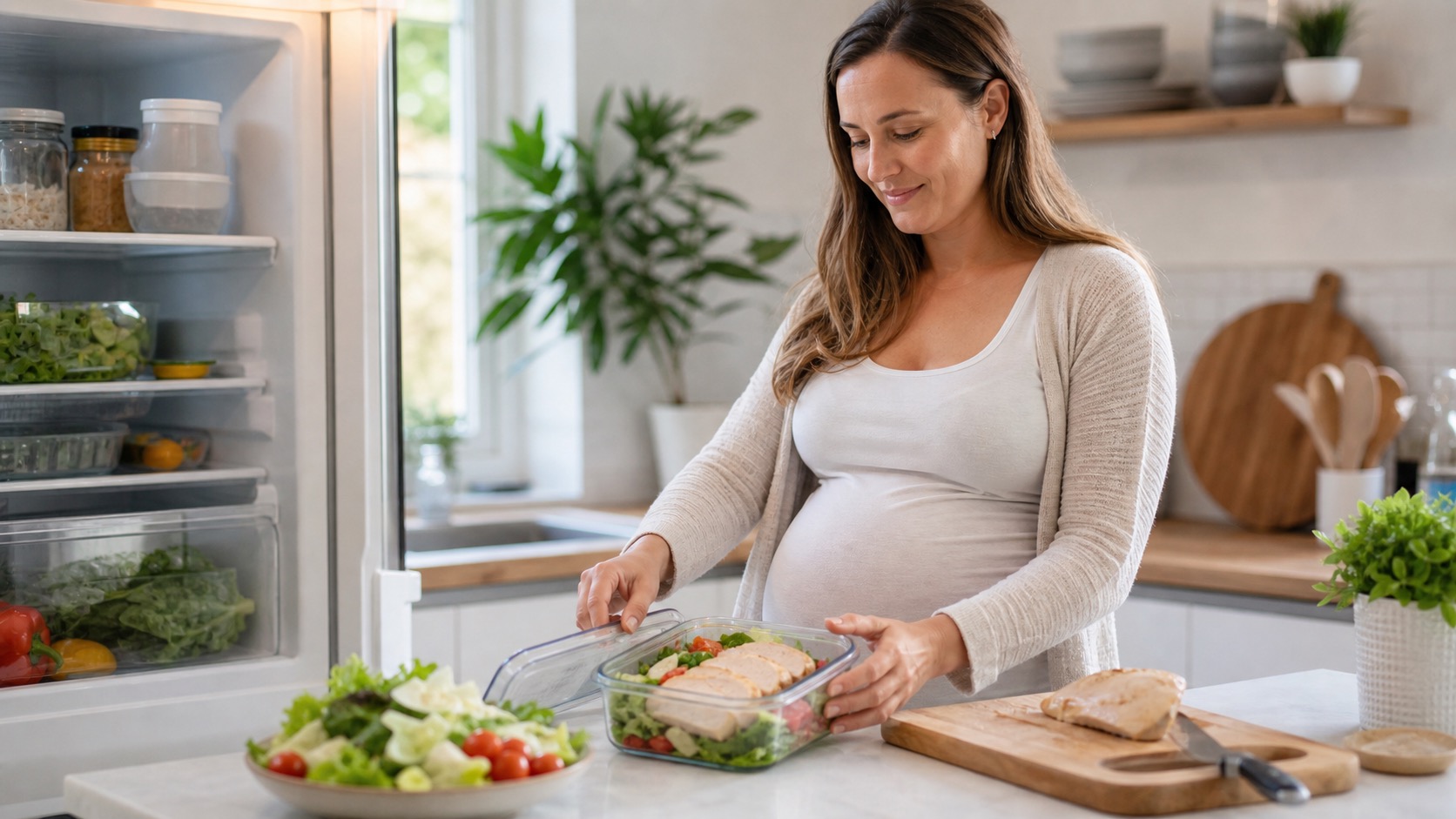
If you cooked the chicken yourself, you control the most important variables. You know when it was cooked, how it was cooled, what container it went into and how long it has been in the fridge. That makes homemade cold chicken the best candidate for eating cold during pregnancy.
The safest method is simple. Cook the chicken fully, let the steam reduce for a short period, portion it into shallow containers, then refrigerate it promptly. Do not leave a whole roast chicken sitting on the counter for hours while the kitchen cools down. Large pieces hold heat in the centre and cool slowly, which can keep them in the bacterial growth zone for too long.
For pregnancy, use a 24 to 48 hour comfort window whenever possible. Official leftover guidance allows 3 to 4 days for many cooked leftovers, but pregnancy is a good time to be stricter with cooked poultry because the downside of getting it wrong is higher. If you batch cook chicken on Sunday, plan to eat the cold portions early in the week and freeze anything you will not use quickly.
Supermarket Pre-Cooked Chicken: Check the Category
Supermarket chicken can be safe, but it depends on the type. A hot rotisserie chicken that you bring home, portion cleanly and chill quickly is different from sliced cooked chicken sold cold in a packet. The packet is ready-to-eat poultry, which means it has been cooked, sliced, packed, transported and refrigerated before reaching you.
For pre-packed cooked chicken, check the use-by date, keep it cold on the way home and eat it soon after opening. Do not treat an opened pack like it has the same safety profile as a fresh whole chicken you cooked yourself. Once opened, the chicken has more oxygen exposure and more handling risk.
If the packet says it must be consumed within a certain number of days after opening, follow the shorter instruction. Pregnancy is not the season for stretching dates because something smells fine. Listeria and other pathogens do not always announce themselves with a bad smell, slimy texture or obvious colour change.
Chicken Salad, Chicken Mayo and Deli Counter Chicken
This is where the audit gets stricter. Chicken salad and chicken mayo are not risky because mayonnaise is automatically dangerous. Commercial mayonnaise is usually made with pasteurized egg and enough acidity to be stable. The issue is the whole environment: cooked chicken, creamy dressing, repeated scooping, refrigeration doors opening all day, and multiple chances for contamination.
A fresh chicken salad you make at home with chilled chicken, pasteurized mayo, washed salad and clean utensils is usually fine. A deli counter chicken salad that has been sitting in a tray all day is a different story. You do not know when the chicken was cooked, how long the tray has been open, whether the scoop has touched other foods, or how accurately the counter holds temperature.
For pregnancy, the safest rule is to avoid deli counter chicken salads unless they are made fresh in front of you and served cold from a clearly well-managed fridge. If you are craving chicken mayo, make it at home, keep it chilled and eat it the same day.
Cold Chicken Sandwiches: Safe or Skip?
Cold chicken sandwiches are one of the biggest grey areas because they are so common. A homemade sandwich made with fresh chilled chicken and eaten within a few hours is usually fine. A pre-packed sandwich from a shop can be higher risk because it is a ready-to-eat chilled product with multiple ingredients and a longer shelf life.
The risk rises if the sandwich includes salad leaves, creamy dressing, sliced deli-style chicken, or has been carried around in a bag without an ice pack. Pregnancy-safe sandwich logic is simple: cold is only safe if it stayed properly cold the whole time.
If you buy a chicken sandwich, choose a high-turnover shop with sealed packaging, a proper cold display and a same-day use-by date. Avoid sandwiches from warm shelves, petrol station displays that look poorly chilled, or lunch bags that have been sitting under your desk since morning. If the sandwich is toasted until the filling is steaming, the risk drops, but the centre needs to be hot, not just the bread.
The Reheat Rule: When Hot Is Safer Than Cold
Reheating cooked chicken until steaming hot is the safest option when you are unsure about the cold chain but still confident the food has not been badly abused. The target for reheated leftovers is 165 degrees Fahrenheit or 74 degrees Celsius throughout. In practical kitchen terms, that means visible steam from the centre, not just warm edges.
Microwaves can create cold spots, especially in thick chicken pieces or dense pasta bakes. Slice the chicken, cover it, heat it thoroughly, stir or rotate it, and let it stand briefly so the heat distributes. If you are reheating a chicken wrap, panini or sandwich, open it and check the middle. Melted cheese does not prove the chicken is hot enough.
Do not repeatedly reheat the same chicken. Heat only the portion you are going to eat. Every cycle through warm temperatures creates another chance for bacteria to grow if cooling is slow afterward.
The Picnic, Lunchbox and Car Journey Problem
Cold chicken becomes higher risk when it leaves the fridge. A chicken salad packed for work at 8 AM and eaten at 1 PM can be safe if it stayed in an insulated bag with an ice pack or went straight into a fridge. The same meal loose in a tote bag, warm car or sunny picnic basket is not the same risk category.
Use the two-hour rule as your baseline. Perishable food should not sit at room temperature for more than two hours. In hot weather, or if the food is in a warm car, the limit becomes one hour. Pregnancy is a good reason to be strict here. If you cannot keep the chicken cold, choose a shelf-stable lunch, a hot meal, or buy something freshly cooked.
For packed lunches, use a proper ice pack, keep the container sealed, and avoid adding warm ingredients to a cold chicken bowl. Warm rice, warm pasta or hot roasted vegetables packed with cold chicken can raise the temperature of the whole container into the danger zone.
What If You Already Ate Cold Chicken?
If you already ate cold chicken, do not spiral. Most exposures do not lead to illness. Start by assessing the facts. Was it homemade or deli? How old was it? Was it kept in the fridge? Did it taste normal? Was it sitting out? The answers matter more than the fact that it was cold.
If the chicken was fresh, properly stored and eaten within a reasonable timeframe, you likely do not need to do anything beyond staying hydrated and moving on. If it was old, left out, from an uncertain deli counter, or tasted wrong, make a note of the time and monitor for symptoms.
Call your midwife, OB-GYN or healthcare provider urgently if you develop fever, chills, flu-like symptoms, severe vomiting, persistent diarrhea, strong abdominal pain, dehydration, reduced fetal movement, or you simply feel that something is not right. With pregnancy food safety, it is always acceptable to call for advice earlier rather than waiting to prove you are ill.
Cold Chicken Safety Checklist
Before You Eat It Cold
- Known source: Homemade or sealed from a trusted shop is better than open deli trays.
- Known timing: You know when it was cooked or opened.
- Cold storage: It has been kept at 40 degrees Fahrenheit or 4 degrees Celsius, or colder.
- Short window: Ideally eaten within 1 to 2 days in pregnancy, with 3 to 4 days as the outer leftover limit.
- No room temperature stretch: It has not been left out for more than two hours, or one hour in heat.
- No deli uncertainty: Avoid open chicken salad tubs and sliced cold chicken from counters unless freshly prepared and well chilled.
- Reheat if unsure: Heat until steaming hot throughout, reaching 165 degrees Fahrenheit or 74 degrees Celsius if you can check.
Best Cold Chicken Meal Ideas for Pregnancy
Once the safety boxes are ticked, cold chicken can be a brilliant pregnancy protein. It is lean, filling and easy to pair with nausea-friendly carbs or fibre-rich vegetables. Try a cold chicken and avocado bowl with lemon dressing, chicken salad with pasteurized Greek yogurt instead of heavy mayo, a chicken and sweetcorn jacket potato filling, or a chicken pasta salad that has been chilled quickly and eaten the same day.
If nausea is active, keep the flavours gentle. Plain chicken with cucumber, crackers, rice cakes, avocado or mild hummus can be easier than spicy marinades. If heartburn is your problem, skip heavy garlic sauces, chilli oil and acidic dressings. If constipation is the issue, pair chicken with beans, lentils, wholegrain bread, berries or a fibre-rich side.
This is where tracking helps. Cold chicken might solve protein, but pregnancy nutrition is not just protein. You still need folate, choline, iron, calcium, iodine, fibre and hydration across the day. Logging the meal in PregnancyPlate helps you see whether your lunch is actually balanced or just safe.
The Final Verdict
Cold chicken is not banned in pregnancy. The safest version is chicken you cooked yourself, chilled quickly, stored in a clean sealed container and eaten within a short window. The riskiest versions are open deli chicken, chicken mayo from uncertain counters, pre-packed sandwiches with poor temperature control, and anything that has sat out for hours.
If you know the chain, cold chicken can stay on the menu. If you do not know the chain, heat it until steaming or choose something else. That is the whole PregnancyPlate rule: do not make pregnancy food harder than it needs to be, but do respect the few details that actually change risk.