Can Pregnant Women Eat Imitation Crab? (California Rolls, Sushi & Mercury Explained)
Craving sushi? We audit California Rolls, surimi pasteurization, Alaska Pollock mercury levels, and exactly how to talk to your sushi chef about cross-contamination.
In this article
Editorial note: This article is researched from official public health and pregnancy food safety guidance, then edited by the PregnancyPlate team for clarity. It is not medical advice. If you are worried about symptoms or a specific exposure, contact your midwife, GP or healthcare provider.
Quick Answer: Yes! Imitation crab is fully pre-cooked and extremely low in mercury, making it one of the absolute safest seafood options you can eat during pregnancy. It is the core ingredient in standard California rolls, meaning you can safely satisfy your sushi cravings without putting your baby at risk.
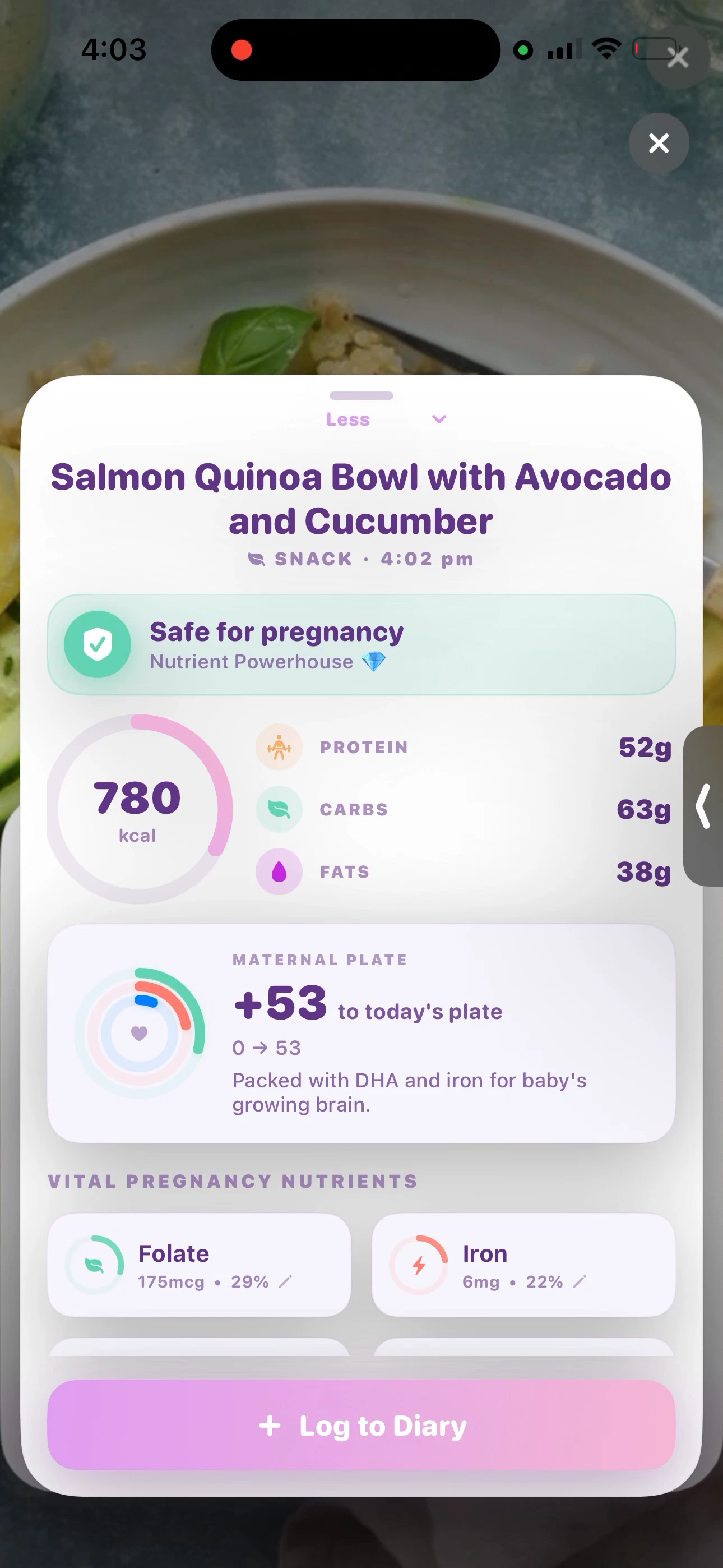
Track Sushi Macros NowYour next meal, a little less guesswork.
Scan your plate for pregnancy food-safety guidance and a nutrition breakdown. Keep your meals and nutrient progress in one place.
 Scan with your iPhone
to get the app
The California Roll Loophole: Why Imitation Crab is a Pregnancy Lifesaver
When you get that positive pregnancy test, one of the first and most painful dietary sacrifices is often sushi. Raw fish carries the risk of parasites and listeria, making sashimi off-limits for nine long months. But when your body hits the second trimester and the craving for soy sauce and seaweed hits hard, you need a safe alternative.
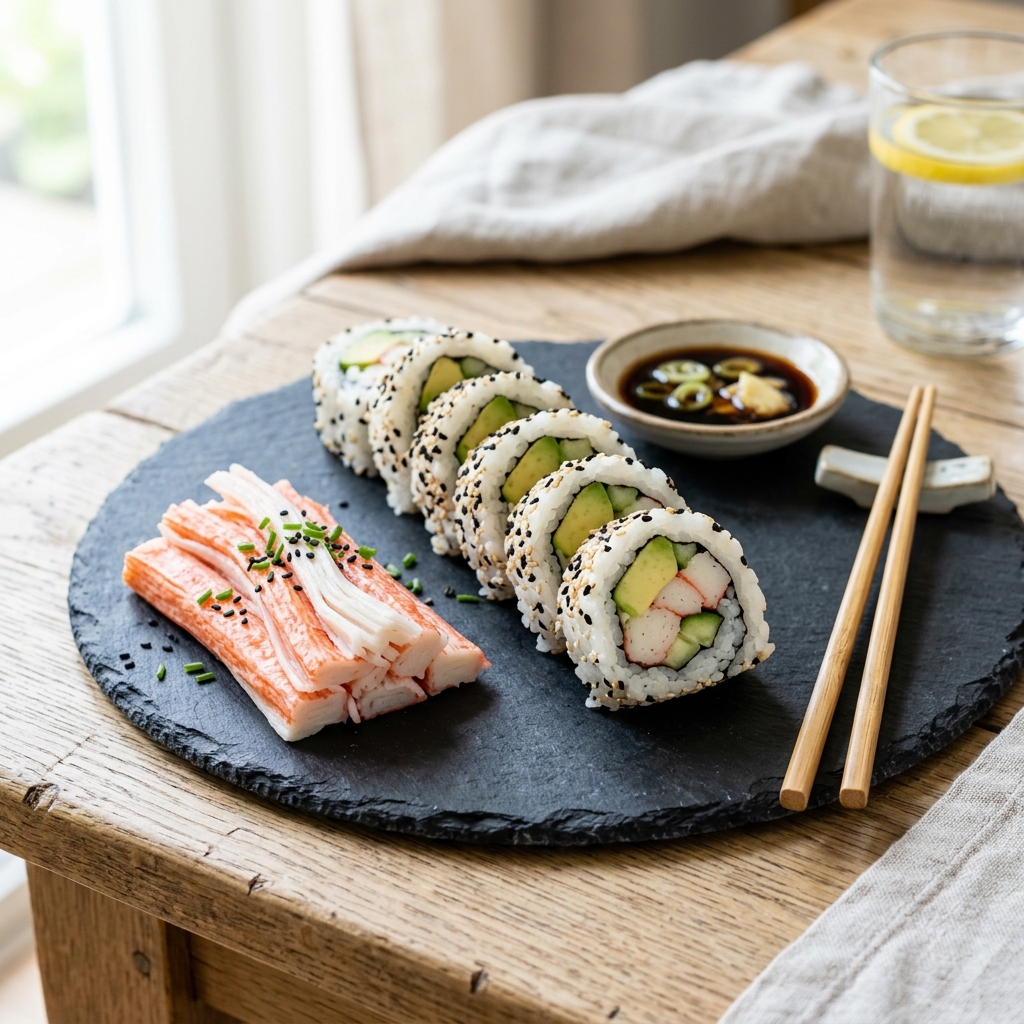
Enter the California roll. At the heart of this iconic roll is the vibrant, slightly sweet "crab" meat that perfectly mimics the look and texture of expensive shellfish. But what exactly is imitation crab, and more importantly, is it actually safe for the neurological development of your fetus?
In this clinical audit,
What is Imitation Crab Made Of? (The Surimi Audit)
Despite its name and vibrant red coloring, imitation crab contains virtually zero actual crab meat.
Imitation crab is a processed fish product known in Japan as surimi (which translates to "minced meat"). Food scientists take white fish - most commonly Wild Alaska Pollock - debone it, wash it thoroughly, and mince it into a fine paste. They then blend this paste with starch, egg whites, and natural flavorings before pressing it into the familiar red-and-white sticks you see at the supermarket.
The "Cook" Method: Completely Pasteurized
During the extrusion process where the paste is shaped into sticks, the surimi is fully cooked through steam and flash-heating to temperatures well above 165°F. This rigorous heat application pasteurizes the egg whites and destroys any potential parasites or Listeria originally present in the raw fish. When you buy imitation crab at the store, it is effectively pre-cooked meat.
The Mercury Advantage: Why Pollock is Top-Tier
The cardinal fear of eating seafood during pregnancy isn't just bacteria - it's heavy metals. High levels of mercury can severely disrupt your baby's developing brain and nervous system, prompting the FDA to issue strict limits on species like tuna, swordfish, and mackerel.
Here is where imitation crab shines. Because surimi is predominantly made from Alaska Pollock, it ranks as one of the cleanest, lowest-mercury fish on the planet. Pollock is a fast-growing, короткийжизнь-lived species that feeds very low on the ocean food chain. This prevents the bioaccumulation of toxic heavy metals in its flesh.
- FDA Classification: The FDA categorizes Pollock in their "Best Choices" list.
- Portion Safety: You can safely consume 2 to 3 servings (8-12 ounces) of "Best Choice" seafood every single week.
- The Math: A standard California roll only uses about 1 to 2 ounces of imitation crab. This means you could theoretically eat a California roll every single day without approaching the FDA's upper limit for prenatal mercury exposure.
Sushi Restaurant Cross-Contamination: The Hidden Danger
We have established that the imitation crab itself is cooked, pasteurized, and exceptionally low in mercury. So, where is the risk?
The danger is not in the crab - it is in the cutting board.
When you order a California Roll at a high-volume sushi restaurant, the sushi chef is building your cooked roll on the exact same bamboo mat, using the exact same knife, and working on the exact same cutting board where they just sliced raw salmon and raw yellowtail.
If the raw salmon was harboring microscopic parasites or bacterial pathogens, those microbes can easily transfer from the chef's knife blade directly onto the exterior of your safe, cooked California roll. This is the definition of dangerous cross-contamination.
The Golden Rule for Sushi Restaurants: When ordering your California roll, you must practice assertive maternal advocacy. Look your server in the eye and say: "I am pregnant and ordering cooked sushi. Can you please ask the chef to wipe down the cutting board and use a clean knife for my roll to avoid cross-contamination with raw fish?" High-end and reputable sushi establishments are incredibly familiar with this request and will happily oblige.
Pre-Packaged Grocery Store Sushi: The "Fridge Trap"
What about those convenient plastic trays of California rolls sitting in the refrigerated section of your local grocery store?
While the crab inside them is fully cooked, grocery store sushi introduces a new vector: Listeria replication over time. Listeria is a rare bacteria that thrives in cold, refrigerated environments. When a sushi roll is prepared and then sits in a 40°F refrigerator case for 48 hours, any trace amounts of factory bacteria are given the perfect environment to multiply into a dangerous colony.
Furthermore, standard grocery store California rolls are notoriously heavy on mayonnaise. If that mayonnaise is not heavily acidified and sits at inappropriate temperatures during retail transit, it can spoil. While a food poisoning bout of severe vomiting is uncomfortable for a non-pregnant adult, it can induce severe dehydration and premature contractions in an expectant mother.
The Verdict: If you buy grocery store California rolls, ONLY buy them from a counter where you can physically watch the chef assemble the roll fresh behind the glass. Do not buy the pre-made boxes that have an expiration date two days in the future.
The Sodium Dilemma: Why You Can't Overindulge
Is there any biological downside to imitation crab? Yes. The extreme sodium levels.
Surimi is heavily processed. The manufacturing method involves washing the fish and then curing the paste with extreme amounts of industrial salt to extend its shelf life and enhance the structural binding of the starches.
Sodium Breakdown (3 Ounces)
A standard 3-ounce serving of imitation crab contains roughly 450mg to 550mg of sodium. If you dip those California rolls into standard soy sauce (which contains another 900mg per tablespoon), your single sushi lunch can easily hit 1,500mg of sodium.
During the third trimester, managing sodium intake is critical for surviving pregnancy edema (the severe swelling of your ankles, feet, and hands). High dietary salt forces your body to retain immense amounts of interstitial fluid. Furthermore, excessive sodium can dangerously elevate your blood pressure, which is closely monitored by your OB-GYN to prevent Preeclampsia.
The Fix: If you are treating yourself to a large plate of imitation crab sushi, pair it with Low-Sodium Soy Sauce (or Coconut Aminos) and aggressively hydrate with 32 ounces of water over the next three hours to help your kidneys flush the excess minerals.
The Nutritional Void: Starches and Fillers
While imitation crab provides a solid 10g of protein per serving, it lacks the omega-3 fatty acids (DHA) that make real seafood so beneficial for fetal brain development.
Additionally, surimi uses heavily refined starches (often wheat or tapioca starch) as binding agents alongside added sugar. A standard serving contains around 13g of simple carbohydrates. If you have Gestational Diabetes (GD), you must account for these hidden carbs. The imitation crab, combined with the dense white sushi rice, can spike your blood glucose rapidly. Opt for "Naruto style" rolls (wrapped in thin cucumber slices instead of rice) to mitigate the glycemic load.
Real Crab vs. Imitation Crab: Which is Better?
Can you eat real crab? Absolutely! Real crab meat (Snow Crab, King Crab, Dungeness) is heavily cooked before serving. It provides superior zinc, Vitamin B12, and selenium without the starchy fillers found in surimi.
However, real crab is significantly more expensive and spoils much faster. If you want the sushi experience on a budget, safely pasteurized imitation crab remains the undisputed champion of the pregnancy-safe sushi bar.
The Science of the "Binder": Egg Whites and Starches
If you've ever wondered how manufacturers turn a flaky white fish into a rubbery, cohesive stick of crab meat, the secret lies in the binders. Surimi processing relies heavily on pasteurized egg whites and specialized transglutaminase (an enzyme often called "meat glue").
For pregnant women, the mention of egg whites often triggers alarms about Salmonella. However, the egg whites used in commercial imitation crab production undergo intense pasteurization before they are ever mixed into the fish paste. Then, during the extrusion and shaping process, the entire mixture is steam-cooked. This double-layer of heat processing guarantees that the binders present zero biological risk to your fetus. In fact, these egg whites are what provide the imitation crab with its respectable 10-gram protein yield per serving.
Frequently Asked Questions (Pregnancy Sushi Edition)
Q: What if I accidentally ate a piece of raw sushi that touched the imitation crab roll?
A: Don't panic. The risk of contracting a dangerous parasite or Listeria from a single point of cross-contamination is incredibly statistically low. Simply monitor yourself closely for any signs of food poisoning, severe stomach cramping, or flu-like symptoms over the next 48 to 72 hours. If you feel perfectly fine, your baby is completely safe.
Q: Can I eat the spicy mayonnaise that comes on top of California rolls?
A: Yes! Commercial spicy mayonnaise (usually a blend of Kewpie mayo and Sriracha) is made using strictly pasteurized egg yolks and vinegar. The high acidity of the vinegar acts as a natural antimicrobial agent. It is completely safe to consume, though it will add a significant amount of saturated fat and refined calories to your meal.
Summary: The Safe Sushi Checklist
Craving a California roll? Run it against this checklist:
- Verify the Ingredients: Confirm it is made with strictly cooked imitation crab (surimi) or fully cooked real crab.
- Demand a Clean Board: Ask the chef to use a sanitized knife and clean cutting board to eliminate raw-fish cross-contamination.
- Skip the Pre-Packaged Box: Order it made fresh to eliminate prolonged refrigeration risks.
- Watch the Soy Sauce: Use low-sodium soy sauce to protect your ankles from third-trimester swelling.
Related Reading
If you're exploring pregnancy-safe seafood, be sure to read our Tilapia Mercury Audit and our deep-dive on Lox, Bagels & Smoked Salmon Risks.
Download the PregnancyPlate App to log your sushi meals and instantly track your weekly mercury limits alongside your protein benchmarks.
Meet the Editorial Team
The researchers and experts behind PregnancyPlate.

Fiza Izra
Founder & Tech Researcher
A UK-based mother of 3 with a background in tech and data synthesis, Fiza brings real-world experience navigating hyperemesis gravidarum and postnatal depression. She engineers complex clinical guidelines (NHS, ACOG) into accessible tools, ensuring rigorous fact-checking with deep empathy.

Emma Davies
Senior Nutrition Editor
A mum and writer, Emma runs our food safety desk. She is the one who rings the restaurant to ask how long the lettuce sits out, checks every claim against CDC, FDA and NHS guidance, and rewrites the answer until it is usable at 9pm in a drive-thru queue.
Make sense of every plate.
Scan your plate for pregnancy food-safety guidance and a nutrition breakdown. Keep your meals and nutrient progress in one place.
Scan with your iPhoneto get the app