Can Pregnant Women Eat Feta Cheese? The Complete Safety Guide
Pasteurised feta is safe to eat cold in pregnancy. How to check the label, the imported PDO Greek feta exception, and why the salad leaves are the real risk.
In this article
Editorial note: This article is researched from official public health and pregnancy food safety guidance, then edited by the PregnancyPlate team for clarity. It is not medical advice. If you are worried about symptoms or a specific exposure, contact your midwife, GP or healthcare provider.
The Fast Answer: yes, if it's pasteurised. Feta gets lumped in with brie and camembert because it's soft, but it doesn't behave like them. It sits in salty brine, which is a hostile environment for listeria. Nearly all feta sold in UK and US supermarkets is made from pasteurised milk and is safe to eat cold, straight from the tub. The two things worth actually checking are imported PDO Greek feta and restaurant or deli-counter feta, where the milk source is harder to verify.
Scan any cheese for pregnancy safety in the PregnancyPlate AppFeta causes more unnecessary panic than almost any cheese we get asked about. It's soft, it's crumbly, and somewhere in early pregnancy someone tells you soft cheese is off the list. So the Greek salad goes back to the kitchen and the tub sits in the fridge untouched for a fortnight.
Most of that is wasted worry. Here's what actually matters, and the two situations where the caution is justified.
Why Feta Isn't Really in the Same Category as Brie
The soft cheese warning exists because of listeria, a bacterium that most people shrug off but which can cross the placenta and cause serious harm in pregnancy. That's why the advice is cautious.
But the warning was written with a specific type of cheese in mind: mould-ripened soft cheeses like brie, camembert and blue cheeses. Those have a low acidity and high moisture content that lets listeria multiply happily, even in a fridge.
Feta is a different proposition. It's stored in brine, and that salt-and-acid environment actively suppresses bacterial growth. It's still a soft cheese by texture, but microbiologically it has far more in common with a hard cheese than with brie. The NHS reflects this: pasteurised feta appears on the safe list, while mould-ripened soft cheeses are the ones to avoid unless cooked.
So the question isn't really "is feta soft?" It's "was the milk pasteurised?"
The Pasteurisation Rule, and How to Check It
Pasteurisation heats milk enough to destroy listeria and other pathogens. Any cheese made from pasteurised milk carries no meaningful listeria risk from the milk itself, soft or not.
In UK and US supermarkets, the overwhelming majority of feta is pasteurised. Own-brand feta, salad cheese, the big Greek export brands, all pasteurised as standard.
To check, turn the tub over and read the ingredients. You're looking for the word pasteurised next to the milk. If it says pasteurised sheep's milk, or pasteurised cow's milk, you're done. In the US, federal rules require cheese aged under 60 days to be made from pasteurised milk, and feta falls into that category, so domestically produced feta is pasteurised by law.
If the label says raw milk, unpasteurised, or lait cru, put it back.
The PDO Greek Feta Exception
This is the one genuine gap in the "it's all pasteurised" reassurance, and it's worth understanding.
Authentic Greek feta carries PDO status, meaning it must be made in specific regions from sheep's milk, with up to 30% goat's milk. What PDO status does not require is pasteurisation. Traditional producers are permitted to use raw milk.
In practice, almost all PDO feta exported to UK and US supermarkets is pasteurised anyway, because exporters know the market. But a small artisan wheel from a Greek deli, a specialist cheesemonger or a holiday market stall is a different matter, and that's exactly where you should ask rather than assume.
The rule of thumb: supermarket tub, check the label and relax. Deli counter or market stall, ask directly. If nobody can tell you, treat it as unpasteurised.
Block in Brine vs Pre-Crumbled
A distinction that matters more than most people realise.
A block sitting in brine is the safest form. The brine keeps it protected, and the cheese has been handled minimally since it was packed.
Pre-crumbled feta in a dry tub has been through more processing, has vastly more surface area exposed to air, and sometimes carries anti-caking agents. It's still fine if pasteurised. But once opened it has a shorter safe life, and it's the format where poor fridge storage causes problems.
If you're buying feta to eat across a week or two, buy the block in brine and crumble it yourself. It also tastes considerably better, which is a reasonable secondary argument.
Restaurants, Tavernas and Deli Counters
This is where the real risk sits, and it isn't usually the cheese itself.
In a restaurant you can't read the label. A Greek taverna may well be using imported artisan feta, and staff often won't know whether it was pasteurised. Meanwhile the deli counter introduces a second problem entirely: cross-contamination. The same slicers, tongs, boards and gloved hands move between products, so a pasteurised feta sitting next to an unpasteurised cheese or a tray of cured meats isn't as isolated as it looks.
What to do about it, without becoming the person who interrogates a waiter for ten minutes:
Ask once, simply. "Is the feta pasteurised?" Most kitchens can check a packet. If they can't answer, order something else.
Order it cooked instead. Baked feta, feta in a hot pastry, grilled halloumi. Heat solves the problem entirely.
Prefer sealed to sliced. Supermarket sealed tubs beat deli counters for the same money.
Cooked Feta Is Always Fine
Heat kills listeria, so anything genuinely cooked through is safe regardless of the milk it started as.
The threshold is steaming hot all the way through, which means above 75C, not merely warmed. Baked feta out of a hot oven, spanakopita straight from the tray, feta melted into a pasta bake or stirred through a hot traybake all qualify.
What doesn't qualify: feta crumbled over a warm salad, scattered onto pizza after it comes out of the oven, or sitting on top of a hot dish as a garnish. Residual warmth isn't cooking. If it's still recognisably a cold cube in a warm bowl, treat it as raw.
The Salad Problem Nobody Mentions
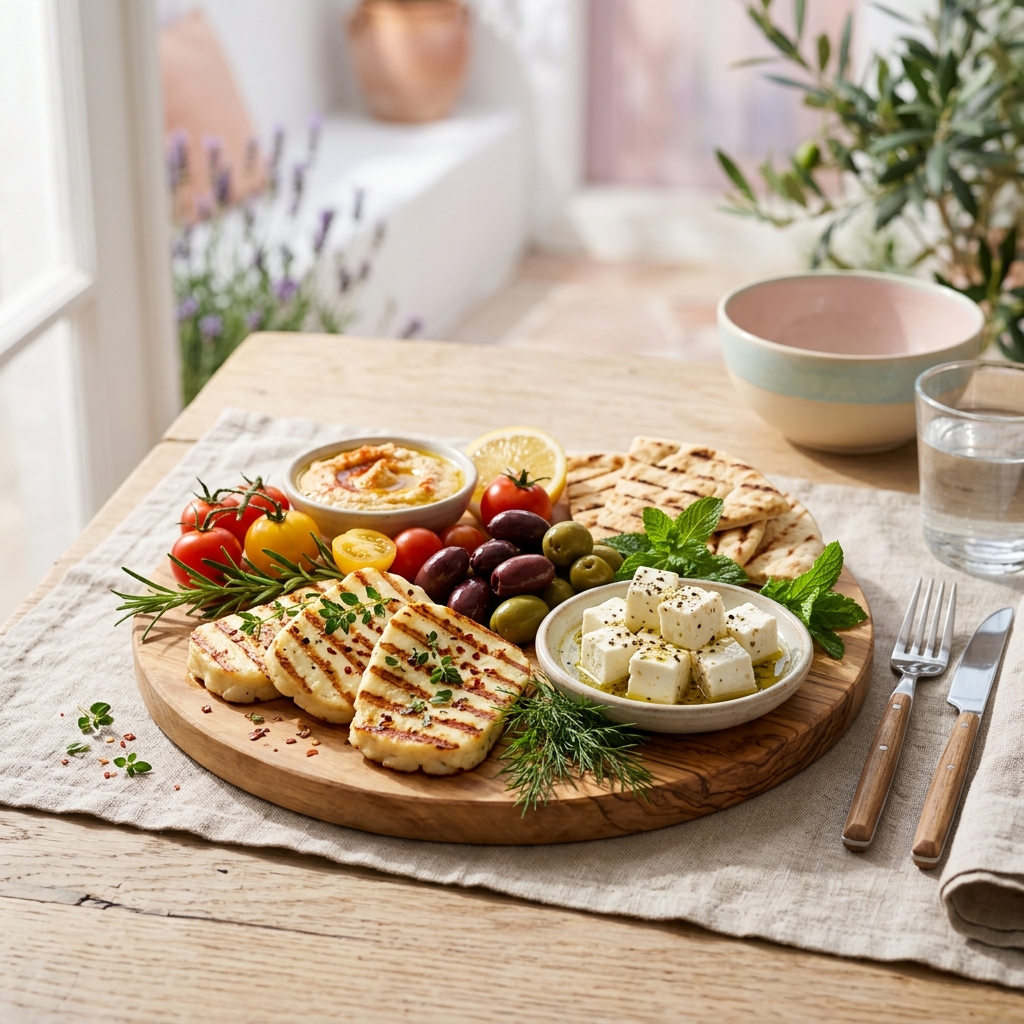
Here's a genuine irony. In a supermarket Greek salad, the pasteurised feta is usually the safest thing in the box.
The higher-risk components are the ones nobody worries about: pre-washed salad leaves, which have a real outbreak history, and any olives or dressing sitting in an open deli tray. Bagged and ready-prepared salads have been behind multiple listeria and E. coli incidents.
So if you're building a Greek salad at home, wash the leaves and tomatoes under running water, use your own dressing, and stop worrying about the cheese. The cheese was never the problem.
Feta in One Box
- Pasteurised feta: safe, cold, straight from the tub. No cooking needed.
- Check the tub for "pasteurised". Nearly all supermarket feta is.
- Ask at delis, tavernas and market stalls. PDO Greek feta may be raw milk.
- Cooked until steaming hot is always safe, whatever the milk.
- Watch the salt, not the cheese. Feta is one of the saltiest things in the fridge.
The Sodium Question, Which Is the Real Downside
Once the listeria question is settled, the thing actually worth managing is salt.
Feta is brined, so it's very high in sodium, often well over 1,000mg per 100g. That's not a safety issue in the listeria sense, but it does matter in late pregnancy when swelling in the ankles, feet and hands is already common, and it matters more if you're being monitored for raised blood pressure.
You don't need to avoid it. Two practical adjustments: rinse the block under cold water before crumbling, which removes a surprising amount of surface brine, and treat feta as the seasoning rather than the protein. A modest crumble does the flavour job that a large portion does, at a fraction of the salt.
If you've been told to watch your blood pressure, mention feta specifically at your next appointment. It's the kind of everyday item that quietly contributes a lot.
What Feta Actually Gives You
Worth knowing, because it's a genuinely useful pregnancy food.
A 50g portion delivers roughly 250mg of calcium, around 7g of protein, plus B12 and phosphorus. Calcium matters throughout pregnancy and peaks in demand in the third trimester as the baby's skeleton hardens, and 1,000mg a day is a target plenty of women miss. Our calcium in pregnancy guide covers where the rest comes from.
Sheep's milk feta is also often easier to digest than cow's milk cheeses for people who find dairy heavy, which is common in pregnancy.
If You've Already Eaten Feta You're Unsure About
The most useful thing to say first: the risk from a single portion is very low, and the overwhelming majority of women in this situation are completely fine.
Don't panic and don't go looking for antibiotics preemptively. Do keep an eye out over the following weeks, because listeriosis has an unusually long incubation period, occasionally stretching to several weeks.
Contact your midwife or GP if you develop a fever, flu-like aches, chills, headache or unusual tiredness, and tell them what you ate and when. Listeriosis is treatable with antibiotics, and treating it promptly is what protects the pregnancy. That timeline is the piece of information your provider will ask for first, and it's easy to lose track of, so log the meal in the PregnancyPlate app when it happens rather than trying to reconstruct it later.
The Verdict
Feta is one of the easier calls in pregnancy food safety, and it's been made unnecessarily frightening by advice written for a different kind of cheese.
Buy the pasteurised block in brine, which is virtually everything on a UK or US supermarket shelf. Eat it cold without a second thought. Ask questions at delis and tavernas, and order it baked when the answer is uncertain. Then spend the attention you've saved on the salad leaves, which genuinely deserve it.
For the neighbouring questions, our halloumi guide covers the other Mediterranean favourite, and our complete pregnancy cheese guide sorts every category into safe, check-first and avoid.
Clinical Sources & Research
Meet the Editorial Team
The researchers and experts behind PregnancyPlate.

Fiza Izra
Founder & Tech Researcher
A UK-based mother of 3 with a background in tech and data synthesis, Fiza brings real-world experience navigating hyperemesis gravidarum and postnatal depression. She engineers complex clinical guidelines (NHS, ACOG) into accessible tools, ensuring rigorous fact-checking with deep empathy.

Emma Davies
Senior Nutrition Editor
A mum and writer, Emma runs our food safety desk. She is the one who rings the restaurant to ask how long the lettuce sits out, checks every claim against CDC, FDA and NHS guidance, and rewrites the answer until it is usable at 9pm in a drive-thru queue.