Can Pregnant Women Eat Smoked Salmon? Hot vs Cold Smoked
Hot-smoked salmon is cooked and safe in pregnancy. Cold-smoked salmon and lox are not, but heating them until steaming fixes it. How to tell them apart.
In this article
Editorial note: This article is researched from official public health and pregnancy food safety guidance, then edited by the PregnancyPlate team for clarity. It is not medical advice. If you are worried about symptoms or a specific exposure, contact your midwife, GP or healthcare provider.
The Fast Answer: It depends entirely on which kind you've got. Hot-smoked salmon is cooked, so it's safe to eat as it comes. Cold-smoked salmon and lox are not cooked, only cured, which is why UK guidance treats them as a listeria risk. The good news is that cold-smoked salmon becomes safe the moment you heat it until steaming, so a bagel with hot scrambled egg and salmon stirred through is a completely different proposition from one straight from the packet.
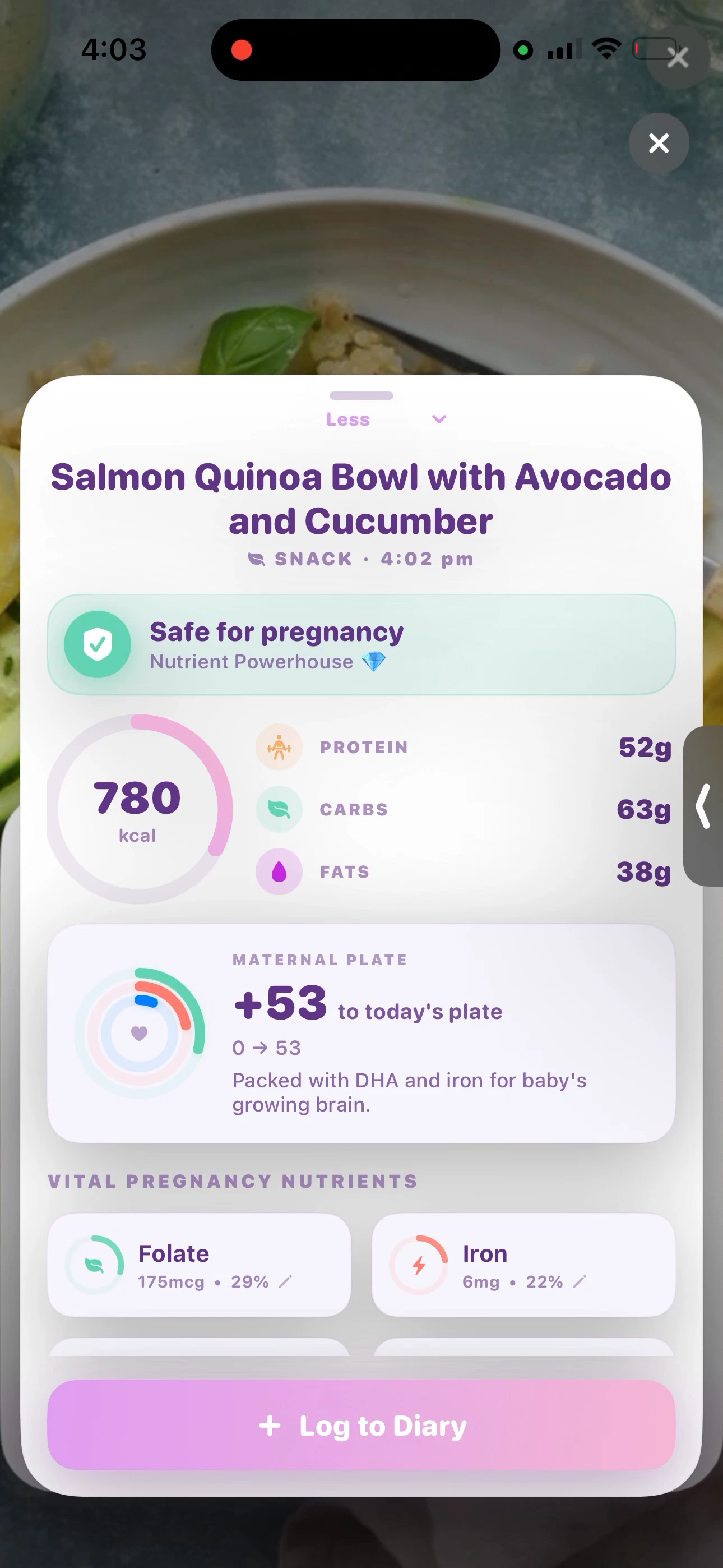
Check any fish for pregnancy safety in the PregnancyPlate AppYour next meal, a little less guesswork.
Scan your plate for pregnancy food-safety guidance and a nutrition breakdown. Keep your meals and nutrient progress in one place.
 Scan with your iPhone
to get the app
Smoked salmon is one of the more confusing items on the pregnancy food list, because two products that sit side by side in the same chiller cabinet have genuinely different answers. One is cooked. One isn't. The packet rarely makes it obvious.
Sort out which you're holding and the rest of this is straightforward.
Hot-Smoked vs Cold-Smoked: The Whole Question
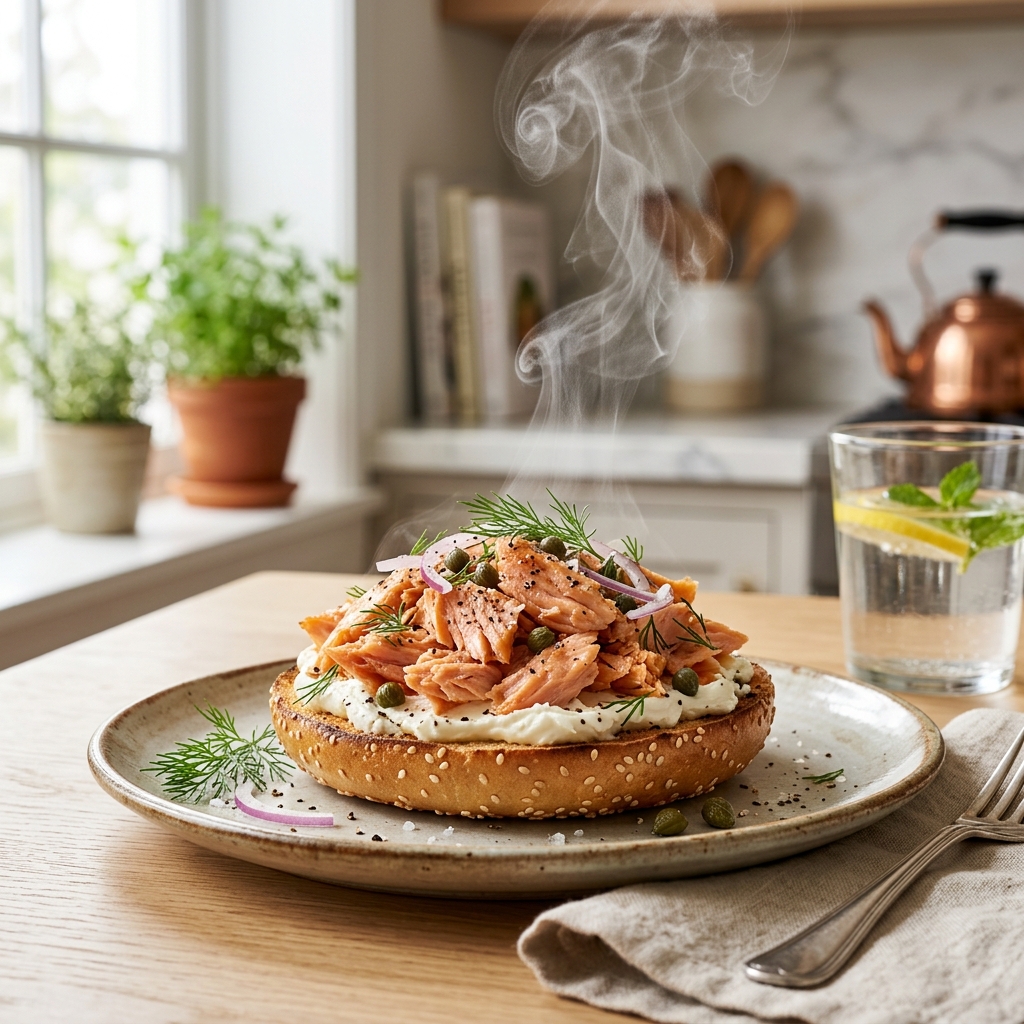
Hot-smoked salmon is smoked at around 70 to 80C, which cooks it. It comes out opaque, firm and flaky, and it breaks apart with a fork like a cooked fillet. Because it's been through a genuine cooking temperature, any listeria present is destroyed. Safe to eat straight from the packet.
Cold-smoked salmon, which includes lox and most of what's labelled simply "smoked salmon", is smoked below 30C. That's a flavouring and curing process, not a cooking one. It stays translucent, silky and sliceable. It has been cured with salt, which suppresses bacteria, but it has never been heated enough to kill listeria. This is the one UK guidance flags.
How to tell them apart without a label: if it's translucent and you could drape it over a bagel, it's cold-smoked. If it's opaque and flakes, it's hot-smoked. That test is more reliable than the packaging.
Why the UK and US Advice Differs
Worth explaining, because you'll find contradictory answers online and both are quoted confidently.
The NHS position is that cold-smoked fish carries a listeria risk and pregnant women may wish to avoid it or heat it first. The FDA is more direct: refrigerated smoked seafood is on its avoid list unless cooked into a dish.
Neither body is saying it's dangerous in the way raw shellfish is. They're saying it's a ready-to-eat chilled food where listeria can grow slowly even at fridge temperatures, and pregnancy raises the stakes if infection occurs. It's a precaution built on consequence rather than likelihood.
Which means the decision is genuinely yours to make with your midwife, and the heat-it-first option lets you sidestep it entirely.
The Heat Fix, Done Properly
Cooking cold-smoked salmon until steaming hot throughout, above 75C, kills listeria and makes it safe. Not warmed. Steaming.
Things that work:
- Stirred through hot scrambled eggs at the end, cooked for a minute more until it turns opaque
- Baked into a quiche, frittata or fish pie
- Tossed through pasta in a hot pan, cooked until the colour changes
- On a pizza that then goes in the oven, not added after
Things that don't work, and this is where people get caught out: laying cold salmon on hot toast, putting it on a bagel with warm cream cheese, or adding it to a hot dish as a garnish at the table. Residual heat doesn't reach 75C in the middle of the fish. The visual test is colour. Raw cold-smoked salmon is translucent; once it's genuinely cooked it turns opaque and matte.
Sushi, Poke and Restaurant Salmon
A few related situations that come up constantly.
Smoked salmon in sushi is cold-smoked and carries the same caution as the packet version. Cooked salmon rolls and fully cooked options are a different matter.
Gravlax and cured salmon are cured with salt, sugar and dill but never smoked or heated, so they sit in the same category as cold-smoked, or slightly riskier since they lack even the smoke.
Tinned and shelf-stable smoked salmon is safe. It has been through a heat sterilisation process as part of canning, which is why it lives in a cupboard rather than a fridge.
Hotel breakfast buffets deserve a specific mention. Cold-smoked salmon sitting out on a chilled buffet has usually been at borderline temperature for hours with tongs shared across dishes. Even if you're relaxed about cold-smoked salmon generally, this is the version worth skipping.
Mercury Is Not the Issue Here
Worth saying plainly, because people conflate the two concerns.
Salmon is a low-mercury fish. Both the FDA and NHS list it among the best choices for pregnancy, and the guidance actively encourages two portions of fish a week with one oily. Salmon is the textbook oily fish.
So the caution around cold-smoked salmon is about listeria only. It is not a reason to reduce salmon overall. Cooked salmon fillets, hot-smoked salmon and tinned salmon are all excellent and there's no need to limit them beyond the standard two-portions-of-oily-fish-a-week guidance.
Smoked Salmon in One Box
- Hot-smoked (opaque, flakes): safe as it comes. It's cooked.
- Cold-smoked and lox (translucent, silky): heat until steaming, or skip.
- Tinned smoked salmon: safe. Heat-treated in the can.
- Mercury is not the concern. Salmon is a low-mercury best choice.
- Skip the buffet version regardless of your position on the rest.
The Omega-3 Payoff
The reason it's worth finding a version you're comfortable with rather than writing salmon off.
Salmon is one of the densest food sources of DHA, the omega-3 fat that builds the foetal brain and retina. Demand climbs sharply in the third trimester, when brain growth accelerates. The target is around 200mg of DHA a day on top of a varied diet, and a single portion of salmon comfortably covers a couple of days of that.
It also brings vitamin D, B12, iodine and around 20g of protein per fillet. Iodine matters more than most people realise, since it drives the thyroid hormones involved in brain development, and it's a nutrient many prenatal vitamins skip. Our guide to prenatal vitamin gaps covers which nutrients your pill is probably missing.
Watch the Salt
Smoked salmon is cured in salt, so a modest 50g serving can carry a substantial share of a day's sodium. That's not a safety problem in the listeria sense, but it's worth knowing in the third trimester when swelling in the feet and hands is already common, and more so if your blood pressure is being monitored.
Nothing dramatic required. Just don't treat it as an everyday staple, and balance a smoked salmon lunch with a low-salt dinner.
Storage, If You Do Eat It
The listeria risk in chilled ready-to-eat food rises with time and temperature, so how you store it matters as much as the decision to eat it.
Keep it at or below 5C, in the coldest part of the fridge rather than the door. Eat within two days of opening, not the full date on the packet, which assumes an unopened pack. Never leave it out at room temperature while you make the rest of the meal. And check the use-by date rather than the best-before, since use-by is the safety date.
Reading the Packet
Manufacturers aren't consistent, so a few label conventions are worth knowing.
"Smoked salmon" with no qualifier is almost always cold-smoked. That's the default in the UK, and it's the one to treat with caution.
"Hot smoked", "flaked" or "roasted" means cooked. Some brands also say "ready to eat, no need to cook", though that phrase turns up on cold-smoked packs too, so it isn't reliable on its own.
"Cured", "gravlax" or "lox" means uncooked, whatever else the packet claims.
When the wording is ambiguous, fall back on the texture test. It has never let anyone down: translucent needs heat, opaque doesn't.
If You've Already Eaten It
Very common, usually before anyone mentions the rule, and almost always fine. The risk from one bagel is low.
What to watch for over the following weeks is fever, flu-like aches, chills or unusual tiredness, because listeriosis can take several weeks to appear. If any of that shows up, contact your midwife or GP and tell them what you ate and when. It's treatable with antibiotics, and prompt treatment is what protects the pregnancy.
Logging the meal in the PregnancyPlate app at the time gives you that timeline ready to hand, which is the first thing a provider will ask for and the thing hardest to reconstruct weeks later.
The Verdict
Hot-smoked salmon: eat it, it's cooked. Tinned: eat it. Cold-smoked and lox: heat it until steaming and it's fine, or accept a small but real precautionary risk if you'd rather have it cold.
The one genuinely useful habit is checking the texture before you eat rather than trusting the label. Translucent and silky means it needs heat. Opaque and flaky means it doesn't.
For the wider fish picture, our salmon in pregnancy guide covers cooked salmon and portion guidance, and our foods to avoid guide puts smoked fish in context with everything else.
Clinical Sources & Research
Meet the Editorial Team
The researchers and experts behind PregnancyPlate.

Fiza Izra
Founder & Tech Researcher
A UK-based mother of 3 with a background in tech and data synthesis, Fiza brings real-world experience navigating hyperemesis gravidarum and postnatal depression. She engineers complex clinical guidelines (NHS, ACOG) into accessible tools, ensuring rigorous fact-checking with deep empathy.

Emma Davies
Senior Nutrition Editor
A mum and writer, Emma runs our food safety desk. She is the one who rings the restaurant to ask how long the lettuce sits out, checks every claim against CDC, FDA and NHS guidance, and rewrites the answer until it is usable at 9pm in a drive-thru queue.
Make sense of every plate.
Scan your plate for pregnancy food-safety guidance and a nutrition breakdown. Keep your meals and nutrient progress in one place.
Scan with your iPhoneto get the app