Can You Eat Chocolate While Pregnant? Caffeine in Dark vs Milk
Wondering if you can give in to those intense chocolate cravings? We break down the hidden caffeine in dark chocolate, the sugar spikes in milk chocolate, and exactly how much you can safely eat.
In this article
Editorial note: This article is researched from official public health and pregnancy food safety guidance, then edited by the PregnancyPlate team for clarity. It is not medical advice. If you are worried about symptoms or a specific exposure, contact your OB-GYN, midwife or healthcare provider.
Quick Answer: Yes, you can absolutely eat chocolate while pregnant. In fact, moderate amounts of dark chocolate can even be beneficial for blood pressure. However, you must account for the hidden caffeine (especially in dark chocolate) to stay under your 200mg daily limit, and monitor the extreme sugar content in milk and white chocolates if you are at risk for Gestational Diabetes.
Track Chocolate Caffeine in the AppYour next meal, a little less guesswork.
Scan your plate for pregnancy food-safety guidance and a nutrition breakdown. Keep your meals and nutrient progress in one place.
 Scan with your iPhone
to get the app
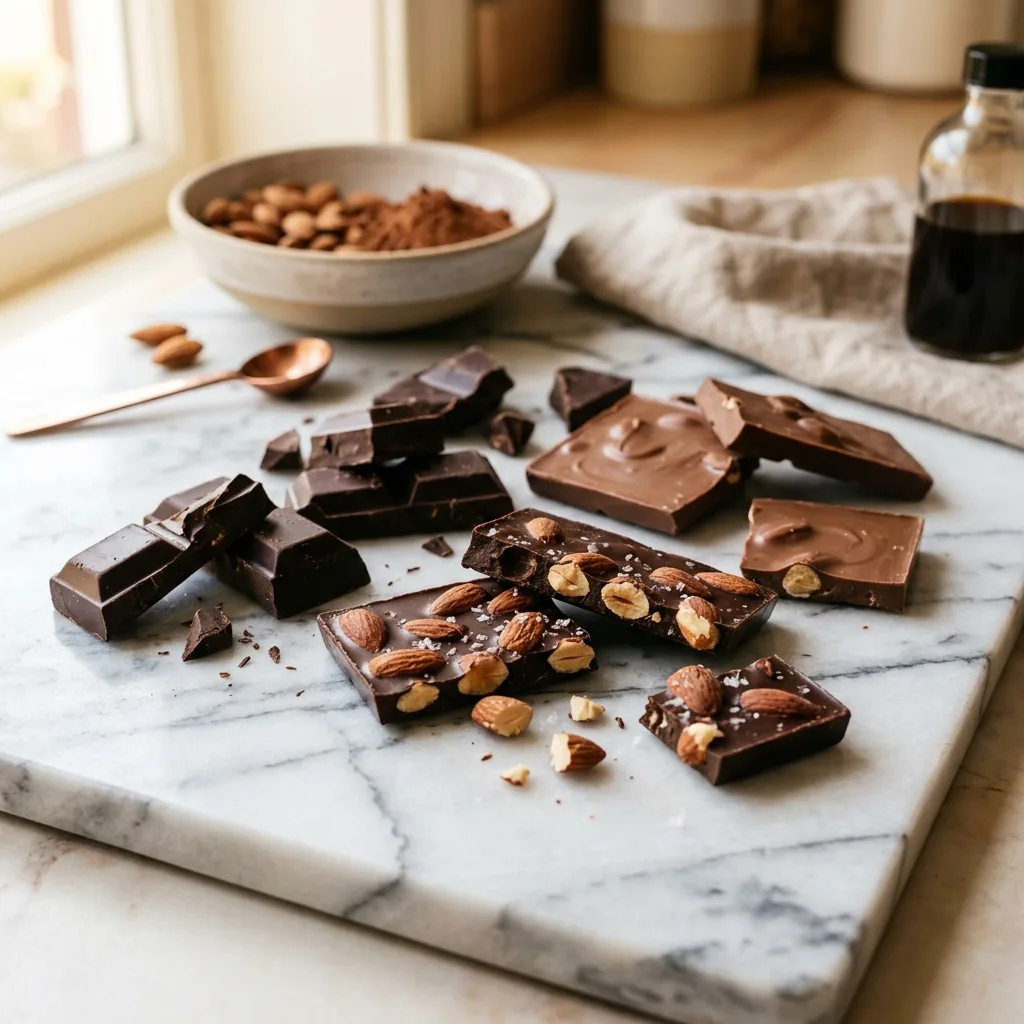
When the second trimester hits, pregnancy cravings usually take over your entire personality. And for millions of women, that craving is aggressively directed at one specific thing: chocolate. Whether you are dreaming about a massive slice of chocolate fudge cake, a simple Hershey bar, or dipping strawberries into a jar of Nutella at 2 AM, the urge is completely normal.
But when you have a baby growing inside you, every single food choice feels like a high-stakes test. Is there too much caffeine in that brownie? Will the sugar spike my glucose levels? Is dark chocolate actually better for the baby than milk chocolate?
The good news is that you do not have to completely give up chocolate for nine months. You just need to understand exactly what is inside the specific type of chocolate you are eating. Let us break down the caffeine math, the sugar realities, and how to safely satisfy those intense cocoa cravings.
The Hidden Danger: Caffeine in Chocolate
Most pregnant women are incredibly vigilant about their morning cup of coffee. They know the strict rule: keep caffeine under 200mg per day to avoid risks of low birth weight or miscarriage. But many women completely forget that chocolate naturally contains caffeine too.
The caffeine in chocolate comes directly from the cocoa solids. The darker the chocolate, the more cocoa solids it contains, which means the higher the caffeine content.
Dark Chocolate: The Caffeine Heavyweight
Dark chocolate is often praised as the "healthy" choice cuz it is rich in antioxidants and low in sugar. But from a pregnancy perspective, it is a massive hidden source of caffeine.
A standard 1.5-ounce bar of 70% to 85% dark chocolate can contain anywhere from 30mg to 50mg of caffeine. That is roughly the same amount of caffeine as a half cup of brewed coffee or a can of Diet Coke. If you are already drinking a large latte in the morning (which might be hovering around 150mg of caffeine), eating a dark chocolate bar after dinner could easily push you dangerously close to, or over, the 200mg daily limit.
Milk Chocolate: Low Caffeine, High Sugar
Milk chocolate contains significantly fewer cocoa solids. The manufacturer dilutes the cocoa with milk powder and massive amounts of sugar to give it that creamy, sweet flavor.
Because it has fewer cocoa solids, the caffeine content is much lower. A standard 1.5-ounce milk chocolate bar usually only contains about 9mg to 12mg of caffeine. You could eat a handful of milk chocolate squares without making a dent in your daily caffeine budget. The trade-off, of course, is the massive sugar spike.
White Chocolate: Zero Caffeine
White chocolate actually contains zero cocoa solids. It is made entirely from cocoa butter, milk powder, and sugar. Because there are no cocoa solids, there is absolutely zero caffeine in white chocolate. If you have already maxed out your coffee limit for the day but you desperately need a sweet treat, white chocolate is the safest bet from a caffeine perspective.
The Sugar Spike and Gestational Diabetes
While dark chocolate triggers caffeine warnings, milk and white chocolates trigger severe blood sugar warnings.
During pregnancy, your placenta produces hormones that naturally cause your cells to become slightly insulin resistant. This is a biological feature designed to keep more glucose in your bloodstream so it can cross the placenta and feed the baby. But if your pancreas cannot produce enough insulin to keep up, you develop Gestational Diabetes (GD).
A standard milk chocolate bar contains around 20g to 25g of refined sugar. Eating that on an empty stomach will cause a rapid spike in your blood glucose levels. If you have already been diagnosed with GD, a milk chocolate bar is usually completely off-limits unless it is specifically formulated with artificial sweeteners (like Lily's brand chocolate).
The Protein Hack: If you do not have GD but you want to prevent a massive blood sugar crash after eating chocolate, never eat it by itself. Pair it with a heavy protein or healthy fat. Dip your chocolate squares in natural peanut butter, or eat them alongside a handful of almonds or a cup of Greek yogurt. The fat and protein will physically slow down the absorption of the sugar in your digestive tract, leading to a much gentler glucose curve.
Can Chocolate Actually Be Good For The Baby?
Yes, specifically dark chocolate! If you can manage the caffeine budget, eating moderate amounts of high-quality dark chocolate (70% cocoa or higher) actually provides legitimate medical benefits during pregnancy.
- Preeclampsia Prevention: Several major studies have shown that the flavonoids and theobromine found in dark chocolate can help dilate blood vessels and improve blood flow. Regular, moderate consumption of dark chocolate has been linked to a reduced risk of developing preeclampsia (dangerously high blood pressure during pregnancy).
- Magnesium: Dark chocolate is shockingly high in magnesium. During the third trimester, magnesium is your best friend. It helps prevent those agonizing middle-of-the-night calf cramps and can help relax your uterine muscles.
- Iron: Your blood volume expands by 50% during pregnancy, requiring massive amounts of iron to prevent anemia. A small serving of premium dark chocolate actually contains a decent hit of iron to help supplement your prenatal vitamins.
Trimester by Trimester Strategy
- First Trimester: You're probably exhausted and nauseous. If a cold glass of chocolate milk is the only thing you can keep down, drink it. Don't stress too much about the sugar yet. Just survive the nausea.
- Second Trimester: This is when the intense cravings usually hit and you get your energy back. It is the perfect time to start incorporating a square or two of 70% dark chocolate into your daily routine to reap the blood pressure benefits. Just remember to subtract that 30mg of caffeine from your morning coffee allowance!
- Third Trimester: Space is tight, and heartburn is brutal. Chocolate is a known trigger for acid reflux because it relaxes the esophageal sphincter. If you are battling brutal heartburn, avoid eating chocolate right before bed. Eat it as a midday snack instead so you have time to digest it while standing upright.
FAQs
Is hot chocolate safe to drink while pregnant?
Yes! Commercial hot chocolate mixes (like Swiss Miss) are made with cocoa powder and contain very little caffeine (usually around 5mg per mug). It is a fantastic, comforting alternative to coffee in the winter. Just be aware of the sugar content.
Can I eat chocolate cake or brownies?
Yes. The rules for baked goods are the same as the rules for chocolate bars. They are safe to eat, but they are incredibly dense in sugar and simple carbohydrates. A massive slice of chocolate fudge cake will definitely spike your blood sugar, so eat it in moderation and try to pair it with a protein-heavy meal.
What about chocolate with nuts or caramel?
Chocolate bars filled with almonds, peanuts, or caramel (like Snickers or Twix) are totally safe. In fact, the nuts actually provide a nice boost of healthy fats and protein which helps stabilize the sugar spike slightly better than a pure milk chocolate bar would.
Can eating chocolate make the baby hyperactive?
Some mothers swear that their baby starts kicking wildly after they eat a chocolate bar. This isn't a myth. The combination of the sugar rushing across the placenta, combined with the mild stimulant effect of the caffeine and theobromine in the chocolate, can absolutely cause a temporary spike in fetal movement. It is completely safe and actually a fun way to get the baby to move during kick counts!
For more ways to handle a sweet tooth, our healthy pregnancy desserts guide has fifteen ideas, including dark chocolate strawberries and avocado chocolate mousse.
The Bottom Line
You do not need to suffer through your pregnancy without chocolate. It is completely safe and can actually be beneficial for your blood pressure.
The only strict rule you need to follow is the math. If you are eating dark chocolate, you must count those milligrams of caffeine towards your 200mg daily limit. If you are eating milk chocolate, you need to be mindful of the sugar crashes. Keep it in moderation, pair it with some protein when you can, and enjoy every single bite.
If you are looking for other safe ways to satisfy your sweet tooth, check out our guides on pregnancy safe baked goods or see if Boba Tea is a safe alternative.
Track Hidden Caffeine Automatically
Is that dark chocolate bar pushing you over the 200mg limit? The PregnancyPlate App automatically calculates the hidden caffeine in chocolate, tea, and soda so you never have to do the math urself. Download it to take the anxiety out of your cravings.
Sources
- American College of Obstetricians and Gynecologists (ACOG), Moderate Caffeine Consumption During Pregnancy (2024).
- National Institutes of Health (NIH), Effects of Chocolate Consumption on Pregnancy Outcomes (2022).
- You.S. Department of Agriculture (USDA), FoodData Central: Caffeine Content in Cocoa Products (2024).
Meet the Editorial Team
The researchers and experts behind PregnancyPlate.

Fiza Izra
Founder & Tech Researcher
A UK-based mother of 3 with a background in tech and data synthesis, Fiza brings real-world experience navigating hyperemesis gravidarum and postnatal depression. She engineers complex clinical guidelines (NHS, ACOG) into accessible tools, ensuring rigorous fact-checking with deep empathy.

Emma Davies
Senior Nutrition Editor
A mum and writer, Emma runs our food safety desk. She is the one who rings the restaurant to ask how long the lettuce sits out, checks every claim against CDC, FDA and NHS guidance, and rewrites the answer until it is usable at 9pm in a drive-thru queue.
Make sense of every plate.
Scan your plate for pregnancy food-safety guidance and a nutrition breakdown. Keep your meals and nutrient progress in one place.
Scan with your iPhoneto get the app