Choline Bitartrate and Alpha-GPC During Pregnancy: Are Brain Supplements Safe?
Choline matters for your baby's brain, but not every brain supplement belongs in pregnancy. We compare food sources, choline bitartrate, Alpha-GPC, dosing, safety gaps and when to ask your provider.
In this article

Editorial note: This article is researched from official public health and pregnancy food safety guidance, then edited by the PregnancyPlate team for clarity. It is not medical advice. If you are worried about symptoms or a specific exposure, contact your midwife, GP or healthcare provider.
The Choline Supplement Audit: Choline is a legitimate pregnancy nutrient, not a wellness trend. It supports fetal brain development, placenta function and maternal liver health. But choline bitartrate and Alpha-GPC are not the same decision. One is a common choline supplement form. The other is often marketed as a brain performance supplement, with far less pregnancy-specific reassurance.
Track Choline Intake on PregnancyPlateCholine has moved from obscure nutrient to pregnancy headline, and for good reason. Your baby needs choline for brain and spinal cord development, cell membranes, methylation pathways and the nervous system. It also supports your liver as pregnancy changes the way your body handles fat and hormones. The problem is that many prenatal vitamins still contain little or no choline, which sends pregnant women searching for separate supplements.
That search often leads to two names: choline bitartrate and Alpha-GPC. Both can provide choline, but they are used in different contexts, sold with different marketing claims, and should not be treated as identical pregnancy choices. Choline bitartrate is usually positioned as a straightforward choline source. Alpha-GPC is commonly sold as a cognitive performance or nootropic supplement. Pregnancy requires a stricter filter than general wellness shopping.
This guide is the PregnancyPlate audit. We will cover how much choline pregnant women need, why food sources matter, what choline bitartrate is, why Alpha-GPC needs more caution, when supplementation may make sense, which labels to avoid, and how to talk to your doctor or midwife without getting lost in supplement marketing.
Quick Answer: Should You Take These During Pregnancy?
If you are pregnant, do not start choline bitartrate, Alpha-GPC or any separate brain supplement without checking with your healthcare provider. Choline itself is important, and many women do not get enough from food. But the best solution depends on your diet, prenatal vitamin, medical history, dose, supplement quality and whether the product contains other active ingredients.
Choline bitartrate may be a reasonable choline form for some pregnant women when the dose is appropriate and your provider agrees. It is not automatically superior to food, and it can cause side effects at high intakes, but it is a direct way to close a choline gap.
Alpha-GPC deserves more caution. It can raise choline availability, but it is often sold for focus, memory or athletic performance, and there is not enough pregnancy-specific safety evidence to treat it as a routine prenatal supplement. If a product is marketed like a nootropic, pregnancy is the time to slow down and ask for professional guidance.
Why Choline Matters for Pregnancy
Choline is involved in building cell membranes, producing acetylcholine, supporting methylation and moving fats out of the liver. In pregnancy, those jobs become especially relevant because your baby is building a brain and nervous system at speed. Choline also interacts with folate pathways, which is why it is often discussed alongside folic acid, methylfolate and neural tube development.
Current nutrition guidance sets the adequate intake for pregnancy at 450 milligrams per day. Lactation needs are higher, commonly listed at 550 milligrams per day. These numbers are not random wellness targets. They are based on the understanding that fetal development and maternal metabolism increase demand.
The issue is intake. Many people do not eat enough choline-rich foods every day, and many prenatals focus on folate, iron, iodine and vitamin D while leaving choline out or including only a small amount. That does not mean every pregnant woman needs a separate supplement. It means choline deserves a proper audit instead of guesswork.
Food-First Choline: The Best Starting Point
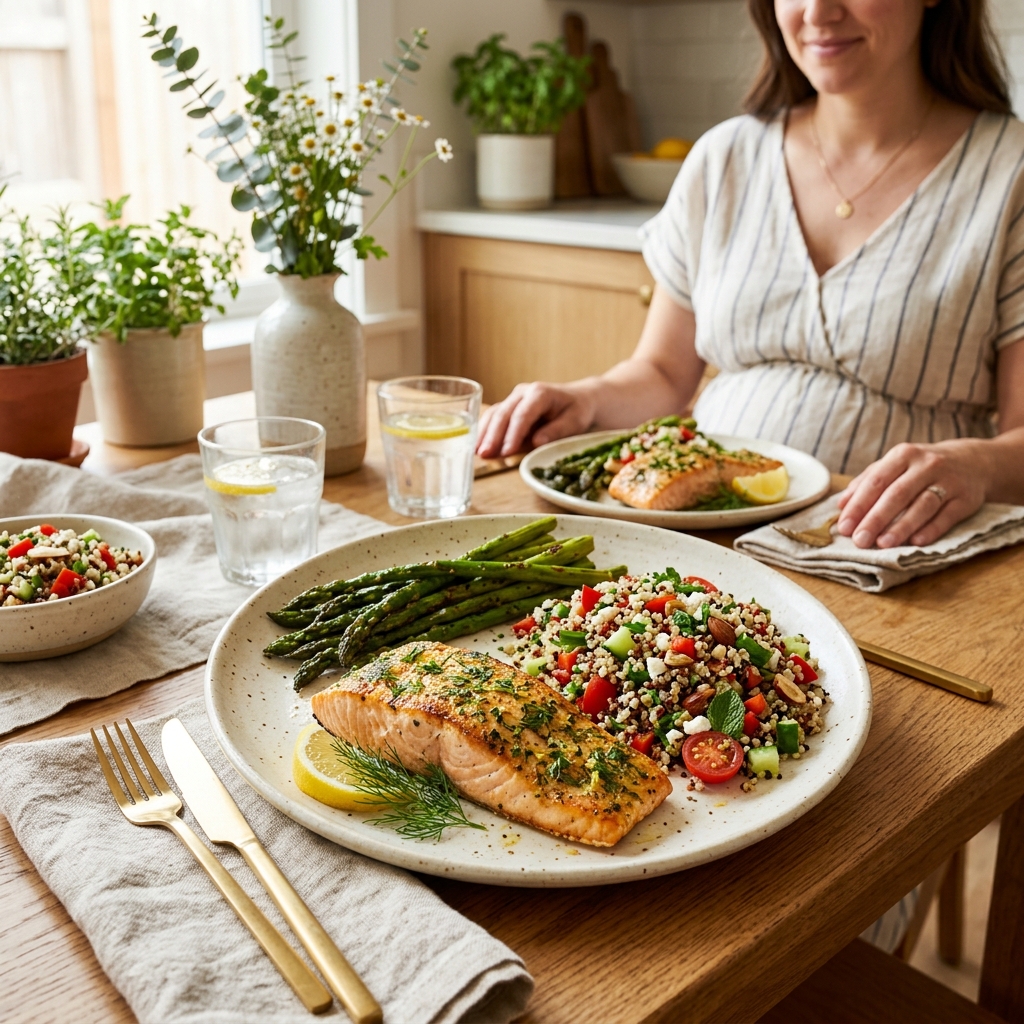
Food should be the first choline strategy because it gives you more than one nutrient at once. Eggs provide choline plus protein, iodine, selenium and fat-soluble nutrients. Salmon provides choline plus DHA. Chicken, beef, milk, yogurt, soybeans, lentils, peanuts, broccoli and brussels sprouts all contribute smaller but useful amounts.
Egg yolks are the most practical high-choline food for many pregnant women. One large egg contains a meaningful amount of choline, and two eggs can make a real dent in the daily target. The key pregnancy rule is safety: eggs should be cooked according to your local guidance, and anyone using raw or runny eggs should be sure they meet recognised safety standards for pregnancy.
If you avoid eggs because of allergy, aversion, vegan diet, nausea or personal preference, you may need a more deliberate plan. Soy foods, legumes, nuts, whole grains and cruciferous vegetables can help, but it can be harder to reach 450 milligrams daily without eggs or animal foods. This is where tracking your actual intake is useful.
What Is Choline Bitartrate?
Choline bitartrate is choline bound to tartaric acid. In supplement terms, it is one of the common forms used to increase total choline intake. It is usually cheaper than forms like phosphatidylcholine or Alpha-GPC, and it is often included in standalone choline capsules or powder products.
The important label detail is that the full capsule weight is not all choline. A 500 milligram choline bitartrate capsule does not equal 500 milligrams of pure choline. Products should ideally state the amount of actual choline provided per serving. If the label is vague, that is a reason to choose a better product or ask your provider before using it.
Choline bitartrate is not magic brain fuel. It is a tool for reaching a nutrient target. If your diet and prenatal already bring you close to your daily goal, you may not need much. If you rarely eat choline-rich foods, a provider may suggest adding a measured dose. The dose is the decision, not just the form.
What Is Alpha-GPC?
Alpha-GPC, short for alpha-glycerylphosphorylcholine, is another choline-containing compound. It is often marketed for cognitive performance, focus, exercise output or memory. That marketing context matters because many Alpha-GPC products are not designed for pregnant women. They may use higher doses, combine multiple ingredients, or make claims that go beyond basic prenatal nutrition.
Alpha-GPC can increase choline availability, but pregnancy safety is not just about whether a compound contains a nutrient. It is about dose, metabolism, evidence in pregnant populations, product purity and the risk of unintended effects. A supplement can be common in sports nutrition and still not be a smart routine choice in pregnancy.
The conservative PregnancyPlate stance is this: do not use Alpha-GPC during pregnancy unless your healthcare provider specifically recommends it for your situation. If your goal is to close a choline gap, there are simpler food-first and prenatal-focused approaches with a clearer rationale.
Dose: More Is Not Better
Choline has an upper limit. Very high intakes can cause unpleasant effects such as fishy body odour, sweating, nausea, vomiting, low blood pressure or liver-related concerns. The adult upper limit is commonly listed at 3,500 milligrams per day, which is far above the pregnancy adequate intake but still important because supplement stacking can add up quickly.
Stacking is the hidden issue. You might have choline in your prenatal, eat eggs at breakfast, drink a fortified shake, take a choline bitartrate capsule, and then add a brain supplement that also contains Alpha-GPC. Suddenly your total intake is not obvious. This is why the PregnancyPlate app approach is useful: you need to count food plus supplements, not just one bottle.
A sensible target is not "as much as possible." It is enough to meet your needs while staying comfortably below high-dose territory. Pregnancy nutrition works best when it is precise rather than heroic.
Label Audit: Red Flags to Avoid
Before taking any choline product during pregnancy, read the entire label. Do not stop at the front of the bottle. The front may say "brain support" or "mom focus," but the supplement facts panel tells you what you are actually swallowing.
Avoid products that combine choline with stimulant blends, high caffeine, aggressive nootropic stacks, proprietary blends, herbs not cleared for pregnancy, or ingredients you cannot identify. Also be cautious with products that do not show the actual amount of choline per serving, or that use serving sizes requiring multiple capsules.
Look for third-party testing where possible. Supplements are not regulated like prescription medicines, so product quality matters. Pregnancy is not the time for mystery powders, imported nootropic blends or social media supplement recommendations with no clinical oversight.
Who Might Need Extra Choline?
Some pregnant women are more likely to fall short. This includes women who avoid eggs, follow a vegan diet, have severe nausea or food aversions, eat very little animal protein, or use a prenatal with no choline. Women carrying multiples, breastfeeding soon after birth, or struggling with low appetite may also benefit from a closer choline review.
That does not automatically mean a supplement is required. It means the choline gap should be measured. A day with two eggs, salmon and yogurt is very different from a day of toast, pasta and fruit. Both can happen during pregnancy, especially with nausea. The pattern over the week matters more than one perfect day.
If your provider agrees you need extra choline, ask which form, dose and timing they prefer. Bring your prenatal label to the appointment. Better still, bring screenshots of the supplement facts panels for any choline bitartrate or Alpha-GPC products you are considering.
Food vs Supplement: Practical Examples
Here is how the decision often looks in real life. If you eat eggs most days, include fish or poultry, and your prenatal has some choline, you may only need light tracking. If you are egg-averse in the first trimester and living on toast and fruit, you may need a short-term strategy. If you are vegan and cannot tolerate soy, you may need a more structured plan with your provider.
A food-first day might include eggs at breakfast, Greek yogurt as a snack, chicken or salmon at lunch, and broccoli or soybeans at dinner. A plant-forward day might include soy milk, tofu scramble, lentils, peanuts, quinoa and cruciferous vegetables. It may still be harder, but it is not impossible with planning.
A supplement-first mindset can make you miss the broader diet. Choline is important, but pregnancy nutrition is not just choline. You still need iron, folate, iodine, calcium, vitamin D, omega-3 fats, protein, fibre and hydration. A single capsule cannot replace the rest of the plate.
The Provider Conversation
Do not ask your provider, "Is this brain supplement good?" Ask better, more specific questions:
- How much choline am I getting from my prenatal?
- Based on my diet, do I need extra choline?
- If yes, what dose should I use?
- Is choline bitartrate acceptable for me?
- Should I avoid Alpha-GPC because of limited pregnancy data?
- Are there any interactions with my medicines, thyroid treatment, blood pressure issues or nausea treatment?
This turns the conversation from vague supplement anxiety into a clinical decision. Your provider does not need to guess what is in the bottle if you bring the exact label.
The PregnancyPlate Choline Checklist
Before You Buy a Choline Supplement
- Audit food first: Count eggs, fish, poultry, dairy, soy, legumes and cruciferous vegetables across the week.
- Check your prenatal: Many contain little or no choline.
- Know the target: Pregnancy adequate intake is commonly listed at 450 milligrams per day.
- Read the label: Check actual choline per serving, not just capsule weight.
- Avoid nootropic stacks: Especially products with stimulants, proprietary blends or herbs.
- Be cautious with Alpha-GPC: Treat it as a provider-only decision in pregnancy.
- Do not megadose: More choline is not automatically better.
The Final Verdict
Choline is one of the most underrated pregnancy nutrients, and many women should pay more attention to it. But attention does not mean panic-buying the strongest brain supplement online. Start with food. Check your prenatal. Track your normal intake. Then discuss a specific supplement plan with your healthcare provider if there is a real gap.
Choline bitartrate can be a practical choline source when used at the right dose under guidance. Alpha-GPC should be treated more cautiously because it is commonly used as a nootropic and lacks the same routine prenatal context. In pregnancy, the safest supplement is not the trendiest one. It is the one that fills a clear need, has a clear dose, and fits your clinical picture.