Best Pregnancy Snacks for the First Trimester: 25 Easy Ideas for Nausea, Energy & Protein
Struggling with morning sickness? We audit 25 first-trimester snacks that settle your stomach, boost energy, and sneak in vital nutrients when you can't handle a full meal.
In this article
Editorial note: This article is researched from official public health and pregnancy food safety guidance, then edited by the PregnancyPlate team for clarity. It is not medical advice. If you are worried about symptoms or a specific exposure, contact your midwife, GP or healthcare provider.
The First Trimester Survival Rule: Forget the 3-meal-a-day schedule. During weeks 6–12, your goal is "grazing." Keeping a small amount of "bland & dry" food in your stomach at all times prevents the blood sugar drops that trigger severe nausea. These 25 snack ideas are clinically selected to settle your stomach while providing the protein and folate your baby needs right now.
Get Your First Trimester Meal Plan on PregnancyPlateYour next meal, a little less guesswork.
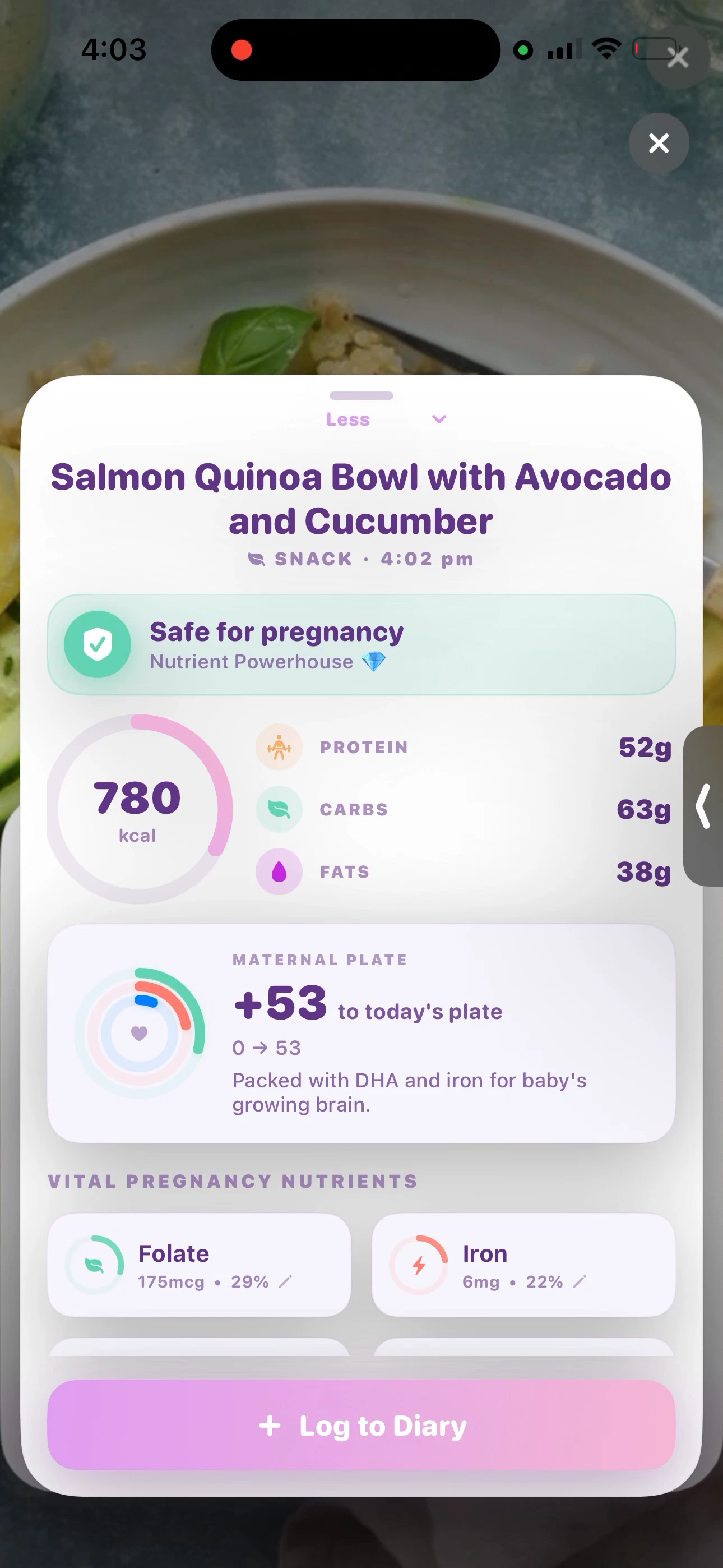
Scan your plate for pregnancy food-safety guidance and a nutrition breakdown. Keep your meals and nutrient progress in one place.
 Scan with your iPhone
to get the app
The first trimester is often a period of nutritional contradiction. On one hand, you know this is the most critical window of "organogenesis" - the rapid period where your baby’s heart, brain, and spinal cord are forming at lightning speed. On the other hand, the mere thought of a kale salad or grilled salmon (the "superfoods" everyone tells you to eat) is enough to send you running for the bathroom. This phase isn't about culinary perfection; it's about survival and strategic intake.
If you are currently surviving on beige food, white crackers, and sheer willpower, you are not alone. Between weeks 6 and 13, up to 80% of women experience some degree of pregnancy nausea (NVP). During this phase, the traditional nutrition advice of "balanced meals" is often impossible to follow. Standard meals feel too heavy, and strong food odors become biological triggers for morning sickness. Your body is undergoing a massive hormonal flood, specifically hCG (human Chorionic Gonadotropin) and progesterone, which slow down your digestion and heighten your sense of smell to an almost superhuman - and often nauseating - level.
This high-authority guide provides a master list of 25 elite snack ideas designed specifically for the first-trimester body. We have categorized these by their clinical function: settling the stomach, boosting energy without the crash, and sneaking in high-quality protein and folate when you're at your most sensitive. Let's reclaim your nutrition, one small bite at a time.
The "Bland & Dry" Essentials (Nausea Relief)
When you first wake up - or when the noon waves of nausea hit - the smell and texture of "wet" or "complex" foods are often the enemy. You need simple carbohydrates that are easy for the body to break down without requiring heavy digestive work. The "Dry Carb" theory works because it absorbs excess gastric acid that accumulates in an empty stomach.
- 1. Whole Grain Saltines: The classic. The salt helps replenish electrolytes lost through nausea, while the complex carbs provide a steady stream of glucose to prevent hypoglycemia.
- 2. Sourdough Toast (Plain): Sourdough is partially fermented, making it easier on the gut than standard white bread. It’s the ultimate "safe" base for a snack. It also contains less phytic acid, allowing for better mineral absorption.
- 3. Rice Cakes (Sea Salt): No odor, extreme crunch. Perfect for distracting the sensory processing center of the brain from nausea signals.
- 4. Pretzels: High in sodium which can help with the low blood pressure many women experience in early pregnancy, which often contributes to feelings of dizziness.
- 5. Dry Cheerios: Eaten one by one, these provide iron and B-vitamins without any offensive scent. They are the perfect "purse snack" for commuting.
Cold & High-Protein (The Nausea Hack)
Heat is the enemy of the first trimester because it intensifies the aroma of food. Cold snacks effectively "mute" the scent, allowing you to consume vital protein that your growing placenta desperately needs for structural integrity.
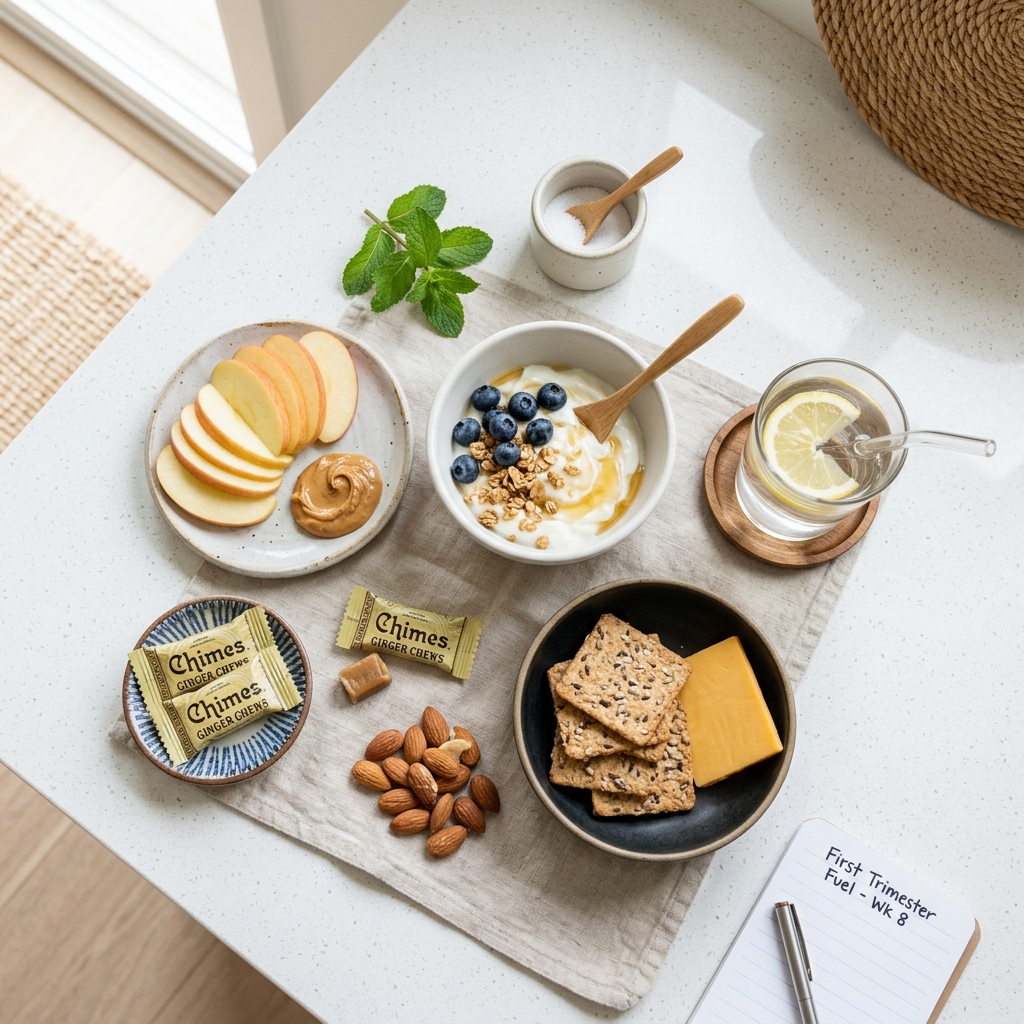
- 6. Chilled Greek Yogurt: Packed with probiotics and roughly 15-20g of protein. The cold temperature helps settle an inflamed stomach lining and provides calcium for baby's skeletal foundation.
- 7. Hard-Boiled Eggs (Chilled): Prepare these in advance and eat them straight from the fridge with a pinch of salt. They are one of the most bioavailable sources of Choline for baby's brain development. Choline helps form the neurotransmitters responsible for memory.
- 8. Cottage Cheese with Pineapple: High in calcium and protein. Pineapple contains bromelain, which in small amounts can aid protein digestion, making it easier on your sluggish first-trimester gut.
- 9. Edamame (Cold with Sea Salt): A massive source of plant-based protein and fiber (essential for managing first-trimester constipation triggered by progesterone).
- 10. Turkey Roll-Ups: Slices of pasteurized deli turkey (reheated then chilled) wrapped around a string cheese stick. A quick 10g protein hit that fits in a lunchbox.
The "Tart & Refreshing" Category (Pallative Relief)
Many women find that sour or tart flavors "cut through" the metallic taste in the mouth (dysgeusia) and instantly suppress nausea signals in the brain.
- 11. Green Apple Slices with Nut Butter: The tartness of the apple settles the stomach, while the protein and healthy fats in the nut butter prevent a blood sugar crash 60 minutes later.
- 12. Frozen Grapes: Like internal ice packs. They hydrate you while providing a slow release of natural fruit sugar. They are excellent for soothing a sore throat if you've been struggling with reflux.
- 13. Lemon Water with Ginger Chews: Inhaling the scent of lemon and sucking on a real ginger chew can intercept nausea signals in the brain's chemoreceptor trigger zone.
- 14. Citrus Segments (Oranges/Grapefruit): High in Vitamin C which helps your body absorb iron from your prenatal vitamin better. It also provides a much-needed "internal cleanse" feeling.
- 15. Watermelon Cubes: Over 90% water. If you can't keep plain water down, eat your hydration through watermelon. It's rich in lycopene and potassium.
Low-Odor Energy Boosters
Pregnancy fatigue in the first trimester is unlike anything else. Your body is literally building a brand-new organ (the placenta) from scratch. You need energy, but you can't handle a heavy meal.
- 16. Almonds (Raw/Sprouted): Low aroma, high in magnesium to help with muscle cramps and prenatal headaches. Magnesium also aids in sleep regulation.
- 17. Pumpkin Seeds: One of the highest plant-based sources of Iron and Zinc. Essential for the expansion of your maternal blood volume.
- 18. Chia Pudding (Vanilla/Coconut): Flavorless but nutrient-dense. The gelatinous fiber is extremely soothing for an acidic stomach and helps manage the "gastric emptying" delay.
- 19. Hummus & Cucumber Slices: A perfect balance of hydration and plant protein. Ensure hummus is fresh and refrigerated to avoid listeria risks.
- 20. Banana with a Sprinkle of Cinnamon: High in Vitamin B6, which is clinically proven to reduce the severity of morning sickness. Cinnamon helps stabilize blood sugar levels.
The "Sip-Able" Snacks
Sometimes, the act of chewing is too much for a sensitive stomach. In these moments, "liquid snacking" is your best friend to keep nutrients flowing.
- 21. Bone Broth (Sipped Warm): Rich in collagen and amino acids like glycine that soothe the gut. It provides meaningful electrolytes without the sugar of sports drinks.
- 22. Smoothies with Pea Protein: Avoid whey if your stomach is sensitive. Use frozen berries and spinach to hide the taste of the greens. The cold temperature is key.
- 23. Miso Soup: The fermented soy and warm broth are excellent for settling an upset stomach after a bout of nausea. It provides an "umami" hit that satisfies cravings.
- 24. Coconut Water: Naturally high in potassium and magnesium. Essential for replenishing electrolytes if you've been struggling with morning sickness.
- 25. Peppermint Tea (Iced or Warm): Menthol is a natural antispasmodic that relaxes the stomach muscles and stops spasms that lead to gagging.
Dysgeusia: Managing the "Metallic Taste"
Many women in the first trimester suffer from Dysgeusia - a persistent metallic or bitter taste in the mouth. This can make even "safe" snacks like water or bread taste offensive. The solution is "Acid Manipulation." Sour snacks (like the lemon water or green apples mentioned above) help neutralize this metallic sensation. Additionally, using plastic or bamboo utensils instead of metal ones can reduce the intensity of the metallic taste while snacking.
The Clinical "Why": Blood Sugar and Nausea
In the first trimester, your body is extremely sensitive to insulin spikes and drops. When your stomach is empty, your blood sugar drops. This drop triggers the release of stress hormones (cortisol and adrenaline), which directly aggravate the "nausea center" of your brain.
The Golden Rule: Never let your stomach be truly empty. By having one of the "Bland & Dry" snacks listed above every 90 minutes, you keep your blood sugar in a "Safe Zone," which can reduce the severity of morning sickness by up to 50% in most mothers. Keep a stash of crackers on your nightstand and eat 2-3 of them *before* you even sit up in bed in the morning to prevent "morning" sickness before it starts.
Workplace Survival: Discretionary Snacking
If you haven't announced your pregnancy at work, snacking can be tricky. Focus on odor-free options like almonds, dried cranberries, or plain crackers. Keeping a "Snack Drawer" at your desk is essential. Frequent, small bites appear like regular activity but are actually your clinical defense against the 3 PM energy crash. If you feel a wave of nausea in a meeting, a single peppermint or a small piece of crystallized ginger can be a lifesaver.
Sneaking in the Nutrients
If you can't handle a salad, don't feel guilty. In the first trimester, your baby's caloric needs are tiny, but their specific nutrient requirements are non-negotiable. Focus on these three "Must-Haves" within your snacks:
- Folate (B9): Found in oranges, edamame, and fortified cereals. This is the #1 nutrient for preventing neural tube defects.
- Iron: Found in pumpkin seeds and turkey. Required for the massive expansion of your blood supply (which increases by 50% during pregnancy).
- Choline: Found in eggs and yogurt. The primary building block for your baby’s memory centers and spinal cord development.
What to Avoid (The Sensitivity List)
While everyone is different, these are the most common "trigger" foods for first-trimester nausea. Try to keep these away from your snack rotation until you reach week 14:
- Strong Aromas: Fried foods, heavy garlic, onions, and strong coffee.
- Heavy Fats: Deep-fried snacks take too long to digest and sit in the stomach for hours, increasing the risk of acid reflux.
- Excessive Sugar: "Sugar crashes" are the #1 cause of afternoon nausea episodes. Opt for complex carbs instead.
Summary: The Grazing Timeline
Consistency is more important than volume during this phase. Use the PregnancyPlate "A-B-C" rotation: A (Bland snack at 8 AM), B (Cold protein at 10 AM), C (Tart snack at 12 PM). Continue this cycle until you go to sleep. This "gentle grazing" approach ensures you meet your baby’s developmental markers while keeping your digestive system calm, functional, and supported through the toughest weeks of pregnancy.
Stop Fighting Your Nausea Alone
The first trimester is a marathon, not a sprint. You don't have to guess what's safe or effective. Download the PregnancyPlate App today. Our built-in "Nausea Relief Planner" and "Snack Auditor" help you find the exact foods for your specific aversions, ensuring you and your baby stay nourished through the toughest weeks of pregnancy. Join 50,000+ mothers grazing their way to a healthy pregnancy.
Meet the Editorial Team
The researchers and experts behind PregnancyPlate.

Fiza Izra
Founder & Tech Researcher
A UK-based mother of 3 with a background in tech and data synthesis, Fiza brings real-world experience navigating hyperemesis gravidarum and postnatal depression. She engineers complex clinical guidelines (NHS, ACOG) into accessible tools, ensuring rigorous fact-checking with deep empathy.

Emma Davies
Senior Nutrition Editor
A mum and writer, Emma runs our food safety desk. She is the one who rings the restaurant to ask how long the lettuce sits out, checks every claim against CDC, FDA and NHS guidance, and rewrites the answer until it is usable at 9pm in a drive-thru queue.
Make sense of every plate.
Scan your plate for pregnancy food-safety guidance and a nutrition breakdown. Keep your meals and nutrient progress in one place.
Scan with your iPhoneto get the app