First Trimester Meal Prep: 15 Easy Make-Ahead Breakfasts, Lunches & Dinners
Cooking while nauseous is a nightmare. Our 2026 guide reveals 15 'Cold-State' meal prep ideas that are odor-free, high-protein, and packed with the Folate and Choline your baby needs.
In this article
Editorial note: This article is researched from official public health and pregnancy food safety guidance, then edited by the PregnancyPlate team for clarity. It is not medical advice. If you are worried about symptoms or a specific exposure, contact your midwife, GP or healthcare provider.
First Trimester Meal Prep Law: When morning sickness is at its peak, the act of cooking - specifically the heat and smells - is the #1 trigger for nausea. Your goal during weeks 6–13 is to cook once during your "high-energy" window (usually 10 AM on a Sunday) so you have a fridge full of cold, low-odor, grab-and-go meals for the rest of the week.
Get Your Personalized First Trimester Prep GuideYour next meal, a little less guesswork.
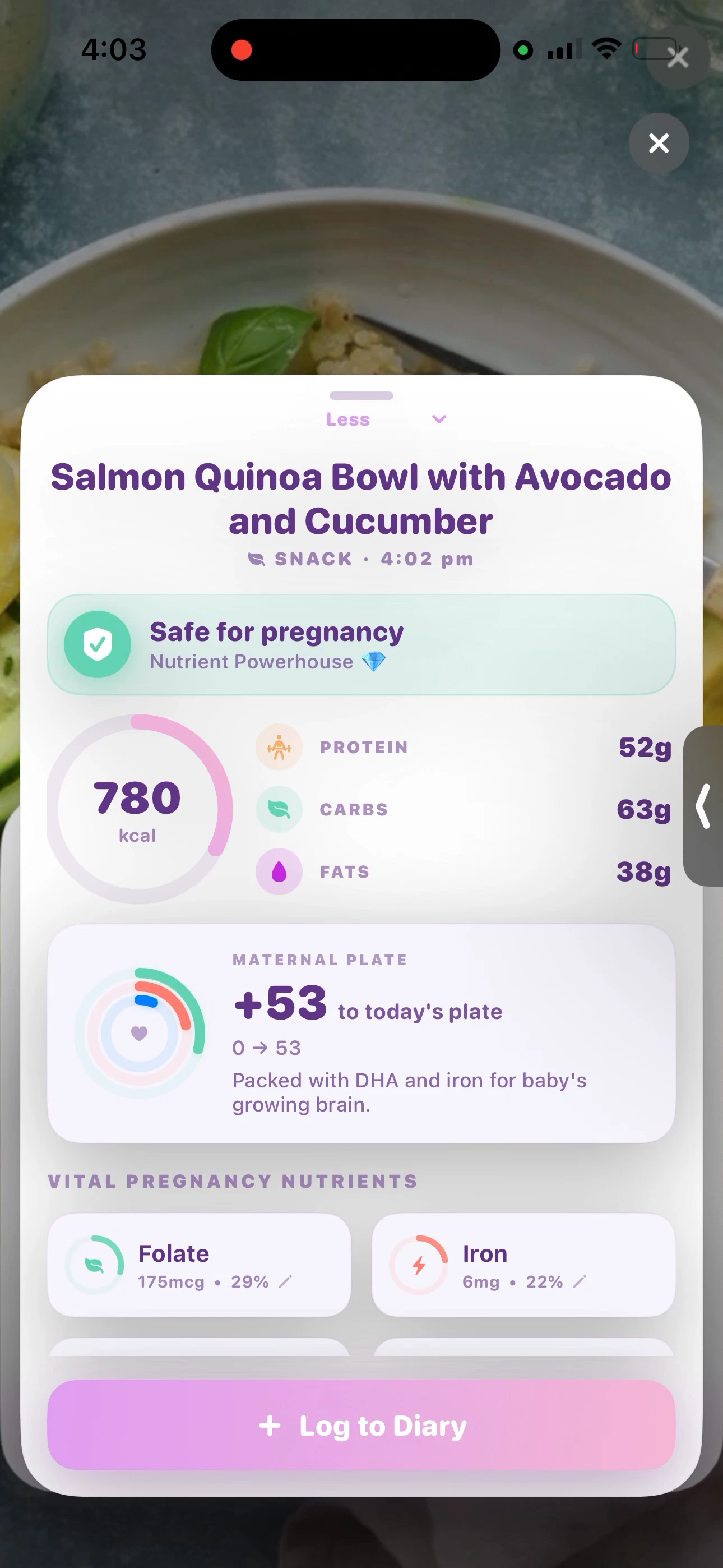
Scan your plate for pregnancy food-safety guidance and a nutrition breakdown. Keep your meals and nutrient progress in one place.
 Scan with your iPhone
to get the app
Navigating the kitchen in the first trimester feels like walking through a minefield. One minute, you're fine; the next, the subtle scent of a neighbor's frying onions or the steam from a boiling pot of pasta sends you spiraling. This "sensory hyper-reactivity" is a biological protective mechanism driven by rising levels of estrogen and hCG, but it makes nourishing yourself and your baby nearly impossible if you try to cook every single night. In 2026, we understand that "pregnancy exhaustion" is real - your body is literally growing a whole new organ (the placenta), and that requires every spare calorie you have.
The solution isn't to stop eating; it's to stop cooking in real-time. In 2026, we advocate for "Cold-State Batch Prepping." By preparing a week's worth of meals during a single functional window (when your nausea is at its daily low), you bypass the daily exposure to cooking triggers. These 15 meal-prep ideas are designed to be eaten cold or at room temperature, are virtually odor-free, and are packed with the Folate, Iron, and Choline required for your baby's rapid organ development during this high-stakes window of organogenesis.
In this high-authority audit, we breakdown 15 recipes across breakfasts, lunches, and dinners that survive the "Nausea Test" and provide the clinical nutrition your body needs. We'll also cover a Sunday Blueprint for 70-minute prepping, specific ingredient swaps for meat aversions, and the "4-Day Safety Rule" to prevent Listeria risks.
Section 1: The "Cold-Start" Breakfasts (Odor-Free Mornings)
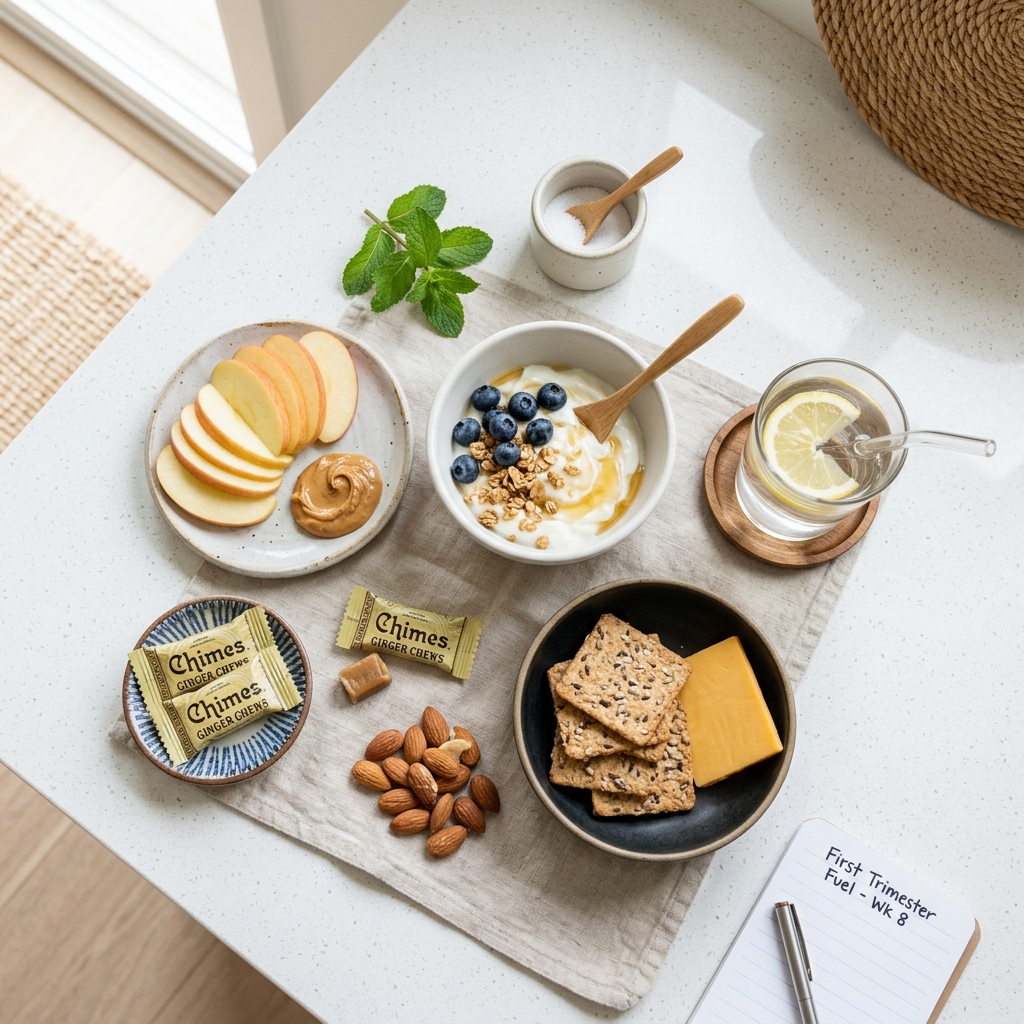
Breakfast is often the hardest meal of the day. Your stomach is empty, your blood sugar is low, and your nausea peaks. You need something ready the second you sit up. Pro-tip: Keep a few nausea-friendly snacks on your nightstand to eat *before* you even head to the kitchen.
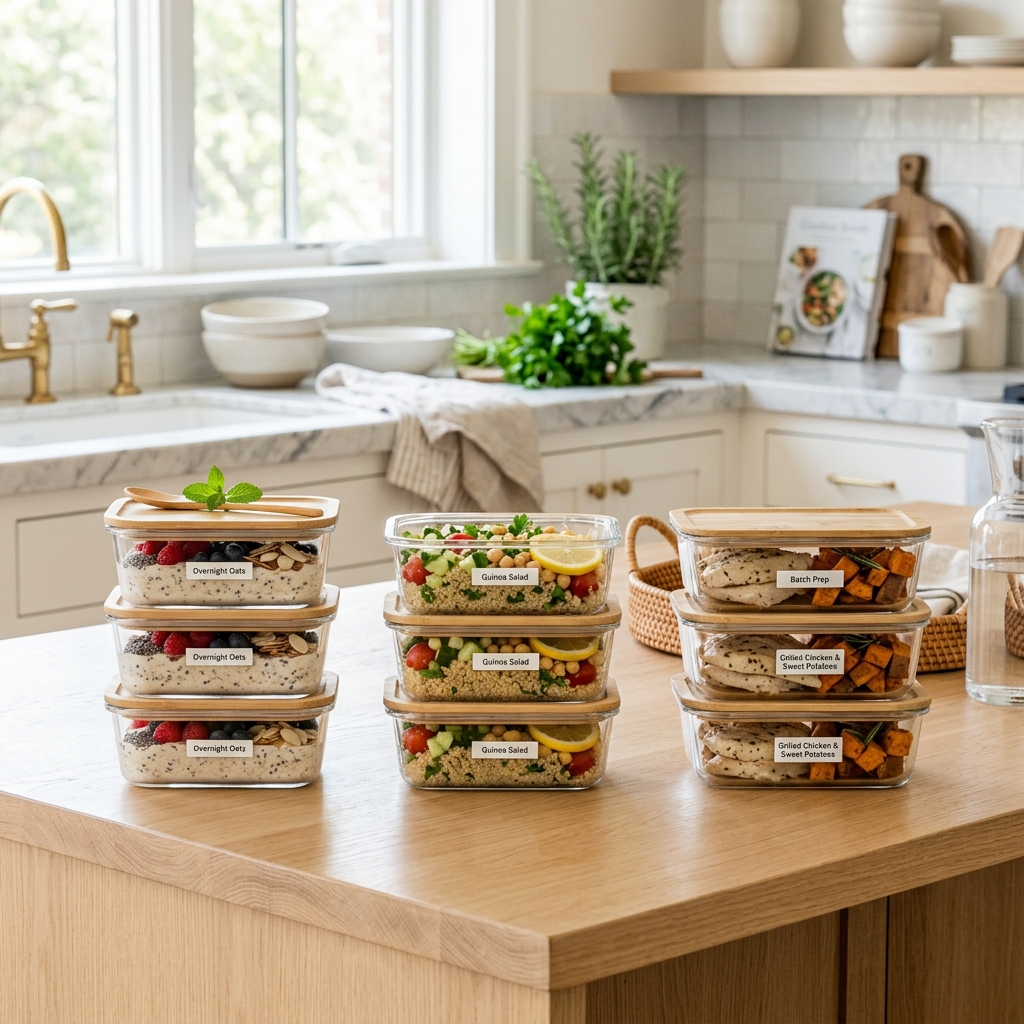
- 1. Blueberry & Chia Overnight Oats: Prep these in individual glass jars. The oats provide slow-burn complex carbohydrates to stabilize blood sugar, while the chia seeds offer a massive fiber boost to combat progesterone-induced constipation. Eat them прямо from the fridge to mute any aroma.
- 2. Frozen Greek Yogurt Bark: Spread Greek yogurt on a tray with honey, granola, and berries; freeze, and break into pieces. The intense cold effectively "numbs" the nausea center of your brain while delivering 15g of high-quality protein per serving.
- 3. Egg & Spinach Breakfast Muffins (Cold): Bake these during your prep window. Once chilled, they lose the "sulfur" smell of freshly cooked eggs. They are a Choline powerhouse - the primary building block for your baby’s neural pathways and memory centers.
- 4. Smashed Avocado & Lemon Hard-Boiled Egg Bins: A perfect balance of healthy fats (DHA) and protein. The lemon zest acts as a natural nausea suppressant and helps "cut" through the richness of the egg.
- 5. Quinoa & Apple Breakfast Bowl: Cooked quinoa chilled with cinnamon, shredded apples, and almonds. Higher in protein than traditional oats and very low-odor. Quinoa is a complete protein, making it ideal for the first trimester.
Section 2: The "Bland & Power" Lunches (Workplace Survival)
Lunch needs to be discreet and scent-free. Avoid the office microwave, as the concentrated smell of heated fish or garlic from other people's lunches can be a major trigger.
- 6. Cold Pesto Pasta with Sliced Chicken: Use pasteurized pesto and pre-cooked, chilled chicken breast. Cold pasta contains "resistant starch," which acts as a prebiotic and is actually easier on blood sugar than hot pasta.
- 7. Chickpea & Cucumber Salad with Feta: A refreshing, high-protein plant-based option. Ensure you use pasteurized feta to maintain safety. The crunch of the cucumber provides a sensory "distraction" from feelings of queasiness.
- 8. Turkey & Hummus Tortilla Wraps: Using a thin tortilla instead of thick bread helps if you are struggling with "gastric heaviness." Add spinach for a hidden folate boost that doesn't affect the taste.
- 9. Tuna-Free "Crab" Salad (Surimi): Uses pasteurized imitation crab, which is extremely low in mercury and safe from a listeria perspective. We audited this in our Imitation Crab Guide.
- 10. Cold Peanut Noodles: High in healthy fats and protein. The saltiness helps replenish electrolytes (sodium/potassium) which can be depleted if you've been struggling with morning sickness.
Section 3: The "Gentle" Dinners (Ending the Day Strong)
By 6 PM, your physical fatigue is likely overwhelming. You shouldn't be standing over a hot stove at this hour. These meals require zero final-step cooking.
- 11. Roasted Sweet Potato & Black Bean Bowls: Prep the potatoes on Sunday. Sweet potatoes are high in Beta-Carotene (Vitamin A), which is vital for baby's eye development and cell growth.
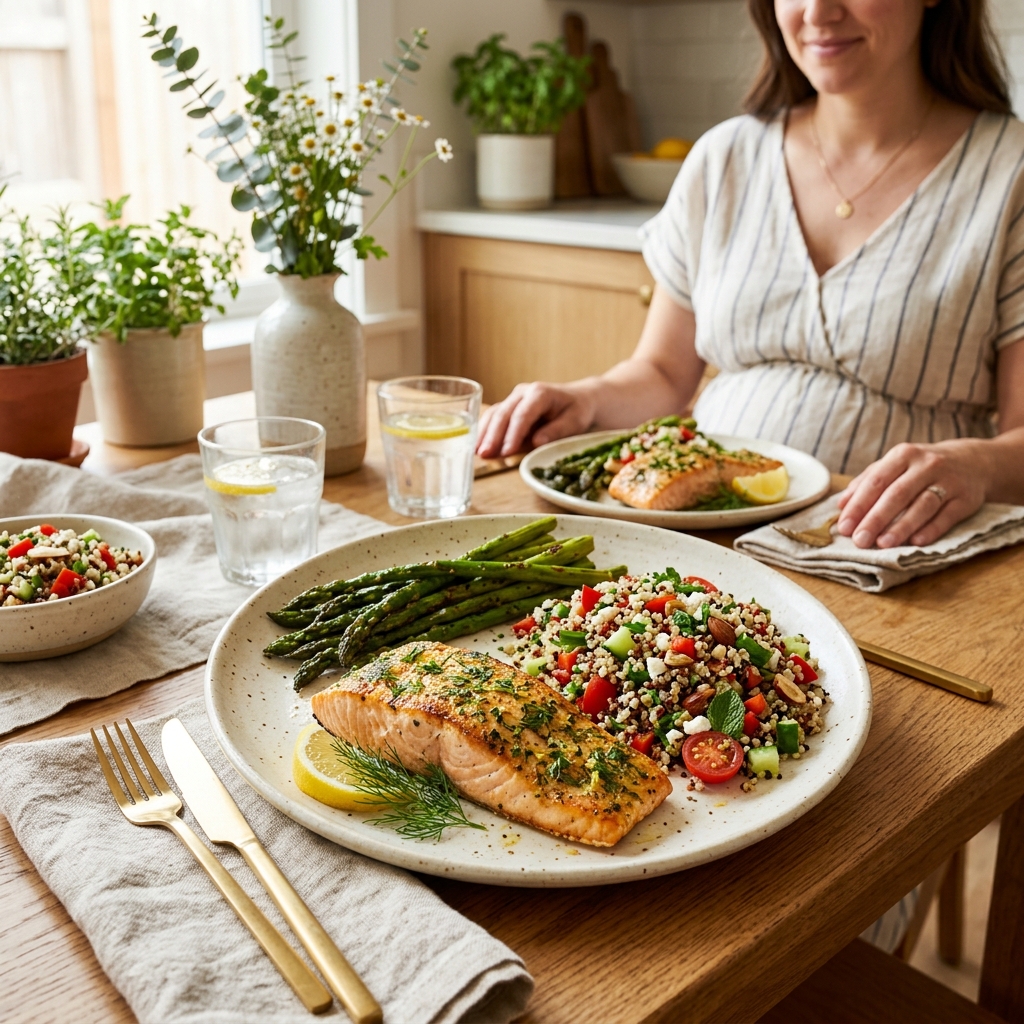
- 12. Lemon-Herb Grilled Chicken & Quinoa: Quinoa is a complete protein, meaning it has all nine essential amino acids. The lemon helps "cut" through the density of the chicken to make it more palatable during meat-aversion phases.
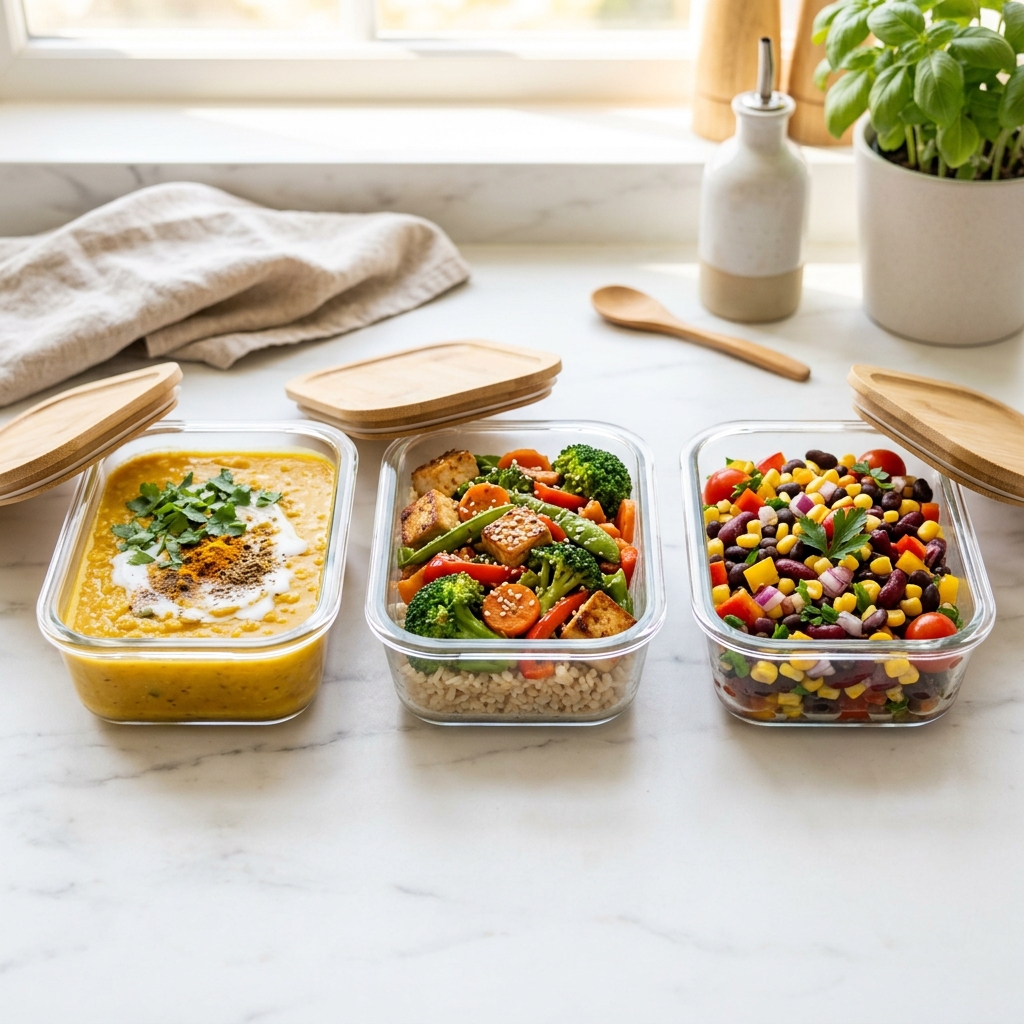
- 13. Cold Sesame Tofu with Brown Rice: Tofu is an excellent alternative if you have developed a strong aversion to animal meat, which is extremely common during weeks 8-11.
- 14. Lentil & Veggie "Energy" Soup (Pre-Batched): Pre-batch this soup and eat it at room temperature if steam is a trigger. Lentils are one of the highest sources of Folate (B9).
- 15. Turkey Meatball & Zucchini Noodle Bins: Low-carb and very light. Season with ginger instead of heavy garlic to aid your digestion.
The Sunday Blueprint: 70-Minute Prep Schedule
How do you prep 15 meals without spending 4 hours in the kitchen? Use this 2026 "Speed-Prep" blueprint:
- Minutes 0-10: Start the quinoa/rice in a rice cooker and pre-heat the oven to 400°F.
- Minutes 10-30: Roast the chicken, sweet potatoes, and egg muffins on three separate sheet pans simultaneously.
- Minutes 30-50: While the oven is work, assemble your 5 jars of overnight oats and chop the raw veggies (cucumbers/carrots).
- Minutes 50-70: Remove hot items, let them cool partially, and portion immediately into airtight glass containers. Clean the kitchen *before* the food smells have a chance to linger.
Aversion Swaps: When Chicken is the Enemy
Meat aversions - specifically to chicken and ground beef - are reported by 60% of pregnant women in the first trimester. If your prepped chicken suddenly becomes repulsive on Tuesday, don't force it. Use these "Emergency Swaps":
- Plant-Based Swap: Replace chicken with chickpeas or edamame. You'll get the same protein hit with zero "meat" smell.
- Cold Dairy Swap: Replace meat-heavy lunch bins with a high-protein Greek yogurt bowl.
- The "Beige" Out: If all else fails, a plain sourdough bagel with cream cheese is a valid "survival meal" that provides some calcium and B-vitamins.
Storage and Safety: The "4-Day Rule"
In the world of 2026 prenatal safety, we have a strict "4-Day Rule" for home-prepped meals. While standard leftovers might technically be safe for 7 days for the general public, a pregnant woman's immune system is suppressed.
- Airtight Glass: Use glass containers (like Pyrex or Weck) to avoid BPA/BPS exposure and to ensure a tighter seal against environmental bacteria.
- The Chilling Curve: Never leave food sitting out to "cool to room temp." Portion it and get it into the fridge within 60 minutes of cooking to prevent the "Danger Zone" temperatures where bacteria thrive.
- The Reheating Clause: If you *do* decide to eat these meals warm, they MUST be reheated until steaming (165°F). For more on this, check our Leftover Safety Audit.
Summary Checklist for 1st Trimester Success
- Identify Your Functional Window: Prep when you feel best (usually mid-morning).
- Keep it Cold: Cold food has the lowest aroma. Use this to your advantage.
- Focus on Choline & Folate: Your baby needs these every day for neural development.
- Hydrate between meals: Drinking liquid with your meal can lead to "fullness nausea." Sip water 30 mins after eating.
- Be Flexible: If a prep meal doesn't "sit right," switch to a bland snack and try again tomorrow.
By shifting your cooking to a single, high-energy window, you turn your kitchen into a safe zone rather than a nausea trigger. Use these 15 ideas to satisfy your 2026 prenatal markers while protecting your peace - and your stomach - through the first trimester.
Is Your Meal Plan Baby-Approved?
Eating for two doesn't have to mean cooking for two hours every day. Download the PregnancyPlate App today. Our "Cold-Prep Navigator" and "Folate Tracker" help you design a week's worth of meals in minutes, ensuring you get every micro-nutrient your baby needs while keeping your kitchen scent-free and safe.
Meet the Editorial Team
The researchers and experts behind PregnancyPlate.

Fiza Izra
Founder & Tech Researcher
A UK-based mother of 3 with a background in tech and data synthesis, Fiza brings real-world experience navigating hyperemesis gravidarum and postnatal depression. She engineers complex clinical guidelines (NHS, ACOG) into accessible tools, ensuring rigorous fact-checking with deep empathy.

Emma Davies
Senior Nutrition Editor
A mum and writer, Emma runs our food safety desk. She is the one who rings the restaurant to ask how long the lettuce sits out, checks every claim against CDC, FDA and NHS guidance, and rewrites the answer until it is usable at 9pm in a drive-thru queue.
Make sense of every plate.
Scan your plate for pregnancy food-safety guidance and a nutrition breakdown. Keep your meals and nutrient progress in one place.
Scan with your iPhoneto get the app
Related posts