Hydration During Pregnancy: Why It Matters and How to Drink Enough
Fluid needs increase dramatically when you are eating for two. We explore the science of amniotic fluid and provide 10 hacks for staying hydrated in 2026.
In this article
Editorial note: This article is researched from official public health and pregnancy food safety guidance, then edited by the PregnancyPlate team for clarity. It is not medical advice. If you are worried about symptoms or a specific exposure, contact your midwife, GP or healthcare provider.
"Drink more water." It's advice you've probably heard a thousand times - from your midwife, your mum, every pregnancy book you've ever opened, and probably a well-meaning colleague or two. And yes, they're all right. Hydration during pregnancy is genuinely important.
But here's what those well-meaning advisors often skip: why does hydration matter so much during pregnancy? How much do you actually need? And perhaps most importantly, how do you drink enough when plain water makes you want to gag, or when you're already running to the bathroom every twenty minutes?
This guide covers the real story of hydration in pregnancy - the science behind why it matters, practical targets you can actually hit, and creative solutions for days when drinking feels like another item on an already overwhelming pregnancy to-do list.
Why Hydration Matters More During Pregnancy
Water isn't just nice to have during pregnancy - it's essential for nearly every process happening in your body right now:
Supporting Blood Volume Expansion
Your blood volume increases by an astonishing 40-50% during pregnancy. That's a lot of extra blood your body needs to produce, and water is a major component of blood plasma. Without adequate fluids, your body can't create the additional blood needed to supply oxygen and nutrients to your growing baby.
Creating and Maintaining Amniotic Fluid
Your baby is floating in amniotic fluid right now, and that fluid needs to be replenished continuously. Amniotic fluid protects your baby, allows them to move and develop, and helps regulate temperature. Dehydration can lead to low amniotic fluid levels, which can cause complications.
Delivering Nutrients to Your Baby
Water helps transport vitamins, minerals, and other nutrients through your bloodstream to the placenta and on to your baby. It's the delivery system for everything your little one needs to grow.
Preventing Common Pregnancy Discomforts
- Constipation: Fibre only works if you have enough water
- UTIs: Common during pregnancy; adequate hydration helps flush bacteria
- Headaches: Many pregnancy headaches are actually dehydration headaches
- Swelling: Counterintuitively, drinking more helps reduce water retention
- Fatigue: Even mild dehydration can make tiredness worse
How Much Water Do You Actually Need?
During pregnancy, the general recommendation is:
💧 Daily Target
At least 2.3 litres (about 10 cups) of fluids per day
That's roughly 8-10 glasses, where a glass is about 240ml (8oz).
But your individual needs depend on:
- Activity level: More movement means more fluid loss
- Weather: Hot weather increases your needs
- Trimester: Third-trimester women often need more
- If you're vomiting: Morning sickness increases fluid loss
- Exercise: Always drink extra during and after physical activity
Listen to Your Body
You're likely well-hydrated if:
- Your urine is pale yellow (straw-coloured) to nearly clear
- You're urinating every 2-4 hours
- You don't feel thirsty
- Your lips and mouth don't feel dry
⚠️ Signs of Dehydration
- Dark yellow or amber urine
- Going long stretches without urinating
- Feeling thirsty (indicates you're already slightly dehydrated)
- Headaches or extra fatigue
- Constipation
- Dizziness or lightheadedness
What Counts Toward Your Fluid Intake?
Good news: you don't have to drink only plain water.
Fluids That Count
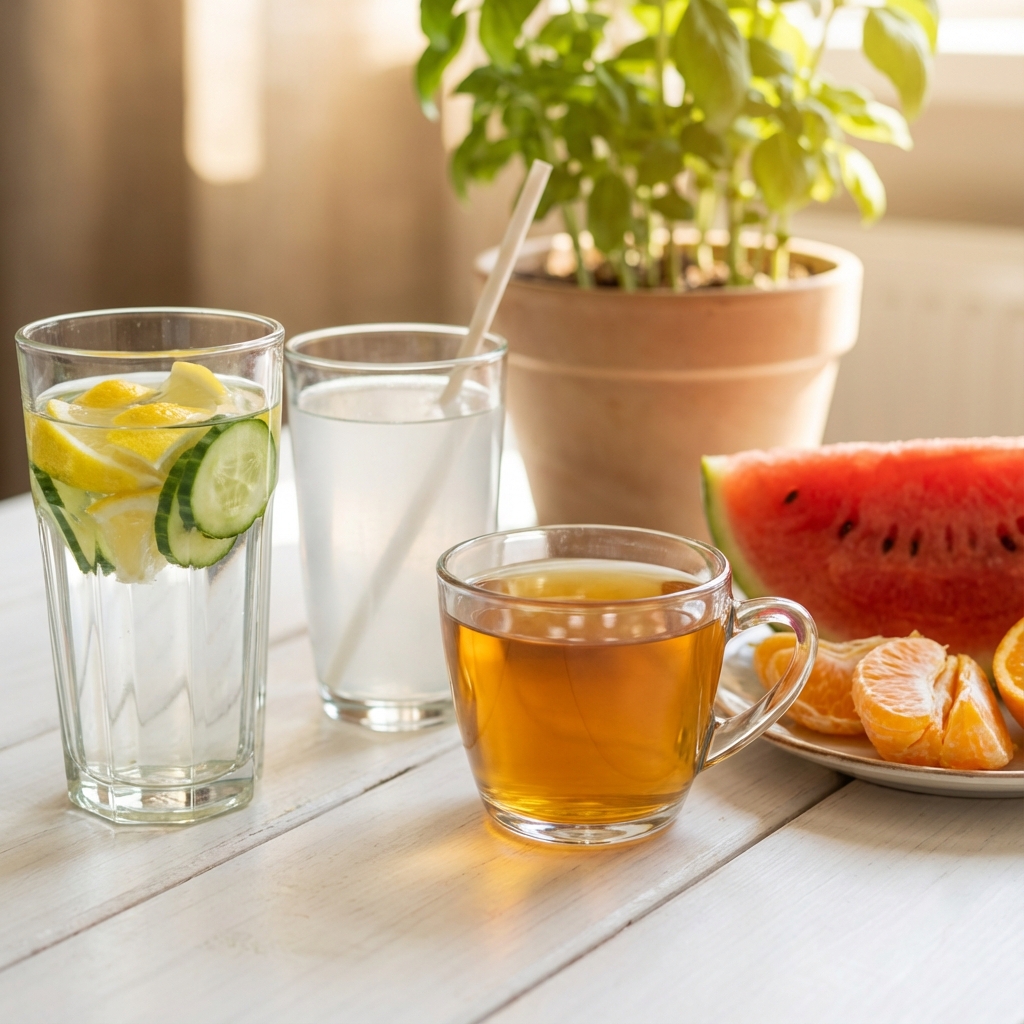
- Water: Still, sparkling, flavoured (without added sugar)
- Herbal teas: Caffeine-free options like rooibos, peppermint, ginger
- Diluted fruit juice: Aim for 50% juice, 50% water
- Milk: Provides calcium and protein too
- Coconut water: Natural electrolytes
- Clear broths and soups
Foods That Help Hydrate
Some foods have incredibly high water content:
- Watermelon - 92% water (the name gives it away!)
- Cucumber - 95% water
- Strawberries - 91% water
- Oranges - 86% water
- Tomatoes - 94% water
- Grapes - 81% water
Making It Easier: Practical Hydration Strategies
Strategy 1: Make Water More Appealing
If plain water feels boring or off-putting (pregnancy taste changes are real), try:
🍋 Infused Water Ideas
- Lemon and mint
- Cucumber and lime
- Strawberry and basil
- Orange and ginger
- Apple and cinnamon (warming option)
- Raspberry and lemon
Temperature matters: Some women find cold water easier to drink during pregnancy; others prefer room temperature or warm water. Experiment to find what works for you.
Strategy 2: Create Drinking Habits
Attach drinking water to existing routines:
- Morning ritual: Glass of water before anything else
- Every bathroom trip: Drink when you wash your hands
- With every meal: At least one full glass (or two)
- Before bed: Another glass
- Set phone reminders: Hourly prompts to take a few sips
Strategy 3: Keep Water Everywhere
Make it impossible to forget:
- Water bottle on your nightstand
- Water bottle in your bag
- Glass of water at your desk
- Water bottle in the car (insulated to keep it cold)
- Jug of water in the fridge, always full
Invest in a bottle you love: A nice water bottle that keeps drinks cold, is easy to clean, and shows your progress can genuinely make drinking feel more enjoyable.
Strategy 4: Front-Load Your Intake
- Heavy hydration in the morning and afternoon
- Slow down in the evening (around 2 hours before bed)
- This approach reduces nighttime bathroom trips while still meeting your daily target
Hydration Challenges and Solutions
Challenge: "I'm Already Peeing Constantly"
Yes, pregnancy means more bathroom trips - that's unavoidable. Drinking less won't significantly reduce bathroom needs, but it will make you dehydrated.
What helps: Accept frequent urination as part of pregnancy, do pelvic floor exercises, know where bathrooms are, and don't restrict fluids.
Challenge: "Water Makes Me Nauseated"
First trimester nausea can make drinking water feel impossible.
What helps:
- Sip small amounts frequently rather than gulping
- Try cold water, ice chips, or frozen cubes of diluted juice
- Carbonated water sometimes settles better
- Add ginger or lemon for nausea-relieving flavour
- Watermelon and high-water-content fruits may be tolerable when liquids aren't
Challenge: "I Forget to Drink"
What helps:
- Set phone alarms or use an app
- Keep water visible at all times
- Pair drinking with activities you already do
- Use a water bottle with hourly markers
Challenge: "Plain Water Is Boring"
What helps:
- Infused waters (see ideas above)
- Herbal teas (variety of flavours)
- Diluted juices
- Sparkling water with fruit
- Smoothies (count as food AND hydration)
What About Electrolytes?
When you're pregnant and especially if you're vomiting or sweating a lot, plain water might not be enough.
Signs You Might Need Electrolytes
- Experiencing significant morning sickness with vomiting
- Exercising regularly
- Very hot weather
- Muscle cramps (especially at night)
Good Electrolyte Sources
- Natural options: Coconut water, milk, bananas, oranges, leafy greens, avocados
- If you need more: Low-sugar electrolyte drinks or tablets
- Homemade: Water + squeeze of citrus + pinch of salt + splash of juice
Drinks to Limit or Avoid
Caffeine (Limit)
The NHS recommends no more than 200mg caffeine per day during pregnancy:
- Filter coffee (250ml) - ~140mg
- Instant coffee (250ml) - ~100mg
- Tea (250ml) - ~75mg
- Cola (330ml can) - ~40mg
Sugary Drinks (Limit)
High-sugar drinks provide empty calories and can contribute to excessive gestational weight gain and increased risk of gestational diabetes.
Meet the Editorial Team
The researchers and experts behind PregnancyPlate.

Fiza Izra
Founder & Tech Researcher
A UK-based mother of 3 with a background in tech and data synthesis, Fiza brings real-world experience navigating hyperemesis gravidarum and postnatal depression. She engineers complex clinical guidelines (NHS, ACOG) into accessible tools, ensuring rigorous fact-checking with deep empathy.

Emma Davies
Senior Nutrition Editor
A mum and writer, Emma runs our food safety desk. She is the one who rings the restaurant to ask how long the lettuce sits out, checks every claim against CDC, FDA and NHS guidance, and rewrites the answer until it is usable at 9pm in a drive-thru queue.