Is Jersey Mike's Lettuce Safe? (2026 Contamination & Outbreak Audit)
Ordering Jersey Mike's 'Mike's Way' is a staple, but is the shredded lettuce safe during pregnancy? We audit their produce handling protocols, historical listeria outbreaks, and the safety of bagged lettuce.
In this article
Editorial note: This article is researched from official public health and pregnancy food safety guidance, then edited by the PregnancyPlate team for clarity. It is not medical advice. If you are worried about symptoms or a specific exposure, contact your midwife, GP or healthcare provider.
The Fast Answer: Yes, you can eat at Jersey Mike's during pregnancy, but you must completely avoid ordering it "Mike's Way." The primary risk at this chain is not actually the deli meat itself, it is a hidden cross contamination risk sitting right in the vegetable bins. Before you place your next lunch order, scroll down to understand the exact assembly line traps and how to safely order a hot sub.
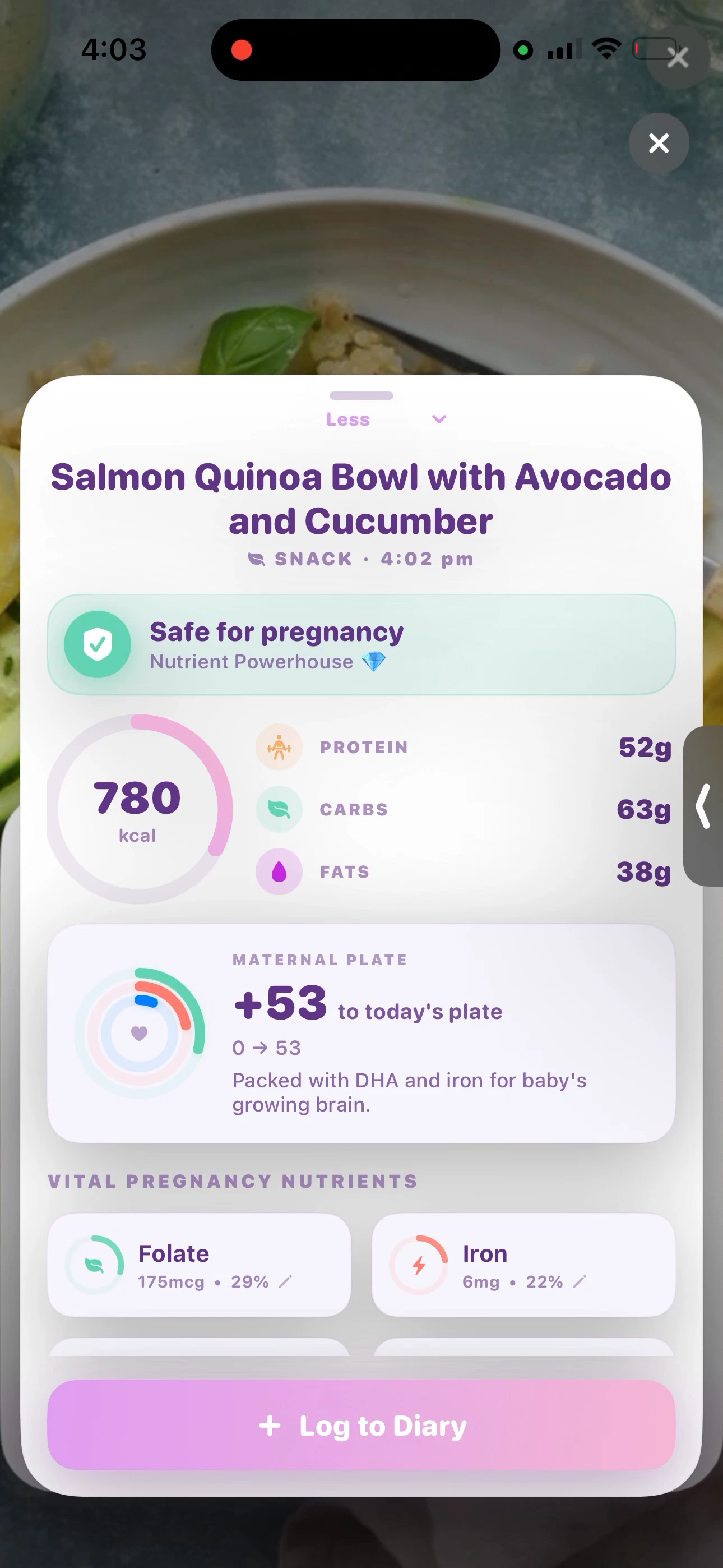
Scan the menu for safety, and track its exact Protein, Iron, and Choline breakdown in the PregnancyPlate AppYour next meal, a little less guesswork.
Scan your plate for pregnancy food-safety guidance and a nutrition breakdown. Keep your meals and nutrient progress in one place.
 Scan with your iPhone
to get the app
When you are pregnant, the craving for a massive, salty, perfectly dressed Italian sub can be completely overwhelming. Jersey Mike's is famous for their incredibly fresh ingredients and their signature "Mike's Way" preparation. However, if you have recently searched "Is Jersey Mike's safe during pregnancy?", you are likely reacting to the relentless news cycle regarding foodborne illness outbreaks.
In 2026, the guidance surrounding fast-food safety during pregnancy has fundamentally shifted. We are no longer telling women to blindly avoid entire restaurant chains. Instead, we are teaching women the exact science of pathogen transmission so they can confidently navigate the menu. In this definitive safety audit, we are going to expose the hidden cross-contamination risks on the assembly line, evaluate the thermal safety of the grill, and show you exactly how to optimize your order to actively support your baby's development.
Because simply avoiding illness is not enough. You need to ensure every meal is working to build your baby's brain. Fast food can be highly nutritious, provided you know exactly which macronutrients and micronutrients to target.
The Hidden Threat: It Is Not Just the Meat
When discussing deli safety, the conversation almost exclusively revolves around Listeria monocytogenes in the cold cuts. While it is entirely true that cold turkey, ham, and roast beef are prime vectors for Listeria (a bacterium that actively thrives at refrigerator temperatures and can cross the placental barrier), focusing only on the meat ignores a massive blind spot: The Produce Bin.
Statistically, in recent years, widespread foodborne illness outbreaks (including E. coli, Salmonella, and Listeria) have been more frequently linked to pre-washed, bagged, or shredded lettuce than to commercially processed deli meats.
The Anatomy of the Assembly Line
To understand why the lettuce at a sub shop is uniquely dangerous, you must look at the physics of the assembly line.
At Jersey Mike's, the meat is sliced fresh to order. The Sandwich Artist slices the turkey, places it on the bread, and then uses their gloved hands to reach directly into the massive bins of shredded lettuce, onions, and tomatoes to dress the sub "Mike's Way."
If the turkey from customer #1 was contaminated with a small amount of Listeria, the employee's gloves are now contaminated. When they reach into the lettuce bin, they transfer that bacteria directly into the damp, room-temperature shredded lettuce. Listeria thrives in moisture. The lettuce bin essentially becomes a massive bacterial incubator.
When you (customer #2) step up and order a completely meat-free "Veggie Sub," the employee reaches into that same contaminated lettuce bin. You have just inherited the Listeria risk of every deli meat sliced before you that day. This is the reality of cross-contamination.
The 2026 Verdict on Produce
Because of the inherent cross-contamination risks on high-volume assembly lines, the safest approach during pregnancy is to completely decline the shredded lettuce at any sub shop that slices raw deli meat on the same line.
What about the onions and tomatoes? While they are subject to the same cross-contamination risks, they are inherently safer than shredded lettuce. Shredded lettuce has massive surface area and traps moisture, making it the perfect breeding ground. Sliced tomatoes and onions have less surface area and are often more acidic (especially tomatoes), which creates a slightly more hostile environment for bacteria. However, for maximum safety, omitting all line-level produce is the most secure protocol.
The Grill is Your Sanctuary: Understanding "Heat Kill"
If the cold assembly line is a minefield, the hot grill is your sanctuary.
The Centers for Disease Control (CDC) state that Listeria, E. coli, and Salmonella are instantly destroyed when food reaches an internal temperature of 165°F (74°C). The commercial flat-top grills at Jersey Mike's run significantly hotter than this.
When you order a hot sub (like the famous Cheese Steak or Chicken Cheese Steak), the raw proteins and vegetables are cooked directly on the blistering hot grill. This "Heat Kill" process effectively vaporizes the pathogens we are concerned about.
The Golden Rule for the Grill: When ordering a hot sub, politely request that the employee changes their gloves before pulling your bread and handling your cooked sandwich. You want to ensure the gloves that just handled a cold Italian sub are not the same gloves wrapping up your perfectly safe, sterilized hot sub.
Safety is Step 1. Nutrition Tracking is Step 2.
If you followed the rules above and secured a steaming hot Chicken Cheese Steak (no lettuce), you have successfully bypassed the Listeria threat. That is a massive win.
However, a safe sub introduces a new challenge: The Nutrition Blindspot.
What did that sandwich actually do to proactively build your baby's brain and body today? A regular Chicken Cheese Steak provides an excellent hit of protein—crucial for fetal tissue growth in the second and third trimesters. But it also contains over 1,800mg of sodium (causing severe swelling and fluid retention) and provides almost zero Choline, Folate, or DHA.
A hot sub might fill you up, but it leaves massive, hidden gaps in your daily micronutrient requirements. Relying entirely on fast food without tracking your pregnancy nutrition can lead to severe deficits during periods of rapid fetal brain development.
The Bread Dilemma: Managing Gestational Diabetes Risk
When you order a massive sub, the meat isn't the only variable you need to optimize. The bread you choose fundamentally alters how your body processes the meal. Pregnancy naturally increases your insulin resistance, meaning a massive influx of refined carbohydrates can spike your blood sugar dramatically.
If you are managing Gestational Diabetes or trying to prevent extreme energy crashes, you must look at the glycemic index of your bread choice:
- White Bread (Regular/Giant): This is essentially rapidly digested sugar. It has virtually no fiber to slow down glucose absorption, leading to a massive blood sugar spike followed by a lethargic crash. This can exacerbate symptoms of pregnancy fatigue.
- Wheat Bread: While better, it is not a perfect whole-grain solution. It still contains refined flour but offers marginally more fiber, which helps blunt the glucose spike slightly. This is generally the best traditional bread option available at Jersey Mike's.
- The "Sub in a Tub" Pivot: This is the ultimate biological hack. If you need a high-protein, low-glycemic meal, ask them to turn your hot sub into a "Tub" (a bowl). You get all the safe protein, grilled peppers, and onions without the massive carbohydrate spike, making it perfect for women strictly monitoring their carb intake or trying to minimize excess weight gain.
Optimizing the Hot Vegetable Matrix for Fetal Health
Since we are avoiding the cold lettuce bin, we must rely on the grill to supply our micronutrients. Most fast-food options offer zero fresh vegetables, making it impossible to hit your micronutrient goals. To maximize your "Sub in a Tub," you should request "heavy" or "extra" portions of specific functional ingredients to be cooked on the grill.
Grilled Bell Peppers and Onions are your secret weapon. Bell peppers (especially green and red ones) are incredibly high in Vitamin C. This is critical because Vitamin C actively helps your body absorb the Iron found in the steak or chicken. Iron is essential for preventing anemia and maintaining your own red blood cell count as your blood volume expands by up to 50% during the second trimester.
The Hidden Sodium Trap in Condiments
One of the most insidious issues with fast-food sandwiches during pregnancy is the hidden sodium, which is a primary driver of pregnancy edema (swelling of the hands, feet, and ankles). A simple sub can easily contain over 2,000mg of sodium—almost your entire recommended daily allowance.
The Sauce Strategy:
- Avoid: Heavy mayonnaise and excessive "Juice" (the red wine vinegar and olive oil blend). While the olive oil is great, if it's heavily salted, it adds to your sodium burden. The hot subs generally have enough moisture from the melted cheese and grilled meat.
- Choose: Plain Olive Oil (if available) or mustard. Olive oil provides healthy monounsaturated fats that support fetal neurological development. If you need extra tang, a light splash of vinegar is fine, but strictly monitor the salt shaker!
Pregnancy Nutrition: The Golden Rule of Fast Food
The golden rule for navigating fast food while pregnant is to never view the meal in isolation. A Jersey Mike's Chicken Cheese Steak "in a Tub" can be an excellent, safe, high-protein meal. But it must be balanced within the context of your entire day's nutrition. If you consume a high-sodium lunch, you must actively pivot to low-sodium, potassium-rich foods (like bananas and sweet potatoes) for dinner to flush out the excess salt.
This is precisely why blind eating is so dangerous during the second and third trimesters. You cannot optimize your baby's development if you are guessing your macros. Every meal must serve a functional purpose.
✅ The Ultimate High-Nutrition Safe Order
- The Format: "Sub in a Tub" (Bowl format to eliminate the refined carbohydrate spike and manage blood sugar).
- The Protein: Big Kahuna Chicken Cheese Steak (Grilled chicken provides massive protein with lower saturated fat than beef).
- The Golden Rule: Request the employee to change their gloves before assembling your hot meal.
- The Micronutrient Boost: Extra grilled Bell Peppers and Onions (Vitamin C to aid in iron absorption).
- The Absolute No: Absolutely no shredded lettuce or cold tomatoes from the main assembly line to eliminate cross-contamination risk.
Pregnancy is an exhausting marathon of decision fatigue. You do not have to give up your favorite fast-food comforts. By understanding the hidden cross-contamination risks of the assembly line, utilizing the safety of the grill, optimizing your carbohydrate intake with the "Tub" option, and tracking your nutrients meticulously, you can safely enjoy Jersey Mike's while giving your baby exactly what they need to thrive.
Clinical Sources & Research
- Centers for Disease Control and Prevention (CDC), Listeria Outbreaks and Deli Meats.
- Food and Drug Administration (FDA), Safe Food Handling and Thermal Pasteurisation.
- American College of Obstetricians and Gynecologists (ACOG), Nutrition During Pregnancy and Seafood Guidelines.
Meet the Editorial Team
The researchers and experts behind PregnancyPlate.

Fiza Izra
Founder & Tech Researcher
A UK-based mother of 3 with a background in tech and data synthesis, Fiza brings real-world experience navigating hyperemesis gravidarum and postnatal depression. She engineers complex clinical guidelines (NHS, ACOG) into accessible tools, ensuring rigorous fact-checking with deep empathy.

Emma Davies
Senior Nutrition Editor
A mum and writer, Emma runs our food safety desk. She is the one who rings the restaurant to ask how long the lettuce sits out, checks every claim against CDC, FDA and NHS guidance, and rewrites the answer until it is usable at 9pm in a drive-thru queue.
Make sense of every plate.
Scan your plate for pregnancy food-safety guidance and a nutrition breakdown. Keep your meals and nutrient progress in one place.
Scan with your iPhoneto get the app