Iron in Pregnancy: How Much You Need and Best Food Sources Week by Week
Why are you so exhausted during your second trimester? We break down exactly why your body demands 27mg of iron daily, the difference between heme and non-heme iron, and the Vitamin C hack.
In this article
Editorial note: This article is researched from official public health and pregnancy food safety guidance, then edited by the PregnancyPlate team for clarity. It is not medical advice. If you are worried about symptoms or a specific exposure, contact your midwife, GP or healthcare provider.
Quick Answer: Pregnant women need exactly 27mg of iron per day. This is nearly double what you needed before pregnancy! Your blood volume expands by 50%, and your body desperately needs iron to create hemoglobin to carry oxygen to your baby. The best strategy is combining Heme Iron (from meat) with Non-Heme Iron (from plants) and always pairing it with Vitamin C to maximize absorption.
Track Iron Macros in the AppSafety is step one. Nutrition helps your baby thrive.
Knowing a meal is safe does not tell you whether you are getting enough iron, folate, calcium and choline. PregnancyPlate tracks all of it from a photo of your plate.
- See nutrient progress
- Scan meals instantly
- Nourish with confidence
 Scan to download
Open with iPhone camera
Scan to download
Open with iPhone camera
There is a very specific type of exhaustion that hits you during pregnancy. It isn't just "I need a nap" tired. It is a bone-deep, can barely walk up the stairs, out-of-breath exhaustion. If you are feeling this right now, your doctor is almost certainly going to test you for iron deficiency anemia.
Iron is the absolute MVP of pregnancy nutrition. Without it, your body literally cannot function properly. But getting 27mg of iron every single day from food alone is actually incredibly difficult, especially when morning sickness makes you want to avoid meat entirely.
Let us break down exactly why your body is hoarding iron, the difference between the two types of iron in food, and how you can legally hack your digestive system to absorb more of it without having to choke down giant, constipation-inducing iron pills.
The Biology: Why You Need So Much Iron
Before you got pregnant, you only needed about 18mg of iron a day. The second you get pregnant, the American College of Obstetricians and Gynecologists (ACOG) bumps that requirement up to 27mg.
Why the massive jump?
Because your body is performing a biological miracle: it is expanding your total blood volume by up to 50%. This extra blood is required to supply the placenta and keep the baby oxygenated. But to make red blood cells, your body requires hemoglobin, and the core building block of hemoglobin is iron.
If you don't eat enough iron, your body will literally steal it from your own stores to give to the baby. This leaves you severely depleted, leading to pregnancy anemia. Symptoms include extreme fatigue, dizziness, shortness of breath, and surprisingly, an intense craving to chew on ice cubes (a condition known as Pica).
Heme vs. Non-Heme: Not All Iron is Equal
This is where most women get confused. If you look at a box of spinach, it says it is packed with iron. But if you eat a giant bowl of spinach, your body actually absorbs very little of it. Why? Because there are two completely different types of dietary iron.
1. Heme Iron (The VIP)
Heme iron is found exclusively in animal products: beef, chicken, pork, and fish. It is the exact same type of iron that already exists in your own blood. Because of this, your body absorbs it incredibly easily. Depending on your current iron levels, you can absorb up to 30% of the heme iron you eat.
Top Heme Sources:
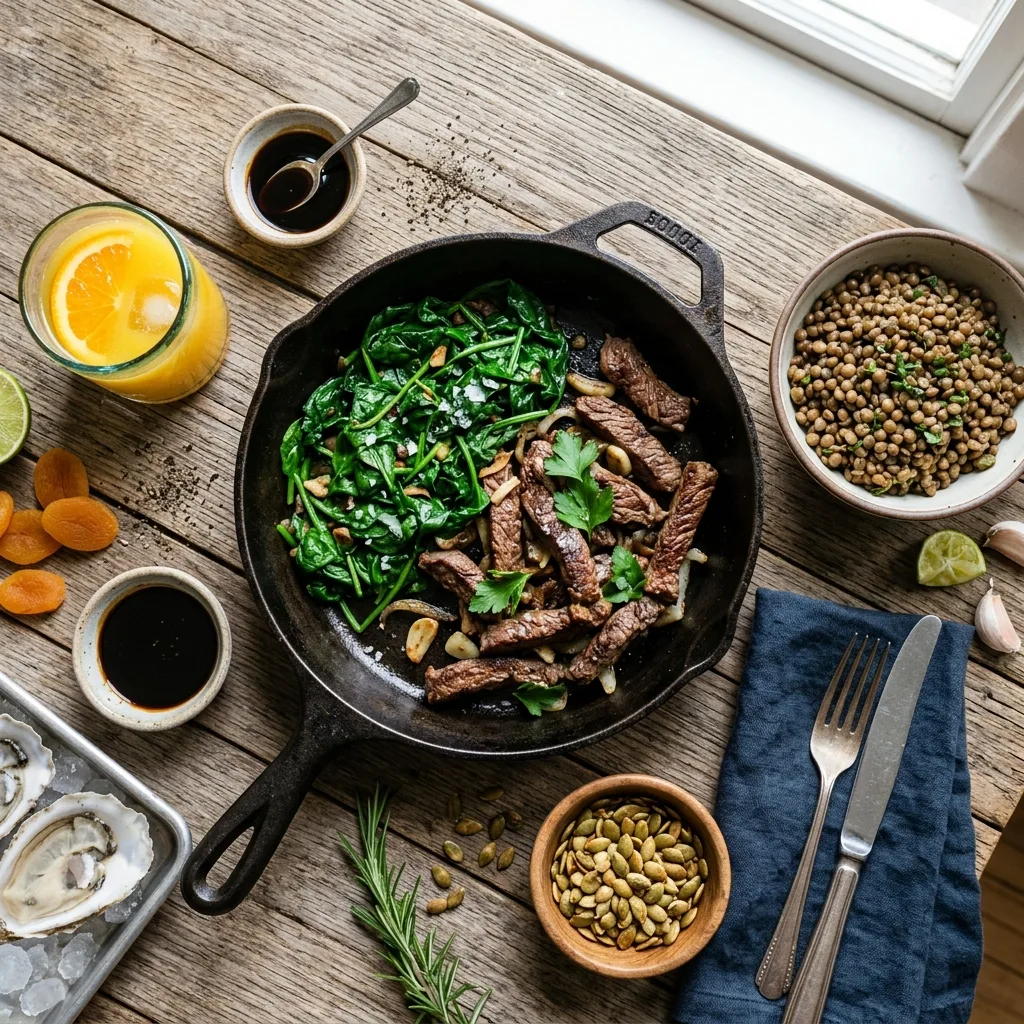
- Lean Beef: 3mg per 3oz serving.
- Chicken Thighs: 1mg per 3oz serving (dark meat has more iron than white breast meat).
- Sardines: 2.5mg per 3oz serving (also packed with omega-3s!).
- Oysters (Fully Cooked!): Massive amounts, but they MUST be cooked thoroughly to avoid food poisoning.
2. Non-Heme Iron (The Stubborn One)
Non-heme iron is found in plant foods: spinach, lentils, beans, tofu, and fortified cereals. While these foods contain high amounts of iron on paper, your body really struggles to absorb it. You might only absorb 2% to 10% of the non-heme iron you eat.
Top Non-Heme Sources:
- Lentils: 3.3mg per half cup (cooked).
- Spinach: 3.2mg per half cup (cooked). Pro-tip: cooking spinach shrinks it down so you can eat way more of it.
- Pumpkin Seeds: 1.2mg per ounce.
- Tofu: 3mg per half cup.
The Vitamin C Hack (Crucial for Vegetarians)
If you are a vegetarian or if meat aversions have you surviving on toast, you are relying entirely on non-heme iron. To prevent anemia, you must use the Vitamin C hack.
When you consume Vitamin C (ascorbic acid) alongside non-heme iron, a chemical reaction occurs in your stomach that converts the stubborn iron into a form that your body can actually absorb. Studies show that adding just 50mg of Vitamin C to a meal can increase iron absorption by up to six times.
Perfect Pairings:
- Drink a small glass of orange juice with your fortified breakfast cereal.
- Squeeze fresh lemon juice heavily over your spinach salad or lentil soup.
- Add diced bell peppers (insanely high in Vitamin C) to your black bean tacos.
- Eat a handful of strawberries right after taking your prenatal vitamin.
The Calcium Blocker (What to Avoid)
Just as Vitamin C is your best friend, Calcium is your worst enemy when it comes to iron absorption. Calcium physically binds to iron in the digestive tract, preventing your body from absorbing it. This applies to both dairy calcium and calcium supplements.
This means if you take your iron pill with a glass of milk, you are basically flushing the iron down the drain. If you make a beautiful, iron-rich beef chili and then smother it in cheddar cheese and sour cream, you are blocking the iron absorption.
The Rule: Keep your iron and your calcium at least two hours apart. Take your prenatal vitamin (which usually contains iron) with orange juice in the morning, and take your calcium supplement or eat your yogurt at night.
Trimester by Trimester Iron Strategy
First Trimester: The Survival Phase
Your iron needs aren't actually that high yet, but morning sickness is peaking. If the thought of eating a steak makes you gag, do not force it. This is the time to rely on fortified foods. Many breakfast cereals (like Cheerios or Total) are heavily fortified with iron. Eat dry cereal if it helps the nausea, and try to sip on some fruit juice with it.
Second Trimester: The Building Phase
Your blood volume is expanding rapidly right now. This is when you need to hit that 27mg target every single day. Start cooking your meals in a cast iron skillet. The acidic foods (like tomato sauce for spaghetti) will actually pull trace amounts of dietary iron out of the skillet and into your food. It sounds crazy, but it works!
Third Trimester: The Storage Phase
In the final weeks of pregnancy, your baby is aggressively stockpiling iron in their own liver to sustain them for the first 6 months of life. Your own iron stores will be completely drained. If your blood tests show you are anemic, your doctor will likely prescribe a dedicated iron supplement. Warning: Iron pills are notorious for causing severe constipation. Combat this by drinking massive amounts of water, taking a pregnancy-safe stool softener (like Colace), and eating high-fiber foods.
Managing Gestational Diabetes While Boosting Iron
For mothers who have been diagnosed with Gestational Diabetes (GD), hitting that 27mg iron target presents a unique challenge. This is because many of the absolute best non-heme iron sources - like lentils, black beans, chickpeas, and fortified cereals - are also incredibly dense in complex carbohydrates.
If you eat a massive bowl of lentil soup to boost your iron, you might inadvertently trigger a severe blood sugar spike. To manage this, you must rely heavily on the protein-pairing strategy.
If you are eating a plant-based, iron-rich meal, you need to anchor it with a zero-carb fat or protein source. For example, if you are eating iron-fortified bran flakes, do not use regular cow's milk (which contains lactose sugar). Instead, use unsweetened almond milk and add a scoop of unsweetened protein powder or a handful of walnuts. If you are eating black beans, pair them with a large serving of avocado (healthy fat) and a lean chicken breast (heme iron and protein) to slow down the glucose absorption in your digestive tract.
Choosing the Right Iron Supplement (If Prescribed)
If your doctor determines that dietary changes are not enough and prescribes an iron supplement, you will quickly learn that not all iron pills are created equal. The standard, cheapest form of iron prescribed is often Ferrous Sulfate. While highly effective, ferrous sulfate is notorious for causing extreme gastrointestinal distress, including severe nausea and debilitating constipation.
If you find that you cannot tolerate ferrous sulfate, ask your OB-GYN or midwife about switching to a Ferrous Bisglycinate or Iron Chelate supplement. In these formulas, the iron molecule is bound to amino acids. This chemical structure allows the iron to pass through the stomach largely intact and absorb directly in the intestines, bypassing much of the stomach irritation and dramatically reducing the constipation effect.
Remember, never start a high-dose iron supplement without a blood test and explicit instructions from your healthcare provider, as iron toxicity is a serious risk.
FAQs
Is it safe to eat liver during pregnancy?
No. While liver is the most iron-rich food on the planet, it is strictly banned during pregnancy. Liver contains dangerously high levels of preformed Vitamin A (retinol). Consuming too much Vitamin A in the first trimester is directly linked to severe birth defects. Stick to muscle meats like beef and chicken.
Why does my prenatal vitamin make me nauseous?
It is almost always the iron! Iron is extremely harsh on an empty stomach. If you are throwing up after taking your prenatal, try taking it right before bed instead of in the morning, or take it directly in the middle of a large meal.
Can I just drink a spinach smoothie for my iron?
Yes, but remember the spinach contains non-heme iron. You must add a source of Vitamin C to the smoothie (like strawberries, mango, or a splash of orange juice) to actually absorb the iron from the spinach.
The Bottom Line
Hitting 27mg of iron every day is a serious chore, but it is the absolute best way to fight off the debilitating exhaustion of the second and third trimesters.
Focus on lean meats if you can stomach them. If you are relying on plants, you absolutely must pair them with Vitamin C and keep them far away from dairy. And if you end up needing an iron supplement, don't feel guilty, just prepare urself with a massive box of high-fiber cereal to fight the constipation.
If you are looking for high-fiber foods to combat the effects of iron supplements, check out our guide to 25 High Fiber Foods for Pregnancy Constipation.
Track Your Daily Iron Intake
Trying to hit 27mg can feel like doing advanced math. The PregnancyPlate App lets you log your meals and automatically calculates your total iron intake for the day. It lets you easily visualize your macros so you can perfectly balance your meals.
Sources
- American College of Obstetricians and Gynecologists (ACOG), Nutrition During Pregnancy (2024).
- National Institutes of Health (NIH), Iron Dietary Supplement Fact Sheet (2023).
- World Health Organization (WHO), Daily Iron and Folic Acid Supplementation in Pregnant Women (2012).
Meet the Editorial Team
The researchers and experts behind PregnancyPlate.

Fiza Izra
Founder & Tech Researcher
A UK-based mother of 3 with a background in tech and data synthesis, Fiza brings real-world experience navigating hyperemesis gravidarum and postnatal depression. She engineers complex clinical guidelines (NHS, ACOG) into accessible tools, ensuring rigorous fact-checking with deep empathy.

Emma Davies
Senior Nutrition Editor
A mum and writer, Emma runs our food safety desk. She is the one who rings the restaurant to ask how long the lettuce sits out, checks every claim against CDC, FDA and NHS guidance, and rewrites the answer until it is usable at 9pm in a drive-thru queue.