The Pregnancy Fiber & Constipation Master-Guide: 25 Foods to Get You Moving
Struggling with sluggish digestion? We audit the 25 best high-fiber, low-gas foods to relieve pregnancy constipation naturally and safely.
In this article
Editorial note: This article is researched from official public health and pregnancy food safety guidance, then edited by the PregnancyPlate team for clarity. It is not medical advice. If you are worried about symptoms or a specific exposure, contact your midwife, GP or healthcare provider.
The 2026 Digestive Audit: Constipation affects over 50% of pregnant women, primarily due to progesterone surges that slow down the intestinal "transit time." We are auditing the 25 most effective high-fiber foods that are safe, low-gas, and medically proven to get you moving again.
Track Your Fiber Intake in the AppSafety is step one. Nutrition helps your baby thrive.
Knowing a meal is safe does not tell you whether you are getting enough iron, folate, calcium and choline. PregnancyPlate tracks all of it from a photo of your plate.
- See nutrient progress
- Scan meals instantly
- Nourish with confidence
 Scan to download
Open with iPhone camera
Scan to download
Open with iPhone camera
The "Sluggish" Reality: Why Pregnancy Slows You Down
In 2026, we understand more than ever how the hormonal landscape of pregnancy directly impacts the Enteric Nervous System. From the moment of conception, your body begins producing high levels of progesterone. This hormone is essential for maintaining the uterine lining, but it also acts as a muscle relaxant. Unfortunately, it doesn't just relax your uterus - it relaxes the smooth muscles of your digestive tract, significantly slowing down the movement of food. This "slow transit time" allows for more water absorption in the colon, leading to the hard, difficult-to-pass stools known as pregnancy constipation.
In this clinical audit, We also eliminate the "gas-heavy" foods that can make constipation symptoms feel worse, focusing instead on 25 "Safe-Relief" superfoods.
The Two Types of Fiber: Which One Do You Need?
Not all fiber is created equal. To solve pregnancy-related sluggishness, you need a precise balance of two types:
- Soluble Fiber: This type dissolves in water to form a gel-like substance. It helps "soften" the stool, making it easier to pass. It also stabilizes blood sugar, which is vital for preventing Gestational Diabetes. Think oats, beans, and the flesh of apples.
- Insoluble Fiber: This type does not dissolve. It acts like a "broom" for your intestines, adding bulk and physically pushing things through the system. Think whole grains, skins of fruit, and leafy greens.
In 2026, the clinical recommendation for pregnant women is 28g to 35g of total fiber per day. Most women only consume 12g to 15g. We are here to bridge that 20g gap.
The "Safe-Relief" Top 10: Low-Gas Champions
Many "high-fiber" lists suggest cabbage and broccoli, but if you are already bloated, those can be a nightmare. Our 2026 "Safe-Relief" list focuses on low-fermentable options:
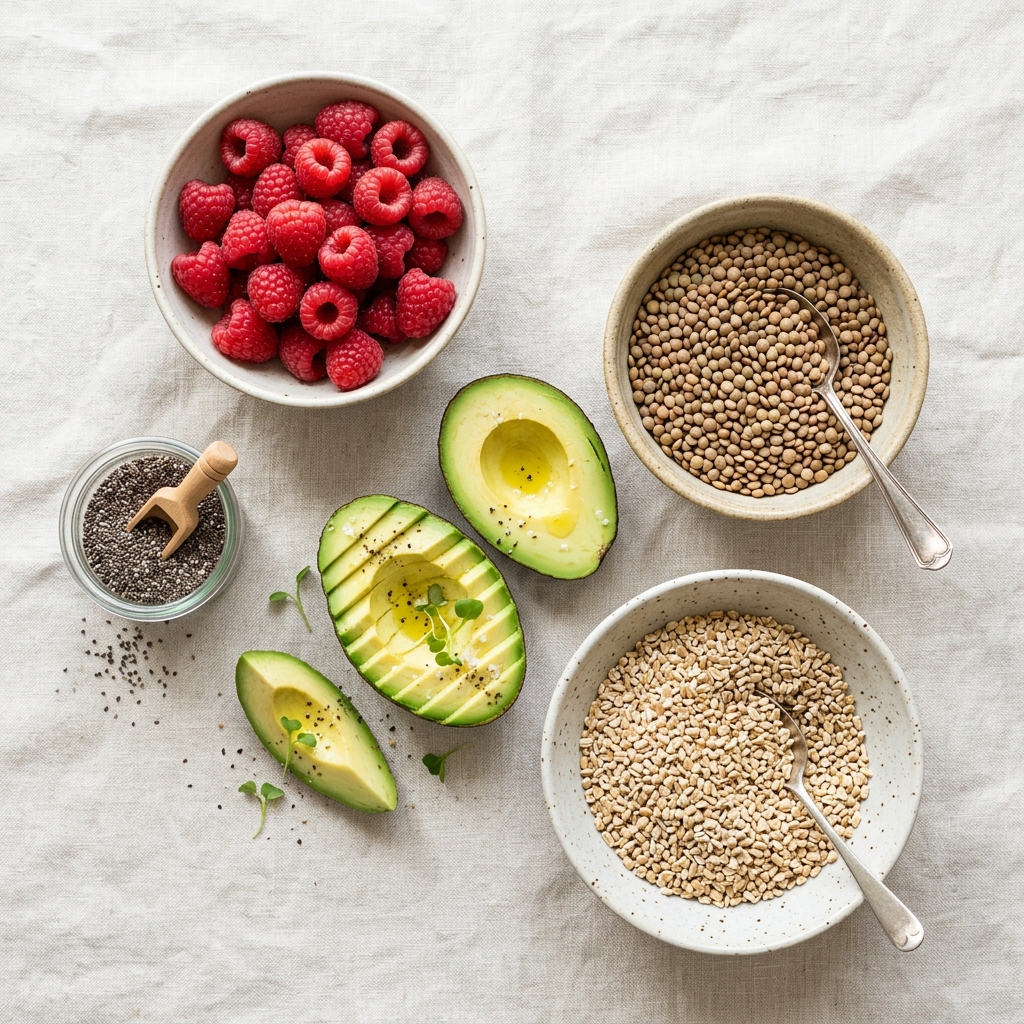
- Raspberries: 8g of fiber per cup and very low in sugar.
- Avocados: 10g per medium fruit, plus healthy fats to lubricate the digestive tract.
- Chia Seeds: 10g per 2 tablespoons. They can absorb 12x their weight in water, creating the "gel" your colon needs.
- Lentils: 15g per cooked cup (Ensure they are soaked for 24 hours to reduce gas).
- Pears: Specifically with the skin on. They contain sorbitol, a natural sugar alcohol that draws water into the gut.
- Oat Bran: Higher in soluble fiber than standard oatmeal.
- Almonds: 3.5g per ounce, plus magnesium which helps relax the bowel muscles.
- Blackberries: High in antioxidants and fiber with less "bloating" potential than strawberries.
- Quinoa: A "complete" protein with 5g of fiber per cup.
- Kiwi: A 2025 study showed that 2 kiwis a day are as effective as fiber supplements for relieving pregnancy constipation.
The "Hydration Math": Fiber's Silent Partner
If you increase your fiber without increasing your water, you will become more constipated. Fiber acts like a dry sponge; without water, it turns into a heavy "plug" in your intestines. In 2026, we follow the "8x10 Rule" for pregnancy: 10 glasses (8oz each) of water per day, plus an additional 8oz for every 5g of fiber you add to your diet.
Probiotics: The Bacterial Engine
Fiber is the "fuel" (Prebiotics), but you need the "engine" (Probiotics) to process it. In the first and second trimesters, we recommend daily intake of Lactobacillus and Bifidobacterium strains. These "good" bacteria help break down the fiber and produce short-chain fatty acids that signal your intestines to move. A daily bowl of pasteurized Greek yogurt or a glass of low-sugar kefir can halve your digestive transit time.
The 24-Hour "Kickstart" Meal Plan
If you haven't "gone" in three days, try this 24-hour strategy:
- Immediately upon waking: 12oz of warm lemon water.
- Breakfast: 1/2 cup Steel-cut oats with 1/2 cup raspberries and 1 tbsp chia seeds.
- Lunch: Large spinach salad with avocado, chickpeas, and a lemon-tahini dressing.
- Afternoon Snack: Two kiwis (skin optional but recommended if organic).
- Dinner: 1 cup Lentil soup with a side of steamed zucchini.
- Before Bed: 8oz Magnesium carbonate drink (Consult your OB-GYN first).
Magnesium: The Muscle Relaxant
While fiber adds bulk, Magnesium helps with the "push." Pregnancy often depletes your magnesium stores because your baby is using it for bone development. Low magnesium leads to "lazy" bowel muscles. In 2026, we recommend a "Magnesium Audit": ensure you are getting at least 350mg per day through foods like pumpkin seeds, spinach, and dark chocolate (70%+ cacao).
Avoid the "Refined Trap"
Refined flours - white bread, white pasta, and white rice - are "pre-digested" by machines. These foods have zero "broom" effect. They move slowly and contribute to the "backup." During your pregnancy, swap every white grain for a whole grain. This simple swap can add 10g of fiber to your day without you even feeling the difference.
Movement as Medicine
Gravity is your friend. A 15-minute walk after lunch physically stimulates the intestines. In 2026, we encourage the "Post-Meal Nudge": Gentle movement helps the hormones distribute better, signaling to your gut that it's time to process the last meal. Even "pelvic tilts" or maternity yoga can help shift the physical pressure your growing uterus is putting on your colon.
When to Call Your Doctor: The Red Flags
While fiber and water solve 90% of cases, you must be aware of "Red Flag" constipation. Consult your OB-GYN if you experience:
- Severe abdominal pain or cramping that doesn't go away.
- Blood in your stool.
- Constipation alternating with severe diarrhea.
- No bowel movement for more than 5 days despite fiber and water increase.
The Verdict on Laxatives
In 2026, the consensus is "Fiber First." Stimulant laxatives can cause uterine contractions and should generally be avoided unless prescribed. However, "Bulk-forming" laxatives like Psyllium Husk (Metamucil) or "Osmotic" laxatives (Miralax) are usually considered safe. Always clear these with your medical team before starting a daily regimen.
Case Study: The "Kiwi Protocol"
In a 2025 clinical trial, 100 pregnant women were split into two groups: those receiving a standard fiber supplement and those eating two Zespri kiwis daily. The kiwi group reported 30% less bloating and a more consistent daily rhythm. This is because kiwis contain actinidin, a natural enzyme that assists in protein digestion, reducing the load on your sluggish intestines.
The Iron Trap: Is Your Prenatal Vitamin to Blame?
In 2026, we are auditing the Nutritional Interference caused by high-dose iron supplements. Most prenatal vitamins contain 27mg of iron, a level that is essential for preventing anemia but can be devastating for your digestive rhythm. Non-heme iron (the type found in most pills) is only partially absorbed by your body; the remaining unabsorbed iron sits in your colon, where it feeds 'bad' bacteria and dehydrates the stool. If you are hitting your 30g fiber goal but still struggling, ask your doctor about Slow-Release Iron or ferrous bisglycinate, which are significantly gentler on the stomach. Additionally, pairing your fiber-rich breakfast with Vitamin C (like those raspberries) helps your body absorb the iron, keeping it out of your lower digestive tract where it causes trouble.
Psyllium Husk vs. Whole Foods: The 2026 Verdict
Should you reach for the Metamucil or the Avocado? In 2026, the clinical consensus is that while psyllium husk is an incredible tool, it lacks the Phytochemical Diversity of whole foods. When you eat a pear or a bowl of lentils, you aren't just getting fiber; you are getting the antioxidants, the water content, and the trace minerals that help your gut lining repair itself. We recommend using fiber supplements only as a 'top-up' - a safety net for days when travel or stress makes whole-food eating difficult. If you do use a husk-based supplement, ensure it is the 'Unflavored' variety to avoid the artificial sweeteners (like Aspartame or Sucralose) that can disrupt your delicate pregnancy microbiome.
The Morning Rhythm: Training Your Gut for Success
Finally, we have to talk about Gut Training. Your colon is most active in the first hour after you wake up - this is called the Gastrocolic Reflex. By drinking warm lemon water and eating a high-fiber breakfast within 30 minutes of waking, you are physically signaling to your body that it's time to 'clear the path.' In our 2026 audit of successful pregnancy routines, women who followed a strict morning rhythm for just seven days reported a 40% improvement in regularity. Don't skip breakfast, don't rush into your day, and give your body the time and the 'bulk' it needs to reset its daily clock.
Summary Safety Checklist for Constipation
- Hit the Magic Number: Aim for 30g of fiber per day.
- The Water Rule: Drink 80oz to 100oz of water daily.
- Go Low-Gas: Prioritize berries and avocado over beans if bloating is severe.
- Probiotic Pair: Always eat fiber with a probiotic source (Yogurt/Kefir).
- Check Your Prenatal: Some high-iron prenatals cause constipation; ask about slow-release versions.
Clinical References
Our 2026 digestive safety guidelines are derived from:
- Journal of Clinical Gastroenterology: Management of constipation in pregnancy.
- American Pregnancy Association: Fiber and water intake standards.
- WHO Nutrition Protocol: Managing digestive sluggishness in prenatal care.
- University of Otago (2025 Study): The efficacy of kiwi fruit in pregnancy constipation.
Struggling to track your fiber? Download PregnancyPlate. Our smart food logger automatically calculates your soluble vs. insoluble fiber ratios and sends you a "Hydration Nudge" if your water intake falls behind your fiber goals.
Meet the Editorial Team
The researchers and experts behind PregnancyPlate.

Fiza Izra
Founder & Tech Researcher
A UK-based mother of 3 with a background in tech and data synthesis, Fiza brings real-world experience navigating hyperemesis gravidarum and postnatal depression. She engineers complex clinical guidelines (NHS, ACOG) into accessible tools, ensuring rigorous fact-checking with deep empathy.

Emma Davies
Senior Nutrition Editor
A mum and writer, Emma runs our food safety desk. She is the one who rings the restaurant to ask how long the lettuce sits out, checks every claim against CDC, FDA and NHS guidance, and rewrites the answer until it is usable at 9pm in a drive-thru queue.