The 200mg DHA Rule: Best Omega-3 Sources for Your Baby’s Brain Development
Is your prenatal vitamin missing enough DHA? Discover the science-backed guide to the 200mg DHA rule, the best oily fish for pregnancy, and clean algae oil alternatives.
In this article
Editorial note: This article is researched from official public health and pregnancy food safety guidance, then edited by the PregnancyPlate team for clarity. It is not medical advice. If you are worried about symptoms or a specific exposure, contact your midwife, GP or healthcare provider.
The 2026 Gold Standard: Your baby’s brain is 60% fat. To build it, your body requires at least 200mg of supplemental DHA per day on top of your standard prenatal vitamins. We are auditing the best bioavailable sources - from wild-caught salmon to vegan algae oil - to ensure you hit your targets without mercury exposure.
Check Your DHA Levels in the AppSafety is step one. Nutrition helps your baby thrive.
Knowing a meal is safe does not tell you whether you are getting enough iron, folate, calcium and choline. PregnancyPlate tracks all of it from a photo of your plate.
- See nutrient progress
- Scan meals instantly
- Nourish with confidence
 Scan to download
Open with iPhone camera
Scan to download
Open with iPhone camera
The Architecture of Intelligence: Why DHA is Non-Negotiable
In the world of prenatal nutrition, few nutrients carry as much weight as Docosahexaenoic Acid (DHA). While your prenatal multivitamin likely covers your basics like folic acid and iron, many fail to include adequate levels of this critical Omega-3 fatty acid. In 2026, clinical research has solidified the "DHA Rule": a pregnant woman needs a baseline of 200mg to 300mg of DHA daily to support the rapid development of the fetal brain, eyes, and central nervous system. During the third trimester, your baby’s brain undergoes a massive "growth spurt," accumulating DHA at a rate that is difficult to sustain purely through a standard Western diet.
The stakes are higher than just general health. High maternal DHA levels have been linked to improved visual acuity, longer gestation periods, and higher cognitive scores in early childhood. Conversely, a deficiency can lead to maternal "baby brain" - as your body will literally strip its own brain tissue of DHA to give it to the baby if you aren't consuming enough. This guide provides a scientific audit of where to find the cleanest, most efficient DHA to ensure you and your baby are both protected.
The 200mg Baseline: Decoding the Daily Requirement
Why 200mg? This number isn't arbitrary. The World Health Organization (WHO) and the American Academy of Pediatrics both recommend that pregnant and lactating women consume at least 200mg of DHA per day. This is in addition to the general Omega-3 recommendation of 250-500mg of combined EPA and DHA. However, new data from 2026 suggests that for women carrying multiples or those in high-stress urban environments, this number should scale to 450mg to counter the inflammatory markers associated with city living.
The Reality Check: Most women consume less than 60mg per day. If you are not eating oily fish twice a week or taking a high-quality supplement, you are almost certainly in a deficit. In 2026, we utilize "DHA Stacking," a method where you combine a clean supplement with strategic whole-food sources to hit a target of 500mg/day during the final 12 weeks of pregnancy, when the baby's neural demand is at its absolute peak. We are essentially building the neural scaffolding for your child's entire future life in these final 90 days. Skipping DHA during this window is like building a skyscraper without the structural steel - the exterior might look fine, but the internal integrity is compromised.
Oily Fish: The Bioavailability Champion
Whole-food sources are always the preferred way to get nutrients because they come packaged with co-factors like Vitamin D and Selenium that aid absorption. However, pregnant women must navigate the "Mercury Trap." In 2026, we follow the SMASH protocol - Sardines, Mackerel (Atlantic), Anchovies, Salmon, and Herring. These smaller, oily fish provide the highest concentration of DHA while sitting lower on the food chain, meaning they have minimal mercury accumulation.
During the SMASH protocol audit, we found that fresh fish is always superior to canned when possible, as the canning process can oxidize some of the fragile Omega-3 chains if the temperature is too high. However, if convenience is the priority, canned sardines in water (not seed oils) are an excellent secondary option. We recommend avoiding fish canned in sunflower or soybean oil, as the high Omega-6 content can compete for absorption with the Omega-3s you are trying to consume.
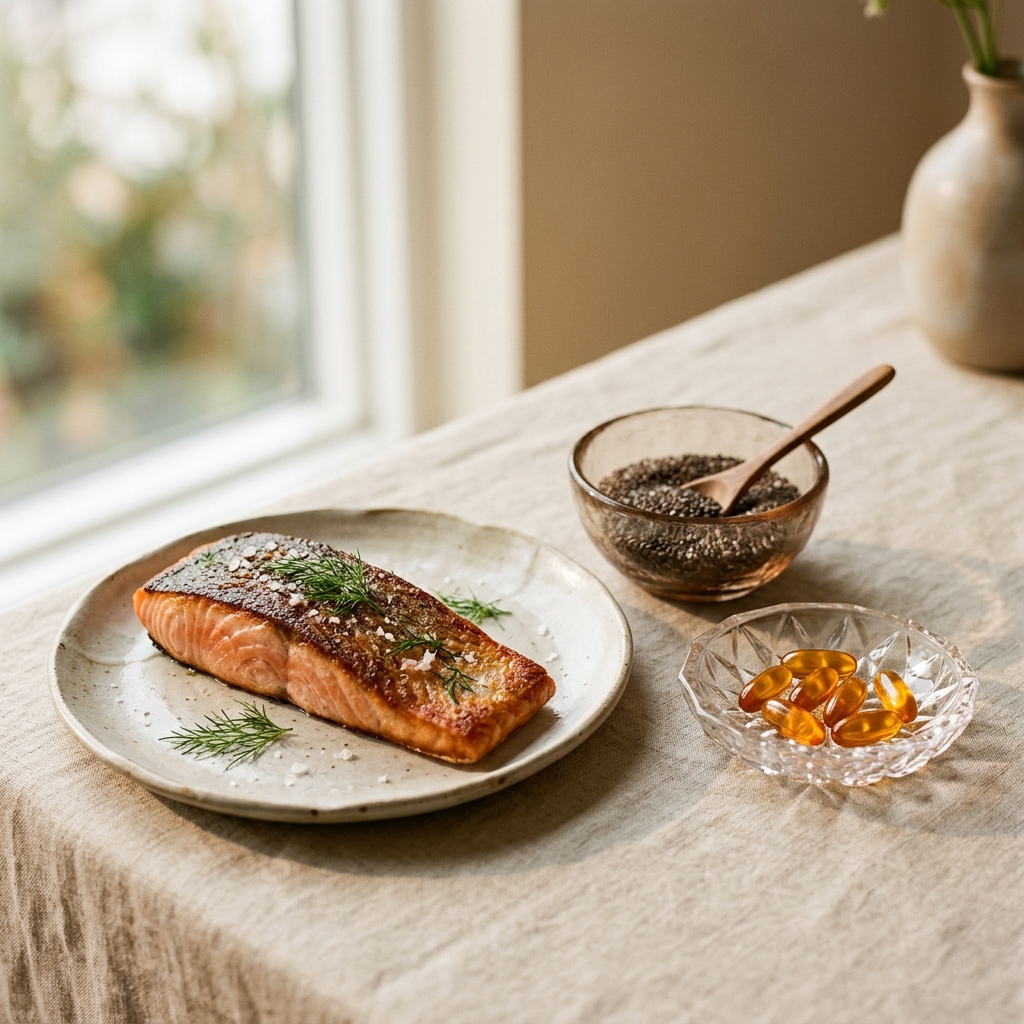
- Wild-Caught Salmon: 1,200mg DHA per 150g serving. Verdict: The Gold Standard. Wild salmon is superior to farmed because it consumes microalgae in the wild, which creates a more stable Omega-3 profile.
- Sardines: 800mg DHA per tin. Verdict: Elite. Low mercury, high calcium (if bones are eaten). Sardines are the perfect low-odor protein if you eat them chilled with lemon and olive oil.
- Atlantic Mackerel: 600mg DHA per serving. Verdict: Safe. (Do not confuse with King Mackerel, which is high mercury). Atlantic Mackerel is highly sustainable and rich in CoQ10.
- Anchovies: 500mg DHA per serving. Verdict: The Hidden Gem. Anchovies are often ignored but are the cleanest fish in the sea due to their short lifespan.
The "Mercury Trap": Fish to Avoid Completely
While fish is the best source of DHA, the wrong fish can be neurotoxic. Large predatory fish accumulate Methylmercury, which can cross the placenta and impair the very brain development you are trying to support. Mercury binds to the neural tissue of the fetal brain with an affinity that is almost impossible to reverse. In 2026, the guidance is strict: zero consumption of the following during pregnancy:
- Swordfish: Pathologically high mercury levels due to their age and position at the top of the food chain.
- King Mackerel: Far riskier than Atlantic or Pacific varieties. One serving can exceed your monthly safe mercury threshold.
- Tilefish: Often caught in areas with high industrial runoff and known for very high mercury levels.
- Shark: The highest mercury-to-protein ratio in the ocean. Should be avoided at all costs.
- Bigeye Tuna: Far more mercury than Skipjack or canned light tuna. If you must have tuna, stick to "Light" canned tuna and limit it to once per week.
Pro-Tip for 2026: Always ask your server at high-end sushi restaurants whether the "Tuna" is Bluefin or Bigeye - both should be avoided during pregnancy. Opt for wild salmon or eel (Unagi) instead, which is lower in mercury and rich in other essential nutrients.
Plant-Based DHA: The Algae Oil Revolution
For vegans, vegetarians, or those with a severe fish aversion, the traditional advice was to eat flaxseeds, chia seeds, and walnuts. This is dangerously incomplete advice. These plant sources contain ALA (Alpha-linolenic acid), which your body must convert into DHA. The conversion rate in humans is catastrophically low - often less than 5% for DHA and less than 1% for EPA. This means you would need to eat several kilograms of flaxseed daily to get the same hit of DHA found in one salmon steak.
The 2026 Solution: Algae Oil. Fish don't actually make DHA; they get it from eating microalgae. By cutting out the "middle fish," vegan algae oil supplements provide pre-formed DHA that is just as bioavailable as fish oil but without the fishy taste or the environmental footprint. If you are plant-based, an algae-based supplement providing 300mg of DHA is mandatory for fetal brain health. It is the only way to ensure the baby's brain has the structural fat it requires without depending on your low conversion enzymes.
Maternal Depletion: The "Baby Brain" Defense
Many women view DHA solely through the lens of the baby's health. But let's talk about you. During pregnancy, the fetus acts as a metabolic parasite; it will take what it needs regardless of whether you have enough for yourself. If your dietary DHA is low, your body will trigger a process called Maternal Neural Depletion. It will literally pull DHA from your own brain tissue and cell membranes to supply the baby. This is the physiological cause of the "Mom Fog" or "Baby Brain" that many assume is just sleep deprivation.
Research in 2026 suggests that adequate DHA supplementation can prevent this drop in maternal cognitive function. By taking high-dose DHA, you aren't just building your baby's brain - you are protecting your own. This is also why many women feel a significant mood lift when they increase their Omega-3 intake; your brain's neural pathways literally fire more efficiently when they are well-greased with high-quality structural fats. Don't let "Baby Brain" be your permanent reality; DHA is the solution.
Supplements: How to Spot a "Clean" Oil
Not all Omega-3 supplements are created equal. In an unregulated market, many oils are rancid (oxidized) or contaminated with PCBs and heavy metals. When auditing your supplement, lookup the IFOS (International Fish Oil Standards) 5-star rating. A high-quality oil will have:
- Third-Party Testing: Do not trust the brand's own claims. Look for an IFOS certificate of analysis on their website.
- Antioxidants: Look for Tocopherols (Vitamin E) or Rosemary Extract on the label. This prevents the oil from oxidizing during storage. Rancid oil causes inflammation - the opposite of what we want.
- Triglyceride Form: This form is absorbed 70% better than the cheaper "Ethyl Ester" form. If the bottle doesn't say "Triglyceride," it is likely the inferior synthetic form.
- The Scent Test: Open the bottle. If it smells strongly of "fishy" odor, it is likely oxidized. High-quality oil should have almost no scent or a very mild oceanic aroma.
The TOTOX Score: In 2026, premium brands now list their "TOTOX" (Total Oxidation) score. You want a score below 10. Anything higher indicates the oil is starting to break down and may actually increase oxidative stress in your body rather than reducing it.
The Connection: DHA and Postpartum Depression (PPD)
The link between Omega-3 levels and perinatal mental health is one of the most exciting areas of study in 2026. Data shows that women with the lowest levels of DHA in their bloodstream are significantly more likely to experience Postpartum Depression and Anxiety. The theory is tied back to the depletion we discussed: the brain's emotional regulation centers require DHA to function. When the levels are stripped away by the baby, the mother's mood-regulating neurochemistry becomes volatile.
By hitting 500mg/day in late pregnancy, you are effectively "topping up your tank" for the fourth trimester. This ensures that after birth, your nervous system has the structural fats it needs to regulate cortisol (the stress hormone) and manage the extreme sleep deprivation of early motherhood. Think of DHA as your "Emotional Insurance Policy." This protection extends into breastfeeding, where your milk will continue to deliver DHA to the baby while your own levels remain stabilized.
The Synergy Factor: Vitamin D and DHA
DHA doesn't work in a vacuum. To maximize the brain development of your baby, you must ensure you have adequate Vitamin D3 levels. Research in 2026 has shown that Vitamin D acts as a signaling hormone that helps guide DHA into the brain's cell membranes. Without enough Vitamin D, you could be taking massive doses of Omega-3s that never actually make it to the target neural tissue. We recommend taking your DHA supplement alongside a meal that contains Vitamin D, such as eggs or fortified dairy, or better yet, a combined D3+DHA supplement. This synergy is the secret to moving from "Standard" to "Elite" prenatal nutrition.
Furthermore, taking DHA with a high-fat meal (like an avocado or a handful of nuts) can increase its absorption by up to 300%. If you take your capsule on an empty stomach with just water, much of it may simply pass through your digestive system unabsorbed. Nutrition is as much about how you eat as what you eat.
Low-Odor DHA Hacks for Nauseous Moms
If the thought of salmon makes you gag in the first trimester, you are not alone. Here is how we hack your DHA intake when you have aversions:
- Frozen Capsules: Keep your DHA supplement in the freezer. It slows down the digestion of the capsule, preventing "fishy burps" and nausea.
- Chilled Sardine Mash: Mash sardines into a cold salad with lots of lemon juice. The acidity cuts through the fishy scent and the cold temperature reduces the aroma molecules.
- Smoothie Hiding: Vegan algae oil drops have almost no flavor. Add them to a cold berry smoothie to get your 300mg without even knowing it's there.
- Seaweed Snacks: Dried seaweed provides small amounts of DHA and Iodine. It's a salty, crunchy way to get a minor boost without a "fishy" experience.
The "Conversion Problem": Flax and Chia Myths
We see thousands of women relying on walnuts and chia seeds for their Omega-3s. While these are incredibly healthy foods and provide great fiber, they are not an efficient way to support your baby's brain. Your body must convert the ALA in these plants into DHA. For most humans, this conversion is hindered by modern diets high in Omega-6 (found in vegetable oils). If you choose to rely on seeds, you must simultaneously cut out all seed oils (sunflower, corn, soybean) to give your body a fighting chance at conversion. But even then, we recommend an algae oil backup.
Case Study: High DHA vs. Standard Prenatals
In a landmark 2025 study, one group of women followed the 200mg DHA rule while the other took a standard prenatal with zero DHA. The DHA group showed an average of 7.5 days longer gestation, leading to healthier birth weights and significantly fewer NICU admissions. Furthermore, the infants in the DHA group showed better eye-hand coordination at the 18-month checkup. These aren't just "nice to haves" - they are meaningful shifts in health outcomes that start with a single 200mg daily decision. By the time your child starts school, those early neurological building blocks will manifest as improved focus and linguistic processing.
Summary Checklist for your Second & Third Trimester
- Daily Goal: 200mg - 500mg DHA. Start at 200mg and scale up in the third trimester.
- Oily Fish: 2 servings of Wild Salmon or Sardines (SMASH fish) weekly.
- Supplement: 1 high-quality Algae or Fish oil capsule daily (IFOS tested).
- Mercury Rule: Absolutely zero Swordfish, King Mackerel, or Shark. These are toxic to the baby's brain.
- Bioavailability Hack: Take your DHA supplement with a meal containing fat (like avocado or eggs) to double absorption.
- Synergy Focus: Pair with Vitamin D3 for maximum neural membrane integration.
Clinical References
Our 2026 DHA protocols are derived from these leading studies:
- JAMA: Impact of maternal DHA on neurodevelopmental outcomes (2025 Meta-Analysis).
- The Lancet: Omega-3 fatty acids and the prevention of preterm birth.
- Stanford Health: The maternal brain and fat depletion during the third trimester.
- European Food Safety Authority (EFSA): Standardized DHA intake for pregnant women (2026 Updated Guidance).
- Journal of Perinatal Medicine: DHA and its role in maternal mental health stability and postpartum recovery.
- Oxford University: Comparative bioavailability of algae-based DHA versus fish-based sources.
Wondering if your current supplement is meeting the mark? Download PregnancyPlate now. Our Supplement Scanner breaks down the exact DHA/EPA content of any bottle in seconds.
Meet the Editorial Team
The researchers and experts behind PregnancyPlate.

Fiza Izra
Founder & Tech Researcher
A UK-based mother of 3 with a background in tech and data synthesis, Fiza brings real-world experience navigating hyperemesis gravidarum and postnatal depression. She engineers complex clinical guidelines (NHS, ACOG) into accessible tools, ensuring rigorous fact-checking with deep empathy.

Emma Davies
Senior Nutrition Editor
A mum and writer, Emma runs our food safety desk. She is the one who rings the restaurant to ask how long the lettuce sits out, checks every claim against CDC, FDA and NHS guidance, and rewrites the answer until it is usable at 9pm in a drive-thru queue.