First Trimester Recipes: 10 Scent-Free, Nausea-Busting Meals to Keep You Nourished
Struggling with morning sickness and food odors? Here are 10 dietitian-approved, scent-free recipes and meal ideas that actually stay down during the first trimester.
In this article
Editorial note: This article is researched from official public health and pregnancy food safety guidance, then edited by the PregnancyPlate team for clarity. It is not medical advice. If you are worried about symptoms or a specific exposure, contact your midwife, GP or healthcare provider.
Quick Answer: Surviving first-trimester nausea is all about minimizing sensory triggers. High estrogen levels make your olfactory system hyper-sensitive, meaning hot, aromatic foods can instantly trigger vomiting. The clinical key is prioritizing cold, bland, and virtually odorless meals that still deliver protein, complex carbs, and key micronutrients. Focus on simple, scent-free recipes like chilled ginger smoothies, cold pasta or quinoa salads, and baked potatoes with Greek yogurt to keep you nourished without triggering your morning sickness.
Get Trimester-Specific Recipes in PregnancyPlateSafety is step one. Nutrition helps your baby thrive.
Knowing a meal is safe does not tell you whether you are getting enough iron, folate, calcium and choline. PregnancyPlate tracks all of it from a photo of your plate.
- See nutrient progress
- Scan meals instantly
- Nourish with confidence
 Scan to download
Open with iPhone camera
Scan to download
Open with iPhone camera
The transition into the first trimester brings an incredible surge of hormones, but it also brings a less-welcome symptom: morning sickness. If you are struggling to keep food down right now, the simple act of walking into the kitchen can feel like a sensory obstacle course. The smell of frying garlic, the aroma of roasting coffee, or even the scent of warm toast can trigger a wave of intense nausea. Its a biological survival mechanism, but when you are trying to nourish both yourself and your developing baby, it can feel incredibly frustrating.
In my role as a researcher, I've spent long afternoons analyzing the metabolic shifts that occur during early gestation. And I want to reassure you: your baby is tiny right now, and they need very little in these early weeks. Your body is incredibly smart, prioritizing your baby's development by drawing from your existing nutrient reserves. But you still need energy, and keeping your blood sugar stable is definately one of the most effective ways to combat nausea. The secret lies in scent-free, cold, or low-odor meals. By avoiding the cooking smells that trigger your gag reflex, you can actually get food down and keep it down. Let's look at the science of why odors trigger nausea, and then dive into ten practical, scent-free recipes that will help you survive these early weeks.
The Science of Odors: Why Estrogen Makes You Hyper-Sensitive
To manage morning sickness, we have to understand the biological connection between your nose and your stomach. During the first trimester, your body is flooded with human chorionic gonadotropin (hCG) and estrogen. While hCG is often blamed for nausea, estrogen is the primary culprit behind your newly acquired, super-hero sense of smell, clinically known as hyperosmia.
Research indicates that estrogen alters how your brain processes olfactory signals, making odors feel magnified and overwhelming. From an evolutionary perspective, this hyper-sensitivity helped protect pregnant women from consuming spoiled food or toxic plants. But in the modern kitchen, it means that standard cooking odors can trigger the vomiting center in your brain stem. Hot foods are particularly problematic because heat causes aromatic compounds to volatilize and rise into the air, making them much easier to smell. Cold foods, on the other hand, hold their volatile compounds within the food structure, making them virtually scent-free. That is why shifting toward cold, simple meals is a game-changer for managing nausea.
According to the American College of Obstetricians and Gynecologists (ACOG), dietary modifications should be the first line of defense for morning sickness. They recommend eating small, frequent meals and focusing on dry, bland foods that are easy on the stomach. If you want to understand the broader range of foods to focus on, you can read our guide on the best foods for first trimester nausea.
Olfactory Triggers: How to Cook Without Odors
Before we look at the recipes, let's establish a few clinical guidelines for managing your kitchen environment. How you prepare your food is just as important as what you eat. If the smell of cooking meat or boiling vegetables makes you gag, it is time to adjust your prep routine. Here are a few simple strategies to keep your kitchen scent-free:
- Embrace the Cold: Prioritize meals that require zero cooking, or use pre-cooked ingredients that can be eaten cold. Cold food has very little aroma, making it much easier to tolerate.
- Let Someone Else Cook: If possible, ask a partner or family member to handle any warm meal prep. Have them cook in a separate room or open the windows to keep the kitchen clear of steam and odors.
- Utilize the Microwave: Microwaving foods produces far fewer airborne odors than pan-searing or baking. If you need to warm something up, a quick microwave run is usually much safer.
- Prep in Advance: Cook grains like quinoa, brown rice, or pasta during a window when your nausea is manageable, then store them in the fridge to eat cold later. For structured ideas, check out our guide on first trimester meal prep.
- Keep it Airtight: Store leftovers in airtight glass containers so you don't catch a whiff of yesterday's dinner every time you open the refrigerator door.
Ten Scent-Free, Nausea-Busting Meals
Here are ten simple, nutrient-dense, and virtually odorless meals designed to settle your stomach while providing the protein and complex carbohydrates your body needs right now.
Chilled Mango Ginger Smoothie
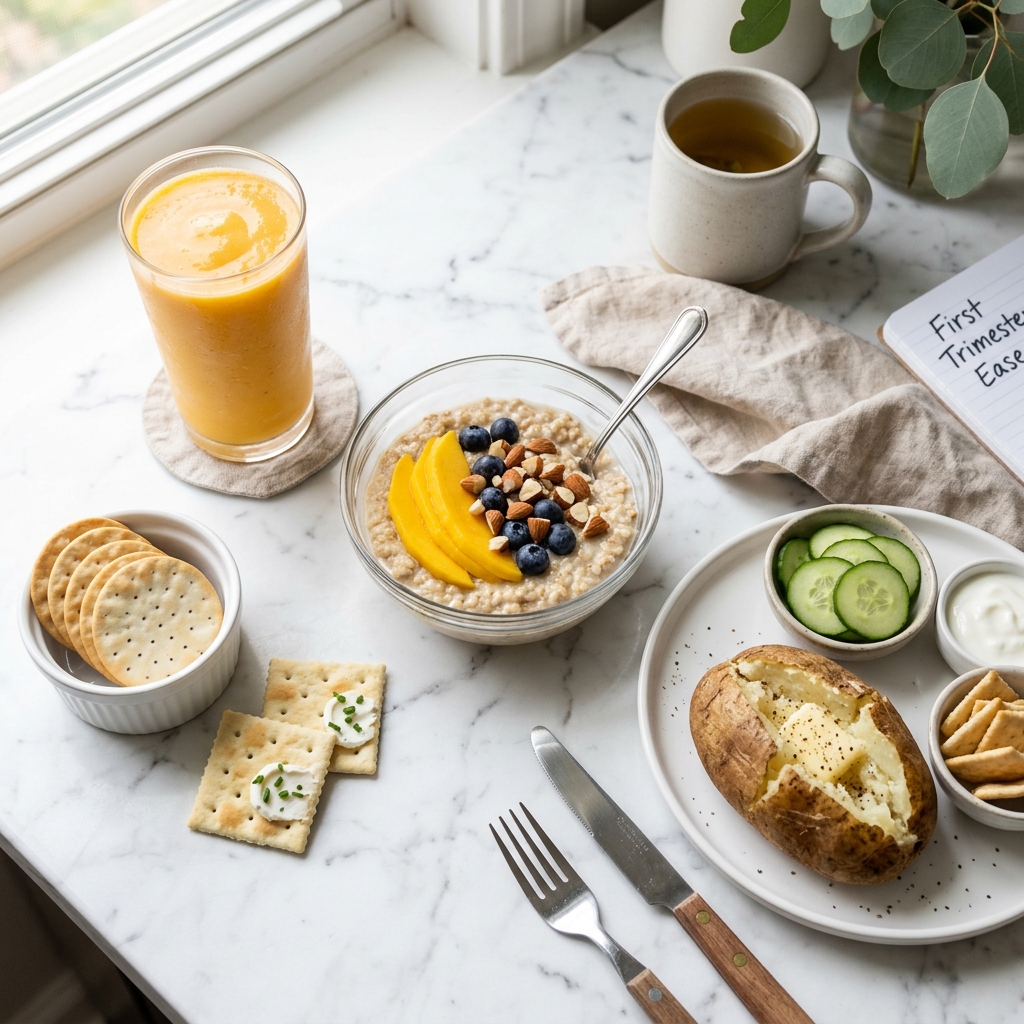
Smoothies are an excellent vehicle for nutrients when solid food feels impossible. This smoothie is served ice-cold, which numbs your taste buds slightly and keeps odors to a minimum. The star ingredient is ginger, which contains bioactive compounds called gingerols that interact with serotonin receptors in your gut to block the nausea signal. We combine this with Greek yogurt for a clean hit of protein, which helps stabilize your blood sugar over the next few hours.
Ingredients: 1 cup frozen mango chunks, 1/2 cup plain Greek yogurt, 1/2 cup unsweetened almond milk, 1/2 teaspoon freshly grated ginger, and a small splash of maple syrup if needed. Blend until completely smooth and drink immediately through a straw.
Cold Sesame Cucumber Noodles
Raw vegetables provide a clean, refreshing crunch that is often highly tolerated during early pregnancy. Cucumber has a high water content, which helps with your daily hydration targets. Rice noodles are extremely easy to digest and have virtually zero aroma when chilled. The light sesame dressing adds healthy fats without the heavy, oily smell of cooked sauces.
Ingredients: 1 cup cooked rice noodles (chilled), 1 small cucumber (sliced into thin ribbons), 1 teaspoon toasted sesame oil, 1 teaspoon low-sodium soy sauce, and a squeeze of fresh lime juice. Toss together and serve cold.
Baked Potato with Greek Yogurt and Chives
Potatoes are a classic morning sickness staple because they are bland and packed with easily digestible starch. While warm, a simple baked potato has very little aroma, especially if you skip strong toppings like sour cream or bacon. Instead, use plain Greek yogurt. It provides a creamy texture and a solid dose of protein and calcium, helping you hit your macros without the rich smell of traditional dairy toppings. If you're struggling with meat aversions, check out our guide on managing meat aversions safely.
Ingredients: 1 medium russet or sweet potato, baked until soft. Split open, let cool slightly so there is no active steam, and top with 3 tablespoons of cold, plain Greek yogurt and a sprinkle of fresh, finely chopped chives.
Almond Butter and Banana Toast
Dry, starchy foods are highly recommended by the National Health Service (NHS) for managing morning sickness. Toasting bread does produce a mild aroma, so if you're in a high-nausea window, let the toast cool completely before topping it. Almond butter provides clean, plant-based protein and healthy fats, while bananas are a natural source of Vitamin B6, which clinical trials show helps reduce the severity of pregnancy nausea.
Ingredients: 1 slice of whole-grain sourdough toast (cooled to room temp), 1 tablespoon of raw almond butter, and 1/2 banana, sliced thin. Spread the butter on the toast, top with banana slices, and eat slowly.
Lemon-Herb Quinoa and Cucumber Salad
Quinoa is a complete protein, meaning it contains all nine essential amino acids required for fetal development. When cooked and chilled, it has a very neutral profile. The acidity of fresh lemon juice is a natural nausea-killer, helping to stimulate saliva production and clear taste buds. This salad is served cold, making it completely odorless and refreshing.
Ingredients: 1 cup cooked quinoa (chilled), 1/2 cup diced cucumber, 1 tablespoon chopped fresh mint, 1 tablespoon extra virgin olive oil, and 2 tablespoons fresh lemon juice. Toss together in a bowl and store in the fridge before serving.
Plain Rice Congee with Silken Tofu
Congee is a traditional Asian rice porridge cooked with extra water until the grains break down into a smooth, gentle gruel. It is incredibly easy on an inflamed digestive system. While congee is served warm, it has zero aroma when cooked plain. Adding cold, silken tofu provides a soft, custard-like texture and clean plant-based protein that slides down easily without requiring chewing.
Ingredients: 1/2 cup jasmine rice cooked in 3 cups of water or low-sodium vegetable broth until completely soft and creamy. Let cool to a warm, non-steaming temp, and stir in 1/4 cup of cubed silken tofu and a tiny drop of sesame oil.
Cold Creamy Avocado Pasta
If you are dealing with fatigue and need a calorie-dense meal that you cant smell, cold pasta is a lifesaver. Avocados are packed with monounsaturated fats, potassium, and folate, which is critical for preventing neural tube defects in the first trimester. The sauce is made entirely of raw, cold ingredients, meaning you don't have to heat up a smelly sauce on the stove.
Ingredients: 1 cup cooked rotini or penne pasta (chilled), 1/2 ripe avocado mashed, 1 tablespoon lemon juice, 1 teaspoon olive oil, and a pinch of salt. Mix the mashed avocado with lemon juice and olive oil to form a smooth cream, then toss with the cold pasta.
Chia Seed Pudding with Berries
First-trimester hormones relax the smooth muscles of your digestive tract, which can lead to severe constipation. Chia seeds are a fantastic source of soluble fiber, which forms a gentle gel in your gut to keep things moving. This pudding is prepped overnight and eaten cold, straight from the fridge, providing a sweet, refreshing, and completely odorless breakfast or snack. For more tips on managing digestion, read our constipation relief guide.
Ingredients: 3 tablespoons of chia seeds mixed with 1 cup of unsweetened almond milk or coconut milk and a dash of vanilla extract. Let sit in the fridge overnight. Top with a handful of cold, fresh blueberries or raspberries before eating.
Dry-Roasted Chickpea and Cucumber Cups
When you are nauseous, sometimes a crunchy texture is the only thing that sounds appealing. Crunching on food can distract your brain from the sensation of nausea. Dry-roasted chickpeas have a nutty, neutral flavor and provide a great mix of plant-based protein and fiber. Pairing them with cold, crisp cucumber cubes keeps the meal refreshing and hydrated.
Ingredients: 1/2 cup of canned chickpeas, rinsed, dried, and roasted in the oven with a tiny bit of olive oil and salt at 400°F for 20 minutes until crunchy. Let cool completely. Mix with 1/2 cup of cold, diced English cucumber.
Apple Slices with Pasteurized Cottage Cheese
This is a zero-prep, zero-cook snack that you can assemble in seconds. Apples provide a crisp texture and a sweet-tart flavor that cuts through nausea, while cottage cheese is a fantastic, high-protein dairy source. As long as you purchase commercial cottage cheese, it is pasteurized and completely safe for pregnancy. For hydration targets, check out our guide on hydration during pregnancy to keep your fluids balanced alongside your snacks.
Ingredients: 1/2 cup of cold, plain cottage cheese served in a bowl, paired with 1 fresh apple, sliced thin. Dip the apple slices into the cottage cheese and enjoy.
Clinical Considerations: Hydration and Electrolytes
When you are managing severe nausea, we have to look at the risk of dehydration. Consistent vomiting forces your body to lose water and vital minerals like sodium, potassium, and magnesium. If you are struggling to drink plain water, dont force it. The cold, flat sensation of water can sometimes feel heavy in a sensitive stomach and trigger reflux.
Instead, prioritize diluted, cold liquids. Sipping on iced coconut water, electrolyte-infused sports drinks, or weak herbal teas can help replenish your mineral reserves without putting pressure on your stomach. Keep your sips small and frequent - taking large gulps of any liquid can stretch the stomach wall and trigger a contraction that leads to vomiting. If you want a detailed look at what is safe to drink, you can consult our herbal tea safety guide.
When Nausea Becomes Critical: Hyperemesis Gravidarum
While mild to moderate morning sickness is a normal, albeit uncomfortable, part of early pregnancy, it is vital to distinguish it from a serious clinical condition known as Hyperemesis Gravidarum (HG). HG is characterized by relentless vomiting that prevents you from keeping any food or fluids down, leading to weight loss and severe dehydration.
If you show signs of extreme dehydration, such as dark yellow urine, urinating very infrequently, feeling dizzy or faint when standing up, or losing more than 5% of your pre-pregnancy weight, you must contact your OB or midwife immediatly. HG cannot be managed with scent-free recipes alone and typically requires clinical intervention, including IV fluids and prescription anti-nausea medications. Your health and safety are the top priority.
Struggling to Track Your Early Pregnancy Meals?
Navigating the first trimester is hard, but you don't have to guess your nutrition targets. Download the PregnancyPlate App today. Our trimester-specific dashboard adjusts your macro goals automatically, logs your fluid intake, and helps you find gentle, scent-free food swaps to keep you and your baby nourished every day.
Sources
- American College of Obstetricians and Gynecologists (ACOG), Morning Sickness: Nausea and Vomiting of Pregnancy Guidelines (2024).
- National Health Service (NHS), Healthy Eating and Morning Sickness Guide (2023).
- Chemical Senses, Olfaction in pregnancy: systematic review and meta-analysis (2022).
- American Journal of Clinical Nutrition, Effects of a low-glycemic-index diet during pregnancy on offspring growth, body composition, and vascular health: a randomized clinical trial (2016).
Meet the Editorial Team
The researchers and experts behind PregnancyPlate.

Fiza Izra
Founder & Tech Researcher
A UK-based mother of 3 with a background in tech and data synthesis, Fiza brings real-world experience navigating hyperemesis gravidarum and postnatal depression. She engineers complex clinical guidelines (NHS, ACOG) into accessible tools, ensuring rigorous fact-checking with deep empathy.

Emma Davies
Senior Nutrition Editor
A mum and writer, Emma runs our food safety desk. She is the one who rings the restaurant to ask how long the lettuce sits out, checks every claim against CDC, FDA and NHS guidance, and rewrites the answer until it is usable at 9pm in a drive-thru queue.