Is Lasagna Safe During Pregnancy? Ricotta, Reheating and Leftover Rules
Craving lasagna while pregnant? We audit ricotta, mozzarella, mince, eggs, restaurant trays, fridge storage and the safest way to reheat leftovers until steaming hot.
In this article
Editorial note: This article is researched from official public health and pregnancy food safety guidance, then edited by the PregnancyPlate team for clarity. It is not medical advice. If you are worried about symptoms or a specific exposure, contact your midwife, GP or healthcare provider.
The Lasagna Safety Audit: Lasagna can be a safe, comforting pregnancy meal when the dairy is pasteurized, the meat is fully cooked, the centre is piping hot, and leftovers are cooled, stored and reheated properly. The risks are not from lasagna itself. They come from undercooked mince, unpasteurized ricotta, lukewarm buffet trays and forgotten fridge leftovers.
Check Pasta and Dairy Safety in the AppLasagna is exactly the kind of food pregnancy can make you crave: warm, rich, filling, salty, cheesy and soft enough to eat even when your appetite is unpredictable. It can also feel confusing. One person tells you ricotta is safe. Another says soft cheese is risky. You read that leftovers can carry Listeria, then remember there is a tray of lasagna in the fridge from two nights ago. Suddenly a comfort meal becomes a food safety calculation.
The good news is that lasagna is usually pregnancy-safe when it is made and handled properly. Most shop-bought ricotta, mozzarella and parmesan in the US and UK are made with pasteurized milk. Baked lasagna reaches temperatures that kill the main pathogens pregnant women worry about. The tomato sauce is acidic, the pasta is cooked, and the whole dish is usually served hot.
The caution is in the details. A thick tray can be hot at the edges but lukewarm in the centre. Meat sauce can be browned on the outside but not fully cooked before assembly. A restaurant slice can sit under weak heat lamps. Leftovers can spend too long cooling on the counter. This guide gives you the PregnancyPlate answer: when lasagna is safe, when to skip it, how to handle ricotta, and exactly how to store and reheat leftovers.
Quick Answer: Can You Eat Lasagna While Pregnant?
Yes, you can eat lasagna while pregnant if it is cooked until steaming hot throughout and the dairy ingredients are pasteurized. Homemade lasagna, restaurant lasagna and ready-meal lasagna can all be safe, but the safety depends on heat, dairy source, meat handling and leftover storage.
The safest lasagna is freshly baked, bubbling at the edges, hot in the centre and eaten soon after cooking. If it contains beef, pork, sausage, chicken or turkey, the meat should be fully cooked before the dish is assembled or should reach a safe internal temperature during baking. If it contains ricotta, mozzarella, mascarpone or bechamel, the milk should be pasteurized.
The lasagna to avoid is the lukewarm slice that has been sitting at a buffet, the homemade tray made with raw milk cheese, the restaurant portion that arrives barely warm, or leftovers that have been kept too long. Pregnancy food safety is less about banning lasagna and more about refusing the risky version.
Ricotta: The Main Question Everyone Asks
Ricotta is a soft cheese, so it understandably worries pregnant women. The important distinction is pasteurization. Pasteurized ricotta is generally safe in pregnancy, especially when baked inside lasagna until hot. Unpasteurized ricotta should be avoided because raw milk dairy can carry Listeria, Salmonella, E. coli and other pathogens that matter more during pregnancy.
In supermarkets, most mainstream ricotta is made from pasteurized milk. Still, check the label instead of guessing. You want to see "pasteurized milk" or a clear equivalent. If the label says raw milk, unpasteurized milk, or you cannot confirm the source at a farmers market or small deli, choose another cheese.
Restaurant ricotta is trickier because you may not see the packaging. Ask a simple question: "Is the ricotta made with pasteurized milk?" Most restaurants will be able to check. If they cannot confirm, choose a dish without soft cheese or one that uses clearly pasteurized mozzarella or parmesan instead.
Mozzarella, Parmesan and Bechamel
Mozzarella in lasagna is usually safe when pasteurized and baked. Low-moisture shredded mozzarella is commonly made from pasteurized milk and is heated during baking. Fresh mozzarella can also be safe if pasteurized, but it has a higher moisture content, so label checking matters more.
Parmesan is usually lower risk because it is a hard, aged cheese. Many hard cheeses are considered safer in pregnancy even when made traditionally, because their low moisture and acidity make it harder for harmful bacteria to grow. Still, pasteurized is the cleanest choice if you have the option.
Bechamel is a cooked white sauce made from milk, butter and flour. If the milk is pasteurized and the sauce is cooked properly, bechamel is pregnancy-safe. The main issue is storage. Creamy sauces should not sit warm for hours, and leftover lasagna with bechamel needs the same fridge and reheating rules as meat lasagna.
Meat Sauce: Beef, Pork, Sausage and Turkey
Meat lasagna is safe when the meat is fully cooked. Ground meat deserves extra care because bacteria can be mixed through the mince during processing. A steak may have bacteria mostly on the surface, but minced beef or pork can carry bacteria throughout the meat. Browning should be thorough, with no pink patches left in the pan.
If you are making lasagna at home, cook the mince fully before layering. Break it up as it cooks, drain excess fat if needed, and let the sauce simmer so the meat is not just browned on the outside but cooked through. If using sausage meat, treat it like mince. Crumbled sausage should be cooked until no pink remains.
Chicken or turkey lasagna also needs proper cooking. Poultry should reach the safety standard used for chicken, and the finished dish should be hot throughout. If the lasagna has large pieces of chicken rather than mince, cut one open and check that the inside is fully cooked, not translucent or rubbery.
The Centre Temperature Problem
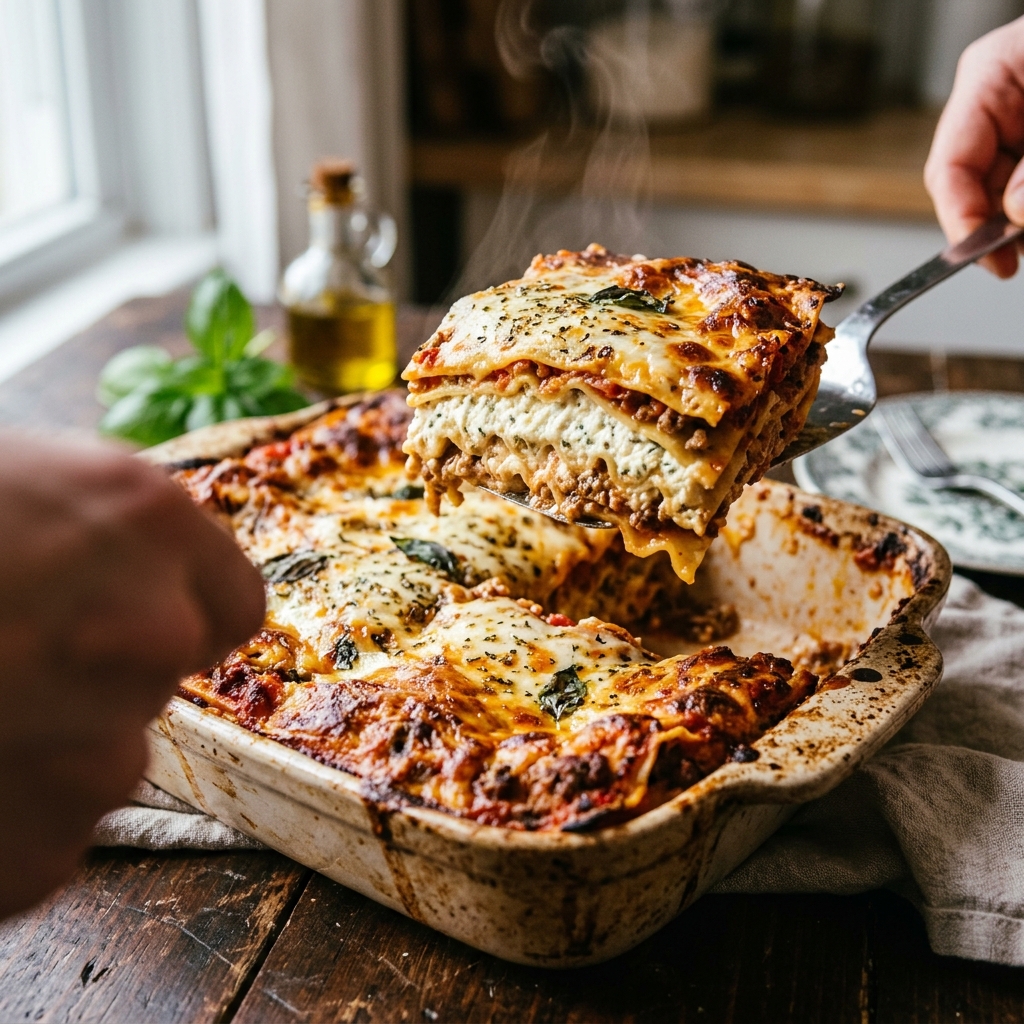
Lasagna is thick. That is what makes it comforting, but it also creates a safety issue. The corners can bubble while the middle is still only warm. During pregnancy, the middle matters. You want the centre steaming hot, not just the cheese on top browned.
If you have a food thermometer, the safest target for reheated leftovers is 165 F in the centre. For freshly cooked meat lasagna, make sure the meat component has been cooked safely and the assembled dish is bubbling hot all the way through. If you do not have a thermometer, use visual and practical checks: steam from the centre, sauce bubbling, cheese fully melted, and no cold or lukewarm spots when you cut into the middle.
Covering the dish with foil for part of the bake helps the centre heat without burning the top. Letting it rest for 10 minutes after baking improves texture, but do not leave it sitting out for hours. Resting is not the same as storage.
Leftover Lasagna: The 2-Hour Rule
Leftovers are where many safe meals become risky. Lasagna should not sit on the counter all evening. Once it has stopped steaming aggressively, portion it into shallow containers and refrigerate it within 2 hours of cooking. If your kitchen is very warm, aim for sooner.
Large trays cool slowly. A deep dish placed straight into the fridge can stay warm in the centre for too long, which gives bacteria a chance to multiply. Portioning into smaller containers helps the food cool faster and makes reheating easier later.
Eat refrigerated leftover lasagna within 1 to 2 days during pregnancy for the most conservative approach. Some general food safety guidance allows longer for certain leftovers, but pregnancy is a good reason to use a tighter window, especially for meat, dairy and creamy sauces. If it smells odd, looks watery or has been forgotten at the back of the fridge, do not try to rescue it.
Reheating Rules: Oven, Microwave and Air Fryer
Reheat lasagna until steaming hot throughout. In the oven, place the slice in an oven-safe dish, add a spoon of water or sauce if it looks dry, cover with foil, and heat until the centre is hot. Remove the foil briefly at the end if you want the top to crisp.
In the microwave, cover the slice loosely, heat in stages, and pause to let heat distribute. Thick pasta dishes can have cold pockets, so cut the slice in half or stir loose pieces if possible. Check the centre before eating. If one bite is hot and the next is cool, it needs longer.
An air fryer can work for smaller portions, but it may crisp the outside faster than it heats the middle. Use it only for thin slices or after partially warming the lasagna in the microwave. The goal is not just a crunchy top. The goal is a hot centre.
Restaurant Lasagna and Buffet Trays
Restaurant lasagna is usually safe if it is served hot from the oven. The risk rises when slices are held in warmers, hotel buffets, catered trays or cafeteria pans. Food that is held warm but not hot enough can sit in the bacterial danger zone. Pregnant women should be stricter with this than the average diner.
At a restaurant, send it back if the centre is lukewarm. You do not need to apologize for that. Ask for it to be reheated until piping hot. If the waiter says the lasagna is pre-cooked and just warmed, that is not automatically a problem, but the warming step must be thorough.
At buffets, choose lasagna only if the tray is visibly hot, recently replaced and steaming. Avoid the last corner piece that has been sitting under a weak heat lamp. Also be cautious with shared serving spoons, messy trays and food that looks dried out around the edges. Those are signs it has been sitting for too long.
Frozen and Ready-Meal Lasagna
Frozen lasagna and ready meals can be safe in pregnancy if cooked exactly according to the packet instructions. Do not shorten the cooking time because the top looks done. Frozen centres take longer to heat than they appear, and microwave wattage varies.
Follow standing time instructions. Standing time is part of the cooking process because heat continues to move through the dish after the microwave stops. Skipping it can leave cold spots. After standing, check that the centre is steaming before eating.
If the packaging says "cook from frozen," cook from frozen. If it says "defrost first," defrost in the fridge, not on the counter. Never refreeze a ready meal that has been warmed or partly cooked.
Vegetable Lasagna Is Not Automatically Safer
Vegetable lasagna avoids the mince issue, but it still has dairy, moisture and leftovers to manage. Spinach, mushrooms, courgette, aubergine and peppers can all be safe when cooked, but washed produce and proper storage still matter.
Spinach and ricotta lasagna deserves the same pasteurized cheese check. Mushroom lasagna needs thorough cooking because mushrooms release water and can leave the centre wet and slow to heat. Roasted vegetable lasagna should be cooked until the vegetables are tender and the sauce is bubbling.
Vegetarian does not mean low-risk if the dish has been sitting lukewarm for hours. The same rule applies: hot when served, cooled quickly, stored cold, reheated until steaming.
The PregnancyPlate Lasagna Checklist
Before You Eat
- Check the dairy: Ricotta, mozzarella and milk sauces should be pasteurized.
- Cook mince fully: No pink beef, pork, sausage, turkey or chicken.
- Heat the centre: The middle should be steaming hot, not just the edges.
- Be strict with buffets: Skip lukewarm catered trays and old-looking slices.
- Cool leftovers fast: Portion into shallow containers within 2 hours.
- Reheat properly: Aim for 165 F in the centre or visibly steaming throughout.
- Use a short fridge window: Eat leftovers within 1 to 2 days during pregnancy.
When to Skip It
Skip lasagna if you cannot confirm whether the ricotta is pasteurized, if the meat looks undercooked, if the centre is lukewarm, if it has been sitting out for more than 2 hours, or if leftovers are older than your comfort window. Also skip it if the smell, texture or appearance feels off. Pregnancy is not the time to negotiate with questionable leftovers.
If you accidentally ate a lukewarm slice, do not panic. Most exposures do not lead to illness. Monitor how you feel and contact your healthcare provider if you develop fever, persistent vomiting, diarrhoea, severe abdominal pain, flu-like symptoms, dehydration, or reduced fetal movement if you are far enough along to track it.
The Final Verdict
Lasagna can absolutely stay on the pregnancy menu. The safest version is made with pasteurized dairy, fully cooked meat or vegetables, and baked until the centre is piping hot. Leftovers are fine when cooled quickly, refrigerated properly and reheated until steaming.
The key is not fear. It is process. Check the cheese. Cook the meat. Heat the middle. Store leftovers properly. Reheat with patience. That turns lasagna from a food safety worry into exactly what it should be during pregnancy: a warm, satisfying meal that actually feels like comfort.