Is Mayonnaise Safe During Pregnancy? (Store-Bought vs Homemade)
Clear guidance on mayonnaise safety during pregnancy: pasteurised vs raw eggs, store-bought vs homemade, safe brands, and what to avoid at restaurants.
In this article
Editorial note: This article is researched from official public health and pregnancy food safety guidance, then edited by the PregnancyPlate team for clarity. It is not medical advice. If you are worried about symptoms or a specific exposure, contact your midwife, GP or healthcare provider.
Quick Answer
Yes - store-bought mayonnaise is safe during pregnancy. Commercial mayonnaise from supermarket shelves is made with pasteurised eggs, which eliminates the Salmonella risk that makes raw eggs concerning. The confusion arises because traditional homemade mayonnaise uses raw egg yolks, which can harbour harmful bacteria. Understanding this distinction is the key to enjoying mayo safely throughout your pregnancy.
So that tuna mayo sandwich, coleslaw at the barbecue, or aioli with your chips? Let's break down exactly what's safe and what deserves caution.
Why Raw Eggs Are a Concern During Pregnancy
The primary worry with mayonnaise during pregnancy is Salmonella - a type of bacteria that can be present in raw or undercooked eggs. For most healthy adults, Salmonella causes unpleasant but temporary food poisoning. During pregnancy, however, the stakes are higher.
⚠️ Why Salmonella Is Serious in Pregnancy
- Pregnancy suppresses parts of the immune system, making infections harder to fight
- Severe dehydration from vomiting and diarrhoea can affect amniotic fluid levels
- In rare cases, Salmonella can cross the placenta and cause serious complications
- High fever associated with infection can potentially harm fetal development
Source: NHS and ACOG guidelines on food safety during pregnancy
The good news? Pasteurisation kills Salmonella. When eggs are pasteurised (heated to a specific temperature that destroys bacteria without cooking the egg), they become safe to consume even without further cooking. This is exactly what commercial mayonnaise manufacturers do.
Store-Bought Mayonnaise: Why It's Safe
Here's something that surprises many expecting mothers: commercial mayonnaise is actually one of the safer condiments you can choose. Beyond using pasteurised eggs, store-bought mayo has several protective factors:
✓ What Makes Commercial Mayo Safe
- Pasteurised eggs: Heat-treated to eliminate Salmonella before production
- Acidic pH: The vinegar and lemon juice create an environment where bacteria struggle to survive
- Controlled manufacturing: Strict hygiene standards and testing throughout production
- Preservatives: Additional ingredients that extend shelf life and inhibit bacterial growth
- Sealed packaging: No exposure to contaminants until you open it
Studies have actually shown that commercial mayonnaise can inhibit bacterial growth due to its acidic nature. A 2019 food science study found that Salmonella added to commercial mayonnaise died off within 24-72 hours due to the low pH environment. This is why mayonnaise-based salads left at room temperature are often safer than people assume - though proper refrigeration is still recommended.
Safe Brands and What to Look For
Virtually all major supermarket mayonnaise brands in the UK, US, EU, and Australia use pasteurised eggs. You don't need to hunt for special "pregnancy-safe" versions - standard commercial mayo is fine.
Trusted Brands (All Use Pasteurised Eggs)
- Hellmann's: UK's most popular brand - completely safe
- Heinz Mayonnaise: Made with pasteurised eggs
- Kewpie: Japanese mayo - uses pasteurised yolks
- Sir Kensington's: Premium brand - pasteurised
- Supermarket own-brands: Tesco, Sainsbury's, ASDA, M&S - all pasteurised
- Miracle Whip: Mayo-style dressing - pasteurised
Label Clues
If you want extra reassurance, check the ingredients label. You may see:
- "Pasteurised egg" or "pasteurised egg yolk"
- "Free-range pasteurised eggs"
- Simply "egg yolk" on a commercial product - this will be pasteurised by default in most countries
Homemade Mayonnaise: The Real Risk
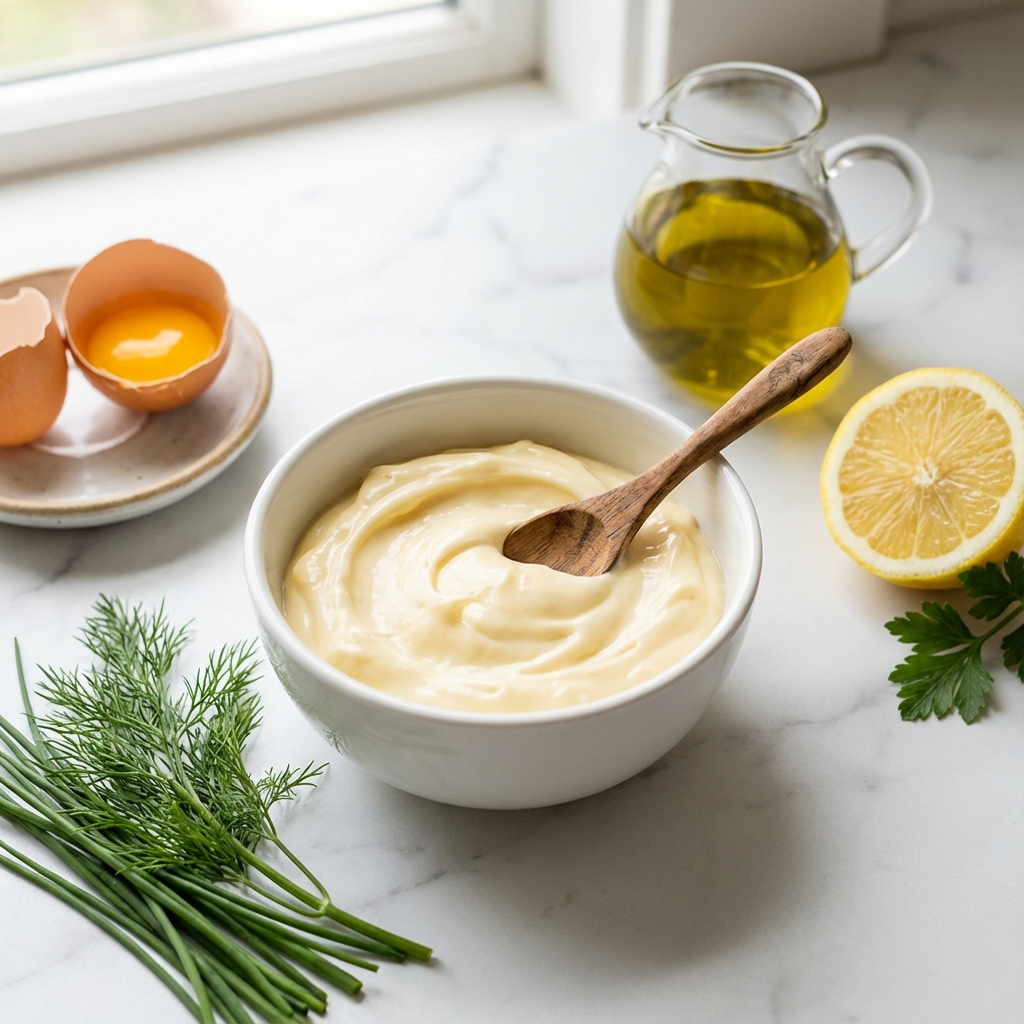
This is where the genuine concern lies. Traditional homemade mayonnaise - the kind made by whisking raw egg yolks with oil and lemon - should be avoided during pregnancy unless you take specific precautions.
⚠️ Homemade Mayo: What to Know
- Traditional recipes use raw, unpasteurised egg yolks
- Home kitchens lack the controlled environment of commercial production
- Even fresh, organic, free-range eggs can carry Salmonella (about 1 in 20,000 eggs)
- The acidity develops over time - fresh homemade mayo is less acidic than store-bought
Safe Alternatives for Homemade
If you love the taste of fresh mayonnaise, you have options:
- Use pasteurised eggs: Look for pasteurised shell eggs (often labelled "safe to eat raw") in supermarkets
- British Lion eggs: In the UK, eggs stamped with the Lion mark are considered safe for pregnant women to eat runny or raw - but this guidance applies to Lion-marked eggs only
- Pasteurised liquid egg yolks: Available in some shops - perfect for homemade mayo
- Aquafaba mayo: Egg-free version using chickpea water - naturally safe
Restaurant and Takeaway Guidance
Eating out adds another layer of uncertainty. Here's how to navigate mayonnaise-based items at restaurants:
📍 Restaurant Scenarios
| Situation | Safety Level | Recommendation |
|---|---|---|
| Fast food chains (McDonald's, etc.) | ✅ Safe | Commercial mayo - no concerns |
| Standard restaurants | ✅ Usually safe | Most use commercial mayo; ask if unsure |
| High-end/fine dining | ⚠️ Ask first | More likely to make fresh - confirm pasteurised |
| Artisan cafés | ⚠️ Ask first | May use homemade - ask about eggs |
| Street food/markets | ⚠️ Variable | Quality varies - ask or choose alternatives |
Questions to Ask
- "Is your aioli/mayo made in-house or commercial?"
- "Does your house-made mayo use pasteurised eggs?"
- "Can I have the dressing on the side?" (to check consistency/source)
Pro tip: If the server seems unsure or the answer is vague, simply ask for olive oil and vinegar as a dressing, or request the dish without the sauce.
Mayo-Based Foods: A Safety Breakdown
Mayonnaise appears in many dishes beyond sandwiches. Here's what's safe:
Typically Safe (When Made with Commercial Mayo)
- Coleslaw: From supermarkets or chains - safe
- Potato salad: Commercial or restaurant versions using standard mayo
- Egg salad: The eggs are cooked; mayo is commercial - double safe
- Tuna mayo: A pregnancy staple (watch mercury limits on tuna)
- Thousand Island dressing: Commercial versions are pasteurised
- Ranch dressing: Made with pasteurised ingredients commercially
- Tartar sauce: Commercial brands are safe
Ask First
- Aioli: Traditional aioli is raw egg and garlic - many restaurants now use commercial versions, but ask
- Hollandaise sauce: Uses raw or lightly cooked eggs - avoid or confirm pasteurised
- Béarnaise sauce: Similar to hollandaise - ask about preparation
- Caesar dressing: Traditional recipes use raw egg - commercial versions are safe
- Fresh deli salads: Depends on the source - ask about mayo origin
Knowledge Check: Test Your Understanding
🧠 Scenario Quiz
Q: You're at a friend's barbecue and they've made homemade coleslaw. They mention the mayo is "from scratch." What do you do?
A: Politely ask if they used pasteurised eggs or Lion-marked eggs (UK). If they're not sure or used regular eggs, it's best to skip it and enjoy the other dishes. You could say, "I'm being extra careful during pregnancy - I'll stick to the grilled items!" No offense taken by thoughtful hosts.
Storage and Handling Tips
Even safe mayonnaise requires proper handling to stay safe:
- Refrigerate after opening: Commercial mayo should be stored below 4°C once opened
- Check use-by dates: Opened mayo typically stays good for 2-3 months refrigerated
- Avoid temperature abuse: Don't leave mayo-based dishes at room temperature for more than 2 hours
- Use clean utensils: Don't double-dip knives that touched bread or other foods
- Trust your senses: If mayo smells off, is discoloured, or has separated unusually, discard it
Common Questions
- Is Hellmann's safe during pregnancy? Yes - Hellmann's uses pasteurised eggs in all their mayonnaise products.
- Can I eat tuna mayo sandwiches while pregnant? Yes, the mayo is safe. Just be mindful of your weekly tuna intake due to mercury (see our tuna guide).
- Is Japanese Kewpie mayo pasteurised? Yes - Kewpie uses pasteurised egg yolks, making it safe during pregnancy.
- What about vegan mayo? Egg-free mayonnaise (like vegenaise) poses no Salmonella risk - completely safe.
- Can I eat mayo every day? From a food safety perspective, yes. Nutritionally, be mindful of fat and calorie content as part of overall balance.
- Is restaurant aioli safe? Ask - some restaurants make fresh aioli with raw eggs, while others use commercial bases.
The Bottom Line
Mayonnaise safety during pregnancy is simpler than the internet makes it seem. Commercial, store-bought mayo is safe - it's made with pasteurised eggs and has an acidic environment that protects against bacteria. The only real caution is around homemade mayonnaise from raw, unpasteurised eggs, or restaurant sauces where you can't confirm the source.
Enjoy your sandwiches, salads, and dips with confidence. Just ask a quick question when eating out, skip clearly homemade options unless you know they're made safely, and you'll be fine.
Your tuna mayo, coleslaw, and chips with aioli? Back on the menu.
Related Reading
See also: Can I Eat Tuna While Pregnant?, Is Soft-Serve Ice Cream Safe During Pregnancy?, and Foods to Avoid During Pregnancy.
Download PregnancyPlate to check any food instantly, get personalised safety guidance, and navigate restaurant menus with confidence throughout your pregnancy.
Meet the Editorial Team
The researchers and experts behind PregnancyPlate.

Fiza Izra
Founder & Tech Researcher
A UK-based mother of 3 with a background in tech and data synthesis, Fiza brings real-world experience navigating hyperemesis gravidarum and postnatal depression. She engineers complex clinical guidelines (NHS, ACOG) into accessible tools, ensuring rigorous fact-checking with deep empathy.

Emma Davies
Senior Nutrition Editor
A mum and writer, Emma runs our food safety desk. She is the one who rings the restaurant to ask how long the lettuce sits out, checks every claim against CDC, FDA and NHS guidance, and rewrites the answer until it is usable at 9pm in a drive-thru queue.