Is Smoked Salmon Safe During Pregnancy? Cold vs Hot Smoked
Cold-smoked salmon and lox are not fully cooked, so they carry a listeria risk. Hot-smoked is different. The clear verdict on each type, and what to order instead.
In this article
Editorial note: This article is researched from official public health and pregnancy food safety guidance, then edited by the PregnancyPlate team for clarity. It is not medical advice. If you are worried about symptoms or a specific exposure, contact your midwife, GP or healthcare provider.
Quick Answer: It depends on the *temperature* of the smoking process. Hot-smoked salmon (cooked to 145°F/63°C) is perfectly safe and a nutritional powerhouse. Cold-smoked salmon (including lox and Nova) is considered "raw" and carries a high risk of *Listeria*, and should be avoided unless it is cooked into a hot dish (like a pasta or quiche) before eating.
Check Your Salmon SafetySafety is step one. Nutrition helps your baby thrive.
Knowing a meal is safe does not tell you whether you are getting enough iron, folate, calcium and choline. PregnancyPlate tracks all of it from a photo of your plate.
- See nutrient progress
- Scan meals instantly
- Nourish with confidence
 Scan to download
Open with iPhone camera
Scan to download
Open with iPhone camera
The Smoked Salmon Confusion
Few foods cause more debate in prenatal forums than smoked salmon. You'll hear some moms say it's their main source of Omega-3s, while others warn of the "Listeria danger." The reason for this confusion is that "smoked salmon" isn't just one product - it’s two completely different cooking processes. During pregnancy, understanding this distinction is the difference between a safe, nutrient-dense breakfast and a high-risk meal.
In this guide, we’ll clear up the "Lox vs. Hot-Smoked" debate, look at the science of *Listeria monocytogenes*, and show you how to safely integrate this superfood into your pregnancy diet.
Hot-Smoked vs. Cold-Smoked: The Safety Spectrum
The "Cold" vs "Hot" label refers to the temperature of the smoke used to cure the fish. This is the single most important factor for pregnancy safety.
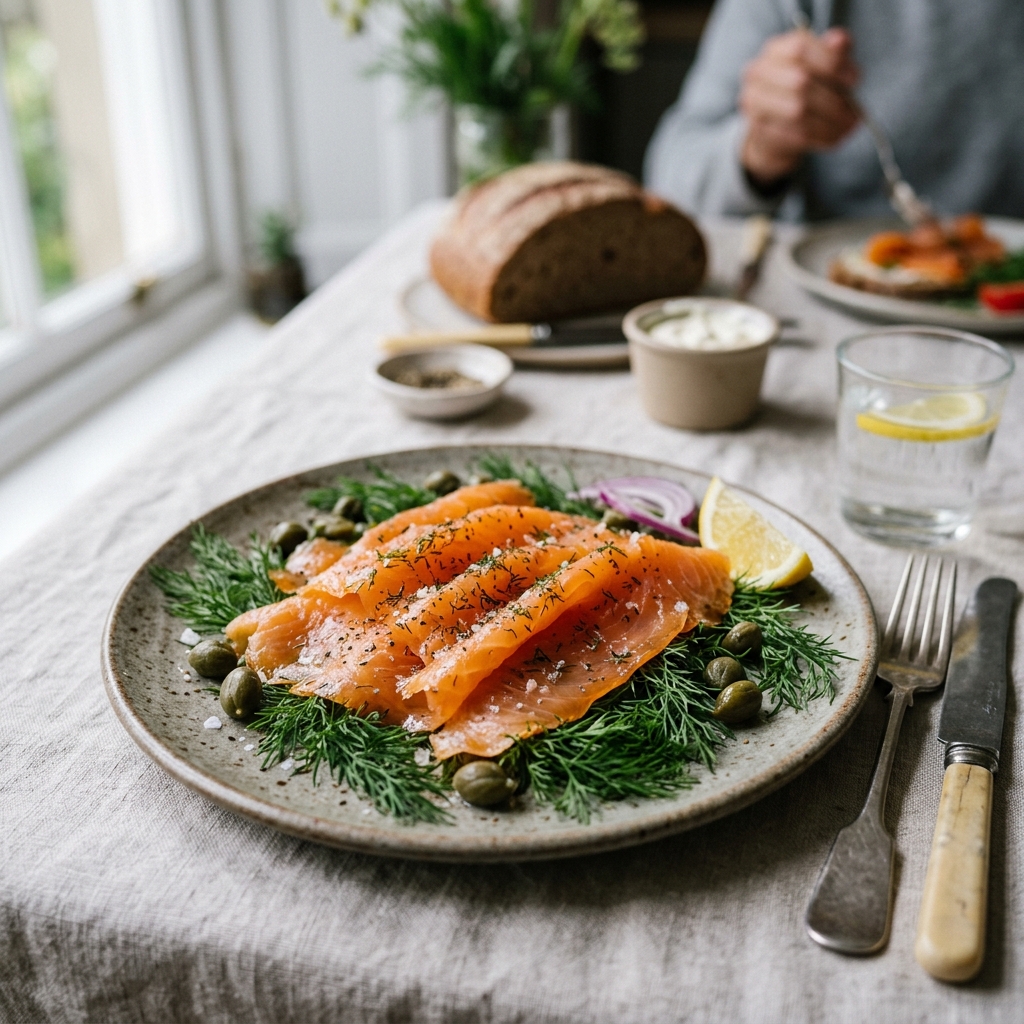
Cold-Smoked Salmon (Avoid)
Cold-smoking occurs at temperatures below 90°F (32°C). At this low heat, the salmon is not actually "cooked" - it is simply cured in salt and then infused with smoke flavor. It retains the texture of raw fish. Because it isn't heated enough to kill pathogens like *Listeria monocytogenes*, it is classified as a high-risk food for expectant mothers.
Common Names: Lox, Nova, Gravlax, Carpaccio-style, or "Smoked Salmon Slices" found in the refrigerated deli section.
Hot-Smoked Salmon (Safe & Recommended)
Hot-smoking involves temperatures of 120°F to 180°F. By the end of the process, the salmon has a flaky, opaque texture similar to grilled or baked salmon. If the internal temperature has reached 145°F (63°C), the *Listeria* bacteria is destroyed, making it 100% safe for pregnancy.
Common Names: Kippered salmon, smoked salmon fillets, or "Flaked" smoked salmon.
Why Listeria is the "Silent Risk"
You might wonder: "I've eaten lox for years and never gotten sick, why stop now?" The answer lies in the unique vulnerability of pregnancy. During gestation, your immune system is naturally suppressed so it doesn't reject the baby. You are 10 to 20 times more likely to contract Listeriosis than a non-pregnant adult.
While the symptoms might feel like a mild flu for you, *Listeria* can cross the placenta. This can lead to miscarriage, stillbirth, or severe neurological issues for the newborn. This is why "it's probably fine" isn't a gamble worth taking with cold-smoked fish.
💡 The "Heat Hack"
If you've already bought a pack of cold-smoked lox and don't want to waste it, you can still eat it! Simply cook it until it is steaming hot. Toss it into a hot carbonara pasta, bake it on a gourmet pizza, or fold it into a breakfast quiche. Once the fish is heated to a "steaming hot" state, the *Listeria* risk is neutralized.
The Omega-3 Win: Why Salmon is a Superfood
Now for the good news: Salmon (especially smoked) is one of the best foods you can eat for your baby's development. It is rich in DHA (Docosahexaenoic Acid), a long-chain Omega-3 fatty acid that is the primary structural component of the human brain and retina.
- Brain Development: Studies show that higher maternal fish intake is linked to higher IQ and better linguistic skills in toddlers.
- Low Mercury: Unlike tuna or swordfish, salmon is very low in mercury, meaning you can safely eat 2-3 servings (8-12 oz) per week.
- Vitamin D: Smoked salmon is one of the few natural food sources of Vitamin D, which is crucial for fetal bone health and your own immune support.
The "Bagel Test": How to Safely Order Out
When you're at a deli or brunch spot, ordering can be tricky. Here is the PregnancyPlate Protocol for navigating the menu:
"I’ll have the Smoked Salmon Bagel, but can you tell me if the salmon is 'Hot-Smoked' or 'Cold-Smoked'?"
If the server doesn't know, ask: "Is the salmon flaky like a cooked piece of fish, or is it silky and translucent like lox?" If it's silky/lox, ask if they can pan-sear it for you until it’s hot. If they can’t, play it safe and order a different protein.
Canned & Shelf-Stable Smoked Salmon
A great safe haven for smoked salmon lovers is the canned or pouch section. Shelf-stable products (not the ones in the refrigerated case) go through a "retort" process - which is essentially pressure-cooking under high heat. This process kills all bacteria and makes the product 100% safe to eat straight from the can. Mix it with pasteurized mayo for a safe, smoky salmon salad!
The Salt Signal: Managing Sodium & Blood Pressure
While the Omega-3s in salmon are a massive "win," there is one trade-off with the smoking process: Sodium. To cure the fish before smoking, it is often brined in large amounts of salt. A typical serving of smoked salmon can contain over 600mg of sodium, which is about 25% of your daily recommended limit.
⚠️ The Preeclampsia Precaution
If you are at high risk for Preeclampsia or are managing Gestational Hypertension, the salt in smoked salmon can cause your body to retain fluid and spike your blood pressure. Our recommendation is to limit smoked salmon to one serving per week and pair it with high-potassium foods like avocado or a side of spinach to help your body balance the sodium load.
Storage & The "3-Day Rule"
Even hot-smoked salmon isn't safe forever. Once a package is opened, it is vulnerable to secondary contamination in your own refrigerator. Unlike non-pregnant individuals who might keep an open pack for a week, expectant mothers should follow the 3-Day Rule.
- Original Packaging: Keep it sealed until the moment you use it.
- Open Containers: Once opened, transfer the fish to an airtight glass container.
- The Deadline: If you haven't finished the hot-smoked salmon within 72 hours of opening, discard it or cook it thoroughly (steaming hot) before eating. This prevents any opportunistic bacteria from reaching levels that could harm your pregnancy.
Mercury vs. DHA: The Real Science
Many moms avoid all fish because they fear mercury. However, the FDA and EPA explicitly list salmon as a "Best Choice" for pregnancy. But why? It comes down to the *Mercury-to-Selenium* ratio. Salmon is high in selenium, a mineral that actually helps block the absorption of mercury in the body. When you combine this with the low baseline mercury levels found in Atlantic or Sockeye salmon, you have a food that provides nearly 1,000mg of DHA per serving with virtually zero heavy metal risk.
Trimester-Specific Benefits
- Trimester 1: Small, nutrient-dense bites. If you can only manage a few crackers, topping them with hot-smoked salmon provides enough protein and DHA to keep your energy up while your appetite is low.
- Trimester 2: The "Brain Building" phase. This is the peak time for fetal neurological development. Aim for 2 servings of safe, hot-smoked salmon per week to maximize the DHA flow to the placenta.
- Trimester 3: Vitamin D support. As your baby's bones are mineralizing rapidly, the high Vitamin D and Calcium levels in salmon support bone density and help prevent the "brain fog" often associated with late-pregnancy nutrient depletion.
Frequently Asked Questions (FAQ)
Can I eat "Salmon Jerky" or "Maple-Cured" salmon?
Jerky-style salmon is usually shelf-stable, meaning it has been dried and heat-treated to a point where bacteria cannot grow. However, check the label - if it says "keep refrigerated," treat it with the same caution as cold-smoked lox. If it’s shelf-stable on the snack aisle, it’s generally safe, though very high in sugar and salt.
Is "Imitation" Smoked Salmon safe?
Some vegan alternatives use carrots or tomatoes to mimic the look of lox. These are 100% safe but lack the crucial DHA and protein of real salmon. If it’s a "Surimi" based imitation (white fish dyed and flavored), it is safe as long as it has been cooked, but it is not a nutritional equivalent to real salmon.
What about "Nova" salmon?
Nova is a style of cold-smoked salmon that is particularly popular in the Northeastern US. Despite the different name, it is still cold-smoked and carries the same *Listeria* risk as standard lox. Avoid it unless you're cooking it into a hot dish.
Knowledge Check: Quiz
🧠 Smoked Salmon Safety Quiz
Q: Does freezing lox kill the Listeria bacteria?
A: No. Unlike parasites (which are killed by deep-freezing), *Listeria* is a hardy bacteria that can survive and even slowly grow in freezing temperatures. The only certain way to kill *Listeria* is through Heat (145°F or steaming hot).
The Final Verdict
Is Smoked Salmon safe? A resounding Yes for Hot-Smoked, and a 'Heat-Required' for Cold-Smoked/Lox. By choosing flaked, hot-smoked fillets or canned options, you get all the brain-building benefits of DHA without the anxiety of bacterial infection. Enjoy those Omega-3s - they are pure fuel for your little one's developing mind!
Related Reading
For more seafood and fast-food safety audits, check out: The Crab Safety Guide, The Tilapia Mercury Audit, and our guide to Taco Bell Pregnancy Safety. If you're a sushi fan, don't miss our Japan-Inspired Sushi Secrets.
Download the PregnancyPlate App and use our Seafood Safety Scanner. We calculate the mercury-to-DHA ratio of every fish species in real-time, helping you optimize your baby's brain health with total confidence. You can also log your intake to ensure you're hitting your Weekly 1,000mg DHA Goal.
Meet the Editorial Team
The researchers and experts behind PregnancyPlate.

Fiza Izra
Founder & Tech Researcher
A UK-based mother of 3 with a background in tech and data synthesis, Fiza brings real-world experience navigating hyperemesis gravidarum and postnatal depression. She engineers complex clinical guidelines (NHS, ACOG) into accessible tools, ensuring rigorous fact-checking with deep empathy.

Emma Davies
Senior Nutrition Editor
A mum and writer, Emma runs our food safety desk. She is the one who rings the restaurant to ask how long the lettuce sits out, checks every claim against CDC, FDA and NHS guidance, and rewrites the answer until it is usable at 9pm in a drive-thru queue.