Is Tilapia Safe During Pregnancy? (Mercury & Cooking Guide for 2026)
Often called the 'affordable superfood,' Tilapia is one of the safest fish for pregnancy. We address the farm-raised controversy and why it's a Top 5 'Best Choice'.
In this article
Editorial note: This article is researched from official public health and pregnancy food safety guidance, then edited by the PregnancyPlate team for clarity. It is not medical advice. If you are worried about symptoms or a specific exposure, contact your midwife, GP or healthcare provider.
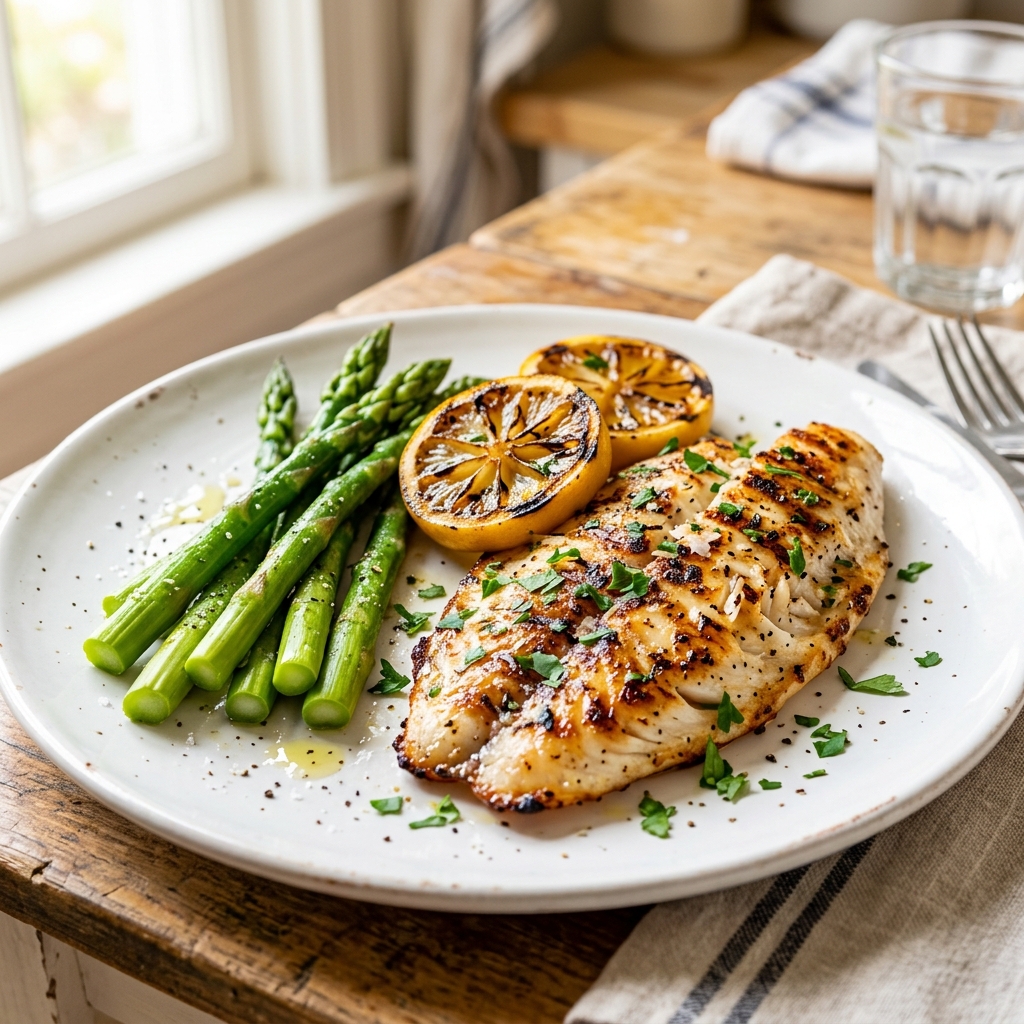
Quick Answer: Yes! Tilapia is classified by the FDA and EPA as one of the "Best Choices" for pregnancy. It is exceptionally low in mercury (averaging 0.01 PPM) and a high-quality source of lean protein. You can safely enjoy 2-3 servings (8-12 oz) per week. Whether it's grilled, baked, or in a taco, it's a safe haven for seafood lovers.
Check Your Mercury IntakeSafety is step one. Nutrition helps your baby thrive.
Knowing a meal is safe does not tell you whether you are getting enough iron, folate, calcium and choline. PregnancyPlate tracks all of it from a photo of your plate.
- See nutrient progress
- Scan meals instantly
- Nourish with confidence
 Scan to download
Open with iPhone camera
Scan to download
Open with iPhone camera
The Affordable Superfood: Tilapia's Reputation Reclaimed
Tilapia is often the first fish we reach for in the supermarket. It's mild, it's affordable, and it's incredibly versatile. However, in the world of internet wellness culture, Tilapia has occasionally been unfairly maligned. You'll hear myths about it being "dirty" or "nutritionally void" because it's farm-raised. For the expectant mother, these myths create unnecessary "Safety Static."
In this guide, we are looking at the 2026 clinical data to prove that Tilapia is not only safe but is one of the most practical ways to hit your prenatal protein goals without the mercury risk found in larger ocean predators.
The Mercury Truth: Why Tilapia Wins
Mercury is a neurotoxin that can cross the placenta and affect the baby's developing brain. This is why we avoid shark, swordfish, and king mackerel. Mercury accumulates in fish that are higher up the food chain (predators) and fish that live long lives.
Tilapia, however, is a short-lived herbivore. It feeds on algae and plants, meaning it doesn't have the time or the diet to accumulate mercury. According to FDA testing, Tilapia has some of the lowest detectable levels of mercury of any commercial fish - often 100 times lower than Albacore tuna.
Farm-Raised vs. Wild: Addressing the 2026 Controversy
99% of Tilapia sold in the US is farm-raised. In the past, poorly managed farms in some regions led to concerns about water quality. However, in 2026, international standards like the Aquaculture Stewardship Council (ASC) have revolutionized the industry.
🌐 The "Location Matters" Rule
For absolute peace of mind, prioritize Tilapia farmed in the United States, Peru, or Ecuador. These regions follow the most stringent environmental and hygiene regulations. Look for the ASC or BAP (Best Aquaculture Practices) seals on the packaging - these are the "Prenatal Security" stickers that guarantee your fish was raised in clean, monitored environments.
Nutritional Benefits: Beyond the Protein
While salmon gets the glory for Omega-3s, Tilapia provides a unique set of "Under-the-Radar" nutrients for your baby:
- Folate (B9): Crucial in the first trimester for neural tube development. Tilapia contains significant natural folate compared to other white fish.
- Selenium: A powerful antioxidant that supports your immune system - which is partially suppressed during pregnancy - and helps protect the baby's cells from damage.
- Phosphorus: Essential for the formation of the baby’s bones and teeth, which mineralize rapidly in the second and third trimesters.
- Lean Protein: 100g of Tilapia provides nearly 26g of protein with almost zero saturated fat, making it an ideal choice if you are monitoring your weight or managing Gestational Diabetes.
The Omega-3 vs. Omega-6 Balance
One common criticism of Tilapia is that it is higher in Omega-6 (pro-inflammatory) than Omega-3 (anti-inflammatory). While true, the overall fat content of Tilapia is so low that the ratio doesn't significantly impact your health. The Strategy: Pair your Tilapia with an avocado slice or sprinkle it with chia seeds. This simple "Fat Swap" balances the scales and ensures your baby gets the DHA they need while you get the lean protein of the Tilapia.
Trimester-Specific Advice
- Trimester 1 (Managing Aversions): Tilapia is the "Swiss Army Knife" of fish because it has almost zero "fishy" smell. If the scent of salmon or tuna makes you nauseous, Tilapia is your best friend. It absorbs the flavor of whatever you cook it with - citrus, garlic, or mild herbs.
- Trimester 2 (Muscle & Blood building): Your protein needs are increasing. A 6oz Tilapia fillet is a quick, 200-calorie hit of pure amino acids.
- Trimester 3 (Digestive efficiency): Tilapia is incredibly light. As your stomach is pushed upward, heavy steaks or greasy fried food can cause severe reflux. Grilled tilapia is easy on the GI tract and won't leave you feeling bloated at bedtime.
Recipe Hack: The "Nausea-Safe" Fish Taco
Looking for a way to eat fish when you don't feel like eating fish? Try this:
- Season Tilapia with lime juice, a tiny bit of cumin, and salt.
- Grill until it flakes easily with a fork (145°F internal temperature).
- Top with crunchy purple cabbage (High in Vitamin C) and a squeeze of lime.
- Serve in a warm corn tortilla.
The crunch of the cabbage and the acidity of the lime neutralize any remaining "fish" scent, making this a pregnancy staple from week 4 to week 40.
Reheating & Storage: The "145°F Rule"
Like all seafood, Tilapia must be handled with care once cooked. If you're saving leftovers:
- Cool Down: Refrigerate within 2 hours of cooking.
- Shelf Life: Eat within 48 hours. Don't push fish leftovers beyond that "Safety Window."
- Reheat: Ensure it's steaming hot (re-heated to 165°F) if you are feeling particularly cautious, although Tilapia is generally safer to eat cold (if properly stored) than shrimp or crab.
Frequently Asked Questions (FAQ)
Can I eat breaded Tilapia (Fish Sticks)?
Yes, but check the labels. Many commercial fish sticks are "processed seafood products" rather than pure fillets. They are safe because they are fully cooked, but they are high in refined carbs and sodium. For pregnancy, stick to whole fillets whenever possible.
Is Tilapia safe for Gestational Diabetes?
It's arguably the best fish for GD. Because it is nearly 100% protein with zero carbs, it has a Glycemic Index of zero. It helps stabilize your blood sugar when paired with a complex carb like quinoa or brown rice.
Does "Imported" mean "Unsafe"?
Not necessarily. In 2026, the FDA inspects all imported seafood with highly sensitive technology. However, sticking to US or Latin American sources gives you an extra layer of oversight that our editorial team prefers for prenatal nutrition.
The Antibiotic Myth: Clearing the "Dirty" Reputation
One of the most persistent myths about Tilapia is that it is "pumped full of antibiotics." In the early 2000s, some poorly regulated farms did use antibiotics to manage overcrowded ponds. However, the world of 2026 is very different. Farms that are ASC (Aquaculture Stewardship Council) or BAP (Best Aquaculture Practices) certified are strictly prohibited from using antibiotics for growth promotion.
🧪 The "Withdrawal Period" Rule
Even in the rare cases where antibiotics are needed to treat a specific disease, international food safety laws require a "withdrawal period" - a set amount of time between the treatment and the harvest - to ensure that no trace of the medication remains in the fish fillet by the time it reaches your plate. For a pregnant woman, this means the Tilapia in your grocery store is statistically as "clean" as any wild-caught species.
Iodine & Thyroid Health: The Baby's Metabolism
During pregnancy, your thyroid works double-time. It produces the hormones that regulate both your and the baby's metabolism. Iodine is the fundamental building block for these hormones, and baby is entirely dependent on you for their supply. While not as high as cod, Tilapia provides a steady, safe source of natural iodine. Adequate iodine intake is linked to higher verbal IQ and better motor skills in early childhood. By including Tilapia in your weekly rotation, you are ensuring a consistent "drip" of this vital nutrient to the placenta.
Selection Guide: Fresh vs. Frozen
Is frozen Tilapia less healthy? No. In many cases, it’s actually safer. Most Tilapia is "Individually Quick Frozen" (IQF) immediately after harvest. This "flash-freezing" process locks in the nutrients and, more importantly, kills any rare parasites that could potentially exist in freshwater fish. When shopping:
- Bagged Frozen Fillets: Check for "Single Ingredient: Tilapia." Avoid those with "Sodium Tripolyphosphate" - an additive used to retain water that can cause the fish to be rubbery and adds unnecessary sodium.
- The "Ice" Test: If a bag of frozen tilapia has excessive ice crystals inside, it has likely partially thawed and refrozen during transport. This doesn't necessarily make it "unsafe," but the texture will be poor and the bacterial risk is slightly higher.
The App Feature: Sustainability Scanner
At PregnancyPlate, we believe that a healthy baby requires a healthy planet. Our Sustainability Scanner allows you to scan the barcode of any frozen fish bag. We instantly tell you if that specific brand meets the 2026 ASC or BAP standards. This takes the guesswork out of the grocery aisle, letting you focus on what matters: nourishing yourself and your baby with total confidence.
Frequently Asked Questions (FAQ)
Can I eat breaded Tilapia (Fish Sticks)?
Yes, but check the labels. Many commercial fish sticks are "processed seafood products" rather than pure fillets. They are safe because they are fully cooked, but they are high in refined carbs and sodium. For pregnancy, stick to whole fillets whenever possible.
Is Tilapia safe for Gestational Diabetes?
It's arguably the best fish for GD. Because it is nearly 100% protein with zero carbs, it has a Glycemic Index of zero. It helps stabilize your blood sugar when paired with a complex carb like quinoa or brown rice. The high protein content also helps slow down the absorption of any carbs in your meal, preventing the "Sugar Spike" that is so dangerous for GD patients.
Does "Imported" mean "Unsafe"?
Not necessarily. In 2026, the FDA inspects all imported seafood with highly sensitive technology. However, sticking to US, Ecuadorian, or Peruvian sources gives you an extra layer of oversight that our editorial team prefers for prenatal nutrition. These countries are leaders in sustainable, high-cleanliness aquaculture.
Knowledge Check: Quiz
🧠 Tilapia Safety Quiz
Q: Is Tilapia more likely to have mercury than canned Light Tuna?
A: No. Tilapia is significantly lower in mercury. Even "Light" tuna (Skipjack) has about 0.12 PPM of mercury, whereas Tilapia averages around 0.01 PPM. Tilapia is the clear winner for safety-first diners.
The Final Verdict
Is Tilapia safe? Yes, it's a Best Choice. Don't let internet myths keep you away from this affordable, lean, and high-protein seafood. By choosing ASC-certified sources and cooking it to 145°F, you are giving your baby pure, clean energy for their growth. Enjoy those fish tacos - your baby is built on the protein you provide!
Related Reading
For more seafood and lifestyle safety, check out: The Crab Safety Guide, The Smoked Salmon Deep-Dive, and our guide to Starbucks Caffeine Safety. If you're a sushi fan, see our Japan-Inspired Sushi Audit.
Download the PregnancyPlate App and use our Mercury Meter. Just log your seafood intake and we'll visualize your total mercury exposure in real-time. We also offer Trimester-Specific Recipes that turn safe fish like Tilapia into delicious, non-nauseating meals for your prenatal journey.
Meet the Editorial Team
The researchers and experts behind PregnancyPlate.

Fiza Izra
Founder & Tech Researcher
A UK-based mother of 3 with a background in tech and data synthesis, Fiza brings real-world experience navigating hyperemesis gravidarum and postnatal depression. She engineers complex clinical guidelines (NHS, ACOG) into accessible tools, ensuring rigorous fact-checking with deep empathy.

Emma Davies
Senior Nutrition Editor
A mum and writer, Emma runs our food safety desk. She is the one who rings the restaurant to ask how long the lettuce sits out, checks every claim against CDC, FDA and NHS guidance, and rewrites the answer until it is usable at 9pm in a drive-thru queue.