The Best Pregnancy Nutrition App: What to Look For (2026 Guide)
Most calorie apps were built for weight loss and miss what pregnancy actually needs. The seven things a pregnancy nutrition app must do, and how to judge any of them.
In this article
Editorial note: This article is researched from official public health and pregnancy food safety guidance, then edited by the PregnancyPlate team for clarity. It is not medical advice. If you are worried about symptoms or a specific exposure, contact your midwife, GP or healthcare provider.
The Fast Answer: The app you already have is probably a weight loss app wearing a maternity dress. General calorie trackers optimise for a deficit, ignore the nutrients that actually matter in pregnancy, and have no idea whether the thing you just logged is safe to eat. Below are the seven things a genuine pregnancy nutrition app has to do, so you can judge any of them, including ours, on the same terms.
Try PregnancyPlate freeSafety is step one. Nutrition helps your baby thrive.
Knowing a meal is safe does not tell you whether you are getting enough iron, folate, calcium and choline. PregnancyPlate tracks all of it from a photo of your plate.
- See nutrient progress
- Scan meals instantly
- Nourish with confidence
 Scan to download
Open with iPhone camera
Scan to download
Open with iPhone camera
Disclosure, up front: we build PregnancyPlate. So read this as a checklist written by people with a horse in the race. The seven criteria below are the ones we think matter, and I have tried to write them so they would still be useful if you go and download something else entirely.
Here is the problem in one sentence. Almost every food tracking app on your phone was designed to help someone lose weight, and pregnancy is the one time in life when that goal is not just wrong but actively unhelpful.
Why a General Calorie App Fails in Pregnancy
Three reasons, and they compound.
It is built around a deficit. Weight loss apps assume you want to eat less than you burn. In pregnancy you need a modest surplus, roughly 340 extra calories a day in the second trimester and 450 in the third, and the app nudging you the other way is fighting your pregnancy.
It tracks the wrong things. A general app obsesses over calories, protein, carbs and fat. Those matter, but the nutrients that genuinely shape a pregnancy are the ones it usually does not show you at all: iron, folate, choline, iodine, calcium, DHA. Choline in particular is missing from most prenatal vitamins and most tracking apps, despite being one of the most important nutrients for fetal brain development.
It has no concept of safe. This is the big one. Log "brie" in a general app and it cheerfully records 95 calories. It has no idea you are pregnant, no idea that soft cheese has a listeria question attached, and no ability to tell you the difference between the pasteurised version and the one at the market stall.
The Seven Things a Pregnancy Nutrition App Should Do
Use this as a checklist. Download two or three and score them.
1. Flag food safety, not just calories. The single most useful thing an app can do while you are pregnant is answer "can I eat this" in the moment, standing in a shop or a queue. If it only counts, it is a calorie app.
2. Track the pregnancy nutrients specifically. Iron, folate, choline, iodine, calcium, DHA, fibre. If the nutrient screen looks identical to the one your partner uses for the gym, it has not been built for this.
3. Shift its targets by trimester. Your needs are not static. Calorie targets change, iron demand climbs steeply in the third trimester, and first trimester nausea often means the realistic goal is "keep something down" rather than "hit every macro". An app that shows you the same targets in week 8 and week 38 is not modelling pregnancy.
4. Make logging fast enough to survive real life. Photo or scan based logging matters more than it sounds. Nobody weighs and enters ingredients at 9pm in the third trimester. If logging a meal takes longer than eating it, you will stop within a week.
5. Handle aversions and nausea like a normal thing. There will be weeks where you eat crackers and cheese. A good app helps you find the nutrients elsewhere rather than showing you a wall of red.
6. Not shame you about weight. Pregnancy weight gain is expected, individual, and a clinical matter for your midwife, not a progress bar. Any app that gamifies weight loss during pregnancy is a genuine risk to your relationship with food. Our guide on tracking calories during pregnancy without triggering anxiety covers this properly.
7. Show its sources. Pregnancy nutrition advice should be traceable to NHS, ACOG, FDA or CDC guidance. If an app gives confident verdicts with no basis, be suspicious of it, including if that app is ours.
What About Free Versus Paid?
Free is the right place to start, and most decent pregnancy apps have a genuinely usable free tier. What you are really deciding is whether the paid features solve a problem you actually have. If you are managing gestational diabetes, tracking iron for anaemia, or eating out constantly and needing safety checks, the paid tier usually earns itself back in avoided anxiety. If you want a light daily log, free is fine and you should not feel pushed.
What I would avoid is any app that locks basic food safety information behind a paywall. Safety guidance is not a premium feature.
Where PregnancyPlate Fits
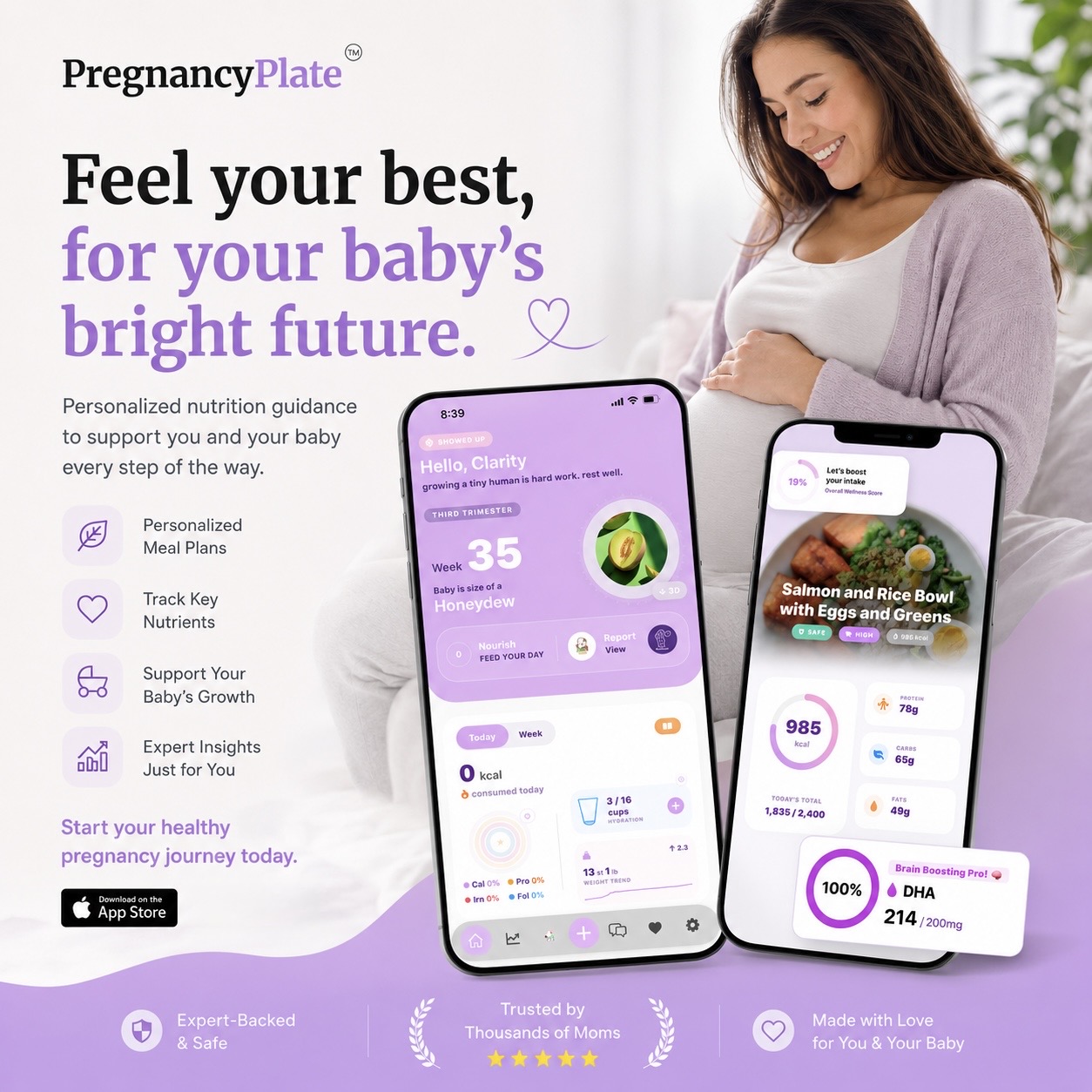
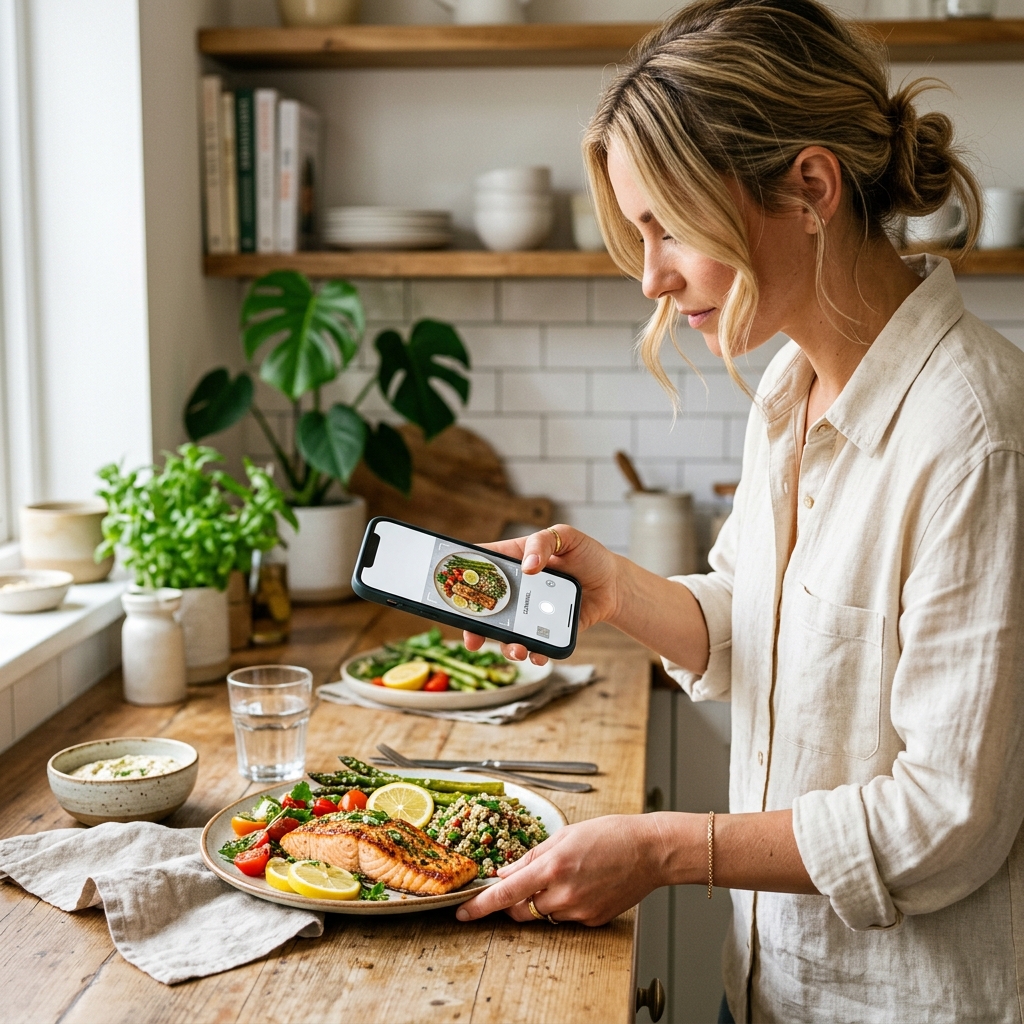
Being straightforward, since I said I would. We built PregnancyPlate because the founder was pregnant, using a general calorie app, and kept hitting exactly the three failures above. It photographs or scans a meal, tells you whether it is safe in pregnancy, and tracks the pregnancy nutrients rather than just calories, with targets that move by trimester.
It will not suit everyone. If you want a full fitness and workout ecosystem, a general app plus a separate safety reference will serve you better. If what you want is to stop googling every meal, that is the specific problem we built it for.
If you want to see how we think about the underlying nutrition rather than take our word for anything, our trimester macro ratios guide and pregnancy macro calculator are free, on this site, and require nothing.
How to Choose in Ten Minutes
A quick practical method rather than reading twenty reviews.
- Download two. Free tiers, no commitment.
- Log the same real meal in both. Something awkward, a sandwich from a shop or a takeaway, not a plain chicken breast.
- Ask both a safety question. Something with a genuine nuance, like feta, or cold roast chicken, or sushi.
- Look at the nutrient screen. Count how many of the seven pregnancy nutrients it actually shows.
- Check how long logging took. If it was tedious once, it will be impossible at week 36.
Whichever wins that test is your app, regardless of what any article says.
The Checklist, Short Version
- Food safety answers, not just calorie counts
- Pregnancy nutrients: iron, folate, choline, iodine, calcium, DHA, fibre
- Targets that change by trimester
- Logging fast enough to still be doing it in month nine
- Handles nausea and aversions without a wall of red
- No weight shaming. Weight is a conversation for your midwife
- Cites its sources. NHS, ACOG, FDA, CDC
The Three Kinds of App People Confuse
Worth separating these, because "pregnancy app" covers three very different products and people often download the wrong category and wonder why it is not helping.
Week by week pregnancy apps tell you the baby is the size of a mango and what is developing this week. Lovely, reassuring, genuinely nice to have. They do almost nothing for food. If you have one of these and are still googling whether you can eat something, that is why.
General calorie and fitness apps are the ones most people already have. Enormous food databases, excellent logging, built entirely around weight management. Useful for the mechanics of tracking, blind to pregnancy.
Pregnancy nutrition apps are the narrow category that actually answers "is this safe" and "am I getting enough iron". Far fewer of them exist, which is partly why the search results are so thin and partly why we ended up building one.
Plenty of women end up running one of the first plus one of the third, which is a completely reasonable setup.
Questions People Ask Before Downloading
Q: Is there a genuinely free pregnancy nutrition app?
A: Yes, several have real free tiers including ours. Be wary of anything that puts basic food safety answers behind a paywall, which is the one thing that should never be premium.
Q: Do I need one at all, or is a website enough?
A: If you mostly cook at home and eat predictably, a good reference site genuinely covers you, and everything on this blog is free. Apps earn their place when you are eating out, deciding in the moment, or tracking something specific like iron or gestational diabetes.
Q: Can I just ask an AI chatbot instead?
A: You can, and for general questions it is often fine. The two things to watch are that it will not reliably know about current recalls and outbreaks, and it cannot see the actual product in front of you. For anything time sensitive, check the FDA or CDC pages directly.
Q: What if I have gestational diabetes?
A: Then your dietitian's plan outranks any app, and what you want from the app is carb visibility per meal rather than daily totals. Ask your team what they want you logging before you pick.
Q: Will an app tell me if something is recalled?
A: Almost none do, including ours, because recalls move faster than app updates. For live outbreak questions the CDC and FDA pages are the ground truth, and we keep a plain English summary on this blog during major events.
Clinical Sources & Research
- American College of Obstetricians and Gynecologists (ACOG), Nutrition During Pregnancy.
- NHS, Have a Healthy Diet in Pregnancy.
- Food and Drug Administration (FDA), Food Safety for Moms-to-Be.
Meet the Editorial Team
The researchers and experts behind PregnancyPlate.

Fiza Izra
Founder & Tech Researcher
A UK-based mother of 3 with a background in tech and data synthesis, Fiza brings real-world experience navigating hyperemesis gravidarum and postnatal depression. She engineers complex clinical guidelines (NHS, ACOG) into accessible tools, ensuring rigorous fact-checking with deep empathy.

Emma Davies
Senior Nutrition Editor
A mum and writer, Emma runs our food safety desk. She is the one who rings the restaurant to ask how long the lettuce sits out, checks every claim against CDC, FDA and NHS guidance, and rewrites the answer until it is usable at 9pm in a drive-thru queue.