Blizzards, McFlurrys, and Soft Serve: The Ultimate Pregnancy Guide to Fast Food Desserts
Craving a late-night sweet treat? We break down the safety of soft serve, the reality of listeria risks in ice cream machines, and how to order your favorite desserts safely.
In this article
Editorial note: This article is researched from official public health and pregnancy food safety guidance, then edited by the PregnancyPlate team for clarity. It is not medical advice. If you are worried about symptoms or a specific exposure, contact your midwife, GP or healthcare provider.
The Late-Night Craving: Is Your Sweet Treat Safe?
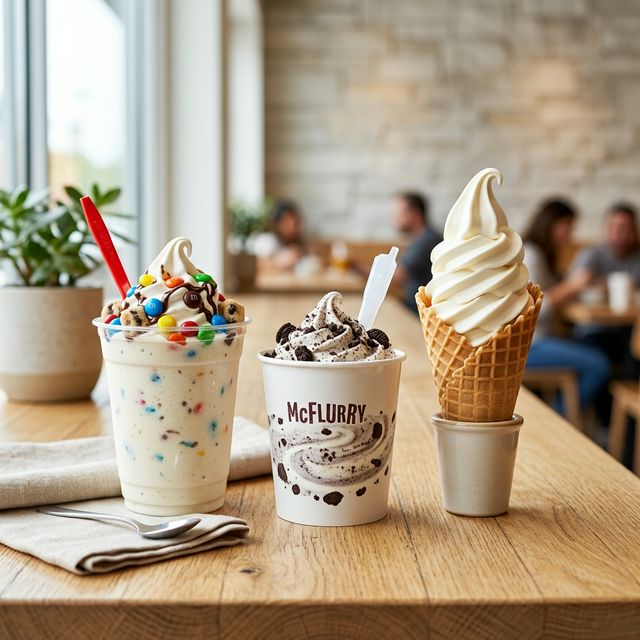
It’s 10:00 PM on a Tuesday, and the craving hits: you need a Dairy Queen Blizzard, a McDonald’s McFlurry, or a classic vanilla soft-serve cone. But as you pull into the drive-thru, a nagging voice in your head remembers a headline about "Listeria in ice cream machines." You pause, wondering if your pregnancy treat is worth the risk.
The good news? For the vast majority of pregnant women, these desserts are perfectly safe. However, there is a specific biological reason why soft serve gets a "caution" flag that hard-packed ice cream doesn't. In this ultimate guide, we’re breaking down the science of the machine, the safety of the ingredients, and how to satisfy your sweet tooth without the anxiety.
Quick Answer: Is Fast Food Soft Serve Safe?
Yes, fast food soft serve (like McFlurrys and Frostys) is generally safe because the dairy mix used is strictly pasteurized. The primary risk isn't the ice cream itself; it's the cleanliness of the machine. Listeria monocytogenes can thrive in the damp, cool crevices of a poorly maintained machine. By choosing high-volume, reputable restaurants, you can minimize this risk to almost zero.
The "Soft Serve" vs. "Hard Serve" Debate
Why do doctors often tell you to stick to hard-packed ice cream from a carton? It’s all about the Environment of Growth.
- Hard-Packed Ice Cream: Is frozen solid at temperatures that inhibit bacterial growth. Once it's in the tub, it's a stable, cold environment.
- Soft Serve: Is kept in a semi-liquid state inside a machine. If the machine isn't cleaned daily according to strict protocols, Listeria - a hardy bacterium that survives in cold temperatures - can establish a "biofilm" on the internal parts.
However, modern fast-food giants like McDonald's and Dairy Queen have automated cleaning cycles and strict health-code requirements that make an outbreak extremely rare.
Dairy Queen Blizzards: The Pregnancy Breakdown
A Blizzard is arguably the king of fast-food desserts. But is that thick, gravity-defying mix safe?
The Ingredients: DQ uses a proprietary soft-serve mix that is fully pasteurized. The "mix-ins" (Oreos, Reese’s, Cookie Dough) are also industrially processed and safe for pregnancy. Even the "raw" cookie dough in a DQ Blizzard is specifically formulated with heat-treated flour and no raw eggs, making it safe from Salmonella.
🍦 The DQ Safety Check
Dairy Queen machines are highly regulated. Most locations use a "heat-treatment" machine that heats the mix to a bacteria-killing temperature every single night before cooling it back down for the next day. This automated cycle is a massive safety plus for pregnant customers.
McDonald’s McFlurrys: The Machine That Always "Breaks"
We’ve all heard the joke about the broken McDonald’s ice cream machine. But did you know that many of those "breakdowns" are actually the machine's automated 4-hour cleaning cycle? If the machine detects it hasn't been cleaned or reached the correct temperature, it locks itself down for safety. This is actually a great sign for you! It means the company prioritizes food safety over sales.
What to Watch For:
- Low Volume Stores: If a store seems empty and the machine looks like it hasn't been used in hours, you might want to skip it. Listeria loves stagnant environments.
- Toppings: Stick to the high-turnover toppings like Oreo or M&Ms. Avoid fruit toppings that look like they’ve been sitting in ambient-temperature plastic bins for a long time.
The Science of Listeria: Why We Worry
Listeria monocytogenes is unique because it is one of the few bacteria that can grow in refrigerated temperatures. For a healthy adult, it might cause mild flu-like symptoms. But for a developing baby, it can cross the placental barrier and cause severe complications. This is why "cold chain" management is the most important part of pregnancy nutrition.
How to Identify a "Safe" Ice Cream Stop
You don't need to be a health inspector to judge a restaurant. Use these three visual cues:
- The "High Volume" Rule: Choose the busiest McDonald’s or DQ in town. High volume means the machine is constantly being depleted and refilled with fresh, pasteurized mix, giving bacteria no time to settle.
- Visual Cleanliness: If the area around the ice cream spout is covered in dried, crusty drips, keep driving. This is a sign of poor daily maintenance.
- Employee Hygiene: Are the staff wearing gloves? Is the counter wiped down? General cleanliness usually translates to machine cleanliness.
Nutritional Management: The Sugar Factor
While we focus on bacteria, we shouldn't ignore the sugar content. A Large Blizzard can contain over 100g of sugar - well over the daily recommended limit for anyone, especially those at risk for Gestational Diabetes (GD).
The GD Strategy: If you are managing your blood sugar, a large Blizzard is likely off the menu. However, a "Mini" size (about 6oz) paired with a protein-heavy meal can often be enjoyed without a massive glucose spike. Always consult your doctor or a dietitian about your specific numbers.
A Chain-by-Chain Safety Comparison
Not all fast-food desserts are created equal. Depending on the equipment and the regional supply chain, the safety profile can shift slightly.
- Wendy's Frosty: Is it a shake? Is it soft serve? It’s actually both. A Frosty is essentially a thick, cold dairy mix that is maintained at a slightly lower temperature than a standard DQ soft serve. Because Frostys are a flagship product with massive daily turnover, the machines are almost never stagnant, making them a very low-risk choice.
- Chick-fil-A Milkshakes: These are hand-spun and often use a mixture of a "milky" base and hard-packed ice cream or a dedicated shake base. Because they involve manual mixing with spoons and dispensers, ensure the staff are practicing high hygiene (gloves and clean utensils).
- Sonic Blasts: Similar to a McFlurry or Blizzard, these depend on the machine's maintenance. Sonic outlets often have high turnover, which is your best friend when it comes to preventing bacterial buildup.
The Science of "Biofilms": Why Cleaning is the Only Cure
To understand the risk, we have to look at Biofilms. A biofilm is a collection of microorganisms (like Listeria) that stick to each other and to the surface of a machine’s internal pipes. They create a protective "slime" layer that makes it difficult for standard soap to reach them. This is why high-heat cleaning cycles are critical.
When a machine at a place like Dairy Queen goes into its "heat-cycle," it isn't just warming up - it is reaching a temperature that literally cooks the biofilm off the sides of the pipes. If a restaurant skips this cycle even once, the biofilm can become permanent until the machine is manually disassembled and scrubbed. Stick to corporate-owned stores where these cycles are non-negotiable.
The Sugar Trap: Beyond the Bacteria
While we focus on the rare risk of infection, the more immediate concern for most pregnant women is the Glucose Load. A standard large Blizzard contains more sugar than five cans of soda. This can cause a massive insulin spike, which, over time, can contribute to excessive pregnancy weight gain and complications.
The "Pairing" Hack: If you're going for a McFlurry, try to eat a protein-rich meal first (like a grilled chicken salad or a burger without the bun). The protein and fiber from your meal will slow down the absorption of the sugar in your bloodstream, preventing a jagged "sugar high" and the subsequent "crash" that leaves you feeling exhausted.
Healthy Support: Frozen Yogurt as an Alternative
If you’re looking for something that feels "safe" and offers a nutritional boost, consider high-quality Frozen Yogurt. Many "FroYo" shops use mixes containing live active cultures (probiotics), which can actually help with the pregnancy-related constipation caused by iron supplements and hormones.
Frequently Asked Questions: Fast Food Desserts & Pregnancy
Q: What about the "mix-ins" like raw cookie dough?
A: In commercial chains like DQ or Sonic, the cookie dough used is specifically manufactured to be safe for raw consumption. The flour is heat-treated to kill E. coli, and the eggs are either omitted or pasteurized. It is 100% safe.
Q: Is the "Natural Flavoring" safe?
A: Yes. Natural flavoring in commercial ice cream is strictly regulated by the FDA and EFSA and poses no risk to fetal development.
Q: Can I eat soft serve if it has melted slightly?
A: Food should not be consumed if it has spent more than 2 hours at room temperature. If your McFlurry has turned into soup in the car over a long drive, it's safer to toss it. Bacteria grow exponentially in liquid dairy at room temperature.
Q: Are chocolate-based desserts safer than vanilla?
A: There is no bacterial difference between flavors, but dark chocolate contains small amounts of caffeine. This is usually negligible (less than 5mg), so unless you are at your absolute daily limit, don't worry about it.
How to Order: Your Drive-Thru Script
If you feel a bit anxious, just ask! The staff are trained to handle food safety questions.
📝 Your Detailed Ordering Script
To the Staff: "Hi! I'm currently pregnant and just being extra cautious. Could you tell me if the ice cream machine was cleaned today? Also, I'll take a Mini Blizzard with Oreos - extra thick, please!"
The "Freshness" Request: "Could I get a vanilla cone, but could you please pull it fresh from the spout? I just want to ensure it’s straight from the machine."
Knowledge Check: Scenario Quiz
🧠 Scenario Quiz
Q: You're at a local fair, and there is a "Soft Serve" truck. The truck looks a bit rusty, and the person serving isn't wearing a hat or gloves. Do you get a cone?
A: Absolutely NO. During pregnancy, stick to established chains (like McDonald's, DQ, or Wendy's) for soft serve. These corporate giants have standardized, automated cleaning cycles. Independent trucks at fairs often lack the infrastructure for the deep daily sanitation needed to keep soft-serve machines Listeria-free.
The Science of "Cravings": Why You Want Ice Cream
Many pregnant women crave cold, creamy textures. This might be your body’s way of asking for Calcium or Fat. If you find yourself craving a Blizzard every single night, try incorporating more Greek Yogurt with honey or a glass of cold, whole milk into your daytime snacks to see if it satisfies the biological urge.
Additionally, some women experience "Pica" - a craving for non-food items like ice. If you are chewing on plain ice cubes constantly, mention it to your doctor, as this can be a clinical sign of Iron Deficiency Anemia.
Final Verdict: Enjoy the Treat!
Pregnancy is hard work. Your body is building a human being, and sometimes, you just need a McFlurry. As long as you:
- Choose reputable, high-volume chains.
- Opt for smaller sizes to manage sugar.
- Avoid "sketchy" looking machines.
...you can enjoy your dessert with total peace of mind. You’ve earned it!
Related Reading
See also: Is Soft Serve Safe? (Deep Dive), The Gestational Diabetes Dessert Guide, and Understanding Food Storage Safety.
Download PregnancyPlate to check the safety of any fast food menu item instantly, track your Gestational Diabetes risk factors, and get AI-powered nutrition advice for every craving.
Meet the Editorial Team
The researchers and experts behind PregnancyPlate.

Fiza Izra
Founder & Tech Researcher
A UK-based mother of 3 with a background in tech and data synthesis, Fiza brings real-world experience navigating hyperemesis gravidarum and postnatal depression. She engineers complex clinical guidelines (NHS, ACOG) into accessible tools, ensuring rigorous fact-checking with deep empathy.

Emma Davies
Senior Nutrition Editor
A mum and writer, Emma runs our food safety desk. She is the one who rings the restaurant to ask how long the lettuce sits out, checks every claim against CDC, FDA and NHS guidance, and rewrites the answer until it is usable at 9pm in a drive-thru queue.




Related posts