The Japanese Secret: Why Do Women in Japan Eat Sushi While Pregnant?




Editorial note: This article is researched from official public health and pregnancy food safety guidance, then edited by the PregnancyPlate team for clarity. It is not medical advice. If you are worried about symptoms or a specific exposure, contact your midwife, GP or healthcare provider.
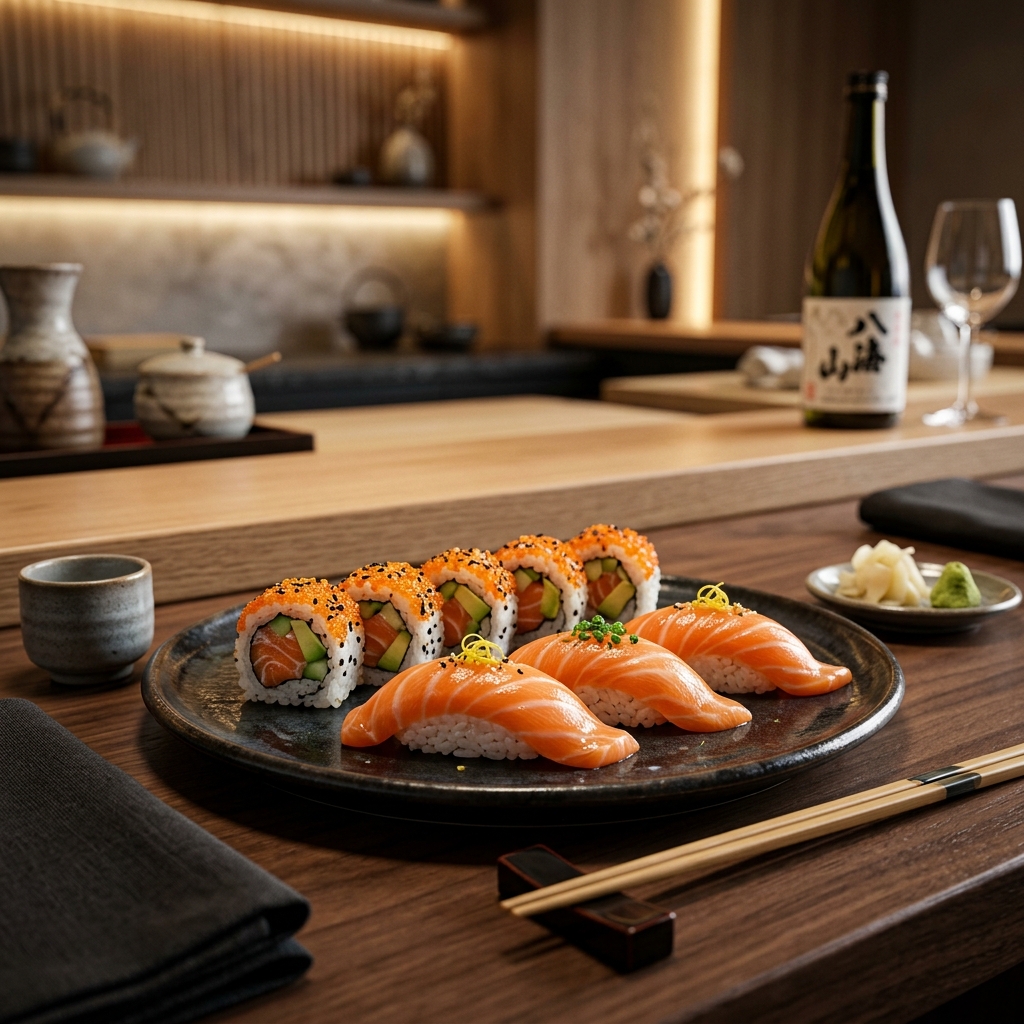
The Fast Verdict: Yes, sushi can be safe during pregnancy, but it depends on Sourcing, Handling, and Temperature. In Japan, it's considered a vital source of DHA and protein for fetal brain development. Today, we're applying Japanese safety standards to your local sushi spot.
Find Safe Sushi Near YouThe Global Divide: Why US and Japanese Guidelines Clash
If you are pregnant in the United States, your doctor likely gave you a list of forbidden foods that includes one heartbroken word: Sushi. But if you were pregnant in Tokyo, your maternity handbook (Boshi Kenkou Techou) would recommend sushi as a high-quality source of lean protein and essential Omega-3 fatty acids (DHA/EPA).
Why the massive discrepancy? It isn't that Japanese babies are magically immune to bacteria. It's because the Japanese food system has a different approach to Sourcing and Flash-Freezing. In 2026, we are finally bridging this gap, showing you why the 'risk' of sushi is often more about the restaurant's hygiene than the fish itself.
The Secret of 'Flash-Freezing' (The Parasite Killer)
The primary concern with raw fish isn't actually bacteria - it's parasites, specifically Anisakis. In Japan, almost all fish intended for sushi consumption undergoes a process known as Super-Freezing.
To kill parasites, the fish must be frozen to at least -4°F (-20°C) for 7 days, or -31°F (-35°C) for 15 hours. In 2026, most high-end sushi grade fish in the West is also 'blast-frozen' at sea immediately after being caught. This process makes the risk of live parasites virtually zero.
Sourcing: Why Salmon is the 'Pregnancy Gold'
In the Japanese prenatal diet, Salmon is king. Unlike tuna, which can carry high levels of mercury, high-quality farm-raised or wild-caught salmon from certain regions is extremely low in contaminants and high in brain-building nutrients.
The Japanese Rule: Always ask where the salmon is from. In 2026, Norwegian and New Zealand salmon have the highest safety ratings for prenatal consumption because their farming practices are strictly regulated for purity. The DHA found in raw salmon is more bioavailable than in many pills, making it a 'Brain Food' for your growing baby.
The Mercury Audit: Tuna vs. Everything Else
Mercury is a neurotoxin that can cross the placenta and affect fetal brain development. This is a risk that Japanese doctors take very seriously. While they allow raw fish, they strictly limit the consumption of high-mercury species:
🐟 The Mercury Hierarchy (2026 Guidelines)
- ❌ NO-GO (High Mercury): King Mackerel, Swordfish, Tilefish, Bigeye Tuna (Ahi).
- ⚠️ CAUTION (Limit to 1x Monthly): Yellowfin Tuna (Maguro), Albacore, Sea Bass.
- ✅ SAFE ZONE (All You Want): Salmon, Shrimp, Eel (Unagi), Scallops (Hotate), Salmon Roe (Ikura).
The 'Sushi Safety Stack': 5 Non-Negotiable Rules
If you want to enjoy sushi like a Japanese mother, you must follow the 2026 Safety Stack. Never settle for 'Grocery Store Sushi' - the risk is in the handling, not the fish.
- High-Velocity Restaurants Only: Eat at places with a high turnover of fish. You want fish that came in this morning, not fish that has been in a refrigerated case for 48 hours.
- The 'Omakase' Standard: Sit at the bar. Watching the chef's hygiene is your best defense. Do they wipe the board between types? Do they wash their hands?
- Avoid 'Pre-Packaged' Platters: Listeria thrives in moist, refrigerated environments over time. Pre-packaged sushi has a significantly higher risk than a roll made fresh in front of you.
- Stick to the 'Flash-Frozen' List: Ask your server: "Was this fish commercially blast-frozen?" If they don't know the answer, don't eat it.
- Wash Your Hands: It sounds simple, but cross-contamination often happens from your own hands or the menu. Use sanitizer before your first bite.
The 'Cooked' Alternatives: 100% Peace of Mind
If the idea of raw fish still makes you anxious (which is perfectly normal in the first trimester), you can still participate in the Japanese sushi experience with zero risk. Almost every sushi house has a deep menu of high-heat items:
- Unagi (Eel): Always served cooked and high in iron and B12.
- Shrimp Tempura: Deep-fried at 350°F+, making it 100% safe from all bacteria.
- California Rolls: In 2026, almost all 'Krab' is surimi (cooked fish paste), which is perfectly safe.
- Avocado & Cucumber Rolls: Zero meat, but high in healthy fats and hydration.
- Spider Rolls (Soft Shell Crab): Deep fried and safe.
The 'Wasabi & Ginger' Myth
Some people believe that wasabi and pickled ginger kill bacteria. This is a dangerous myth. While ginger is great for managing nausea, and wasabi has mild antimicrobial properties, neither acts as a true 'kill step' for pathogens like Listeria or Salmonella. Use them for flavor and digestion, but never as a fallback for unsafe fish.
The Listeria Audit: Why the 'Case' Matters
In 2026, we understand that Listeria monocytogenes is the true enemy of the prenatal diner. Listeria is a 'hardy' bacterium that can grow even in refrigeration. This is why Japanese homes often avoid keeping sushi in the fridge as a leftover. The Rule: If you buy sushi, eat it within 2 hours. Never eat it the 'next day,' as that is when the Listeria risk triples.
Trimester-by-Trimester Sushi Strategy
🔝 Navigating the Sushi House
Trimester 1: Stick to Cooked Items or Veggie Rolls. Your nausea and heightened sense of smell (Hyperosmia) will making raw fish unappealing anyway. Use the 'Shrimp Tempura' order to stay safe while your baby's organs are forming.
Trimester 2: Introduce Salmon Nigiri (Flash-Frozen). This is when you need DHA most for brain growth. Choose a high-end restaurant and enjoy one high-quality meal per week.
Trimester 3: Focus on Unagi and Ikura. Toward the end of pregnancy, you need massive amounts of DHA and easy-to-digest protein. Avoid the heavy 'Fusion Rolls' with sugary sauces to keep your Gestational Diabetes risk low.
Cultural Context: The Role of 'Quality' in Japan
In Japan, sushi isn't just 'raw fish' - it is a discipline. The reason safety is so high is the Chain of Custody. The chef knows exactly where that fish was caught, how long it was frozen, and when it was sliced. If you find a restaurant that treats their fish with this level of reverence, you have found a safe 'Japanese Secret' spot.
The 2026 'Health Hack': Probiotics & Sushi
Miso soup, often served before sushi, is a nutritional powerhouse. For a pregnant woman, the fermented soy in miso provides essential Probiotics that support gut health and help manage the classic 'pregnancy boat' (constipation). Always start your sushi meal with a warm bowl of miso - it primes your digestion and provides a hit of iron.
The 'Cold Chain' Logistics: Why 2026 is Different
In 2026, the global cold chain logistics for seafood have seen a massive upgrade. High-tech GPS-tracked 'super-freezers' now monitor the exact temperature of sushi-grade fish from the moment it leaves the boat at the Tsukiji (or Toyosu) market until it reaches your local restaurant. This transparency allows chefs to guarantee the 'kill step' for parasites, which is the primary medical reason for avoiding raw fish in the first place.
Specialty Seafood: Uni (Sea Urchin) and Ikura (Salmon Roe)
🔱 The Premium Selection Audit
Uni (Sea Urchin): Safe if fresh. Uni is high in zinc and iodine, which are crucial for the development of your baby’s central nervous system. However, uni has a high surface area and can spoil quickly; only order this at restaurants where you can see the chef opening the shell fresh.
Ikura (Salmon Roe): In Japan, Ikura is considered 'The Pregnancy Superfood.' It is essentially a concentrated dose of Omega-3s. Because the eggs are cured in salt (and often soy), they have a natural preservation barrier, making them highly safe and nutritionally dense.
The 'Sushi Vinegar' and Blood Sugar Secret
The rice in sushi is seasoned with Sushi Vinegar (Su), which contains sugar and salt. For those monitoring for Gestational Diabetes, this rice can cause a faster sugar spike than plain white rice. To mitigate this, many Japanese mothers focus on 'Nigiri' (small rice amount) rather than 'Maki' (large rice amount) and prioritize the protein-to-carb ratio.
Conclusion: Confidence in Every Bite
Eating sushi during pregnancy isn't about being 'reckless'; it's about being informed. By following the Japanese protocol of sourcing flash-frozen salmon, avoiding high-mercury tuna, and prioritizing restaurant hygiene over convenience, you can enjoy one of the most nutrient-dense foods on the planet.
Your 2-Minute 'Is it Safe?' Checklist:
- Is it a high-end restaurant? ✅
- Was the fish commercially frozen? ✅
- Is it a low-mercury fish (Salmon/Shrimp)? ✅
- Was it freshly made in front of you? ✅
Frequently Asked Questions
Q: Can I have 'Spicy Tuna' rolls?
A: Exercise caution. Many spicy tuna fillings are made from 'tuna scrape' - the leftovers of the fish - which has a higher surface area for bacteria. Stick to solid cuts of Nigiri instead.
Q: What about Salmon Roe (Ikura)?
A: Yes! In Japan, Ikura is considered one of the best foods for pregnant women because it is incredibly concentrated in DHA. Ensure it is very fresh.
Q: Does the 'Krab' contain actual crab?
A: Most 'Krab' (Imitation Crab) is made from steamed whitefish. It is highly processed and fully cooked, making it very safe for pregnancy.
Q: Is seaweed (Nori) safe?
A: Yes. It is a great source of Iodine, which support your baby's thyroid development. Just don't overdo it - one or two rolls is the perfect amount.
Clinical References
- Japanese Ministry of Health, Labour and Welfare (MHLW): Dietary Guidelines for Expectant Mothers (2025 Edition).
- ACOG (American College of Obstetricians and Gynecologists): Update on seafood safety and DHA benefits during gestation.
- Journal of Clinical Nutrition: Comparative study on prenatal outcomes in Japan vs. USA based on fish consumption.
- FDA Food Code: Freezing protocols for parasite destruction in sushi-grade fish.
Related Reading
Check out our Nausea-Safe Dinner Survival Guide and Jersey Mike''s Safety Audit. Don't miss our deep dive into Japanese Matcha Safety.
Meet the Editorial Team
The researchers and experts behind PregnancyPlate.

Fiza Izra
Founder & Tech Researcher
A UK-based mother of 3 with a background in tech and data synthesis, Fiza brings real-world experience navigating hyperemesis gravidarum and postnatal depression. She engineers complex clinical guidelines (NHS, ACOG) into accessible tools, ensuring rigorous fact-checking with deep empathy.

Emma Davies
Prenatal Nutrition Editor
Emma translates dense public health and FDA guidelines into practical, everyday advice to help mothers navigate pregnancy food safety with confidence.