The Ultimate Constipation Cure: Fiber-Rich Foods for Pregnancy
Your complete guide to beating pregnancy constipation naturally - the best high-fiber foods, how much you need, and proven strategies that actually work.
In this article
Editorial note: This article is researched from official public health and pregnancy food safety guidance, then edited by the PregnancyPlate team for clarity. It is not medical advice. If you are worried about symptoms or a specific exposure, contact your midwife, GP or healthcare provider.
If you've been sitting on the loo wondering why nothing is happening, you're not alone. Constipation affects up to 40% of pregnant women at some point, making it one of the most common - and most uncomfortable - pregnancy complaints.
The good news? You don't have to suffer through it. With the right foods and a few simple habits, you can get things moving again naturally and safely. This guide covers everything you need to know about using fiber-rich foods to beat pregnancy constipation for good.
Why Is Constipation So Common During Pregnancy?
Before we dive into solutions, it helps to understand why your digestive system has suddenly gone on strike. There are several culprits working against you:
Pregnancy Hormones
The hormone progesterone is essential for maintaining your pregnancy, but it has an unfortunate side effect: it relaxes smooth muscle tissue throughout your body, including the muscles in your digestive tract. This means food moves through your system much more slowly than usual, giving your intestines more time to absorb water from waste - leading to harder, drier stools.
Iron Supplements
If you're taking prenatal vitamins containing iron (which most do), this could be contributing to your constipation. Iron is notoriously binding and is one of the most common causes of medication-related constipation.
Growing Uterus
As your baby grows, your expanding uterus puts increasing pressure on your intestines and rectum. This physical compression can slow the movement of waste through your system, particularly in the second and third trimesters.
Reduced Physical Activity
If morning sickness, fatigue, or general discomfort has reduced your activity levels, this can also slow down your digestive system. Movement helps stimulate intestinal contractions.
How Much Fiber Do You Actually Need?
The recommended daily fiber intake during pregnancy is 25-30 grams per day. However, many women fall well short of this, averaging only 15-17 grams daily.
Getting enough fiber does two crucial things:
- Adds bulk to stools: Fiber absorbs water and creates softer, larger stools that are easier to pass
- Speeds transit time: Fiber helps push waste through your digestive system more quickly
There are two types of fiber, and you need both:
- Soluble fiber dissolves in water to form a gel-like substance. It helps soften stools. Found in: oats, beans, apples, citrus fruits
- Insoluble fiber doesn't dissolve - it adds bulk and helps food pass more quickly through your system. Found in: whole wheat, vegetables, nuts
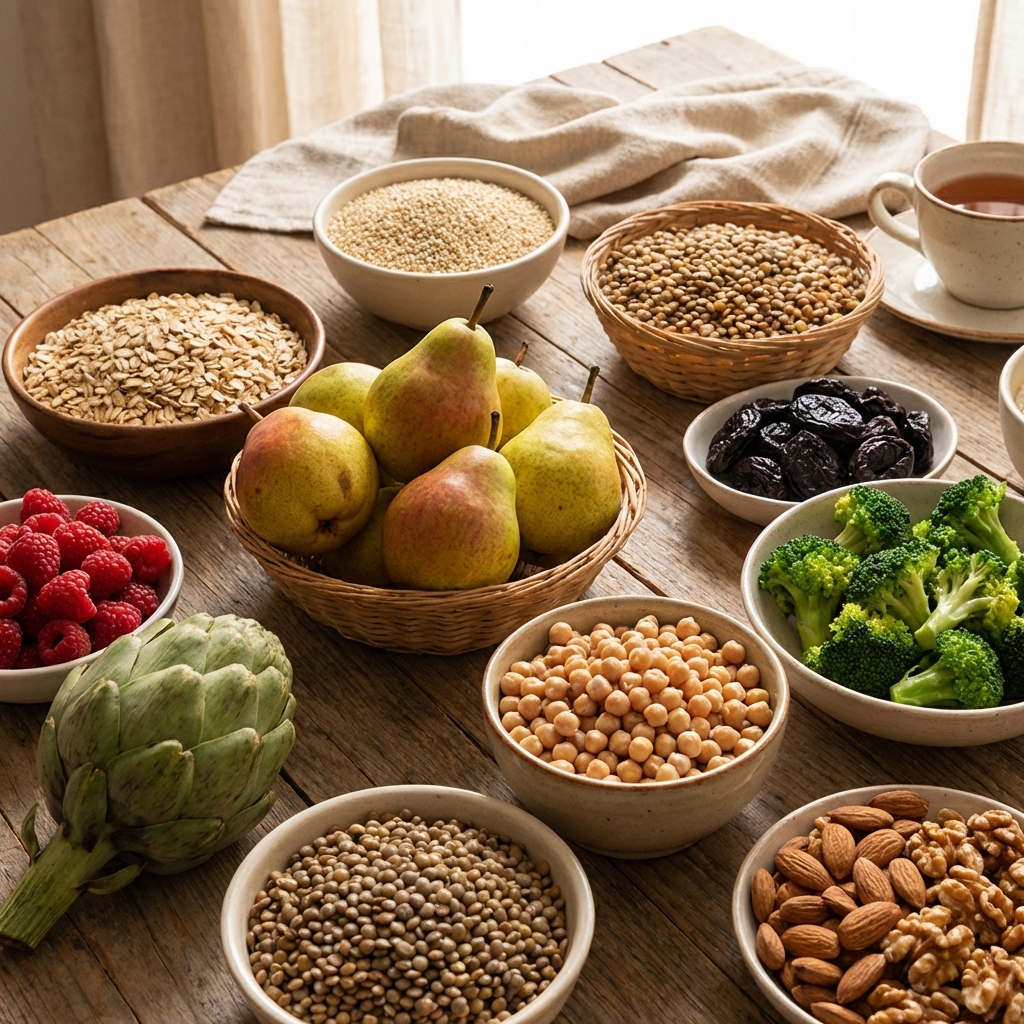
The Top 20 Fiber-Rich Foods for Pregnancy
Here's your shopping list for constipation relief. All of these foods are pregnancy-safe and nutritious choices.
Fruits (Nature's Sweet Relief)
1. Prunes (Dried Plums)
The classic constipation remedy for good reason. Prunes contain fiber plus sorbitol, a natural sugar alcohol that has a gentle laxative effect.
Fiber: 7g per 100g
How to eat: 4-5 prunes as a snack, or add chopped prunes to morning oatmeal
2. Raspberries
One of the highest-fiber fruits you can eat
Fiber: 8g per cup
How to eat: Add to yoghurt, smoothies, or eat fresh
3. Pears
Sweet, juicy, and surprisingly high in fiber when eaten with the skin
Fiber: 5.5g per medium pear
How to eat: Slice and eat fresh, or bake with cinnamon
4. Apples
Keep the skin on for maximum fiber benefit
Fiber: 4.4g per medium apple
How to eat: Slice with nut butter, or add to salads
Vegetables (Bulk Builders)
5. Artichokes
One of the highest-fiber vegetables available
Fiber: 10g per medium artichoke
How to eat: Steam and dip leaves in olive oil and lemon
6. Broccoli
A pregnancy superfood that's also great for digestion
Fiber: 5g per cup (cooked)
How to eat: Steam, roast, or add to stir-fries
7. Sweet Potatoes
Fiber plus vitamin A for baby's development
Fiber: 4g per medium sweet potato (with skin)
How to eat: Bake whole, mash, or slice into wedges
Whole Grains (Daily Staples)
8. Oatmeal
A gentle, soothing breakfast that promotes regularity
Fiber: 4g per cup (cooked)
How to eat: Steel-cut or rolled oats for breakfast; avoid instant varieties
9. Quinoa
Complete protein plus fiber in one grain
Fiber: 5g per cup (cooked)
How to eat: Use in salads, as a side, or for breakfast bowls
Legumes (Fiber Powerhouses)
10. Lentils
One of the best sources of both fiber and plant-based iron
Fiber: 15.5g per cup (cooked)
How to eat: Soups, stews, dal, or added to salads
11. Chickpeas (Garbanzo Beans)
Versatile and delicious with excellent fiber content
Fiber: 12.5g per cup (cooked)
How to eat: Hummus, roasted snacks, curries, salads
Nuts & Seeds (Snackable Fiber)
12. Chia Seeds
Tiny but mighty - absorb water to create a gel that helps things move
Fiber: 10g per ounce (2 tablespoons)
How to eat: Chia pudding, add to smoothies, sprinkle on yoghurt
13. Almonds
A satisfying snack with fiber and healthy fats
Fiber: 3.5g per ounce (about 23 almonds)
How to eat: Handful as a snack, or add to oatmeal
A Sample High-Fiber Day
Here's what a constipation-fighting day of eating might look like:
Sample High-Fiber Meal Plan
Breakfast: Overnight oats with chia seeds and raspberries (11g fiber)
Morning Snack: Apple slices with almond butter (6.4g fiber)
Lunch: Chickpea salad wrap with mixed greens (11g fiber)
Afternoon Snack: Prunes and almonds (6.5g fiber)
Dinner: Grilled salmon with brown rice and steamed broccoli (10.5g fiber)
Total: ~45g fiber - exceeding the recommended 25-30g!
7 Essential Tips for Success
Drink Plenty of Water
This is non-negotiable. Fiber needs water to work properly. Without adequate hydration, eating more fiber can actually make constipation worse by creating dry, bulky stools. Aim for at least 8-10 glasses of water daily.
Increase Fiber Gradually
If you've been eating a low-fiber diet, don't suddenly jump to 30+ grams a day. This can cause gas, bloating, and cramping. Instead, increase your fiber intake by about 5 grams every few days.
Move Your Body
Physical activity stimulates intestinal contractions and helps move things along. Even a 15-20 minute walk after meals can make a significant difference. Pregnancy-safe options include walking, swimming, and prenatal yoga.
Don't Ignore the Urge
When you feel the need to go, go. Delaying can lead to harder stools as more water is absorbed.
Consider Your Iron Supplement
If constipation is severe and you're taking an iron supplement, talk to your midwife or doctor. They may be able to suggest a different form of iron or recommend taking iron with food.
Time Your Coffee Wisely
If you're still having your allowed caffeine (up to 200mg daily), consider having it in the morning. Caffeine stimulates bowel movements for many people.
Try the Squatty Potty Position
Elevating your feet on a small stool while on the toilet creates a squatting position that straightens the anorectal angle, making it easier to pass stools.
When Natural Remedies Aren't Enough
Sometimes, despite your best efforts with diet and lifestyle, constipation persists. If you're still struggling after 2-3 weeks of increased fiber and water intake, it may be time to consider additional options.
Generally safe during pregnancy (but always check with your provider first):
- Stool softeners (docusate/Colace): These help water mix with stools to make them softer
- Psyllium husk (Metamucil): A fiber supplement that can help
- Lactulose: A prescription osmotic laxative safe during pregnancy
Avoid during pregnancy: Stimulant laxatives (senna, bisacodyl), castor oil, and mineral oil.
Frequently Asked Questions
How quickly will increasing fiber help?
Most women notice improvement within 3-7 days of consistently eating more fiber and drinking adequate water. However, it may take up to 2 weeks for your system to fully adjust.
Can I eat too much fiber?
Yes, it's possible. More than 50-60 grams daily can cause gas, bloating, and even diarrhea. If you experience discomfort, scale back slightly.
Are fiber supplements safe during pregnancy?
Generally, yes. Psyllium husk (Metamucil), methylcellulose (Citrucel), and wheat dextrin (Benefiber) are typically considered safe. However, getting fiber from food is preferable as you'll also get vitamins, minerals, and other beneficial nutrients.
Will constipation harm my baby?
Constipation itself won't harm your baby. However, straining excessively can contribute to hemorrhoids, which are already common during pregnancy.
The Bottom Line
Pregnancy constipation is incredibly common, but you don't have to just suffer through it. By filling your plate with fiber-rich foods - fruits, vegetables, whole grains, legumes, and nuts - and staying well-hydrated, you can naturally keep things moving.
Quick Action Plan:
- 🎯 Target: 25-30g fiber daily
- 💧 Hydrate: 8-10 glasses of water daily
- 🍇 Star foods: Prunes, raspberries, lentils, chia seeds
- 🚶 Move: Daily walks to stimulate digestion
- ⏰ Be patient: Allow 3-7 days for improvement
Related Reading
See also: Hydration During Pregnancy, Best Foods for Pregnancy Heartburn, and Pregnancy-Safe Snacks.
Download PregnancyPlate to track your fiber intake and get personalised insights.
Meet the Editorial Team
The researchers and experts behind PregnancyPlate.

Fiza Izra
Founder & Tech Researcher
A UK-based mother of 3 with a background in tech and data synthesis, Fiza brings real-world experience navigating hyperemesis gravidarum and postnatal depression. She engineers complex clinical guidelines (NHS, ACOG) into accessible tools, ensuring rigorous fact-checking with deep empathy.

Emma Davies
Senior Nutrition Editor
A mum and writer, Emma runs our food safety desk. She is the one who rings the restaurant to ask how long the lettuce sits out, checks every claim against CDC, FDA and NHS guidance, and rewrites the answer until it is usable at 9pm in a drive-thru queue.