First Trimester Breakfast Survival Guide: What to Eat When Everything Makes You Sick
When morning sickness makes eating impossible, how do you get the nutrients your baby needs? Here is the ultimate clinical breakfast guide for the first trimester.
In this article
Editorial note: This article is researched from official public health and pregnancy food safety guidance, then edited by the PregnancyPlate team for clarity. It is not medical advice. If you are worried about symptoms or a specific exposure, contact your midwife, GP or healthcare provider.
The Fast Answer: Surviving the first trimester means completely throwing out the concept of a "traditional breakfast." If the smell of cooking food triggers your morning sickness, you must pivot to a very specific, clinical macronutrient strategy to stabilize your blood sugar. Scroll down to learn the four "cold and odorless" survival meals that will actually keep food down today.
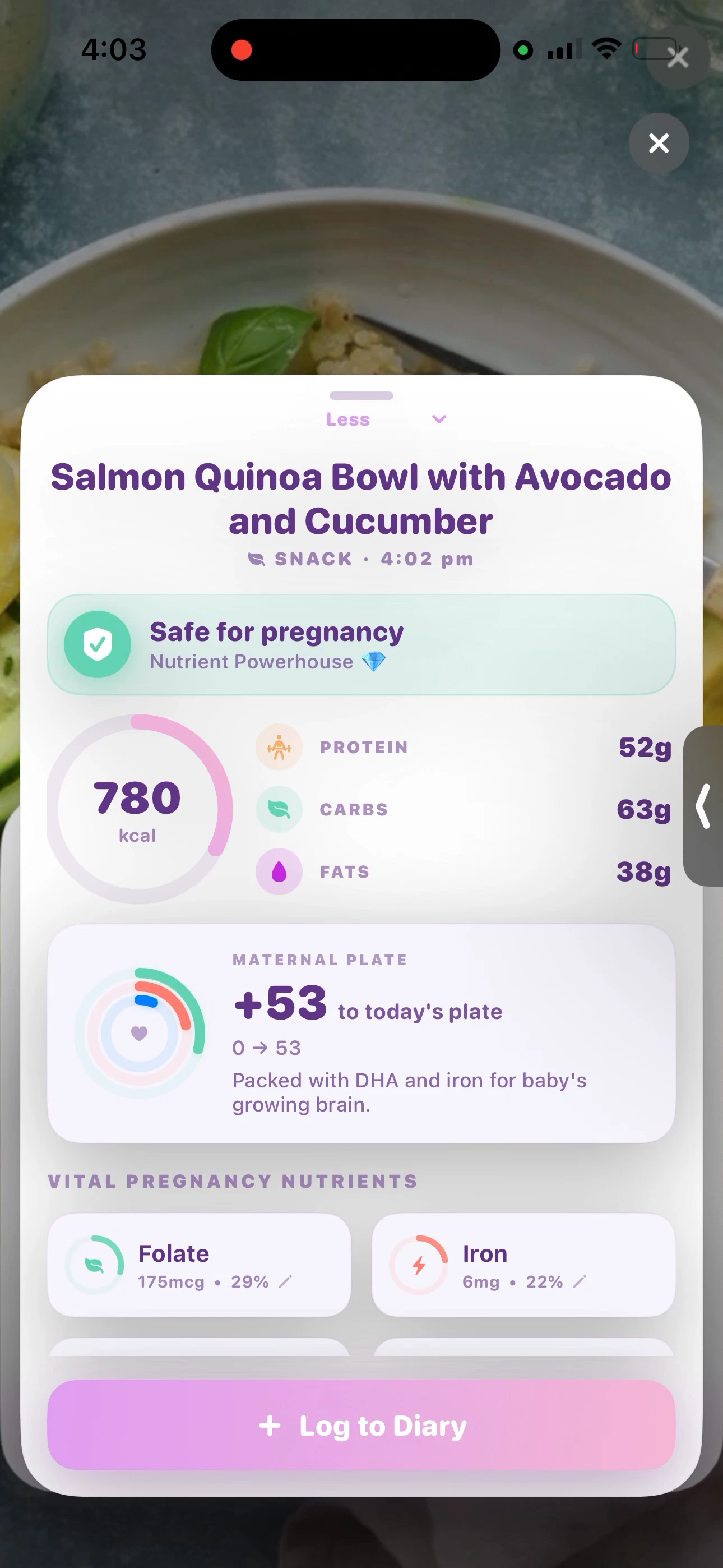
Track your essential first-trimester macros with the PregnancyPlate AppYour next meal, a little less guesswork.
Scan your plate for pregnancy food-safety guidance and a nutrition breakdown. Keep your meals and nutrient progress in one place.
 Scan with your iPhone
to get the app
The alarm goes off. You roll over, open your eyes, and instantly, a wave of profound nausea washes over you. Your partner is cooking eggs in the kitchen, and the smell alone is enough to send you sprinting to the bathroom. You know you need to eat. You know your developing baby needs Folate, Protein, and Iron. But the idea of putting food in your mouth feels like an impossible task.
Welcome to the first trimester.
If you have been frantically searching for "meals for first trimester nausea" or "early pregnancy breakfast ideas," you are experiencing one of the most universally brutal rites of passage in motherhood. The hormonal surge of hCG (human chorionic gonadotropin) and estrogen during the first 12 weeks of pregnancy fundamentally alters your digestive tract and hyper-sensitizes your olfactory system (your sense of smell). In this clinical survival guide, we are going to dismantle the pressure to eat a "perfect" pregnancy diet and give you the exact, science-backed strategies to get calories and critical nutrients into your body when absolutely everything makes you sick.
The Golden Rule: Survival Over Perfection
The most important concept to internalize right now is this: During severe morning sickness, caloric survival supersedes optimal nutrition.
In our modern world, expectant mothers are bombarded with social media images of "perfect" pregnancy breakfasts—massive bowls of kale, spirulina smoothies, and perfectly poached eggs on avocado toast. When you can barely keep down a saltine cracker, seeing these images induces massive guilt. You worry you are failing your baby before they are even born.
Let the clinical data reassure you: Your baby is currently the size of a blueberry. They are a highly efficient parasite. In the first trimester, your fetus will pull the necessary nutrients (like calcium and iron) directly from your maternal stores. If you survive weeks 6 through 12 entirely on plain toast, cold cereal, and ginger ale, your baby will be absolutely fine. The goal right now is simply to stay hydrated and keep your blood sugar from crashing.
The Biology of Nausea: Why Odor is the Enemy
To outsmart your morning sickness, you must understand how it works. Elevated estrogen levels significantly lower the threshold for your olfactory receptors. Put simply: you can smell everything, and strong smells trigger the vomiting center in the brain.
When food is heated, the molecules become volatile and release into the air. This is why the smell of cooking bacon or roasting coffee—things you used to love—now makes you physically ill. Therefore, the first step in your breakfast survival guide is to eliminate heat.
- Cold Foods Emit Less Odor: A cold bowl of cereal emits almost zero aromatic compounds compared to a hot bowl of oatmeal.
- The Scent-Free Strategy: If you must eat hot food, ensure it is completely bland. Plain baked potatoes, plain white rice, or simple buttered toast are the gold standards.
The "Carb-First" Awakening Strategy
The worst nausea usually hits the moment you wake up. This is because your stomach has been completely empty for 8 hours, allowing gastric acid to pool. When you stand up, that acid sloshes against the stomach lining, triggering immediate nausea.
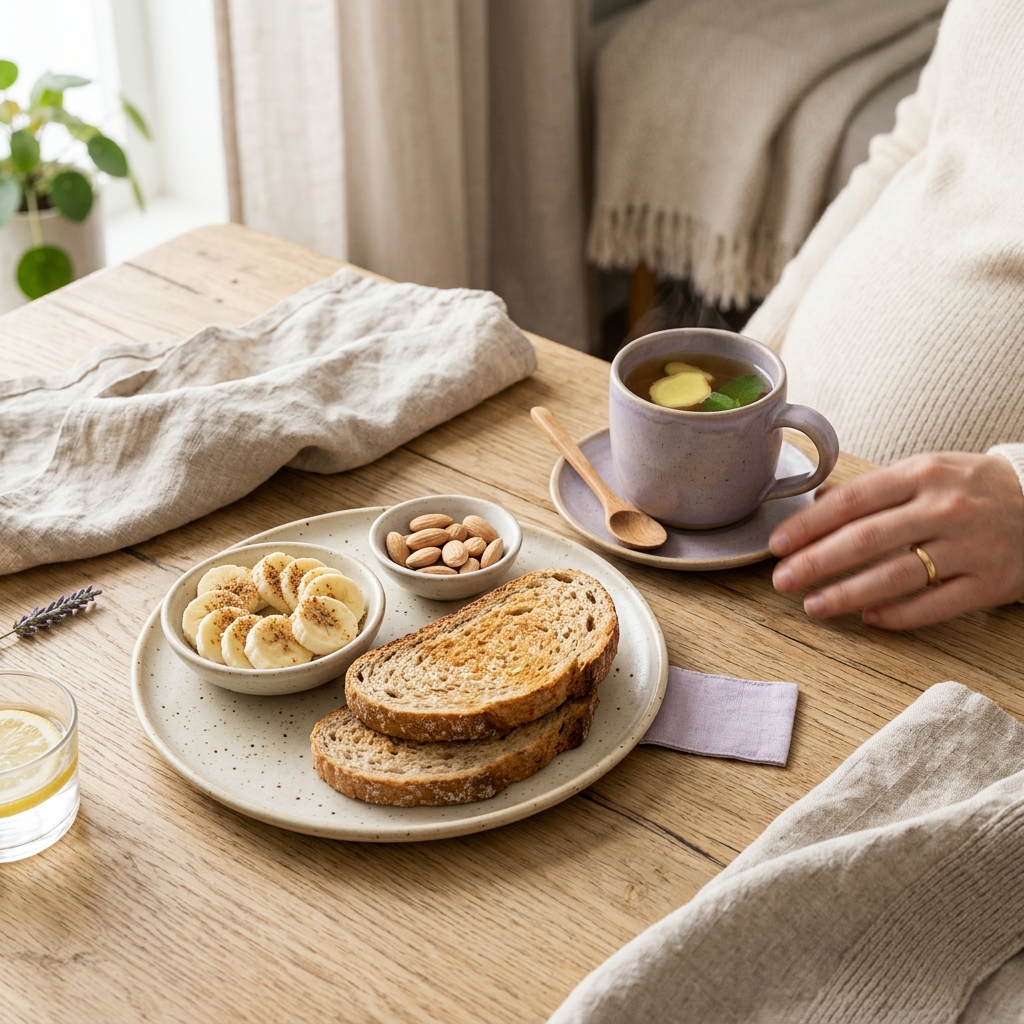
The Nightstand Hack: Do not get out of bed until you have consumed a simple carbohydrate. Keep a sleeve of Saltines, plain Ritz crackers, or dry Cheerios on your nightstand. The moment you wake up, before your feet even touch the floor, slowly eat two or three crackers. The dry carbohydrates act like a sponge, soaking up the excess gastric acid and giving you a 20-minute window of relief to actually get out of bed.
Safety is Step 1. Nutrition Tracking is Step 2.
Once you have mastered the art of "keeping it down," you can begin to optimize. Even if you are eating small, bland meals, you can still strategically select foods that actively support early fetal development.
During the first trimester, the neural tube (which becomes the brain and spinal cord) is forming. This process requires a massive influx of Folate and Choline. However, a diet consisting entirely of white bread leaves massive, hidden gaps in these critical micronutrients.
This is why tracking your pregnancy nutrition is so vital, even when you feel sick. If you know you are deficient in Folate because you cannot stomach leafy greens, you can actively seek out fortified cereals or ensure you are religious about your prenatal vitamin intake.
5 Clinical Breakfast Templates for Severe Nausea
When you cannot stomach the idea of a traditional breakfast, pivot to these clinically approved, low-odor, easy-to-digest templates.
1. The "Bland Hydration" Smoothie
Dehydration is the biggest risk of morning sickness. If you are vomiting frequently, you must replace fluids. A cold smoothie kills two birds with one stone: it provides hydration and calories without triggering your sense of smell. Keep it incredibly simple.
- 1 Frozen Banana (provides Potassium to prevent cramping)
- 1/2 cup Ice (makes it freezing cold and odor-free)
- 1 scoop of flavorless Collagen Peptides (adds crucial protein without altering the taste)
- Unsweetened Almond Milk
2. Cold Fortified Cereal
Do not let diet culture demonize breakfast cereal. For a nauseous pregnant woman, a bowl of fortified cereal is a medical miracle. Cereals like Total, Cheerios, or Special K are heavily fortified with synthetic Folic Acid and Iron. Pouring ice-cold milk (dairy or soy) over dry cereal provides a crunchy, cold, odor-free breakfast that delivers a massive percentage of your daily micronutrient requirements.
3. The Lemon & Ginger Greek Yogurt
Sour and tart flavors are scientifically proven to cut through nausea by stimulating salivary glands. High-protein Greek yogurt is excellent for stabilizing blood sugar. Buy plain Greek yogurt and add a squeeze of fresh lemon juice or a tiny bit of grated ginger. The cold temperature keeps it scent-free, while the tartness provides immediate relief.
4. The Cold Pasta Protocol
Who said breakfast has to be breakfast food? If eggs and toast make you sick, eat last night's leftovers. Cold pasta is completely odorless. Furthermore, cooling cooked pasta alters its chemical structure, turning it into "Resistant Starch." This means it digests much slower, preventing the massive blood sugar spike and subsequent crash that often exacerbates nausea.
5. The Desperation Baked Potato
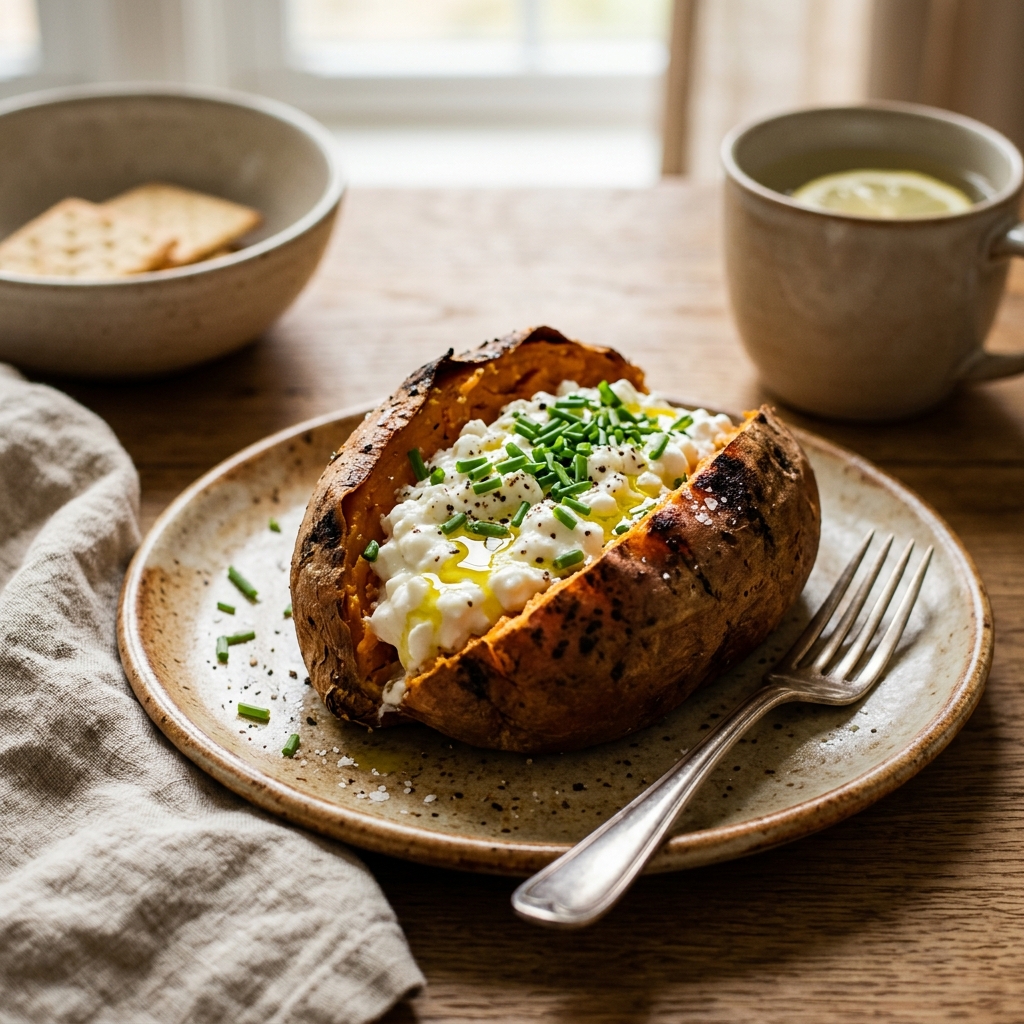
If you are in the deepest trenches of hyperemesis and absolutely nothing sounds appealing, turn to the humble baked potato. It is a complex carbohydrate that is incredibly easy on the stomach. Microwave a potato, let it cool slightly to reduce the steam (and thus the smell), and eat it plain with a tiny bit of butter and salt. The high potassium content is excellent for hydration retention.
The Protein Problem: Why You Must Stabilize Blood Sugar
While carbohydrates are your best friend for immediate relief, eating exclusively carbs will eventually betray you. A breakfast of only crackers will cause your blood sugar to spike and then plummet 90 minutes later. That sudden drop in blood sugar is a primary trigger for a secondary wave of intense nausea.
To prevent this, you must introduce protein. Protein acts as an anchor, slowing down the digestion of carbohydrates and keeping your blood sugar stable for hours.
Low-Odor Protein Hacks:
- String Cheese: Cold, individually wrapped, and completely odorless. Keep these in the fridge for a quick protein hit.
- Almonds: Keep a bag of raw, unsalted almonds in your purse. They require no preparation and provide healthy fats and protein.
- Edamame: Cold, lightly salted edamame beans are incredibly high in protein and Folate, and they have virtually no smell.
- Bone Broth: If you can handle a warm liquid, sipping on high-quality bone broth provides 10g of protein per cup with a very mild flavor profile.
The Danger of Dehydration
The most critical medical complication in the first trimester is not malnutrition; it is dehydration. If you are vomiting multiple times a day and cannot keep water down, you are at risk for electrolyte imbalance, which can lead to hospitalization.
If plain water makes you nauseous (a very common symptom due to the metallic taste many women experience in early pregnancy), you must find alternatives:
- Ice Cold Sparkling Water: The carbonation can often settle a churning stomach. Add a squeeze of fresh lemon or lime. (Read our La Croix Safety Guide for more).
- Electrolyte Popsicles: Freeze Pedialyte or Liquid IV into popsicle molds. Sucking on ice is often easier to tolerate than gulping a glass of water.
- Watermelon: Cold watermelon is 92% water. It provides hydration and a small amount of fructose for energy without triggering nausea.
The Ultimate First Trimester Breakfast Strategy
✅ The Morning Survival Checklist
- Step 1: The Nightstand Hack. Eat 2-3 plain crackers before sitting up in bed to absorb pooling gastric acid.
- Step 2: Eliminate Heat. Pivot completely to cold, odorless foods (smoothies, cold cereal, chilled fruit).
- Step 3: Sip, Don't Gulp. Do not drink a massive glass of water with your meal. Sip slowly between meals to prevent stretching the stomach.
- Step 4: The Tart Advantage. Utilize lemon, ginger, or sour candies to actively cut through sudden waves of nausea.
- Step 5: Forgive Yourself. If all you ate today was three bowls of Cheerios, you succeeded. You survived the day.
The first trimester is an incredibly isolating marathon. You feel terrible, yet you often look completely normal to the outside world, forcing you to suffer in silence at work or in social settings. Please remember that this phase is temporary. For the vast majority of women, the placenta takes over hormone production around week 12 to 14, and the crushing nausea begins to lift.
Until then, drop the guilt. Embrace the cold, bland foods, track your critical nutrients when you can, and focus entirely on surviving one breakfast at a time.
Clinical Sources & Research
- American College of Obstetricians and Gynecologists (ACOG), Morning Sickness: Nausea and Vomiting of Pregnancy.
- National Institutes of Health (NIH), Nutritional Management of Nausea and Vomiting in Pregnancy.
- Mayo Clinic, Pregnancy diet: Focus on these essential nutrients.
Meet the Editorial Team
The researchers and experts behind PregnancyPlate.

Fiza Izra
Founder & Tech Researcher
A UK-based mother of 3 with a background in tech and data synthesis, Fiza brings real-world experience navigating hyperemesis gravidarum and postnatal depression. She engineers complex clinical guidelines (NHS, ACOG) into accessible tools, ensuring rigorous fact-checking with deep empathy.

Emma Davies
Senior Nutrition Editor
A mum and writer, Emma runs our food safety desk. She is the one who rings the restaurant to ask how long the lettuce sits out, checks every claim against CDC, FDA and NHS guidance, and rewrites the answer until it is usable at 9pm in a drive-thru queue.
Make sense of every plate.
Scan your plate for pregnancy food-safety guidance and a nutrition breakdown. Keep your meals and nutrient progress in one place.
Scan with your iPhoneto get the app