Is Leftover Rice and Pasta Safe? Understanding "Fried Rice Syndrome" During Pregnancy
You know to avoid deli meat and sushi, but what about the leftover pasta sitting on your counter? We explain the dangers of Bacillus cereus, how to reheat leftovers safely, and the golden rules of pregnancy food storage.
In this article
Editorial note: This article is researched from official public health and pregnancy food safety guidance, then edited by the PregnancyPlate team for clarity. It is not medical advice. If you are worried about symptoms or a specific exposure, contact your midwife, GP or healthcare provider.
The Hidden Danger in Your Refrigerator
When you discover you are pregnant, you are immediately handed a laundry list of dietary restrictions. Everyone tells you to avoid raw fish, unpasteurized cheese, and cold deli meats. The messaging around these high-risk foods is loud and clear. But what about the Tupperware container of spaghetti you made last night? What about the takeout fried rice you left on the counter while watching a movie?
For most of our lives, we treat leftover rice and pasta as entirely benign. We throw them in a bowl, microwave them for a minute until they are "warm enough," and eat them without a second thought. However, during pregnancy, your immune system is naturally suppressed to prevent your body from rejecting the fetus. This immunological shift makes you significantly more vulnerable to foodborne illnesses - and leftover starches hide a particularly resilient, microscopic threat known as Bacillus cereus.
Let's dive into the science of "Fried Rice Syndrome," why it poses an elevated risk during pregnancy, and exactly how to store and reheat your leftovers to ensure you and your baby remain entirely safe.
What is "Fried Rice Syndrome"?
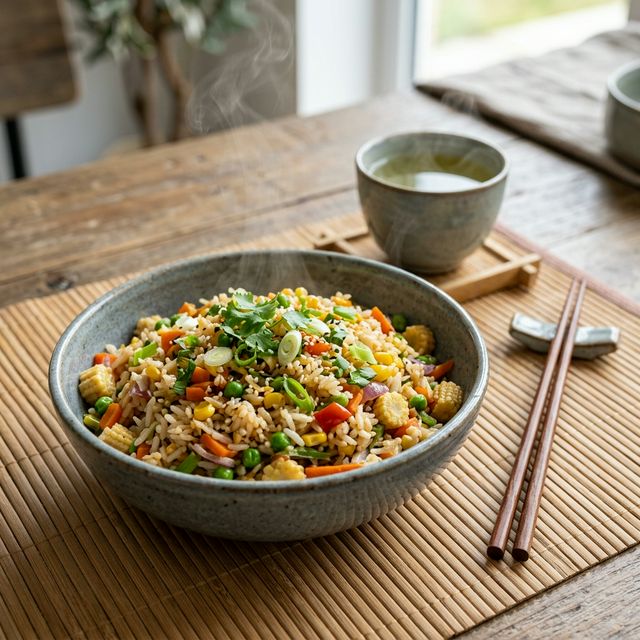
The term "Fried Rice Syndrome" sounds slightly comical, but it refers to a very serious form of food poisoning caused by the bacterium Bacillus cereus (B. cereus). While it is commonly associated with rice - specifically fried rice at buffets or takeout restaurants - this bacterium can proliferate in any starchy food that is improperly stored, including pasta, potatoes, and couscous.
The Science of the Spore
Unlike many other bacteria that are easily killed by the heat of cooking, Bacillus cereus produces incredibly resilient spores. Think of a spore as a microscopic armor shell. These spores naturally exist in dry, uncooked rice and dried pasta sitting in your pantry. They are completely harmless in this dry state.
However, when you add water and boil the rice or pasta, the heat activates the spores but does not reliably kill them. They survive the boiling process. The true danger begins after cooking.
If the cooked rice or pasta is left sitting out at room temperature, the activated spores germinate into vegetative bacteria. These active bacteria then begin to reproduce rapidly and, crucially, they produce powerful toxins. Some of these toxins are heat-stable, meaning that no matter how thoroughly you microwave or fry the rice the next day, the toxin remains intact and will make you violently ill.
The Two Types of B. cereus Illness
If you consume heavily contaminated leftover rice or pasta, the resulting illness typically manifests in one of two ways. During pregnancy, both can lead to dangerous complications like severe dehydration and Braxton Hicks contractions.
The Emetic (Vomiting) Syndrome
This is the classic "Fried Rice Syndrome." It is caused by the heat-stable toxin (cereulide) perfectly preserved in the starchy food. Because the toxin is pre-formed in the food before you even eat it, the onset of symptoms is shockingly fast - usually within 30 minutes to 6 hours after eating. It causes intense, unrelenting nausea and severe vomiting.
The Diarrheal Syndrome
This form occurs when you consume the live bacteria (rather than just the pre-formed toxin). The bacteria travel to your small intestine, where they produce a different type of toxin. This version has a longer incubation period (up to 15 hours) and results in profound abdominal cramping and watery diarrhea.
🚨 Pregnancy Complications
While B. cereus itself does not typically cross the placenta to infect the fetus directly (unlike Listeria), the secondary effects of the illness are highly dangerous. Severe vomiting and diarrhea can rapidly lead to maternal dehydration. Dehydration sharply decreases amniotic fluid volume and is a primary trigger for premature labor contractions. Furthermore, a high fever resulting from the infection can be detrimental to early fetal development.
The "Danger Zone": Time and Temperature
The proliferation of B. cereus is entirely dependent on time and temperature. The FDA defines the "Danger Zone" for food safety as between 40°F and 140°F (4°C and 60°C). In this temperature range, bacteria double in number every 20 minutes.
Many people make the critical mistake of leaving a massive pot of cooked pasta or a rice cooker full of rice sitting on the stove for hours "to cool down" before putting it in the fridge. During pregnancy, this old habit must be completely abandoned.
The "2-Hour Rule"
The golden rule of food safety is that perishable foods must be refrigerated within two hours of cooking. If the ambient temperature in your kitchen or at an outdoor picnic is above 90°F (32°C), that window drops to just one hour.
If your takeout rice or your homemade pasta has been sitting on the counter for longer than two hours, you must discard it. Do not attempt to "cook the bacteria out" in the microwave; remember, the vomiting toxin is heat-stable and cannot be destroyed by normal reheating.
How to Cool Leftovers Safely and Rapidly
If you wait for a massive, deep pot of chili, stew, rice, or pasta to cool down entirely on the counter, the center of the mass may stay warm and perfectly incubated in the "Danger Zone" for four, five, or even six hours. This creates an absolutely perfect microbial breeding ground in the very center of your meal, even if the edges feel cool to the touch.
- Shallow Containers: To cool food safely and rapidly, transfer your cooked rice or pasta immediately into wide, shallow containers, preferably glass. The food should ideally be less than two inches deep. This drastically increases the surface area exposed to the cold air.
- Airflow is Key: Do not stack warm containers directly on top of each other in the fridge. Place the shallow containers individually on the shelves to allow the cold refrigerator air to circulate fully around them, dropping the food temperature rapidly below 40°F (4°C).
- The Ice Bath Method: If you have made a massive batch of soup or pasta sauce that you simply must cool down fast before bed, place the cooking pot into a sink filled with ice water and stir vigorously for ten minutes before transferring to Tupperware.
- Straight to the Fridge: It is a complete myth that hot food will "spoil" your refrigerator or make it work too hard. You do not need to wait for the food to reach room temperature before putting it in the refrigerator. Modern, high-efficiency refrigerators are highly powerful and can handle warm containers without significantly compromising the ambient temperature affecting your other surrounding foods.
The Art of the Reheat: Hitting 165°F (74°C)
Proper storage prevents the bacteria from multiplying wildly, but proper reheating is the final defense mechanism to destroy any vegetative bacteria that managed to grow slowly during cold storage.
During pregnancy, you should never eat leftover rice or pasta cold straight from the fridge (like cold pasta salads or cold rice paper rolls) unless you assembled them freshly and ate them immediately.
When reheating leftovers, you must ensure the core of the food reaches a minimum internal temperature of 165°F (74°C).
- The Microwave Trap: Microwaves heat food unevenly, leaving notorious "cold spots" where bacteria effortlessly survive. If you are reheating rice or pasta in a microwave, you must stop halfway through, stir the food thoroughly, and continue heating. The food should literally be "steaming hot" throughout.
- Add Moisture: Rice tends to dry out in the fridge. When reheating, add a tablespoon of water or broth to the bowl and cover it with a loose lid or damp paper towel. This creates a steam chamber that heats the starches more evenly and thoroughly.
- Invest in a Thermometer: The absolute best tool a pregnant woman can have in her kitchen is a highly accurate, digital instant-read food thermometer. Guessing the temperature by touching the bowl is wildly inaccurate. Insert the probe into the center of the reheated meal. If it doesn't say 165°F, it goes back in the microwave or pan.
Buffets and Takeout: The Highest Risk
The highest risk for B. cereus exposure does not usually come from your own relatively clean kitchen; it comes from commercial buffets and takeout restaurants.
The Fried Rice Buffet Problem: To make authentic restaurant fried rice, the rice must actually be cooked a day in advance and left to "dry out." If a restaurant cuts corners and leaves massive vats of this prep rice sitting at room temperature overnight instead of properly chilling it, millions of spores germinate. When they quickly stir-fry it the next day, they do not destroy the toxins.
Takeout Rules for Pregnancy: If you order Chinese takeout or Indian curries, eat the rice immediately upon delivery while it is still piping hot. Do not let the cardboard boxes sit on the table for three hours while you graze. If you have leftovers, refrigerate them immediately. If you order takeout and the food arrives merely lukewarm, it is highly recommended to transfer it to a skillet or microwave and reheat it to 165°F before taking a single bite.
Knowledge Check: Scenario Quiz
🧠 Scenario Quiz
Q: You made a huge batch of pasta for dinner at 6:00 PM. You and your partner watched a movie, and you finally remembered to put the leftover, un-sauced pasta in the fridge at 10:30 PM. The next day for lunch, you microwave the pasta until it is completely steaming and visibly boiling at the edges. Is it safe to eat?
A: NO. The pasta sat at room temperature for over four hours, violating the 2-hour rule. During that time, B. cereus spores germinated and produced heat-stable toxins. Even though your microwave successfully killed the live bacteria, the toxins survived the intense reheating process. Eating it will likely trigger the Emetic "vomiting" syndrome. When in doubt regarding the 2-hour rule, throw it out.
The Final Verdict
You do not need to ban rice and pasta from your pregnancy diet; they are incredible, comforting sources of complex carbohydrates that fuel your baby's growth and stabilize maternal energy levels. However, you must view starchy leftovers with the same critical eye that you use for raw seafood or deli meats.
Store starches immediately in shallow containers, respect the 2-hour rule with ruthless consistency, and always reheat your leftovers until they are steaming, bubbling, and registering 165°F on your thermometer. By mastering these simple kitchen habits, you entirely eliminate the risk of Fried Rice Syndrome, protecting both your delicate digestive system and the health of your pregnancy.
Related Reading
See also: Is Deli Meat Safe During Pregnancy?, Is Kombucha Safe During Pregnancy?, and Over-the-Counter Medicine Safety (Trimester by Trimester).
Download PregnancyPlate to use our AI Leftover Scanner. Simply snap a photo of your container and input the time - our AI instantly calculates shelf life, reheating instructions, and bacterial risk factors to keep your meals completely safe.
Meet the Editorial Team
The researchers and experts behind PregnancyPlate.

Fiza Izra
Founder & Tech Researcher
A UK-based mother of 3 with a background in tech and data synthesis, Fiza brings real-world experience navigating hyperemesis gravidarum and postnatal depression. She engineers complex clinical guidelines (NHS, ACOG) into accessible tools, ensuring rigorous fact-checking with deep empathy.

Emma Davies
Senior Nutrition Editor
A mum and writer, Emma runs our food safety desk. She is the one who rings the restaurant to ask how long the lettuce sits out, checks every claim against CDC, FDA and NHS guidance, and rewrites the answer until it is usable at 9pm in a drive-thru queue.