Hospital Bag Snacks: What to Pack for Labour (and What Not To)
What to pack in your hospital bag for labour - the best high-energy snacks to keep you fuelled, hydrated, and strong through every stage of birth and early recovery.
In this article
Editorial note: This article is researched from official public health and pregnancy food safety guidance, then edited by the PregnancyPlate team for clarity. It is not medical advice. If you are worried about symptoms or a specific exposure, contact your midwife, GP or healthcare provider.
You've washed the tiny clothes. You've packed the nappies and the going-home outfit. You've probably even rolled up a phone charger. But have you thought about what you're going to eat during labour?
Here's a reality check that nobody really prepares you for: labour is physically demanding. Some people compare it to running a marathon, and while every birth is different, one thing is universal - your body needs fuel. Hospital food might not be available when you need it, portions are often small, and the canteen definitely isn't open at 3 AM when you're in active labour and starving.
This guide covers exactly what to pack, why each snack matters, what to eat during each stage of labour, and what to have ready for those first precious (and ravenous) hours after your baby arrives.
Why You Need Snacks During Labour
Labour is one of the most physically intense experiences a human body can go through. Your uterus is the largest and strongest muscle in your body, and during labour, it contracts continuously for hours (sometimes days). This requires enormous amounts of energy.
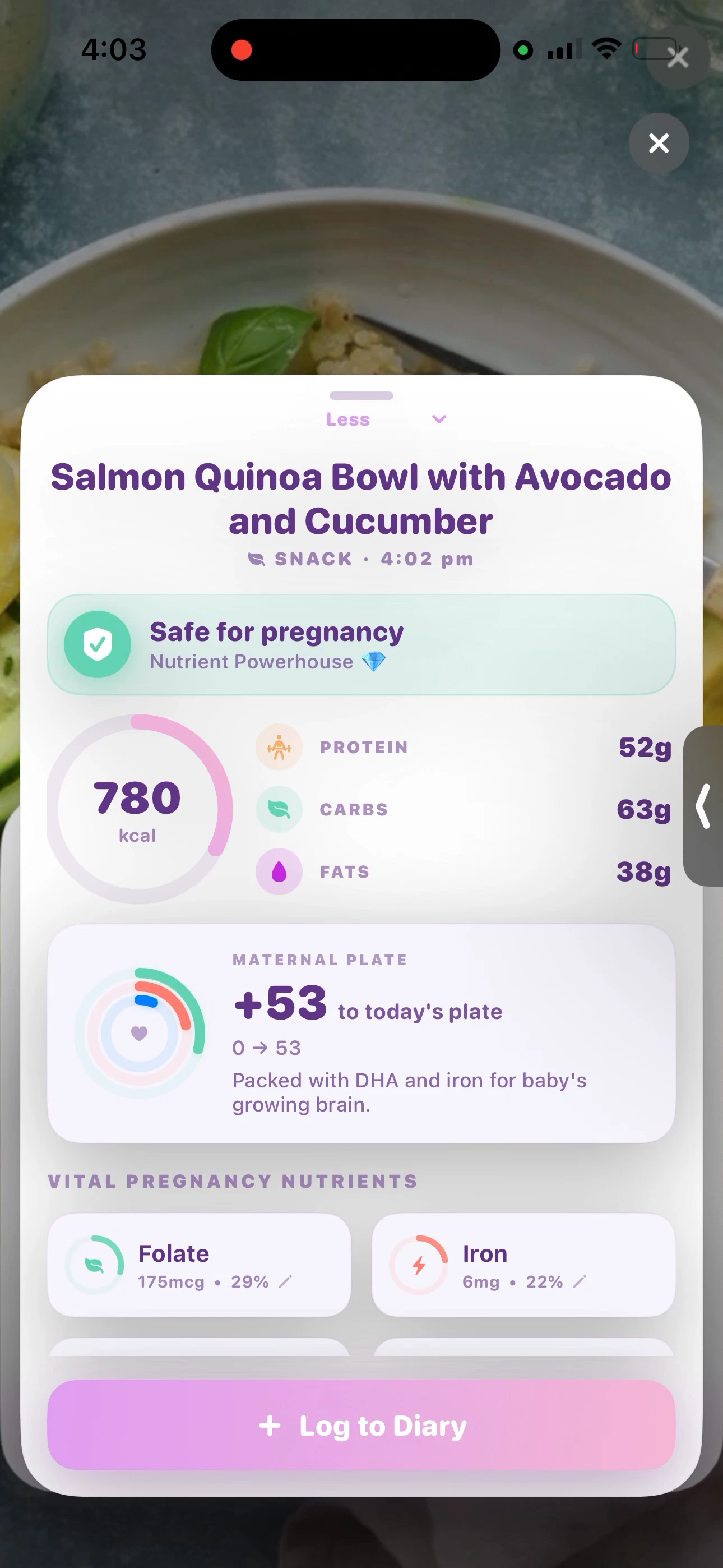
Your next meal, a little less guesswork.
Scan your plate for pregnancy food-safety guidance and a nutrition breakdown. Keep your meals and nutrient progress in one place.
 Scan with your iPhone
to get the app
The Science Behind It
- Calorie burn: Active labour can burn 300-600+ calories per hour - comparable to high-intensity exercise
- Glycogen depletion: Your muscles rely on stored glycogen (sugar) for contractions. When stores run low, labour can slow down and fatigue sets in faster
- Blood sugar stability: Low blood sugar leads to nausea, shakiness, weakness, and difficulty concentrating - the last things you need during birth
- Dehydration risk: Heavy breathing, sweating, and the physical effort can dehydrate you quickly
What the Guidelines Say
Current NICE guidelines (UK) and ACOG (US) support eating and drinking during low-risk labour. The old rule of "nil by mouth" during labour has been largely abandoned for uncomplicated births. Eating during early and active labour is encouraged - light, easily digestible foods that provide sustained energy.
Important Note
If you're having a planned C-section or have been advised to fast before a procedure, follow your medical team's specific instructions about eating. This guide is for women planning a vaginal birth without complications.
The Three Stages: What to Eat and When
Stage 1: Early Labour (Latent Phase)
This is when contractions start but are still manageable - typically 5-20 minutes apart. This phase can last hours (or even a day or two for first-time mums). You'll probably still be at home.
What to eat: Proper meals! This is your chance to fuel up before things intensify.
- Complex carbohydrates: Wholegrain toast, pasta, rice, porridge
- Lean protein: Eggs, chicken, yoghurt
- Healthy fats: Avocado, nut butter
- Fruit: Bananas, berries, oranges
Think of it like: Carb-loading before a race. You want slow-release energy that'll carry you through the hours ahead.
Meal ideas:
- Peanut butter and banana on wholegrain toast
- Scrambled eggs with avocado
- Chicken pasta with vegetables
- Porridge with honey, berries, and nuts
- Rice bowl with chicken and vegetables
Stage 2: Active Labour
Contractions are closer together (3-5 minutes apart) and more intense. You're likely at the hospital or birth centre now. Eating becomes harder - you might not want to, and that's okay.
What to eat: Small, light, easy-to-eat snacks between contractions.
- Energy balls/bites: Homemade oat and date balls (recipe below)
- Medjool dates: Natural sugars plus potassium and magnesium
- Honey sticks: Quick glucose in a convenient tube
- Banana: Easy to eat, gentle on the stomach, packed with potassium
- Apple slices: Refreshing and light
- Dried fruit: Apricots, mango, raisins - concentrated energy
- Crackers: Plain or with a thin spread of nut butter
- Cereal bars/granola bars: Choose ones without excessive sugar
Key rule: Nothing heavy, fatty, spicy, or strongly scented. Your sense of smell is heightened, and nausea is common. Bland, sweet, and easy-to-digest is the goal.
Stage 3: Transition and Pushing
This is the most intense phase. You almost certainly won't want to eat (and your body is redirecting blood flow away from digestion anyway). Focus on hydration.
- Ice chips or frozen fruit: Keeps you hydrated without drinking too much
- Small sips of water or isotonic drink: Between pushes
- Honey sticks: Quick energy if you feel weak
- Jelly sweets: A few jelly babies for fast glucose
The Ultimate Hospital Bag Snack Checklist
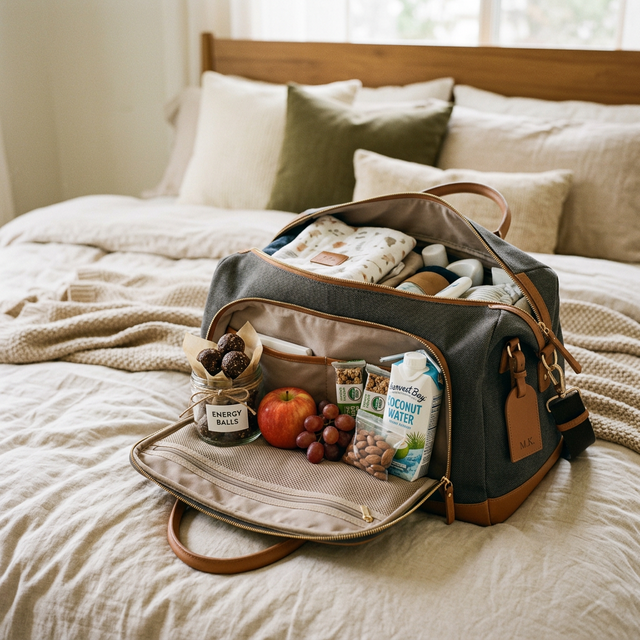
Here's your complete packing list. We've organised it by type so you can mix and match:
🎒 Pack These Snacks
Quick Energy (For During Labour):
- Medjool dates (6-8)
- Honey sticks (4-5)
- Jelly babies or fruit pastilles (small bag)
- Banana (pack day-of)
- Dried apricots or mango strips
Sustained Energy (For Early Labour & Recovery):
- Homemade energy balls (6-8)
- Granola bars / cereal bars (3-4)
- Trail mix (nuts, seeds, dried fruit)
- Nut butter sachets (individual portions)
- Crackers or rice cakes
- Flapjacks (oat bars)
Hydration:
- Reusable water bottle with a straw (easier to drink lying down)
- Coconut water (natural electrolytes - 2-3 cartons)
- Isotonic sports drinks (1-2 bottles)
- Herbal tea bags (peppermint or ginger - ask for hot water)
Post-Birth Recovery (Pack separately):
- Proper sandwiches (pack day-of in a cool bag)
- Porridge pots (just add hot water)
- Fruit - apples, tangerines, grapes
- Dark chocolate (a well-deserved treat)
- Biscuits or cookies
- Juice boxes
Don't forget snacks for your birth partner! They'll be there for hours too and won't want to leave your side to find food.
The Power of Dates: Why Every Pregnant Woman is Eating Them
Medjool dates deserve their own section because the research is genuinely impressive:
- Multiple studies show that women who ate 6 dates per day in the last 4 weeks of pregnancy had significantly more favourable outcomes
- Higher cervical dilation on admission to hospital
- Shorter first stage of labour
- Less need for induction
- Less need for prostaglandin and oxytocin augmentation
While this doesn't mean dates guarantee an easy labour, they're nutrient-dense, packed with natural sugars for energy, and contain potassium, magnesium, and fibre. They're the perfect labour snack whether or not you've been eating them in the run-up.
Recipe: Labour Day Energy Balls
Make a batch in the last few weeks of pregnancy and freeze them. Pop them in your hospital bag on the day.
Ingredients:
- 1 cup rolled oats
- ½ cup peanut or almond butter
- ⅓ cup honey
- ½ cup dark chocolate chips
- 2 tablespoons chia seeds
- 1 teaspoon vanilla extract
- Pinch of salt
Method:
- Mix all ingredients in a bowl until combined
- Chill for 30 minutes (makes rolling easier)
- Roll into walnut-sized balls (makes ~15)
- Store in the fridge for up to a week or freeze for up to 3 months
Per ball: ~110 calories, 4g protein, 14g carbs, 5g fat
These give you quick energy from the honey, sustained energy from the oats and nut butter, and a hit of iron from the dark chocolate and chia seeds.
Post-Birth: The Most Important Meal of Your Life
Nobody warns you about the hunger that hits after giving birth. The post-birth appetite is legendary - and completely logical. Your body has just done the most physically demanding thing it's ever done, and it wants food.
What Your Body Needs After Birth
- Calories: You've burned through your reserves. Your body needs replenishing
- Protein: For tissue repair and (if breastfeeding) milk production
- Iron: You've lost blood. Iron-rich foods help recovery
- Fluids: Hydration is critical, especially if breastfeeding
- Comfort: You deserve something delicious. This is not the time for restriction
What to Have Ready
Hospital meals can be hit or miss (and might not arrive when the hunger hits). Have these in your cool bag:
- Sandwiches: Hearty ones - think chicken and avocado, cheese and pickle, or peanut butter and banana
- Pasta salad: In a sealed container (eat within a few hours - see our leftovers safety guide)
- Soup in a thermos: Warm, nourishing, easy to eat one-handed
- Fruit: Easy-to-eat varieties like grapes, tangerines, apple slices
- Flapjacks: Oats provide slow-release energy and support milk production
- Dark chocolate: Iron, magnesium, and pure joy
What NOT to Pack
Some snacks seem like a good idea but can cause problems:
- Strong-smelling foods: Tuna sandwiches, curry - you (and everyone around you) will regret it
- Very sugary drinks: Energy drinks, full-sugar fizzy drinks - they cause energy crashes
- Heavy, greasy food: Crisps, fried food - hard to digest during labour
- Anything that needs refrigeration for hours: Unless you have a cool bag with ice packs
- Chewing gum: Can cause you to swallow air and feel more nauseous
- Foods you haven't tried before: Labour is not the time to discover a new allergy or intolerance
Practical Tips From Mums Who've Been There
- "Pack a straw water bottle" - Drinking from a regular bottle while lying on your side is impossible. A straw or sports cap is essential
- "Frozen grapes were my saviour" - They soothe a dry mouth and provide gentle hydration
- "I ate 4 rounds of toast after delivery" - Pack filling post-birth food, not just snacks
- "My partner ate all the snacks" - Pack a separate bag for them!
- "Honey sticks were perfect" - Quick, no-mess energy between contractions
- "I couldn't eat anything during active labour" - That's normal too. Don't force it. Focus on sips of water
The Bottom Line
Your hospital bag snacks aren't an afterthought - they're fuel for one of the biggest physical events of your life. A well-packed snack bag can genuinely make a difference to your energy levels, your mood, and your recovery.
Key Takeaways:
- 🎒 Pack three categories: Quick energy (dates, honey), sustained energy (energy balls, bars), and hydration (water, coconut water)
- 🍌 Early labour: Eat proper meals at home while you can
- ⚡ Active labour: Small, light, easy-to-eat snacks between contractions
- 💧 Transition/pushing: Focus on hydration - ice chips, small sips
- 🍫 Post-birth: Pack real food (sandwiches, soup) for the legendary post-birth hunger
- 👫 Don't forget your partner's snacks!
Related Reading
- Third Trimester Foods for Energy & Labour Prep
- Pregnancy-Safe Snacks for Any Time of Day
- Hydration During Pregnancy
- Is It Safe to Eat Leftovers When Pregnant?
Download PregnancyPlate to track your nutrition throughout pregnancy and make sure you're fuelled and ready for the big day.
Why Your Digestion Changes in Labour
Worth understanding, because it explains why the usual advice about eating a big meal beforehand is wrong.
During labour your body diverts blood away from the digestive system and toward the uterus, so digestion slows dramatically. Anything heavy, fatty or high in fibre sits in your stomach far longer than it normally would, and a surprising number of women are sick during transition. That is not a sign anything is wrong, it is a normal response to intense contractions plus a stomach that has essentially stopped working.
Which is why the strategy is not "eat a big meal before you go in". It is small, simple, fast-releasing carbohydrates taken steadily throughout, so you are topping up energy without asking your body to do much work processing it. Think of it as sipping fuel rather than filling a tank.
Hydration Matters More Than the Snacks
If you only manage one thing on this list, make it fluids. Labour is physically demanding and often long, dehydration makes contractions feel worse and slows things down, and a dry mouth from breathing through contractions is genuinely miserable.
- A large water bottle with a sports cap or straw. You will be in positions where tipping a bottle is impossible. This is the single most useful item in the bag.
- An electrolyte drink or two. Plain water alone over many hours can leave you flat. Coconut water works, so do isotonic drinks.
- Ice lollies or frozen fruit in a small cool bag, if your hospital allows them. Many women who cannot face food will manage these, and they hydrate at the same time.
- Lip balm. Not a snack, but you will be grateful.
One thing to check in advance: some units still restrict eating during established labour, particularly if a caesarean becomes likely. Ask at an antenatal appointment rather than discovering the policy mid-contraction.
Pack a Bag for Your Birth Partner Too
This sounds like a footnote and is not. Birth partners routinely go ten or twelve hours without eating because they will not leave the room, and a partner who is lightheaded and irritable is no use to you at hour fourteen.
Their bag needs things that are quiet, non-smelly and require no preparation. Sandwiches made at home, cereal bars, nuts, a large bottle of water, and change or a card for the vending machine at 3am. What it must not contain is anything strongly aromatic, because the smell of a tuna sandwich in a delivery room is a genuine grievance that gets retold at every family gathering for the next decade.
Meet the Editorial Team
The researchers and experts behind PregnancyPlate.

Fiza Izra
Founder & Tech Researcher
A UK-based mother of 3 with a background in tech and data synthesis, Fiza brings real-world experience navigating hyperemesis gravidarum and postnatal depression. She engineers complex clinical guidelines (NHS, ACOG) into accessible tools, ensuring rigorous fact-checking with deep empathy.

Emma Davies
Senior Nutrition Editor
A mum and writer, Emma runs our food safety desk. She is the one who rings the restaurant to ask how long the lettuce sits out, checks every claim against CDC, FDA and NHS guidance, and rewrites the answer until it is usable at 9pm in a drive-thru queue.
Make sense of every plate.
Scan your plate for pregnancy food-safety guidance and a nutrition breakdown. Keep your meals and nutrient progress in one place.
Scan with your iPhoneto get the app