The Ultimate Guide to Pregnancy Safe Starbucks Drinks (Caffeine, Refreshers & The Medicine Ball)
Ordering at Starbucks during pregnancy feels like navigating a minefield. From hidden caffeine in Refreshers to the botulism myth surrounding the Medicine Ball, here is your definitive, clinical guide to the Starbucks menu.
In this article
Editorial note: This article is researched from official public health and pregnancy food safety guidance, then edited by the PregnancyPlate team for clarity. It is not medical advice. If you are worried about symptoms or a specific exposure, contact your midwife, GP or healthcare provider.
The Fast Answer: You do not have to give up your Starbucks habit during pregnancy, but you do need to completely change how you look at their menu. While a basic latte is generally safe if you watch the espresso shots, there is a massively popular category of cold, fruity drinks on the menu that appears completely innocent but actually contains hidden, concentrated extracts. Ordering the wrong "fruit juice" could easily push you over your daily clinical limit before noon. Scroll down to see exactly which drinks contain this hidden ingredient, and learn the strict clinical protocol for ordering the famous Medicine Ball when you are feeling under the weather.
Scan Starbucks Menus with PregnancyPlate ProYour next meal, a little less guesswork.
Scan your plate for pregnancy food-safety guidance and a nutrition breakdown. Keep your meals and nutrient progress in one place.
 Scan with your iPhone
to get the app
Standing in line at Starbucks used to be the easiest part of your morning. You would glance at the menu, pick a seasonal latte or a brightly colored iced drink, and head to work. But the moment you become pregnant, that glowing menu board suddenly looks like a highly complicated clinical exam.
Is the milk pasteurized? How much caffeine is in a Grande versus a Venti? Is the honey in the Medicine Ball safe for the baby? Are the fruity Refreshers just juice, or is there something else hiding in the ice? The sheer volume of conflicting information online about what you can and cannot drink is enough to make anyone anxious.
The anxiety is completely understandable. The American College of Obstetricians and Gynecologists (ACOG) recommends limiting prenatal caffeine to under 200mg per day. Exceeding this limit has been clinically linked to an increased risk of low birth weight and, in severe cases, miscarriage. But tracking that 200mg limit is almost impossible when Starbucks is constantly launching new, complex beverages with unlisted ingredients.
We are going to completely demystify the Starbucks menu. We have audited their entire beverage lineup to show you exactly what is safe, what requires a specific ordering modification, and what you must avoid entirely. By the end of this guide, you will know how to order with complete confidence.
The Great Refresher Deception: Hidden Caffeine
Let us start with the biggest trap on the entire menu: Starbucks Refreshers. When you look at the Strawberry Acai, the Mango Dragonfruit, or the Pineapple Passionfruit Refresher, they look like glorified, highly aesthetic fruit juices. Because they do not taste like coffee and they are aggressively marketed as "refreshing," thousands of pregnant women order them under the assumption that they are entirely caffeine free.
They are not.
Every single Starbucks Refresher is formulated with Green Coffee Extract. This is an unroasted coffee bean derivative that delivers a massive hit of hidden caffeine without altering the fruity flavor profile. A Grande (16 oz) Refresher contains roughly 45mg to 55mg of caffeine. If you order a Trenta (30 oz) on a hot summer day, you are instantly consuming up to 90mg of caffeine.
While 90mg is technically under your 200mg daily limit, the danger lies in the hidden nature of the extract. If you drink a Trenta Refresher thinking it is just juice, and then follow it up with a small cup of home brewed coffee later in the afternoon, you have unknowingly blown right past your clinical safety limit.
Furthermore, because pregnancy significantly slows down your body's metabolic rate, the half-life of caffeine is extended. This means the caffeine from that afternoon Refresher stays in your bloodstream—and crosses the placenta to your baby—for much longer than it did before you were pregnant.
The Clinical Verdict: Refreshers are safe to drink, but you must strictly account for them in your daily caffeine budget. They are not juice. Treat them exactly as you would treat a cup of black tea.
The Medicine Ball (Honey Citrus Mint Tea)
Pregnancy completely suppresses your immune system, making you highly susceptible to standard seasonal colds. Because you are heavily restricted from taking over the counter cold medications like DayQuil or Sudafed, many expecting mothers turn to the famous Starbucks "Medicine Ball" for relief.
Officially known as the Honey Citrus Mint Tea, this viral drink is made with hot water, steamed lemonade, a bag of Jade Citrus Mint green tea, a bag of Peach Tranquility herbal tea, and a heavy dose of honey.
The safety of this drink often causes panic in pregnancy forums due to two specific ingredients: the green tea and the honey.
First, let us address the honey. There is a persistent myth that pregnant women cannot consume honey due to the risk of botulism. This is entirely false. The warning against honey is strictly for infants under one year of age because their digestive tracts are not fully formed. Your mature, highly acidic adult stomach easily destroys any potential botulism spores. The honey in the Medicine Ball is 100% safe for your baby.
The second concern is the Jade Citrus Mint tea bag. Green tea contains caffeine. A Grande Medicine Ball contains roughly 16mg of caffeine from this single tea bag. Again, this is well under your 200mg limit, but it is not zero.
The Safe Ordering Hack: If you want the soothing, throat coating benefits of the Medicine Ball without any caffeine, simply ask the barista to leave out the Jade Citrus Mint tea bag and use two bags of the Peach Tranquility herbal tea instead. The Peach Tranquility is completely caffeine free, and the drink will still taste incredible.
The Espresso Math: Lattes, Cappuccinos, and Macchiatos
If you are a traditional coffee drinker, navigating Starbucks is simply a game of mathematics. You must memorize exactly how much caffeine is in their standard espresso shots.
A single shot of Starbucks signature dark espresso contains roughly 75mg of caffeine. A single shot of their Blonde espresso contains roughly 85mg of caffeine (because lighter roasts actually retain more caffeine density than dark roasts).
Here is how the standard hot cups are built:
- A Tall (12 oz) Latte contains ONE shot of espresso (75mg).
- A Grande (16 oz) Latte contains TWO shots of espresso (150mg).
- A Venti (20 oz) Latte contains TWO shots of espresso (150mg).
If you order a Grande or a Venti hot latte, you are consuming 150mg of caffeine. This leaves you with only a 50mg buffer for the rest of the day, which means you cannot have any chocolate, soda, or tea later on. If you order a Venti iced latte, Starbucks actually adds a THIRD shot of espresso (225mg), which immediately violates your clinical safety limit.
If you prefer drip coffee (like the Pike Place Roast), the numbers are even higher. A Grande Pike Place contains a staggering 310mg of caffeine. You cannot drink a Grande drip coffee during pregnancy without exceeding your limit.
The Clinical Verdict: The absolute safest way to order espresso drinks at Starbucks is to request "Half-Caf" or entirely "Decaf." Starbucks decaf espresso still contains trace amounts of caffeine (roughly 10mg per shot), but it drastically reduces your exposure and allows you to enjoy the ritual of a morning latte without the anxiety.
Frappuccinos and Gestational Diabetes Risk
Frappuccinos are essentially milkshakes marketed as morning beverages. While they do contain varying amounts of coffee base (which adds caffeine), the primary clinical concern with Frappuccinos is the astronomical glycemic load.
A Grande Caramel Ribbon Crunch Frappuccino contains an eye watering 60 grams of sugar. When you consume a drink with this much refined syrup on an empty stomach, your blood glucose spikes violently. Your pancreas scrambles to produce insulin to pull that sugar out of your blood, resulting in a severe "crash" an hour later that will leave you exhausted, shaky, and highly nauseous.
If you have been diagnosed with Gestational Diabetes (GD), or if you are struggling with severe first trimester morning sickness, a Frappuccino is the absolute worst thing you can put into your body. The rapid glycemic fluctuation will heavily exacerbate your nausea.
Pregnancy already induces a state of natural insulin resistance to ensure nutrients remain in your bloodstream long enough to cross the placenta. Overloading this delicate system with 60 grams of liquid sugar puts massive stress on your metabolic function.
The Clinical Verdict: Reserve Frappuccinos for very rare occasions. If you absolutely must have one, order a "Tall" and ask for it to be made with only ONE pump of the base syrup. Drink it alongside a high protein meal (like eggs) to help blunt the blood sugar spike.
Pasteurization and Dairy Safety
One of the most common panics we see on the PregnancyPlate forums involves dairy. Expecting mothers are constantly terrified that the milk or the whipped cream at Starbucks might be unpasteurized, exposing them to Listeria.
You can breathe a massive sigh of relief. Every single dairy product served at Starbucks—including the whole milk, the heavy cream, the sweet cream cold foam, and the whipped cream canisters—is commercially pasteurized. They are entirely safe to consume during pregnancy.
However, if you are experiencing lactose intolerance (which commonly flares up during pregnancy due to hormonal shifts), Starbucks offers excellent alternatives like Oat, Almond, and Soy milk.
Just be aware that oat milk is naturally higher in carbohydrates than almond milk. If you are managing Gestational Diabetes, switching from whole milk to oat milk can actually cause a larger blood sugar spike. Almond milk is typically the lowest carbohydrate option available at the counter.
The Danger of the "Secret Menu"
Social media is flooded with TikTok and Instagram influencers sharing complicated "Secret Menu" orders. These usually involve mixing multiple different syrups, cold foams, and bases to create drinks that taste like Cinnamon Toast Crunch or Skittles.
During pregnancy, you must avoid the Secret Menu entirely.
Because these drinks are not official menu items, their nutritional information is not publicly logged in the Starbucks app. You have no way of knowing how much hidden caffeine is in the specific combination of bases they are using, and the sugar content is often completely off the charts.
When you are tracking your 200mg limit and managing your blood sugar, you need exact, clinical data. You cannot afford to guess what is in your cup.
The Clinical Verdict: Stick to the official menu where you can pull up the exact nutritional macros and caffeine content for your specific order.
Decaffeination Methods: Swiss Water vs. Chemical
When you order decaf coffee, it is important to understand how the caffeine was removed from the bean. Many commercial coffee roasters use chemical solvents (like methylene chloride or ethyl acetate) to strip the caffeine from the unroasted beans.
While the FDA considers these trace chemical residues safe for the general population, many pregnant women prefer to avoid them entirely. The alternative is the Swiss Water Process, which uses only water, temperature, and time to gently extract the caffeine.
Starbucks uses different decaffeination methods depending on the roast. Their standard Decaf Pike Place Roast and Decaf Espresso are typically processed using the direct contact method (which uses trace chemicals). However, their Decaf Sumatra blend is processed using the Swiss Water method.
If you are highly sensitive to processing methods, the Decaf Sumatra is the cleanest decaffeinated option they offer.
The Ultimate Starbucks Rulebook
Navigating Starbucks does not have to be a source of stress. You just need to follow three fundamental rules to protect your baby and enjoy your morning routine.
First, always assume that iced, fruity drinks (like Refreshers) contain hidden caffeine. Ask the barista or check the app before you sip. Second, default to Half-Caf or Decaf for any drink larger than a "Tall" to protect your 200mg limit. Third, avoid drinking heavy sugar syrups on an empty stomach to prevent nausea-inducing blood sugar crashes.
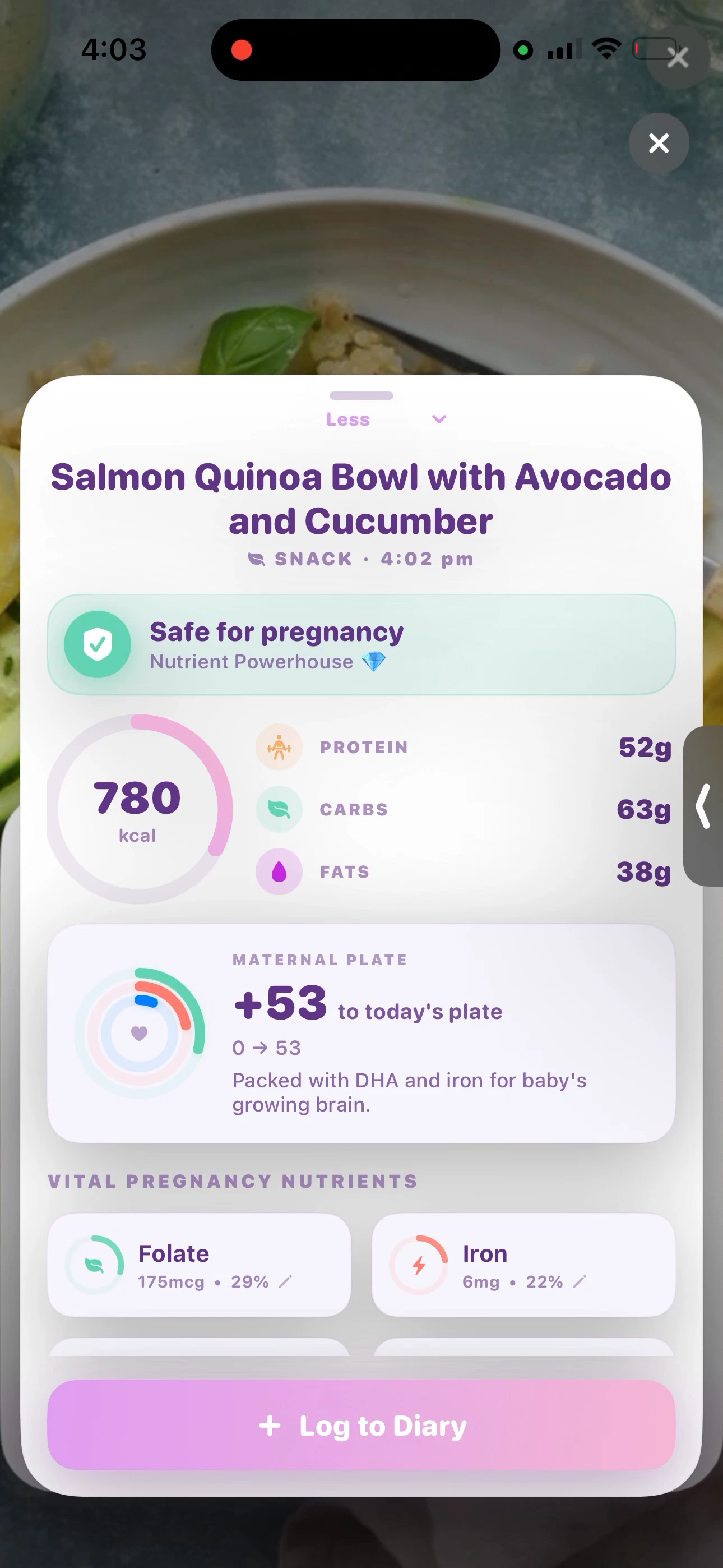
If you are ever standing at the counter feeling overwhelmed by the menu, you can simply use the AI Menu Scanner inside the PregnancyPlate Pro App. Point your phone at the menu board, and the AI will instantly highlight the safest drinks, flag the hidden caffeine, and provide you with the exact modifications you need to order safely.
Clinical Sources & Research
- American College of Obstetricians and Gynecologists (ACOG), Moderate Caffeine Consumption During Pregnancy.
- National Institutes of Health (NIH), Caffeine Intake During Pregnancy and Fetal Growth.
- American Diabetes Association (ADA), Gestational Diabetes and Blood Sugar Management.
Meet the Editorial Team
The researchers and experts behind PregnancyPlate.

Fiza Izra
Founder & Tech Researcher
A UK-based mother of 3 with a background in tech and data synthesis, Fiza brings real-world experience navigating hyperemesis gravidarum and postnatal depression. She engineers complex clinical guidelines (NHS, ACOG) into accessible tools, ensuring rigorous fact-checking with deep empathy.

Emma Davies
Senior Nutrition Editor
A mum and writer, Emma runs our food safety desk. She is the one who rings the restaurant to ask how long the lettuce sits out, checks every claim against CDC, FDA and NHS guidance, and rewrites the answer until it is usable at 9pm in a drive-thru queue.
Make sense of every plate.
Scan your plate for pregnancy food-safety guidance and a nutrition breakdown. Keep your meals and nutrient progress in one place.
Scan with your iPhoneto get the app