Are Smoothies Safe During Pregnancy? Juice Bars, Boosts and Wheatgrass Shots
Blended smoothies are fine. Fresh-squeezed juice and wheatgrass shots are not pasteurised, which is the one real issue. Plus what is actually in a boost.
In this article
Editorial note: This article is researched from official public health and pregnancy food safety guidance, then edited by the PregnancyPlate team for clarity. It is not medical advice. If you are worried about symptoms or a specific exposure, contact your midwife, GP or healthcare provider.
The Fast Answer: Smoothies are fine in pregnancy and genuinely useful when nausea makes solid food hard. Three things to watch: freshly squeezed juice and wheatgrass shots are not pasteurised, which pregnancy guidance says to avoid; some boosts contain caffeine or herbal ingredients that are worth asking about; and a large fruit smoothie carries a lot of sugar without much to slow it down. Add protein, skip the raw juice shots, and they're a good option.
Track your nutrition in seconds in the PregnancyPlate AppSafety is step one. Nutrition helps your baby thrive.
Knowing a meal is safe does not tell you whether you are getting enough iron, folate, calcium and choline. PregnancyPlate tracks all of it from a photo of your plate.
- See nutrient progress
- Scan meals instantly
- Nourish with confidence
 Scan to download
Open with iPhone camera
Scan to download
Open with iPhone camera
Smoothies occupy an odd position in pregnancy. They feel like the healthy choice, and they're often the only thing that appeals during a week when nothing else does. They also contain a few things worth knowing about.
None of it is a reason to avoid them. It's a reason to order slightly differently.
The Juice Question, Which Is the Real One
This is the part most people have never heard, and it's the one genuine safety issue on a juice bar menu.
Pasteurisation heats juice enough to kill bacteria like E. coli, salmonella and cryptosporidium. Most juice sold in cartons and bottles is pasteurised. Juice squeezed fresh in front of you is not.
US guidance advises pregnant women to avoid unpasteurised juice, and the NHS gives the same advice for unpasteurised fruit juice and smoothies. Freshly squeezed juice prepared to order in a shop doesn't have to be pasteurised, and typically isn't.
In practice at a smoothie chain:
Blended smoothies are usually made from commercially produced frozen fruit, purees and juice bases, which are pasteurised. These are fine.
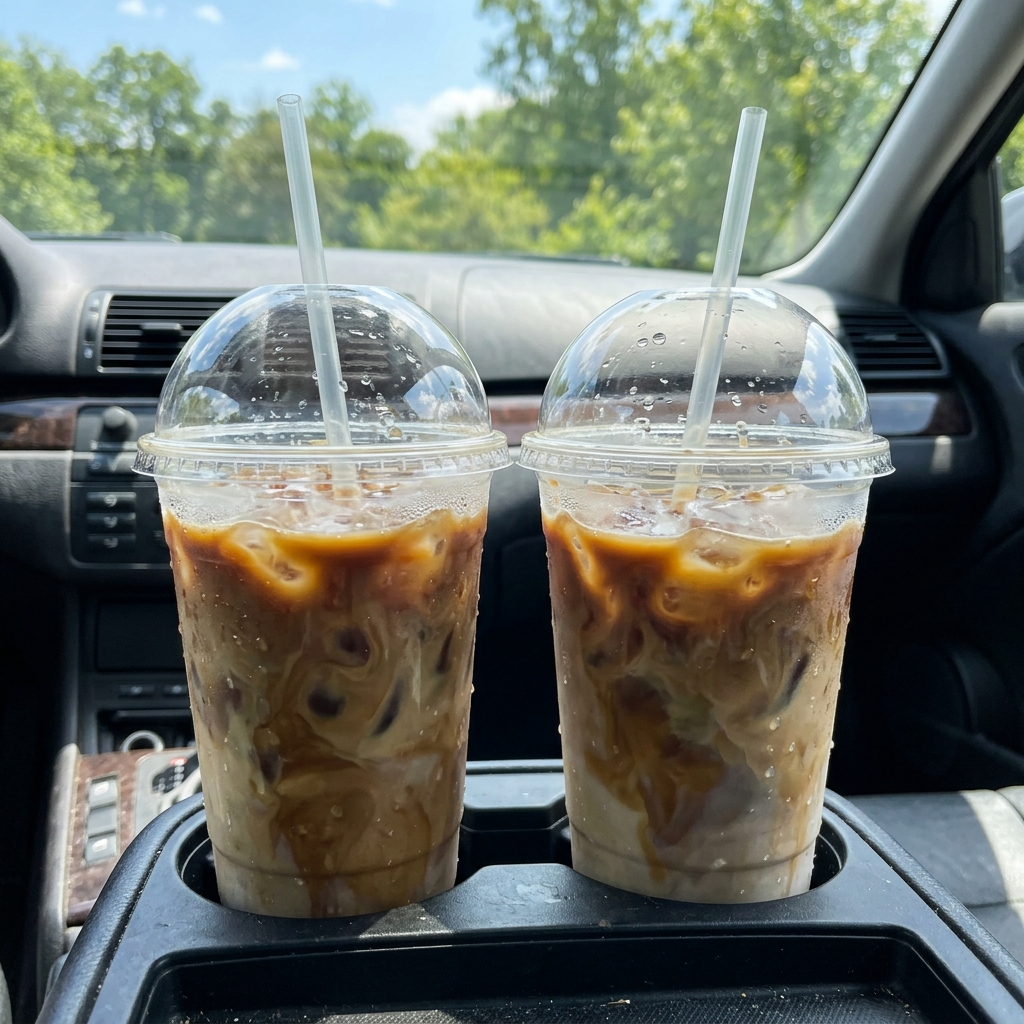
Fresh-squeezed orange, carrot or apple juice made at the counter is the one to skip, or to ask about.
Wheatgrass and ginger shots are raw juice by definition. They're the clearest example of the category to avoid.
Asking "is the juice in this pasteurised?" is a normal question and staff at chains generally know, because it comes up for other reasons too.
Boosts, Shots and Add-Ins
The second thing worth a question, because the menu board rarely explains what's in them.
Protein boosts are straightforward. Whey, soy and pea protein powders are food ingredients and fine in pregnancy. Protein is the single most useful thing you can add to a smoothie, for reasons below.
Energy boosts usually contain caffeine, often from green coffee extract or guarana. That counts towards your 200mg daily limit exactly like coffee does, and it's easy to miss because it doesn't taste of anything. Ask for the amount, or skip it.
Immunity and wellness boosts are the ones to be cautious with. They can contain concentrated herbal extracts like echinacea, elderberry or ginseng, and most herbal supplements have very limited safety data in pregnancy. That's different from a herb used in cooking. If nobody can tell you what's in it, leave it out. Our herbal safety guide covers the same reasoning for teas.
Chia, flax, oats and nut butters are all fine and useful, adding fibre and slowing the sugar down.
Vitamin boosts are generally low dose, but if you're already taking a prenatal vitamin, be aware you're stacking. Vitamin A in particular has an upper limit in pregnancy, so more is not better.
The Sugar Problem Nobody Mentions
The nutritional issue here is bigger than the safety one.
A large fruit smoothie can contain as much sugar as a soft drink, even when every ingredient is fruit. Blending breaks down the fibre that would normally slow absorption, and a drink goes down far faster than the same fruit eaten whole. Fruit juice concentrates that effect further.
On an empty stomach that produces a sharp rise and then a slump an hour or two later, which in pregnancy is easily mistaken for ordinary tiredness or early nausea. Our guide to pregnancy blood sugar crashes explains the mechanism.
It matters more after your glucose screening. If you've been diagnosed with gestational diabetes, a large fruit smoothie is one of the first things a team will ask you to change, because it delivers a lot of carbohydrate very quickly. Our gestational diabetes meal plan covers what works instead, and if your test is still ahead, our guide on what to eat before the glucose test is worth reading.
Three fixes, none of which ruin the drink: add protein, choose a smaller size, and have it with food rather than as a standalone breakfast.
Smoothie Bars in One Box
- Blended smoothies are fine. Fresh-squeezed juice is the exception.
- Skip wheatgrass and raw juice shots.
- Energy boosts contain caffeine. Count them.
- Ask what is in a wellness boost, or leave it out.
- Always add protein. It changes how the whole thing lands.
Why Smoothies Are Worth Ordering Anyway
With those adjustments, this is a useful menu in pregnancy rather than a compromise.
They work when nothing else does. Cold, sippable and low odour is the exact profile that gets through first trimester nausea, when the smell of hot food is the trigger. Our guide to eating with severe sickness leans on the same principle.
Folate and vitamin C. Berries, mango, spinach and kale bring both, and folate matters most in early pregnancy. Our guide to folate versus folic acid covers how food adds to your supplement.
Calcium and protein, if the base is milk or yogurt rather than juice or sorbet. That single swap changes a smoothie from a sugar delivery system into a meal.
Iron, if you build it right. A spinach and berry smoothie pairs plant iron with the vitamin C that helps you absorb it, which our iron guide explains is the highest-value pairing in pregnancy nutrition.
Hydration, which sounds trivial and isn't. Dehydration worsens headaches, Braxton Hicks and constipation, and plenty of people find a cold drink easier than plain water when water tastes wrong.
What About Juice at Home?
The same logic applies in a supermarket, and it is simpler than it sounds.
Cartons and bottles from a chilled or ambient shelf are pasteurised unless the label says otherwise, so ordinary orange juice is fine. The ones to check are the premium chilled juices sold as raw, cold pressed or unpasteurised, which are usually labelled clearly because they have to be, and are sometimes sold with a warning notice.
If you have a juicer at home, juice you make yourself is raw. Washing the fruit thoroughly helps but does not make it equivalent to pasteurised juice. Blending whole fruit into a smoothie is a different thing, since you are eating the fruit rather than extracting the juice, and washing the skin is the relevant step there.
None of this is a reason for alarm if you have already had some. The risk from a single glass is low, and our food poisoning in pregnancy guide covers the symptoms worth watching.
Smoothies Instead of Meals
Worth a caution, because this is where smoothies most often go wrong in pregnancy.
A fruit smoothie on its own is not a meal. It is mostly carbohydrate and water, and it leaves most people hungry within the hour, which usually leads to something sweet at eleven o'clock. That pattern is a common and unnecessary source of the energy crashes people blame on pregnancy itself.
Used as an addition it works far better. A smoothie alongside toast and eggs, or as a mid-afternoon top-up between lunch and dinner, does exactly what it is good at without the crash.
The exception is genuine sickness. If a smoothie is the only thing staying down, then it is the right thing to drink, and getting calories and fluid in matters more than the composition. In that situation a milk or yogurt base with a protein boost is the version that does the most work.
How to Build a Good One
A default order, so it stops being a decision.
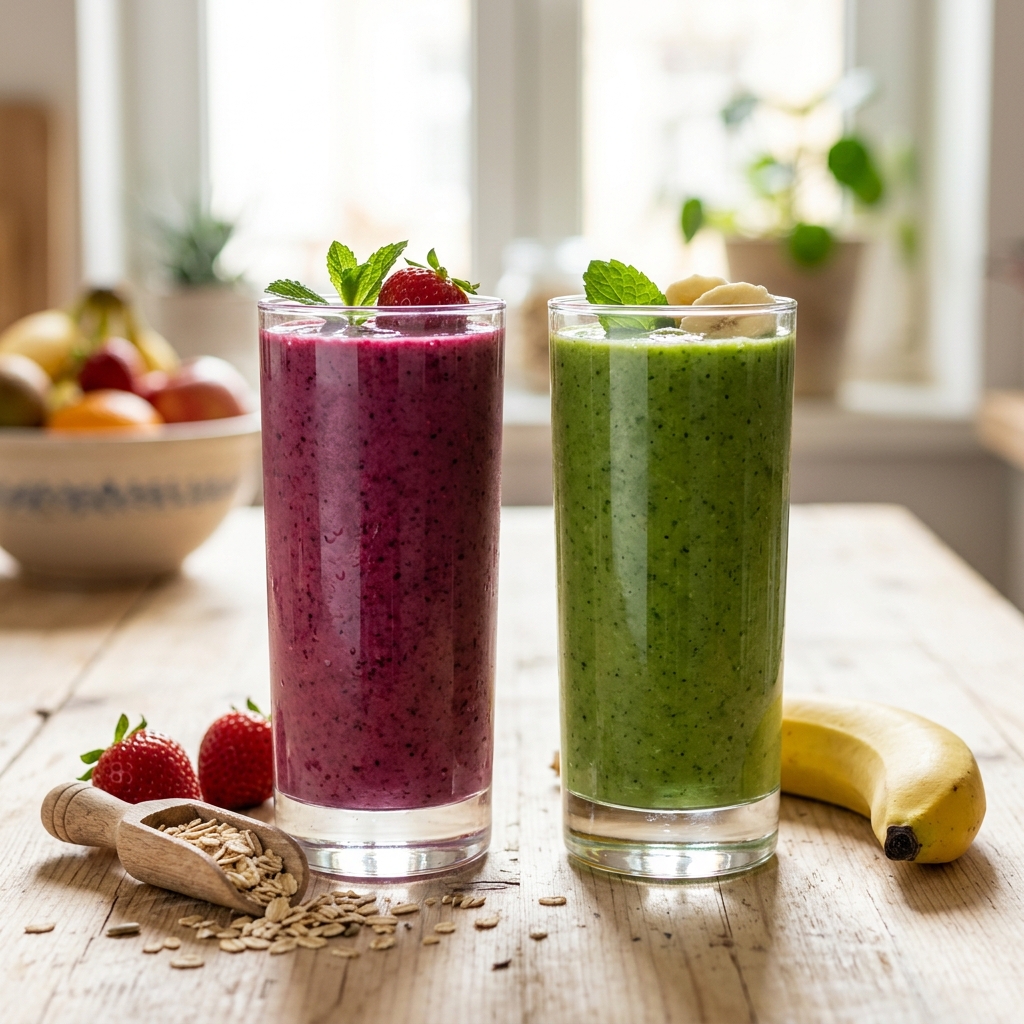
Base: milk, soy milk or yogurt rather than juice or sorbet. Pasteurised dairy is fine and adds calcium and protein.
Fruit: berries and banana rather than a fruit-juice-heavy blend. Berries bring more fibre and less sugar for the volume.
Add: a protein boost, plus oats, nut butter or chia for fibre.
Skip: sorbet or frozen yogurt bases, energy boosts unless you have counted the caffeine, and anything herbal you cannot identify.
Size: the smallest one, especially in the third trimester when a large cold drink fills you up and leaves no room for dinner.
Acai Bowls and Frozen Yogurt
Two related items worth a line each.
Acai bowls are made from commercially produced frozen acai puree, which is pasteurised, so the base is fine. The toppings are granola, fruit and nut butters, which are also fine. The considerations are the same as a smoothie: sugar, and whether it has any protein in it.
Frozen yogurt and soft serve are made with pasteurised dairy. The variable is machine cleaning, which has been linked to listeria outbreaks in the past and is something you cannot assess from the counter. It's a low risk rather than a real hazard, and pre-packaged alternatives have no such variable.
Ice is worth a brief mention for completeness. Ice made from mains water in a normal commercial machine is fine. This only becomes a question when travelling somewhere the tap water isn't safe, which our eating abroad guide covers.
The summary: blended smoothies yes, fresh-squeezed juice and wheatgrass shots no, ask about boosts, and put some protein in it. Ordered that way, it's one of the easier things to get down on a bad week.
Clinical Sources & Research
This article is general information and does not replace advice from your midwife, GP or dietitian. Ingredients and boosts vary by chain and location. Ask before adding any herbal supplement in pregnancy.
Meet the Editorial Team
The researchers and experts behind PregnancyPlate.

Fiza Izra
Founder & Tech Researcher
A UK-based mother of 3 with a background in tech and data synthesis, Fiza brings real-world experience navigating hyperemesis gravidarum and postnatal depression. She engineers complex clinical guidelines (NHS, ACOG) into accessible tools, ensuring rigorous fact-checking with deep empathy.

Emma Davies
Senior Nutrition Editor
A mum and writer, Emma runs our food safety desk. She is the one who rings the restaurant to ask how long the lettuce sits out, checks every claim against CDC, FDA and NHS guidance, and rewrites the answer until it is usable at 9pm in a drive-thru queue.