Eating Abroad While Pregnant: Water, Street Food and the Cheese Problem
Food safety on holiday while pregnant: water and ice rules, street food, buffets, and why unpasteurised cheese is far more common in Europe than at home.
In this article
Editorial note: This article is researched from official public health and pregnancy food safety guidance, then edited by the PregnancyPlate team for clarity. It is not medical advice. If you are worried about symptoms or a specific exposure, contact your midwife, GP or healthcare provider.
The Fast Answer: Two things change when you eat abroad. Water quality, which affects ice, salads and anything washed rather than cooked. And unpasteurised dairy, which is far more common across Europe than it is at home, including in cheeses you'd assume were fine. Hot, freshly cooked and served to you is the safest food anywhere in the world. Room-temperature buffets are the thing to be wary of.
Scan any unfamiliar dish in the PregnancyPlate AppSafety is step one. Nutrition helps your baby thrive.
Knowing a meal is safe does not tell you whether you are getting enough iron, folate, calcium and choline. PregnancyPlate tracks all of it from a photo of your plate.
- See nutrient progress
- Scan meals instantly
- Nourish with confidence
 Scan to download
Open with iPhone camera
Scan to download
Open with iPhone camera
Most pregnancy food advice quietly assumes you're at home, shopping in a supermarket where pasteurisation is the default and the cold chain is reliable. On holiday, both of those assumptions loosen.
That isn't a reason to stay home or to live on plain bread for a fortnight. The risks shift rather than multiply, and knowing which way they shift is most of the work.
Water, Ice and Anything Washed In It
The first question in any country is whether the tap water is safe to drink. If it isn't, the problem extends much further than the glass.
If tap water isn't safe, avoid: ice in drinks, salads and raw vegetables (washed in it), unpeeled fruit, fresh fruit juices topped up with water, and brushing your teeth with it.
Safe: sealed bottled water, hot tea and coffee, canned and bottled drinks opened in front of you, and anything boiled.
The general rule that survives every guidebook is worth remembering: boil it, cook it, peel it, or forget it.
In most of western Europe, North America, Australia and New Zealand the tap water is fine and none of this applies. It matters in parts of Asia, Africa, Latin America and some Mediterranean and eastern European destinations. Check for your specific destination rather than assuming.
The Cheese Problem in Europe
This is the one that catches British travellers out, because it feels like the safest possible destination.
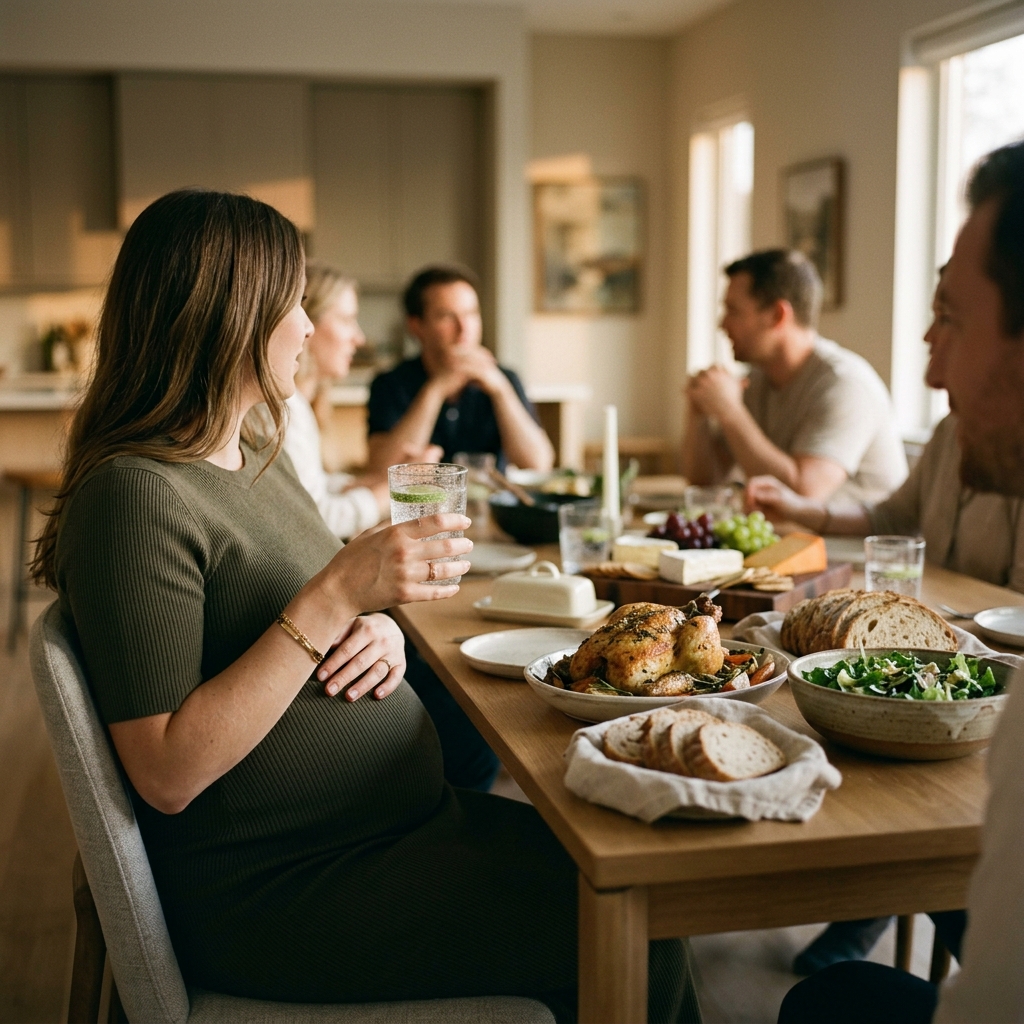
In France, Italy, Spain, Switzerland and much of southern Europe, unpasteurised cheese is normal, traditional and widely sold. Many of the famous ones are legally required to be made from raw milk to carry their protected name. So the brie, camembert, roquefort or gorgonzola on a restaurant cheeseboard is considerably more likely to be unpasteurised than the supermarket version at home.
What to look for: lait cru in France, latte crudo in Italy, leche cruda in Spain. Those mean raw milk. Pasteurisé, pastorizzato and pasteurizado mean it's been treated.
Always fine: hard cheeses like parmesan, pecorino and manchego, even when unpasteurised, because the low moisture makes them inhospitable to listeria. And any cheese cooked until piping hot, which is why a bubbling pizza or a baked camembert is a different proposition from a cheeseboard.
Cured meats are the sister problem. Parma ham, chorizo, salami and prosciutto are cured rather than cooked, so they carry a toxoplasmosis risk and are best cooked or skipped. On a pizza, they're fine. On a plate, less so. Our cheese guide covers the categories.
Street Food Is Not the Enemy
Counterintuitively, a busy street food stall is often safer than a quiet restaurant.
The reason is turnover and visibility. You can see it being cooked, it's cooked to order over high heat, and a stall with a queue isn't storing food for hours. A restaurant kitchen you can't see, serving fewer covers, may be reheating something prepared this morning.
What to look for: a queue of locals, food cooked in front of you, high heat, and hot food served hot rather than lifted from a warm tray.
What to avoid: anything sitting at room temperature, pre-cut fruit that's been out, raw or lightly cooked seafood, unpasteurised dairy drinks like lassi or fresh cheeses, and cold sauces or chutneys that may have been sitting out.
The principle transfers everywhere: freshly cooked and steaming is the safest food in any country, and lukewarm is the thing to be suspicious of. If you can only remember one rule while staring at an unfamiliar menu, make it that one.
Hotel Buffets Deserve More Suspicion
A buffet breaks nearly every rule at once. Food sits for hours, sometimes in a warm room. Serving utensils get swapped. Cold items warm up and hot items cool down toward the temperature range where bacteria multiply fastest.
Practical approach: go early, when the food has just been put out. Choose things served hot and steaming rather than tepid. Skip the cold seafood, the pre-dressed salads, the mayonnaise-based dishes and the pre-cut melon. Ask for eggs cooked to order rather than taking scrambled egg from a tray that's been under a lamp since seven. Our buffet guide goes through it station by station.
Eating Abroad in One Box
- Boil it, cook it, peel it, or forget it where tap water is unsafe.
- Learn the local phrase for raw milk. Lait cru, latte crudo, leche cruda.
- Busy street food beats a quiet restaurant. You can see it cooked.
- Buffets early, hot and steaming. Skip anything tepid.
- Hard cheese and cooked cheese are always fine.
Fish, Seafood and the Local Speciality
Worth thinking about before you're handed a menu you can't read.
Raw and lightly cured fish is the obvious one: sushi and sashimi in Japan, ceviche in Latin America, gravlax in Scandinavia, carpaccio in Italy. All are best avoided unless the fish has been commercially frozen first, which kills parasites but is impossible to verify on holiday. Our sushi guide covers the detail.
Shellfish should be cooked until piping hot, and raw oysters are off the list anywhere. Large predatory fish like shark, swordfish, marlin and king mackerel carry high mercury and appear more often on menus in coastal and tropical destinations than they do at home.
Well-cooked white fish, prawns cooked until opaque, and oily fish within the two portions a week guidance are all fine and worth eating.
Where the Risks Actually Differ
Broad strokes, and worth checking your specific destination rather than trusting a region.
France, Italy, Spain, Switzerland. Tap water fine. The issue is dairy and charcuterie. Assume restaurant cheese may be raw milk unless told otherwise, and treat cured meats as cooked-only.
Greece, Turkey, Portugal. Water usually fine in cities, less certain rurally. Watch for feta and other white cheeses in salads, which may be unpasteurised, and for pre-dressed mezze sitting out.
Japan. Water excellent, hygiene standards very high. The issue is simply how much of the cuisine is raw fish.
Southeast Asia, India, Latin America, much of Africa. Water is the main question, which pulls in ice, salads and unpeeled fruit. Street food cooked hot in front of you is generally the safer choice over a lukewarm buffet.
USA, Canada, Australia, New Zealand. Broadly similar rules to home. Unpasteurised cheese is restricted in the US, though raw milk products do exist in some states.
One general point: hospital and pharmacy access varies enormously, and that matters more than the food risk itself. Somewhere with excellent healthcare and slightly riskier food is a better bet in late pregnancy than the reverse.
What to Pack
A small amount of preparation removes most of the difficult moments.
Take your prenatal vitamins in hand luggage, enough for the whole trip plus a few days. Pack snacks you know are safe for travel days and late arrivals, when the only options are a service station or a minibar: nuts, oatcakes, cereal bars, dried fruit. Take oral rehydration sachets, which are far more useful than they sound if you do get an upset stomach. And note down how to reach medical care where you're going, along with your travel insurance details.
Check your insurance actually covers pregnancy, because a lot of standard policies exclude it beyond a certain number of weeks. Airlines also have their own cut-offs, commonly around 28 weeks for a doctor's letter and 36 weeks for flying at all on many carriers, so check with yours rather than assuming.
If You Do Get Ill
Traveller's diarrhoea is unpleasant at the best of times and dehydration is the main concern in pregnancy.
Fluids first, using oral rehydration salts rather than water alone. Get medical advice before taking any anti-diarrhoeal medication, since several common ones aren't recommended in pregnancy. And seek help the same day for a high fever, blood in your stools, an inability to keep fluids down, or any change in your baby's movements.
One thing worth knowing: listeria can take weeks to appear and often looks like flu rather than food poisoning. So if you develop an unexplained fever in the weeks after a trip, mention the travel to whoever you see. Our food poisoning guide covers the symptoms in full.
Clinical Sources & Research
Meet the Editorial Team
The researchers and experts behind PregnancyPlate.

Fiza Izra
Founder & Tech Researcher
A UK-based mother of 3 with a background in tech and data synthesis, Fiza brings real-world experience navigating hyperemesis gravidarum and postnatal depression. She engineers complex clinical guidelines (NHS, ACOG) into accessible tools, ensuring rigorous fact-checking with deep empathy.

Emma Davies
Senior Nutrition Editor
A mum and writer, Emma runs our food safety desk. She is the one who rings the restaurant to ask how long the lettuce sits out, checks every claim against CDC, FDA and NHS guidance, and rewrites the answer until it is usable at 9pm in a drive-thru queue.