Can You Eat Chicken Salad While Pregnant? Safe Deli Rules + What to Avoid
Is store-bought or restaurant chicken salad safe? We explain the Listeria risks in pre-made deli salads and how to safely satisfy your chicken salad cravings.
In this article
Editorial note: This article is researched from official public health and pregnancy food safety guidance, then edited by the PregnancyPlate team for clarity. It is not medical advice. If you are worried about symptoms or a specific exposure, contact your midwife, GP or healthcare provider.
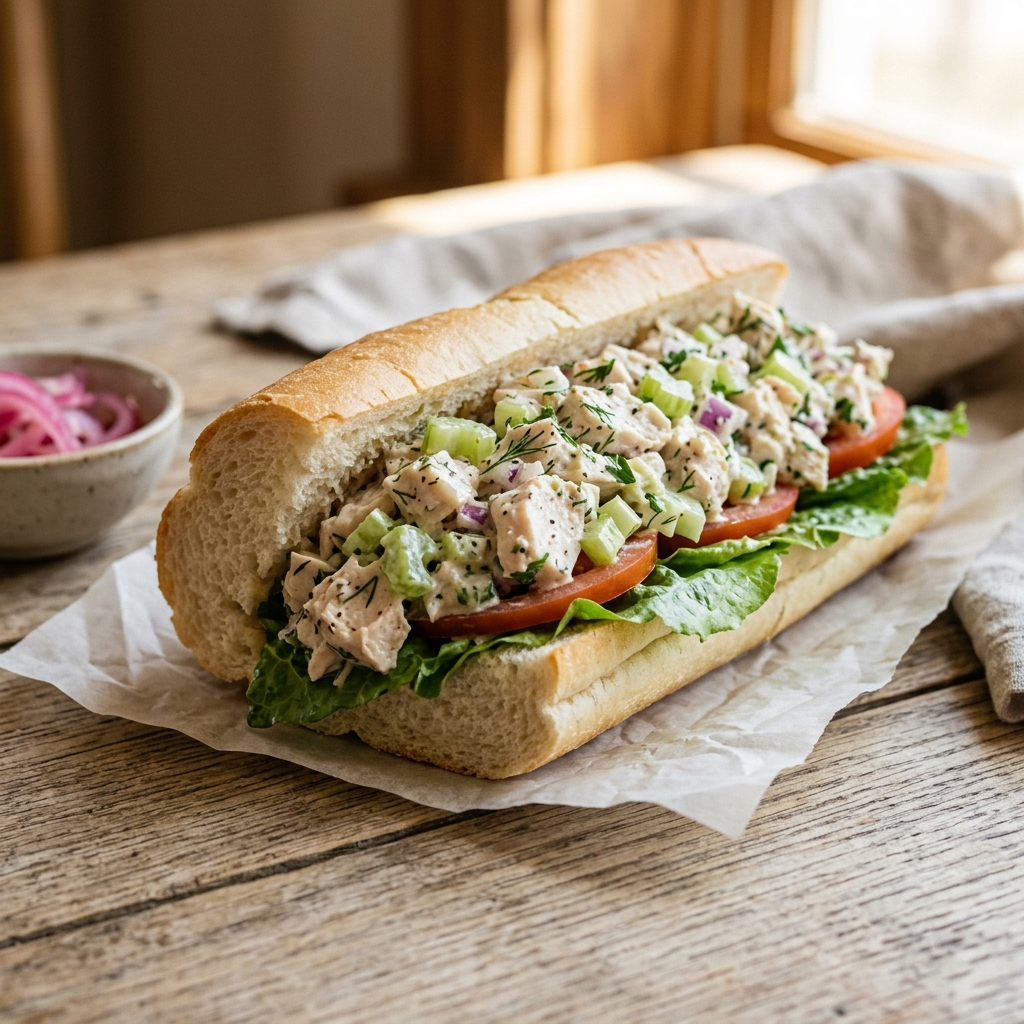
Quick Answer: No, Jersey Mike's chicken salad is not recommended during pregnancy. While the individual ingredients like roasted chicken, pasteurised mayo, and celery are safe on their own, pre-made cold deli salads are flagged by the FDA and CDC as high-risk foods due to the risk of Listeria monocytogenes contamination. Since chicken salad is served cold and cant be heated to the required 165°F (74°C) safety threshold without turning into a greasy mess, it is safest to choose one of Jersey Mike's hot-grilled subs instead.
Scan Restaurant Menus Safely with PregnancyPlateSafety is step one. Nutrition helps your baby thrive.
Knowing a meal is safe does not tell you whether you are getting enough iron, folate, calcium and choline. PregnancyPlate tracks all of it from a photo of your plate.
- See nutrient progress
- Scan meals instantly
- Nourish with confidence
 Scan to download
Open with iPhone camera
Scan to download
Open with iPhone camera
The mouthwatering smell of baking bread, the sizzle of sliced steak on the flat-top grill, and the general lunch-rush buzz of a busy Jersey Mike's sub shop can trigger some intense cravings. If you're standing in line or looking at the menu online when you're pregnant, it's so normal to crave something clean and easy. You spot the Chicken Salad sub (Sub #25 in many locations) and think, oh perfect! It's cold, it's chicken, it's mayo... surely it's fine? It's not raw fish or unpasteurised cheese from a local farm. But commercial delis present unique microbiological challenges, and they are kind of a weird minefield, honestly.
As a nutrition editor, I spend way too much time looking at food safety reports and CDC guidelines. And the reality is that ready-to-eat cold salads at delis are a bit of a risk when you're pregnant. Since they're served cold, you don't get a 'heat kill' step at the counter. If you try heating up mayo-based chicken salad on a grill, it splits and turns into a greasy, split mess. So you have to eat it cold, and that's where the problem lies. In this clinical audit, we'll break down the science behind the listeria risk in pre-made salads, look at the ingredients in Jersey Mike's recipe, and show you some safer hot-grilled alternatives that let you satisfy your cravings with absolute peace of mind.
Let's Talk About Listeria: Why Cold Deli Salads Carry Heightened Risk
The main reason doctors tell us to avoid ready-to-eat cold salads is a bacterium called Listeria monocytogenes. Listeriosis is a relatively rare foodborne infection, but it is disproportionately dangerous for expectant mothers. According to the Centers for Disease Control and Prevention (CDC), pregnant women are roughly ten times more likely to get a Listeria infection than the general population. This is because your immune system naturally dials down during pregnancy. It is an amazing biological design that stops your body from rejecting your growing baby, but it also leaves you a bit vulnerable to foodborne bugs.
While standard food poisoning might just mean a miserable weekend for a healthy adult, Listeria can cross the placental barrier. This means a mild or even asymptomatic infection in the mother can lead to serious risks for the baby, including premature delivery or infection. Listeria is particularly annoying because it loves the cold. Refrigerator temperatures don't kill it, they just slow it down. It is a hardy little bug that thrives in cool, damp environments where ready-to-eat foods are stored.
To ensure a complete 'heat kill' of Listeria, food must reach an internal temperature of at least 165°F (74°C). You can easily do this with a turkey sub by asking the staff to heat the meat on the flat-top grill until it is sizzling hot. But as we discussed, you cant throw chicken salad on a hot grill without ruining it. Since the chicken salad has to be consumed cold, the clinical recommendation is avoidance. For a wider look at deli safety, you can read our Pregnancy-Safe Sandwich Guide.
Deconstructing the Jersey Mike's Chicken Salad Recipe
Let's deconstruct the Jersey Mike's recipe. The individual ingredients are actually fine on their own, but the risk comes from the post-cooking handling and storage environment:
Roasted Chicken Breast
The chicken used in the salad is pre-cooked and shredded. While the initial cooking process at the supplier kills any active pathogens, the risk lies in the post-cooking handling. In a commercial kitchen, shredded chicken must be chilled, mixed, stored in containers, and portioned out. Every touch in this handling chain introduces a potential point of cross-contamination if equipment or surfaces harbor bacteria.
Commercial Mayonnaise
Many pregnancy resources warn against mayonnaise due to the risk of Salmonella from raw eggs. But this concern only applies to fresh, scratch-made mayonnaise prepared in homes or artisanal bistros. Jersey Mike's uses commercial, pasteurised mayonnaise. Pasteurisation heats the eggs to a temperature that destroys Salmonella while preserving their properties. Furthermore, commercial mayonnaise is highly acidic due to the vinegar and lemon juice. This high acidity actually makes it a hostile environment for bacterial replication. While the mayo itself is safe, it cannot protect the other ingredients in the salad if contamination occurs. For a detailed breakdown of mayo brands, read our Mayonnaise Safety Guide.
Diced Celery
Raw vegetables are a common vector for foodborne pathogens because they grow in the soil and can carry bacteria from irrigation water. In a busy deli, large quantities of celery must be washed and chopped. Raw celery provides a crisp texture, but its high surface area can harbor bacteria if it is not washed thoroughly. Because the celery in chicken salad is not cooked, any surface pathogens remain present in the final mixture.
The combination of these three ingredients creates a moist, nutrient-rich, low-acid environment. While the acidity of the mayonnaise helps, the presence of the cooked chicken and raw celery at cold temperatures creates the exact conditions where Listeria can slowly replicate if cross-contamination occurs during mixing or storage.
Slicers, Scoops, and Surfaces: The Deli Cross-Contamination Threat
Even if a batch of chicken salad is prepared under highly sanitary conditions, we have to look at the physical environment of the deli counter. During the lunch rush, a sub shop is a high-speed assembly line designed for efficiency. This rapid workflow introduces several cross-contamination risks that are difficult to control:
The Shared Scoop
Unlike cold cuts, which are sliced fresh or portioned with paper sheets, chicken salad is served using a metal scoop. This scoop sits in the container of chicken salad inside the cold well. Throughout the day, the same scoop is handled by multiple staff members, placed back in the container, and used to spread the salad onto the bread. If a staff member's gloves touch a contaminated surface (such as the counter, a register, or a cold cut containing pathogens) and they then handle the scoop, the bacteria can easily transfer into the chicken salad container.
Prep Table Proximity
At Jersey Mike's, the sandwich assembly table is a shared workspace. Cold cuts like ham, turkey, salami, and provolone are sliced fresh and placed on the bread, while toppings like lettuce, tomatoes, onions, and pickles are added from adjacent bins. Slicers and prep boards are cleaned regularly, but the constant movement of sliced meats and raw vegetables creates a highly integrated environment. Sliced deli meats are a recognized source of Listeria, and any microscopic trace of bacteria on a prep board, knife, or glove can easily transfer to your sandwich. To understand the safety variables of other deli meats, consult our Jersey Mike's vs. Jimmy John's Safety Audit.
Safer Alternatives: Utilizing the Flat-Top Grill
If you're meeting friends at Jersey Mike's or simply craving a sub, you don't have to skip the meal entirely. The chain has a major safety asset that makes it one of the most accommodating fast-food options for pregnant women: an active, high-temperature flat-top grill. Every location uses this grill to prepare their hot subs to order. This means you can get a hot, freshly cooked meal with a built-in heat-kill step. Here are the safest and most delicious alternatives to chicken salad:
The Famous Philly (#56 or #17)
The classic Philly cheesesteak is prepared by cooking sliced steak, onions, and peppers directly on the flat-top grill before melting American or provolone cheese over the top. Because the meat is cooked to order on a hot grill, it easily exceeds the 165°F (74°C) safety threshold required to destroy foodborne pathogens. It is a hot, satisfying, and completely safe choice.
The Chicken Philly (#42 or #24)
If you're craving chicken, swap the cold chicken salad for a hot Chicken Philly. Shredded chicken breast is grilled fresh with onions and peppers and topped with melted cheese. Just like the steak version, the intense heat of the grill acts as a natural sanitiser, making this a safe, high-protein alternative that satisfies your poultry craving. For a full audit of Jersey Mike's hot menu, read our Jersey Mike's Safety Audit.
The Grilled Portabella (#64)
For a lighter, vegetarian option, the Grilled Portabella sub features fresh portabella mushrooms, peppers, onions, and melted Swiss cheese cooked on the grill. It is flavorful, nutrient-dense, and completely safe from ready-to-eat meat pathogen concerns.
The Pro-Ordering Script: When ordering a hot sub, practice assertive maternal advocacy. Look the staff member in the eye and say: "I am pregnant and need to be extra cautious. Could you please put on fresh gloves and use a clean scraper on the grill before preparing my sub?" Jersey Mike's staff are trained in customer service and will gladly accommodate your request.
Satisfying the Craving: How to Make Safe Chicken Salad at Home
If your heart is set on chicken salad, the absolute safest solution is to prepare it in your own kitchen. By controlling the cooking temperature, storage conditions, and cleanliness of the utensils, you can eliminate the risks associated with commercial delis. Here is how to make a 100% pregnancy-safe version at home:
- Cook the Chicken Fresh: Purchase raw chicken breast and cook it thoroughly using your preferred method (baking, boiling, or pan-searing). Use a food thermometer to verify that the thickest part of the chicken reaches an internal temperature of 165°F (74°C). Do not use pre-cooked rotisserie chickens from the grocery store, as they sit in warm displays and are susceptible to listeria during carving.
- Chill Immediately: Once cooked, allow the chicken to cool slightly and place it in a clean, airtight container in the refrigerator. Ensure your refrigerator is set below 40°F (4°C). Listeria cannot grow quickly at these temperatures, and starting with a fresh, hot-cooked product ensures a clean baseline.
- Wash Produce Thoroughly: Wash fresh celery and any herbs under cold running water, scrubbing the surface to remove dirt and soil bacteria. Dry with a clean paper towel before dicing.
- Use Pasteurised Mayonnaise: Mix the chilled chicken and celery with a freshly opened jar of commercial, pasteurised mayonnaise. Use clean utensils and clean prep surfaces.
- The 48-Hour Rule: Eat your homemade chicken salad within 24 to 48 hours of preparation. While standard guidelines allow leftovers to keep for longer, keeping the storage window short minimises any opportunity for bacterial replication. Never let the salad sit at room temperature for more than two hours.
What to Do If You Already Ate It
If you're reading this guide after consuming a chicken salad sub from Jersey Mike's, take a deep breath. It is vital to separate clinical warnings from acute panic. While the clinical advice is to avoid these foods due to a higher statistical risk, the absolute probability of contracting Listeriosis from a single meal is incredibly low. Thousands of pregnant women consume ready-to-eat salads every day without experiencing any adverse effects.
Do not stress, as high cortisol levels are also unfavorable for your baby's environment. Instead, simply practice basic awareness. Keep a note of the date you ate the salad. Listeria has an unusually long incubation period, ranging from one to seventy days, though symptoms typically appear within three weeks. Monitor yourself for any signs of infection, which include a sudden high fever, muscle aches, severe headache, stiff neck, gastrointestinal issues, or general flu-like symptoms. If you develop any of these symptoms, contact your obstetrician or midwife immediately. Listeriosis is diagnosed through a simple blood test and is highly treatable with intravenous antibiotics, which protect both you and your baby from complications. If you feel perfectly healthy, you can assume everything is fine and adjust your ordering habits for your next meal.
Conclusion: Prioritise the Heat
Managing your diet during pregnancy does not have to mean feeling restricted or anxious at the counter. The key to food safety is understanding where the biological risks lie and choosing options that naturally mitigate them. While Jersey Mike's chicken salad is a refreshing option, the lack of a heat-kill step and the inherent cross-contamination risks of a busy deli counter make it a choice to skip for these nine months. Prioritise the heat of the flat-top grill, order a freshly cooked Philly or Chicken Philly sub with clean gloves, and enjoy your lunch with absolute confidence. Savor your meal, drink plenty of water, and keep tracking your prenatal macro and safety targets on the PregnancyPlate app!
Sources
- Centers for Disease Control and Prevention (CDC), Listeria (Listeriosis) Risk and Prevention in Ready-to-Eat Salads (2024).
- American College of Obstetricians and Gynecologists (ACOG), Nutrition and Food Safety During Pregnancy Guidelines (2024).
- U.S. Food and Drug Administration (FDA), Food Safety for Pregnant Women and Listeria Prevention (2023).
- Journal of Food Protection, Microbiological safety of ready-to-eat deli salads in retail establishments (2019).
Unsure About a Deli Ingredient?
Your baby's safety is your top priority. Don't leave it to guesswork. Download the PregnancyPlate App today. Our built-in "Food Safety Scanner" lets you scan barcodes or search menu items to instantly check pasteurisation and cooking temps, helping you dine safely throughout all three trimesters.
Meet the Editorial Team
The researchers and experts behind PregnancyPlate.

Fiza Izra
Founder & Tech Researcher
A UK-based mother of 3 with a background in tech and data synthesis, Fiza brings real-world experience navigating hyperemesis gravidarum and postnatal depression. She engineers complex clinical guidelines (NHS, ACOG) into accessible tools, ensuring rigorous fact-checking with deep empathy.

Emma Davies
Senior Nutrition Editor
A mum and writer, Emma runs our food safety desk. She is the one who rings the restaurant to ask how long the lettuce sits out, checks every claim against CDC, FDA and NHS guidance, and rewrites the answer until it is usable at 9pm in a drive-thru queue.