Hyperemesis Gravidarum: What to Eat When You Can Barely Keep Water Down
Practical food and fluid strategies for hyperemesis gravidarum, why diet is not the treatment, and the red flags that mean you need medical help today.
In this article

Editorial note: This article is researched from official public health and pregnancy food safety guidance, then edited by the PregnancyPlate team for clarity. It is not medical advice. If you are worried about symptoms or a specific exposure, contact your midwife, GP or healthcare provider.
The Fast Answer: Start here, because it's the part most articles bury: hyperemesis is a medical condition and diet does not treat it. It needs anti-sickness medication and sometimes IV fluids. What food strategy can do is help you cope alongside treatment and reduce how often you're admitted. Fluids matter more than food. Cold beats hot. Tiny and constant beats meals. And if you can't keep fluids down for 24 hours, call your midwife or GP today.
Keep a simple record of what stays down in the PregnancyPlate AppSafety is step one. Nutrition helps your baby thrive.
Knowing a meal is safe does not tell you whether you are getting enough iron, folate, calcium and choline. PregnancyPlate tracks all of it from a photo of your plate.
- See nutrient progress
- Scan meals instantly
- Nourish with confidence
 Scan to download
Open with iPhone camera
Scan to download
Open with iPhone camera
Most morning sickness advice is useless if you have hyperemesis gravidarum, and being handed it repeatedly is one of the more demoralising parts of the condition. Ginger biscuits are not the answer to vomiting twenty times a day.
So this article assumes you already know that. It won't tell you to try dry crackers and think positively.
What Separates HG From Morning Sickness
The distinction matters because it changes what help you're entitled to ask for.
Morning sickness is unpleasant and usually settles by around week 14. You feel sick, you may be sick sometimes, and you can generally keep enough down to stay hydrated and hold your weight.
Hyperemesis is different in kind, not degree. Persistent, severe vomiting. Losing weight, often 5% of your body weight or more. Dehydration. Sometimes lasting well past the first trimester, occasionally the whole pregnancy. It affects a small percentage of pregnancies and it's a recognised medical condition with recognised treatments.
If that's you, the single most useful thing on this page is this: ask for anti-sickness medication. There are several options considered safe in pregnancy, they work for many women, and NICE guidance supports offering them. Nobody gets a prize for enduring it untreated, and delayed treatment tends to make the whole thing harder to get on top of.
Fluids Come Before Food
If you take one practical thing from here, this is it. Dehydration is what lands people in hospital, not undernutrition, and it's the thing you can most influence at home.
Sip constantly rather than drinking. A few millilitres every few minutes stays down far better than a glass, which often comes straight back. Set a timer if you need to.
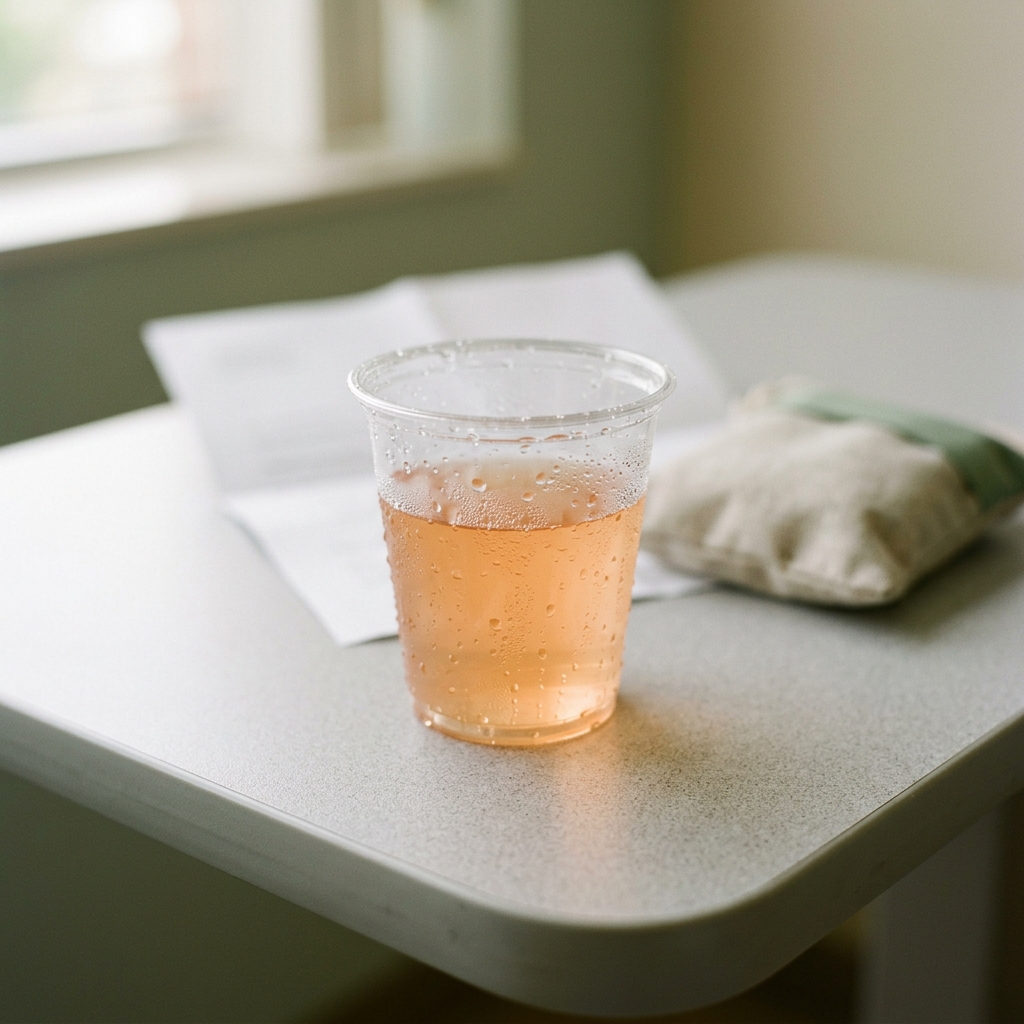
Cold and clear tends to work best. Ice cold water, ice chips, ice lollies. Frozen fluids are sometimes tolerated when liquid isn't, and they count.
Use oral rehydration salts, not just water. When you're vomiting repeatedly you're losing electrolytes as well as fluid, and plain water alone doesn't replace them. Sachets from any pharmacy. Flat cola and diluted squash are the household versions, and while they're not ideal nutritionally, calories and fluid you keep down beat perfect ones you don't.
Keep a record of what goes in and stays in. When a midwife or doctor asks what you've managed in the last 24 hours, a straight answer changes what happens next, and it's almost impossible to recall accurately when you're this ill. Logging it in the app as you go means the answer is already there. Our hydration in pregnancy guide covers normal requirements, though HG rewrites the rules.
Food Strategies That Sometimes Help
All of these are coping tools, not cures. Some will work for you and some won't, and what works often changes week to week, which is its own kind of exhausting.
Cold food over hot. Heat carries smell and smell is frequently the trigger. Cold food is also less work. If someone can cook for you, ask them to plate it and let it cool elsewhere.
Tiny amounts, constantly. A single cracker. Two grapes. A spoonful of yogurt. An empty stomach often makes the nausea worse, so the aim is never fully empty and never remotely full.
Separate food and drink. Taking both together fills the stomach faster and comes back up more readily. Leave thirty minutes between them where you can.
Salty and plain over sweet. Many women with HG find crisps, salted crackers and plain potato more tolerable than sweet things, and the salt is doing useful work too.
Protein where possible. Some evidence suggests protein-containing foods settle nausea better than carbohydrate alone. Worth trying if you can manage it, not worth forcing if you can't.
Eat what you can face. If the only thing that stays down for three days is beige toast or a specific brand of soup, eat that. This is not the moment for a balanced diet, and food guilt on top of HG helps nobody.
Managing the Environment, Not Just the Food
Half the battle with HG happens before anything reaches your mouth, and this is where other people can genuinely help.
Get smells out. Ask someone else to cook and to open windows afterwards. Cook nothing yourself if you can avoid it. Bin food waste immediately and outside if possible. Many women find a strong scent they *can* tolerate, often lemon or mint, and keeping it to hand helps override the ones they can't.
Prepare food when you feel least bad. HG often has a rhythm, even if it's a rough one. Whatever your better hours are, that's when someone should plate up small portions and put them in the fridge for later.
Keep everything within reach. Getting up, walking to a kitchen and standing there is often enough to trigger vomiting on its own. A box by the bed with crackers, sweets, water and rehydration sachets removes that.
Brush teeth carefully. Repeated vomiting damages enamel. Rinse with water or a fluoride mouthwash after being sick, and wait an hour before brushing, since brushing immediately scrubs acid into softened enamel. Tell your dentist you have HG, as dental care is free during pregnancy and for a year after in the UK.
Supplements When Swallowing Is Hard
Standard prenatal vitamins are often impossible with HG. The iron in them is notoriously hard on an already irritated stomach and can make vomiting worse.
Practical options worth raising with your midwife or GP: switch to folic acid alone for a while, since that's the non-negotiable one in early pregnancy. Try a chewable, spray or dissolvable form. Take it at whatever time of day is least bad, often evening. Or pause the iron-containing prenatal temporarily with medical advice.
Thiamine (vitamin B1) deserves a specific mention. Prolonged vomiting can deplete it, and severe deficiency causes a serious neurological condition. Your care team should be alert to this if you're admitted or vomiting persistently, and it's a reasonable thing to ask about directly.
Contact Your Midwife or GP Today If
- You've kept no fluids down for 24 hours
- You're passing very little urine, or it's dark
- You've lost weight, particularly 5% of your body weight or more
- You have severe weakness, dizziness or fainting
- There's blood in your vomit
- You have abdominal pain or a high temperature
What Happens If You Need Hospital
Worth knowing in advance, because it makes it less frightening and it is not a failure.
Treatment is usually IV fluids to rehydrate you, anti-sickness medication given intravenously if tablets won't stay down, and sometimes vitamin replacement. Many units now offer day-case ambulatory care, so you're rehydrated and home the same day rather than admitted.
Plenty of women need this more than once across a pregnancy. It's a normal part of managing the condition, not evidence you've handled it badly.
Catching Up on Nutrition Later
A question that causes a lot of guilt, so here's the honest answer.
Babies are remarkably good at drawing what they need, and outcomes for babies of women with HG are generally reassuring, particularly where the condition is treated. The bigger risk in most cases is to you, not to the baby: dehydration, weight loss and the mental health toll of months of illness.
If your HG eases, and for many women it does improve after the first trimester, that's the point to rebuild. Iron and protein first, since those are the ones most likely to have suffered. Our iron guide and prenatal gaps guide cover what to prioritise once eating is possible again.
And when things start to lift, our first trimester nausea guide and blood sugar guide become genuinely useful, which they aren't while you're in the thick of it.
The Part Nobody Mentions
HG is isolating in a way that's hard to explain to people who had ordinary morning sickness. You may be unable to work, unable to care for other children, unable to leave the house. Depression and anxiety are common alongside it, and some women describe feeling unable to bond with a pregnancy that's making them so ill.
That's a recognised part of the condition, not a character flaw, and it's worth telling your midwife about as plainly as you'd report the vomiting. Pregnancy Sickness Support in the UK runs a helpline and peer support network, and speaking to someone who's had it is often more use than any list of foods.
Most importantly: HG usually ends. Often after the first trimester, almost always at delivery. That doesn't help much today, but it's true.
Clinical Sources & Research
This article is general information and does not replace medical care. Hyperemesis gravidarum requires assessment and treatment from your midwife, GP or maternity unit. If you are struggling to keep fluids down, seek help today rather than waiting for your next appointment.
Meet the Editorial Team
The researchers and experts behind PregnancyPlate.

Fiza Izra
Founder & Tech Researcher
A UK-based mother of 3 with a background in tech and data synthesis, Fiza brings real-world experience navigating hyperemesis gravidarum and postnatal depression. She engineers complex clinical guidelines (NHS, ACOG) into accessible tools, ensuring rigorous fact-checking with deep empathy.

Emma Davies
Senior Nutrition Editor
A mum and writer, Emma runs our food safety desk. She is the one who rings the restaurant to ask how long the lettuce sits out, checks every claim against CDC, FDA and NHS guidance, and rewrites the answer until it is usable at 9pm in a drive-thru queue.