What to Eat Before the Glucose Test in Pregnancy (and What Not To)
Cutting carbs before the glucose test can raise your result, not lower it. What to eat in the days before, the night before and the morning of the test.
In this article

Editorial note: This article is researched from official public health and pregnancy food safety guidance, then edited by the PregnancyPlate team for clarity. It is not medical advice. If you are worried about symptoms or a specific exposure, contact your midwife, GP or healthcare provider.
The Fast Answer: Eat normally in the days before your glucose test, including your usual carbohydrates. Cutting carbs to try to pass can actually distort the result, because your body handles a sudden glucose load worse after several low-carb days. Have a balanced dinner the night before, follow your clinic's fasting instructions exactly, and take a proper snack with protein for straight after. The test is a screen, not an exam, and you cannot revise for it.
Track your nutrition in seconds in the PregnancyPlate AppSafety is step one. Nutrition helps your baby thrive.
Knowing a meal is safe does not tell you whether you are getting enough iron, folate, calcium and choline. PregnancyPlate tracks all of it from a photo of your plate.
- See nutrient progress
- Scan meals instantly
- Nourish with confidence
 Scan to download
Open with iPhone camera
Scan to download
Open with iPhone camera
Almost everyone arrives at the glucose test slightly anxious, having read something the night before about a friend who "failed because of a biscuit". It's one of the few pregnancy appointments that feels like a pass or fail.
It isn't one. It's a screen for a common condition that's very manageable once it's found. But what you eat in the days before does matter, just not in the direction most people assume.
What the Test Actually Involves
Screening usually happens between 24 and 28 weeks, or earlier if you have risk factors like a previous large baby, a family history of diabetes, or a raised BMI.
There are two common formats and which one you get depends on where you are.
In the UK, it's usually a single oral glucose tolerance test. You fast overnight, have a blood test, drink a measured glucose drink, then have another blood test two hours later. You stay at the clinic in between.
In the US, many clinics start with a one-hour glucose challenge, which does not require fasting. You drink 50g of glucose and have blood taken an hour later. If that comes back high, you're booked for a longer fasting test on another day.
So the first thing worth doing is checking which one you're having and whether you need to fast, because the advice below splits at that point. Your appointment letter will say, and if it doesn't, the clinic will tell you.
The Days Before: Do Not Cut Carbs
This is the part that gets people into trouble, and it's the opposite of the internet's advice.
If you eat very few carbohydrates for several days before a glucose tolerance test, your body becomes less efficient at handling a sudden large dose of glucose. That can push your result higher, not lower. It's a well-recognised effect, which is why the classic guidance before this kind of test is to eat a normal diet containing your usual amount of carbohydrate in the run-up.
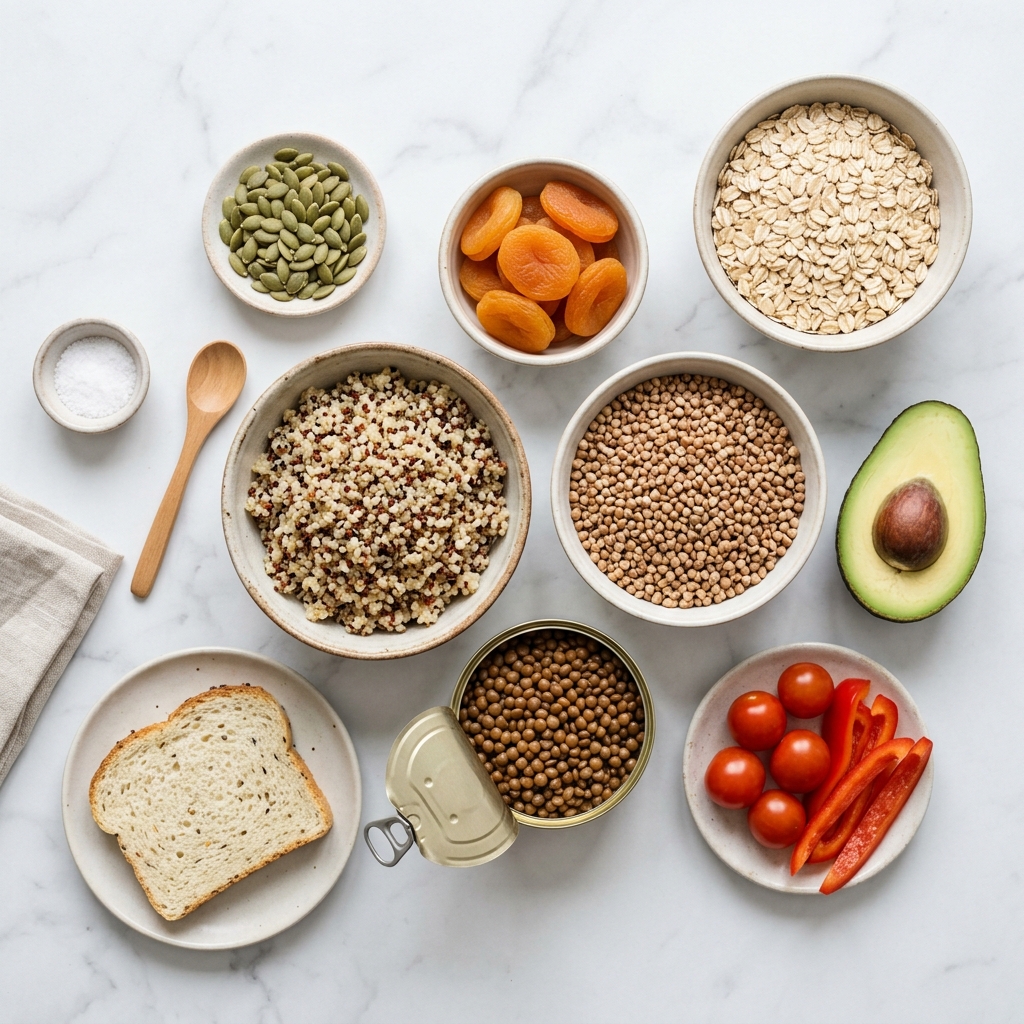
So keep eating your normal bread, rice, pasta, potatoes, fruit and cereal in the days beforehand. Don't start a low-carb experiment the week of your test.
Equally, don't do the opposite. A blowout of cake and sugary drinks the day before won't help, and can raise a fasting reading. Normal is genuinely the instruction here.
The Night Before
Assuming you're fasting for the test, this is the meal that matters most.
Have a balanced dinner with protein, some carbohydrate and vegetables, at your usual sort of time. Chicken with rice and vegetables, pasta with a lentil sauce, a jacket potato with beans and cheese. Nothing unusual, nothing enormous, nothing very sugary.
Avoid a late-night dessert or a sweet drink close to bedtime, since that's the thing most likely to nudge a fasting number up.
Then follow the fasting window exactly. In the UK this is usually eight to ten hours of no food and no drinks other than plain water. Water is allowed and worth drinking, because being dehydrated makes the blood draw harder and makes you feel worse afterwards.
Two things people forget: no chewing gum and no mints, and no sugary drinks in the morning, including tea or coffee with milk or sugar. If you take regular medication, ask your team in advance rather than guessing.
The Morning Of
If you're fasting, the answer is simple. Nothing but water. Take your snack with you for afterwards rather than eating it on the way.
If you're having the non-fasting one-hour challenge, eat a normal, balanced breakfast rather than skipping it or loading up on sugar. Eggs on wholegrain toast, porridge with nuts, or yoghurt with oats all work. What to avoid right before is a sugary cereal, pastry, or a large glass of fruit juice, because that stacks sugar on top of the test drink.
Book an early appointment if you can. Fasting until an eleven o'clock slot while pregnant is genuinely unpleasant, and hunger plus nausea makes the drink harder to keep down.
Glucose Test Prep in One Box
- Eat your normal carbs in the days before. Cutting them can backfire.
- Balanced dinner, no late sugary snack.
- Water only during the fast, and drink some.
- Take a protein snack for straight after.
- Book early and take something to do for two hours.
One practical thing worth knowing if your appointment is late in the morning: ask the clinic whether you can move to an earlier slot. Fasting until midday at 26 weeks, then drinking concentrated glucose, is the version of this test people find hardest, and clinics reschedule for that reason more often than you would expect.
Getting the Drink Down
The glucose drink is very sweet, often lukewarm, and on an empty pregnant stomach it can be grim. A few things genuinely help.
Ask if it can be chilled. Cold is much easier than room temperature. Some clinics keep them in a fridge and will hand you a cold one if you ask.
Drink it steadily rather than in one go, within the time the nurse gives you, usually about five minutes. Sipping slowly across that window beats gulping.
Breathe through your mouth while drinking if the smell is the problem, and have plain water to rinse afterwards if you're allowed it.
If you vomit, tell them straight away. The test usually has to be rescheduled rather than continued, and that's a normal thing to happen rather than a failure on your part.
What to Take With You
You'll be there a while, and you can't leave between blood tests.
A snack with protein for afterwards. A cheese sandwich, nuts, a boiled egg, yoghurt. After a large glucose load your blood sugar can drop sharply an hour or two later, and protein steadies it better than more sugar. Our guide to pregnancy blood sugar crashes explains why.
Water, for during and after.
Something to do. Two hours in a waiting room is long. A charger is more useful than you'd think.
A lift home if possible. Plenty of people feel shaky, headachy or nauseated afterwards, and driving straight away isn't ideal.
What the Numbers Mean
Thresholds differ between countries and even between hospitals, so your own team's numbers are the ones that count. Broadly:
UK guidance diagnoses gestational diabetes at a fasting level of 5.6 mmol/L or above, or a two-hour level of 7.8 mmol/L or above.
US practice commonly flags a one-hour screening result at or above 130 to 140 mg/dL for further testing, then uses a three-hour test with its own set of thresholds to diagnose.
A raised screening result is not a diagnosis. Plenty of people who fail the first stage pass the longer test.
Why the Test Matters
Worth a paragraph, because plenty of people consider skipping it.
Untreated gestational diabetes raises the chance of the baby growing large, which makes birth harder and increases the likelihood of intervention. It's also linked to higher rates of pre-eclampsia, and to low blood sugar in the baby after birth. Picked up and managed, most of that risk comes back down.
It also matters afterwards. Gestational diabetes raises your own long-term risk of type 2 diabetes, so a diagnosis buys you a postnatal check and a heads-up you wouldn't otherwise have. That's a genuine benefit, not just a label.
None of that is a reason to be frightened of the appointment. It's the reason the two hours are worth sitting through.
If You Are Diagnosed
Worth saying plainly: gestational diabetes is common, it is not your fault, and it is not caused by eating too much cake.
It happens because pregnancy hormones from the placenta make your body more resistant to insulin, and for some people the pancreas can't quite keep up. Risk factors include family history, BMI, age and ethnicity, none of which are behaviour.
Most people manage it with food changes and monitoring alone. The key move is not cutting carbohydrate out but spreading it across the day and pairing it with protein. Our seven day gestational diabetes meal plan lays that out, and the gestational diabetes diet guide covers the principles behind it.
If food alone isn't enough and you're offered medication or insulin, that is not a failure either. It's a common part of treatment, and it usually means the placenta is doing a lot rather than that you did something wrong.
One more practical note. Whatever the result, the days after the test are a good moment to look honestly at how your meals are structured, since spreading carbohydrate and adding protein helps how you feel regardless of your numbers. Our second trimester lunch ideas are built on exactly that pattern.
Clinical Sources & Research
This article is general information and does not replace advice from your midwife, GP or obstetrician. Follow your own clinic's fasting instructions, which take precedence over anything here, and ask them about any regular medication before the test.
Meet the Editorial Team
The researchers and experts behind PregnancyPlate.

Fiza Izra
Founder & Tech Researcher
A UK-based mother of 3 with a background in tech and data synthesis, Fiza brings real-world experience navigating hyperemesis gravidarum and postnatal depression. She engineers complex clinical guidelines (NHS, ACOG) into accessible tools, ensuring rigorous fact-checking with deep empathy.

Emma Davies
Senior Nutrition Editor
A mum and writer, Emma runs our food safety desk. She is the one who rings the restaurant to ask how long the lettuce sits out, checks every claim against CDC, FDA and NHS guidance, and rewrites the answer until it is usable at 9pm in a drive-thru queue.