Dizziness and Fainting in Pregnancy: Blood Sugar, Blood Pressure or Iron?
Three different causes produce the same lightheaded feeling in pregnancy, and each needs a different fix. How to tell them apart and when it needs checking.
In this article

Editorial note: This article is researched from official public health and pregnancy food safety guidance, then edited by the PregnancyPlate team for clarity. It is not medical advice. If you are worried about symptoms or a specific exposure, contact your midwife, GP or healthcare provider.
The Fast Answer: Feeling lightheaded in pregnancy usually comes down to one of three things, and they need different responses. Blood sugar, if it happens when you have gone too long without eating. Blood pressure, if it happens standing up, in heat, or lying on your back. Iron, if it is constant and paired with exhaustion and breathlessness. Working out which one you have is most of the fix.
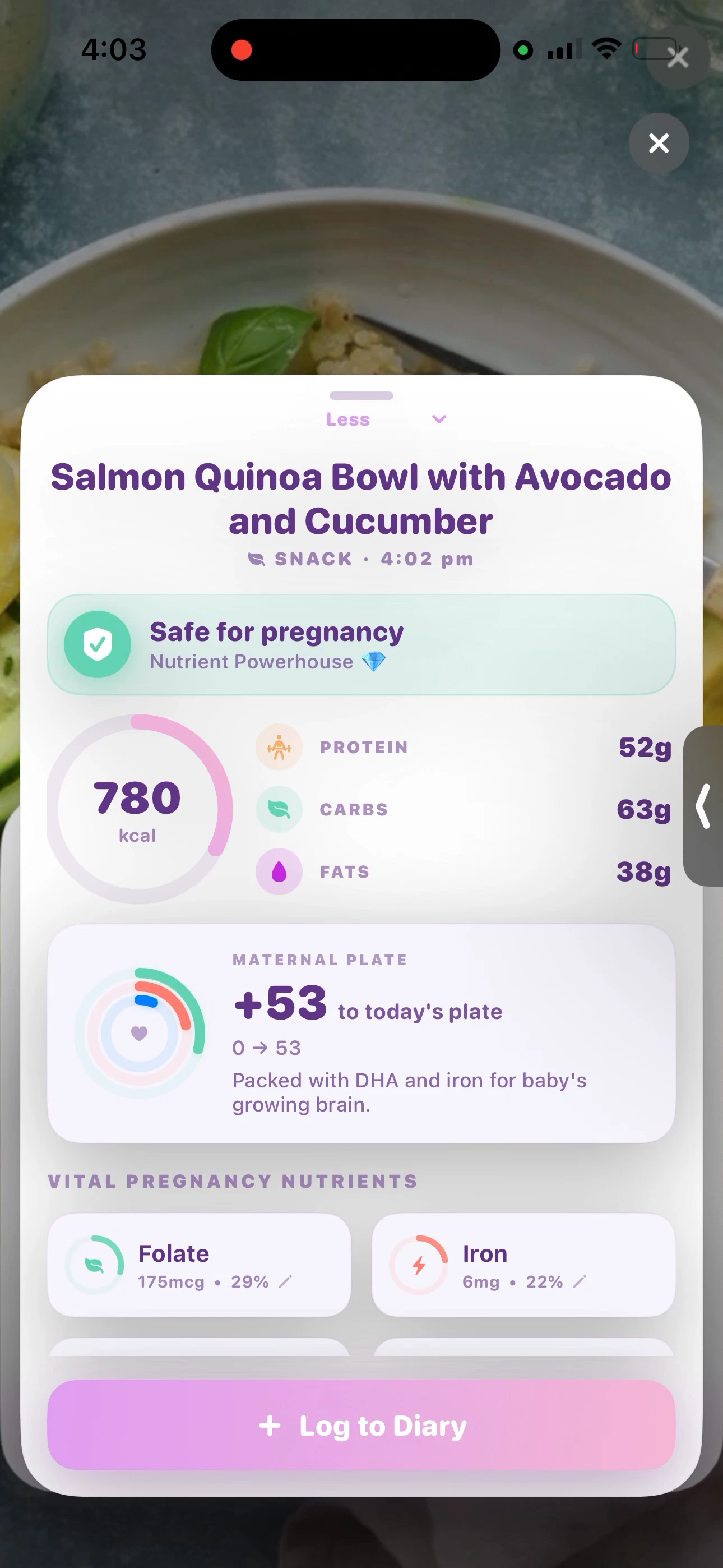
Spot your own pattern in the PregnancyPlate AppYour next meal, a little less guesswork.
Scan your plate for pregnancy food-safety guidance and a nutrition breakdown. Keep your meals and nutrient progress in one place.
 Scan with your iPhone
to get the app
Feeling faint is one of the most common pregnancy complaints and one of the most generically handled. The usual advice is to eat something and sit down, which is fine but only addresses one of the three causes.
They are genuinely distinguishable, and knowing which one you are dealing with changes what actually helps.
Why Pregnancy Makes You Lightheaded
Two background changes set the stage for all three.
Your blood vessels relax. Progesterone widens them, which lowers blood pressure, particularly through the second trimester. Less pressure means less efficient delivery of blood to your brain when you change position.
Your blood volume rises faster than your red cell count. The plasma increases more than the cells do, which dilutes your haemoglobin. This is normal and expected, and it also means the margin before genuine deficiency is narrower.
On top of that your growing uterus starts compressing major blood vessels in the second half of pregnancy, which is where the lying-down version comes from.
Cause One: Blood Sugar
What it feels like: shaky, sweaty, irritable and lightheaded, usually with hunger. Comes on when you have not eaten for a while, and is often worst mid-morning or late afternoon.
Why it happens: pregnancy hormones make glucose handling less stable, and a fast-absorbing carbohydrate eaten alone produces a spike then an overshoot downwards.
The fix: eat every two to three hours rather than waiting for hunger, and never eat carbohydrate on its own. Adding protein or fat flattens the curve entirely. This is the same mechanism behind a lot of pregnancy nausea, and our blood sugar guide covers it in full.
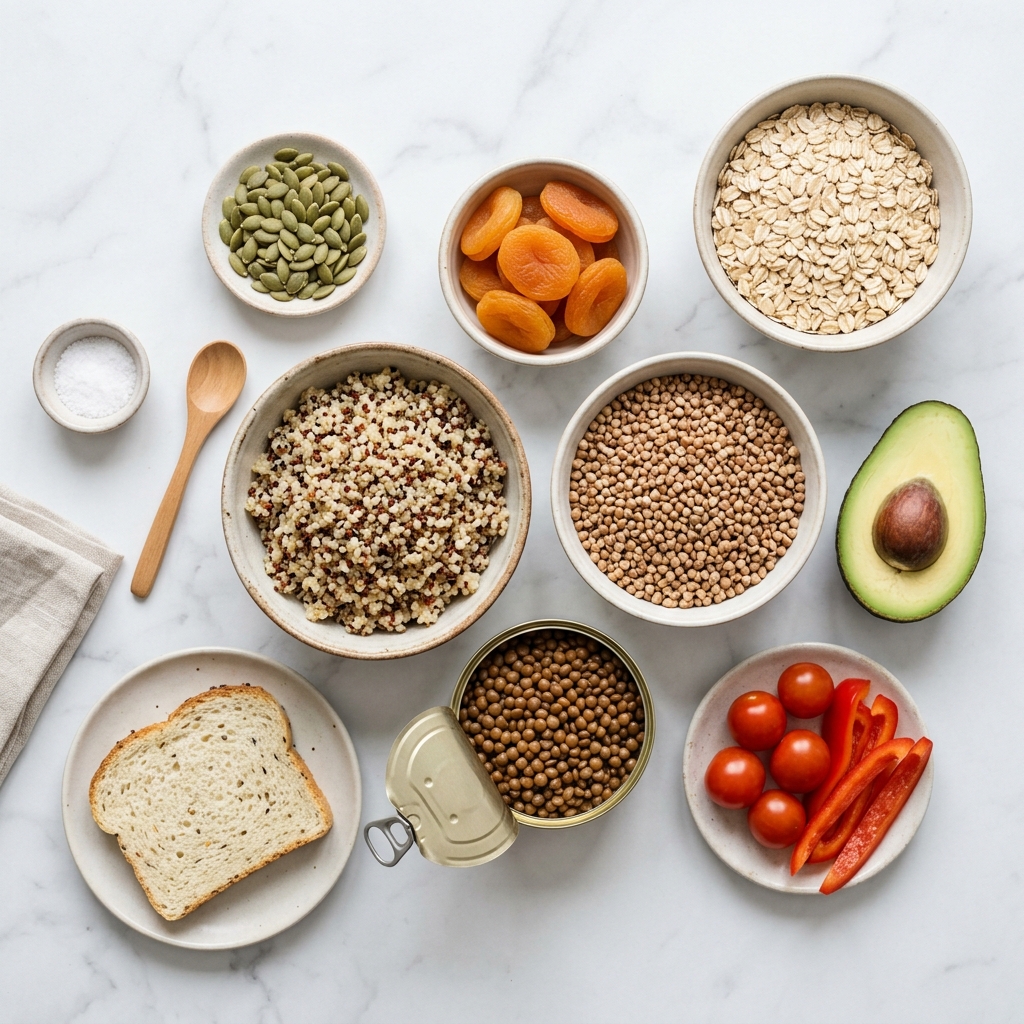
Right now: something with carbohydrate and protein together. Cheese and crackers, yogurt, nuts and dried fruit.
Cause Two: Blood Pressure and Position
What it feels like: a head rush on standing, vision greying or spotting briefly, unsteadiness for a few seconds. No hunger involved.
Why it happens: relaxed blood vessels mean blood pools in your legs, and standing up quickly leaves your brain briefly short. Heat makes it worse because it widens vessels further, which is why hot showers, hot weather and standing in queues are classic triggers.
The fix: stand up slowly, in stages. Sit on the edge of the bed before standing. Avoid long periods standing still, and if you must, shift your weight and flex your calves to keep blood moving. Stay hydrated, since low fluid volume makes it markedly worse, and our hydration guide covers the amounts.
The lying-down version deserves its own note. From around the middle of pregnancy, lying flat on your back lets the uterus press on the vena cava, the large vein returning blood to your heart. That can make you feel faint, clammy and unwell within minutes. Roll onto your left side and it resolves quickly. This is also why side sleeping is recommended in later pregnancy.
Which One Is It?
- Shaky and hungry, hours since eating → blood sugar. Eat, and pair carbs with protein.
- Head rush on standing, or in heat → blood pressure. Move slowly, drink more.
- Faint and clammy lying on your back → vena cava. Roll onto your left side.
- Constant, with exhaustion and breathlessness → iron. Ask for a ferritin test.
- With headache, visual changes or upper abdominal pain → call the same day.
Cause Three: Iron
What it feels like: different in character from the other two. Rather than sudden episodes, it is a persistent background of exhaustion, breathlessness climbing stairs, a racing heart and lightheadedness that is not clearly tied to eating or standing.
Why it happens: iron deficiency reduces your blood's oxygen-carrying capacity, and pregnancy roughly doubles your iron requirement to 27mg a day.
The fix: get tested. Ask for a full blood count and ferritin, since ferritin measures stores and can be low while haemoglobin still reads normal. If it is low, your midwife or GP will advise on supplementation, and correcting it usually resolves the symptom over several weeks.
Look out for the other iron flags travelling with it: pale inner eyelids, cravings for ice or non-food items, restless legs at night. Those are covered in our pica guide and restless legs guide, and any of them alongside dizziness makes iron considerably more likely. Our iron guide covers the food side.
What to Do in the Moment
If you feel faint, get down before you fall. That is the priority, because the injury risk from falling is greater than the faint itself.
Sit or lie down immediately, wherever you are. If lying down, go onto your left side rather than your back. If sitting, put your head between your knees. Loosen anything tight, get cool air, and sip water once the worst passes. Then eat something with protein in it.
Do not try to walk it off or push through to somewhere more convenient. Sitting on a supermarket floor is embarrassing for a moment and a great deal better than fainting onto it.
Two situations worth planning for in advance. Driving: pull over safely and stop if you feel it coming on, rather than trying to reach your destination. Bathing: keep the water cooler than you would like and avoid locking the door in late pregnancy, which is a small precaution that costs nothing.
Contact Your Midwife or Maternity Unit If
- You actually faint, rather than just feeling close to it
- Dizziness comes with headache, visual changes or pain under your ribs, which can indicate pre-eclampsia
- You have chest pain, palpitations or breathlessness at rest
- There is any bleeding or abdominal pain alongside it
- You notice any change in your baby's movements
- It is frequent, worsening, or stopping you functioning
When It Is None of the Three
Most cases are blood sugar, blood pressure or iron. A few other things produce the same feeling and are worth knowing about.
Dehydration on its own, which is easy to slide into if nausea or a metallic taste has put you off drinking. It amplifies both the blood sugar and blood pressure versions rather than being separate.
Overheating. Hot weather, hot baths, crowded trains. Pregnancy raises your core temperature and reduces your tolerance for heat considerably.
A vasovagal response, the ordinary faint triggered by pain, a blood test, standing too long or a shock. More easily provoked in pregnancy than outside it.
Anxiety and hyperventilation, which produce genuine lightheadedness alongside tingling in the hands and around the mouth.
Thyroid problems, which are common in and after pregnancy and can cause dizziness along with fatigue and heart rate changes. Picked up on a blood test.
The three main causes are still where to start, and the way to tell is the pattern rather than the sensation. Note when it happens, what you had eaten and what you were doing, over about three days. Almost everyone finds a pattern in that time, and it points straight at which fix to try.
Reducing How Often It Happens
Most of the prevention is unglamorous and effective.
Eat regularly, every two to three hours, with protein at each occasion. Keep a snack in your bag permanently, because the episodes happen when you are out rather than at home. Drink steadily through the day. Stand up in stages. Sleep and rest on your side from the middle of pregnancy. Avoid very hot baths and long hot showers. Move around if you have to stand for a long time.
And mention it at your next appointment even if it feels minor. Blood pressure is checked at every visit precisely because it matters, and swelling alongside dizziness is a combination worth flagging, which our swelling guide explains.
For most women this is a second trimester nuisance that settles as blood pressure normalises later on. It is worth working out which of the three you have, though, because two of them have easy fixes and the third is a blood test away from being sorted.
Clinical Sources & Research
This article is general information and does not replace medical advice. If you faint, or dizziness comes with headache, visual changes, bleeding or reduced fetal movements, contact your maternity unit the same day.
Meet the Editorial Team
The researchers and experts behind PregnancyPlate.

Fiza Izra
Founder & Tech Researcher
A UK-based mother of 3 with a background in tech and data synthesis, Fiza brings real-world experience navigating hyperemesis gravidarum and postnatal depression. She engineers complex clinical guidelines (NHS, ACOG) into accessible tools, ensuring rigorous fact-checking with deep empathy.

Emma Davies
Senior Nutrition Editor
A mum and writer, Emma runs our food safety desk. She is the one who rings the restaurant to ask how long the lettuce sits out, checks every claim against CDC, FDA and NHS guidance, and rewrites the answer until it is usable at 9pm in a drive-thru queue.
Make sense of every plate.
Scan your plate for pregnancy food-safety guidance and a nutrition breakdown. Keep your meals and nutrient progress in one place.
Scan with your iPhoneto get the app