Swelling in Pregnancy: What Actually Helps, and the Salt Myth
Cutting salt does not reduce pregnancy swelling, and drinking less water makes it worse. What genuinely helps, and the red flags that need same-day attention.
In this article

Editorial note: This article is researched from official public health and pregnancy food safety guidance, then edited by the PregnancyPlate team for clarity. It is not medical advice. If you are worried about symptoms or a specific exposure, contact your midwife, GP or healthcare provider.
The Fast Answer: Two pieces of advice you will be given are wrong. Cutting salt does not reduce pregnancy swelling, and it is not recommended. Drinking less water makes it worse, because a dehydrated body holds on to more fluid. What genuinely helps is movement, elevation, compression and enough protein. And one thing matters more than all of it: knowing which swelling is normal and which needs a phone call today.
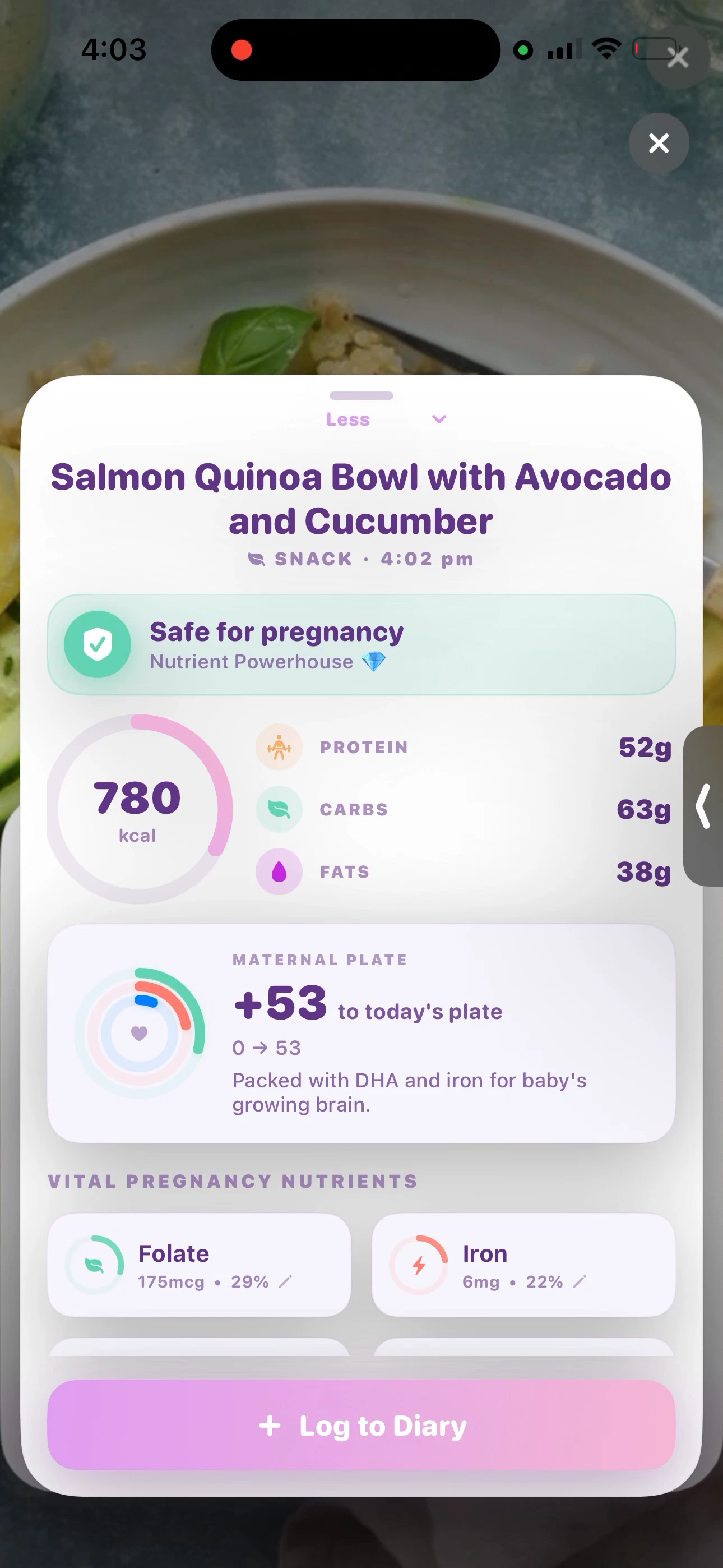
Track your protein and hydration in the PregnancyPlate AppYour next meal, a little less guesswork.
Scan your plate for pregnancy food-safety guidance and a nutrition breakdown. Keep your meals and nutrient progress in one place.
 Scan with your iPhone
to get the app
Swollen ankles arrive for most people somewhere in the third trimester, usually along with a great deal of confident advice about salt. Most of that advice is a leftover from guidance that changed decades ago.
Here is what is actually happening, what the evidence supports, and the part that genuinely matters.
Why It Happens
Three things at once, none of which is your diet.
Your blood volume rises by roughly half. That extra fluid has to go somewhere, and gravity puts it in your feet and ankles.
The uterus presses on the veins returning blood from your legs, which slows the flow back up and lets fluid pool.
Pregnancy hormones make blood vessel walls more permeable, so fluid moves out into surrounding tissue more easily than usual.
Which is why it is worse at the end of the day, worse in hot weather, worse after standing, and better in the morning after a night lying down.
The Salt Myth
This is the one worth correcting, because women are still routinely told to cut salt right down and it does not work.
Severely restricting salt does not reduce swelling in pregnancy, and it is not recommended by NHS or NICE guidance. Sodium plays a role in maintaining the increased blood volume pregnancy requires, and cutting it hard can be counterproductive.
What is worth doing is eating normally rather than at either extreme. Very high intakes from heavily processed food are not helpful for blood pressure generally, and the UK target of around 6g of salt a day applies in pregnancy as it does otherwise. But that is ordinary healthy eating, not a swelling treatment, and there is no benefit in going below it.
So if someone tells you to stop salting your food to fix your ankles, they are repeating advice that has been out of date for a long time.
Drink More, Not Less
The second counterintuitive one. Cutting fluids to reduce fluid retention is exactly backwards.
When you are underhydrated your body responds by holding on to what it has, which increases retention rather than reducing it. Drinking enough signals that fluid is plentiful and helps your kidneys clear excess sodium.
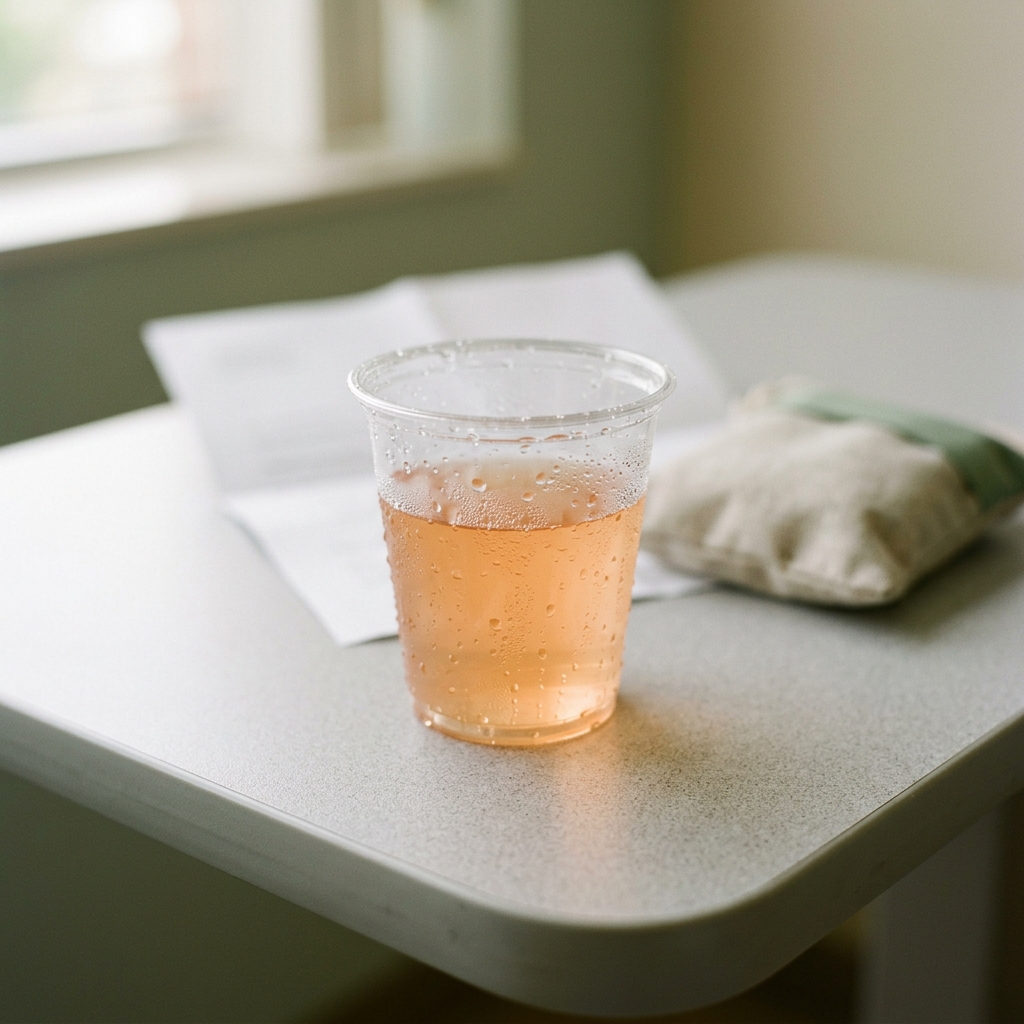
Aim for pale straw-coloured urine as the check rather than counting glasses. Our hydration guide covers the numbers.
Where Food Does Help
Less dramatic than the myths, and genuinely useful.
Protein. The most relevant nutrient here. Protein in your blood, particularly albumin, helps hold fluid inside blood vessels rather than letting it leak into tissue. Consistently low protein intake can worsen oedema. You need roughly 75 to 100g a day by late pregnancy, and our protein guide covers how to get there.
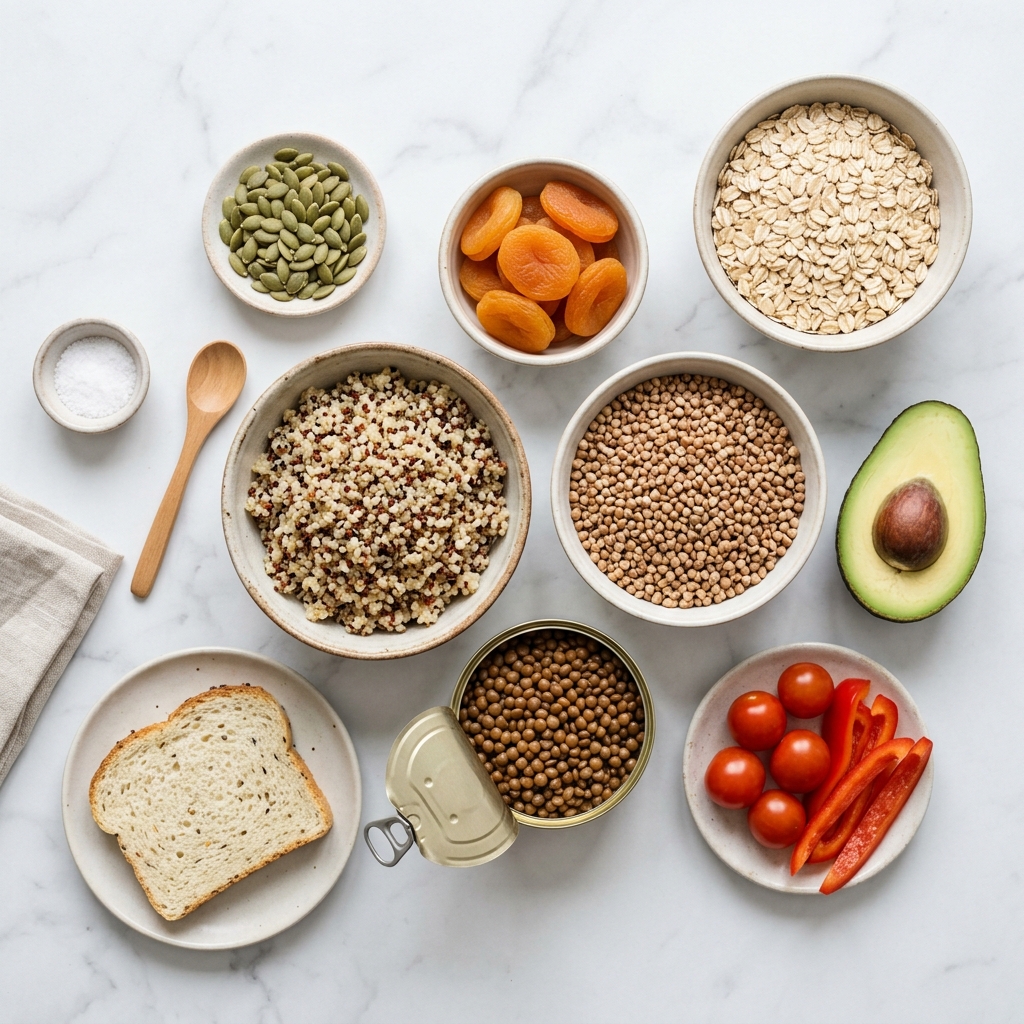
Potassium. Works opposite sodium in fluid balance. Bananas, potatoes with skins, sweet potatoes, spinach, beans, lentils, avocado, dried apricots.
Magnesium. Often suggested, and the evidence for swelling specifically is thin. It does have better evidence for leg cramps, which frequently arrive at the same time, and our leg cramps guide covers that.
Foods with high water content. Cucumber, melon, celery, citrus. They contribute to hydration and are easy to eat when nothing else appeals.
What does not have good evidence: dandelion tea, parsley tea and other herbal diuretics. Some are not recommended in pregnancy at all, and using anything diuretic without medical advice is a bad idea while pregnant.
Swelling in One Box
- Do not cut salt. It does not reduce swelling and is not recommended.
- Drink more, not less. Dehydration increases retention.
- Protein matters most of the nutrients. Aim for 75 to 100g daily.
- Movement beats rest. Standing still is the worst position.
- Sudden swelling of face or hands is not normal. Call the same day.
The Places It Shows Up That Nobody Warns You About
Ankles and feet are expected. Several others are not, and they cause a lot of unnecessary alarm.
Hands and fingers, which is why rings stop fitting. Worth removing them early rather than waiting.
Carpal tunnel. Fluid in the wrist compresses the nerve running through it, causing numbness, tingling or pain in the thumb and first fingers, classically worse at night. Very common in the third trimester, and it resolves after birth. Wrist splints worn at night help considerably and are cheap.
Your face, particularly in the morning. Mild puffiness can be normal, but facial swelling is also a pre-eclampsia sign, so this is the one to mention rather than shrug off.
Your feet growing. Not just swelling. The hormone relaxin loosens ligaments, and for some women feet stay half a size larger permanently. Buy comfortable shoes rather than trying to squeeze into the old ones.
Nose and gums. The same increased blood volume and vessel permeability cause blocked noses and bleeding gums. Unrelated to your ankles, same underlying cause.
What Helps More Than Food
Honestly, the non-food measures do more here.
Move regularly. Standing still is worse than walking. Calf muscles pump blood back up your legs, so a short walk every hour beats sitting or standing for long stretches.
Elevate your feet above hip level when you can, even for twenty minutes.
Compression stockings, put on first thing before swelling builds. Unglamorous and genuinely effective. Ask your midwife about proper graduated ones rather than flight socks.
Lie on your left side. Takes pressure off the vena cava and improves return flow.
Cool water. Swimming is particularly good, because water pressure pushes fluid back into circulation while you are weightless.
Take rings off early. Fingers swell gradually and it is easier to remove a ring before it is stuck than after.
Contact Your Midwife or Maternity Unit the Same Day If
- Swelling comes on suddenly, or affects your face, around your eyes or your hands
- You have a severe headache that will not shift
- Vision changes: blurring, flashing lights, spots
- Pain just below your ribs, usually on the right
- Vomiting alongside any of the above
- One leg swollen, painful, red or warm, which can signal a clot rather than ordinary oedema
When It Starts, and When It Goes
Useful to know so you can tell whether yours is following the ordinary pattern.
Mild swelling can appear from around the fifth month, but for most women it becomes noticeable in the third trimester and peaks in the final few weeks. Hot weather accelerates it considerably, so a summer third trimester is harder than a winter one.
After birth it often gets briefly worse before it improves, which surprises people. Your body is clearing several litres of extra fluid, plus any given intravenously during labour, and it takes a week or two. Night sweats and a great deal of urinating are part of the same process and are entirely normal.
If swelling is still significant beyond a couple of weeks postpartum, or appears newly after the birth alongside headache or feeling unwell, that needs checking. Pre-eclampsia can develop after delivery as well as before it, which is not widely known.
Normal Swelling Versus Pre-eclampsia
This is the most important section on the page, and it is why swelling is worth paying attention to rather than simply enduring.
Ordinary pregnancy oedema builds gradually, affects feet and ankles most, is worse at the end of the day and better after resting overnight, and is symmetrical.
Pre-eclampsia swelling tends to come on suddenly, affects the face and hands as well as the feet, does not improve overnight, and arrives with other symptoms: headache, visual disturbance, pain under the ribs, feeling generally unwell.
Pre-eclampsia is a serious condition affecting the placenta, and it is picked up through blood pressure and urine checks, which is exactly why antenatal appointments include both every time. It can develop with no symptoms at all, so never skip those appointments on the basis that you feel fine.
No diet prevents pre-eclampsia. Your team may recommend low-dose aspirin from twelve weeks if you have risk factors, and there is some evidence around calcium intake in women who get very little, but that is a clinical decision rather than something to self-manage.
Ordinary swelling usually eases within a week or two after birth, sometimes getting briefly worse first as your body clears the extra fluid. Our third trimester meal plan covers eating well through the stretch where this is at its most annoying.
Clinical Sources & Research
This article is general information and does not replace medical care. Swelling is monitored at every antenatal appointment for good reason. If you have sudden swelling, headache, visual changes or pain under your ribs, contact your maternity unit the same day.
Meet the Editorial Team
The researchers and experts behind PregnancyPlate.

Fiza Izra
Founder & Tech Researcher
A UK-based mother of 3 with a background in tech and data synthesis, Fiza brings real-world experience navigating hyperemesis gravidarum and postnatal depression. She engineers complex clinical guidelines (NHS, ACOG) into accessible tools, ensuring rigorous fact-checking with deep empathy.

Emma Davies
Senior Nutrition Editor
A mum and writer, Emma runs our food safety desk. She is the one who rings the restaurant to ask how long the lettuce sits out, checks every claim against CDC, FDA and NHS guidance, and rewrites the answer until it is usable at 9pm in a drive-thru queue.
Make sense of every plate.
Scan your plate for pregnancy food-safety guidance and a nutrition breakdown. Keep your meals and nutrient progress in one place.
Scan with your iPhoneto get the app