Foods That Help With Pregnancy Leg Cramps (Magnesium & Potassium Guide)
The complete guide to preventing painful leg cramps during pregnancy - which minerals you need, the best foods to eat, and natural remedies that actually work.
In this article
Editorial note: This article is researched from official public health and pregnancy food safety guidance, then edited by the PregnancyPlate team for clarity. It is not medical advice. If you are worried about symptoms or a specific exposure, contact your midwife, GP or healthcare provider.
The Agony of the Midnight Calf Spasm
You are finally drifting off into a beautifully deep, much-needed sleep after an incredibly exhausting day. The house is completely silent, and you are finally deeply comfortable. Suddenly - with absolutely zero warning - a violent, searing, deeply agonizing pain shoots straight through your calf muscle. Your entire leg violently jerks awake, and you frantically grab your shin, desperately trying to aggressively flex your foot while the muscle feels like it is ruthlessly trying to twist itself entirely inside out. Sound familiar?
Welcome to the horrific reality of pregnancy leg cramps. They are universally considered one of the most agonizing, unwelcome nighttime visitors during pregnancy, aggressively affecting up to half of all expectant mothers, most particularly striking with vicious frequency throughout the second and third trimesters. The incredible news is that these spasms are not a punishment you simply must endure. By aggressively strategically altering your specific macro and micronutrient intake, you can effectively silence these cramps forever.
The Biological Mechanism: Why Do We Cramp?
These terrifying nighttime spasms do not happen randomly. They are the direct physical result of several aggressive physiological changes violently converging on your tired legs simultaneously.
The Weight and Circulation Factor
Your body is physically carrying a massive amount of significantly increased weight. Your rapidly expanding uterus is aggressively pressing heavily down on your major blood vessels and main nerves that run directly from your trunk down to your legs. This drastically slows the return of blood flow from your lower extremities back up to your heart, leading directly to deep muscle fatigue and terrifying cramping.
The Micro-Nutrient Drain
The most profound cause of sudden muscle spasms is a catastrophic, silent depletion of key intracellular electrolytes. Your rapidly growing baby is ruthlessly demanding massive amounts of vital minerals - specifically Calcium, Magnesium, and Potassium - to aggressively construct their developing skeletal and nervous systems. If your dietary intake does not massively exceed your baby's extreme demands, your body will mercilessly siphon these minerals out from your own muscle pathways, leaving your physical muscles highly prone to horrific, electrical misfiring (the cramp).
The Holy Trinity of Cramp Prevention: Magnesium, Potassium, Calcium
To ruthlessly eradicate leg cramps, you must flood your circulatory system with three specific, highly critical minerals. Let us break down exactly what they do, and precisely which absolute super-foods contain massive bioavailability of each.
Magnesium: The Master Muscle Relaxant
If you take nothing else away from this guide, remember this: Magnesium is the single most violently powerful, medically proven natural muscle relaxant known to human biology. It aggressively blocks the calcium channels in your muscle fibers that physically cause the fibers to aggressively contract. When you lack magnesium, your muscles literally cannot biochemically relax.
The Ultimate Magnesium Superfoods:
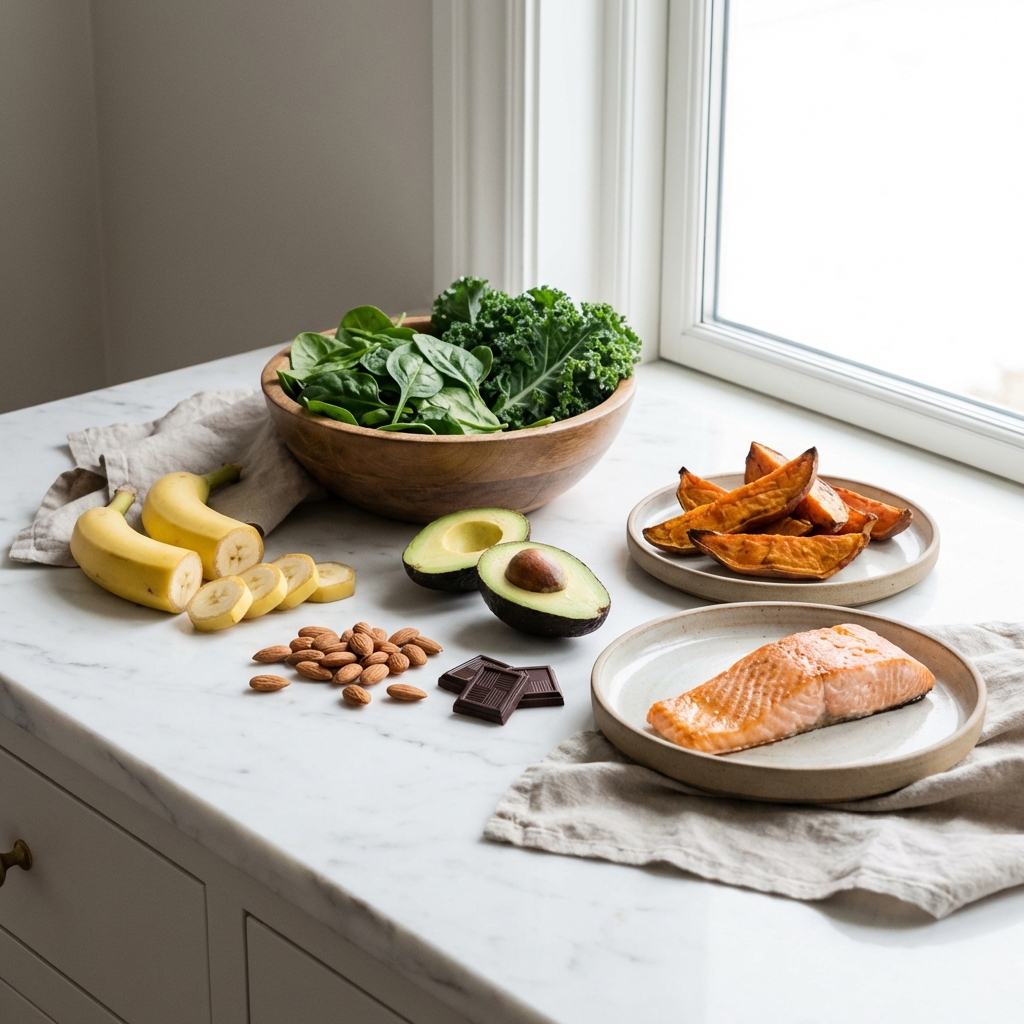
- Raw Pumpkin Seeds (Pepitas): An absolute powerhouse. Just one single ounce contains a monstrous 150mg of magnesium. Aggressively throw them into salads or heavily layer them over your morning porridge.
- Dark Leafy Greens: Specifically Spinach and Swiss Chard. When you aggressively boil or heavily steam huge quantities of spinach down into a tiny serving, you are concentrating the magnesium profoundly.
- Dark Chocolate: Yes, glorious chocolate. A high-quality dark chocolate (minimum 70% cacao) contains roughly 64mg of magnesium per single serving, making it an incredibly legitimate evening medical intervention.
Potassium: The Electrical Conductor
Potassium is arguably the most critical electrolyte for transmitting the actual nerve signals that tell your muscles to move perfectly smoothly instead of violently spasming. During pregnancy, your massive increase in total blood volume drastically dilutes your circulating potassium, significantly increasing your cramp risk.
The Ultimate Potassium Superfoods:
- The Mighty Sweet Potato: Bananas famously get all the credit, but the sweet potato absolutely destroys the banana in total potassium. One massive, deeply baked sweet potato delivers an astonishing 700mg of highly absorbable potassium.
- Avocados: Half an avocado sliced heavily onto your morning toast delivers a massive 500mg of potassium, along with phenomenally healthy fetal-brain-building fats.
- White Beans: Cannellini beans and great northern beans are incredibly cheap and drastically loaded with potassium. Blend them deeply into a rich, creamy soup.
Calcium: The Hidden Culprit
Everyone knows calcium builds the fetal skeleton. But calcium is also the specific trigger that physically initiates the muscle contraction. If your blood calcium drops tremendously low because the baby is taking it all, your muscles become hyper-excitable and spasm uncontrollably.
The Ultimate Calcium Superfoods:
- Greek Yogurt: Opt specifically for plain, thick, full-fat Greek yogurt. It contains practically double the heavy calcium of standard thin yogurts.
- Chia Seeds: These tiny seeds are absolute nutritional titanium. Just two tablespoons aggressively deliver roughly 180mg of calcium. Let them soak heavily overnight in almond milk to rapidly increase bioavailability.
- Fortified Plant Milks: If you are completely dairy-free, you absolutely must aggressively seek out oat or almond milks that are explicitly fortified with heavy calcium carbonates.
The Hydration Mandate
You can aggressively consume all the magnificent pumpkin seeds and huge sweet potatoes in the entire world, but if your muscles are even slightly dehydrated, they will unequivocally cramp. Muscle fibers physically require massive volumes of water to smoothly glide past one another. During the intense heat of the third trimester, you should be aggressively targeting roughly three full liters (over 100 ounces) of fluid per single day.
🛑 An Immediate Mid-Spasm Action Plan
When the horrific midnight spasm strikes, you must absolutely refrain from pointing your toes. Pointing your toes violently contracts the calf muscle further, exponentially intensifying the severe pain.
Instead, instantly pull your entire foot aggressively upwards toward your shin (flexing your foot flat). Violently force your heel down and deeply push your toes toward your kneecap. This aggressively stretches the spasming muscle and forcibly breaks the intense contraction. Follow immediately by applying a heavy, piping hot towel to explicitly increase rapid blood flow.
Topical Magnesium: The Secret Weapon
If dietary changes alone simply are not stopping the agony, you absolutely must consider Epsom salt baths or topical magnesium sprays. Epsom salt is comprised entirely of Magnesium Sulfate. When you dissolve huge quantities in a piping hot bath before bedtime, your heavily expanded skin biologically absorbs the magnesium completely directly into the localized, highly fatigued leg muscles, bypassing the entire digestive tract entirely. It is borderline miraculous for severe pregnancy insomnia and brutal leg cramps.
The Bottom Line
Do not simply aggressively suffer in absolute silence. A horrific, screaming nocturnal muscle cramp is your biological body holding up a massive, flashing neon sign that reads: "I am desperately out of specific electrolytes!" By intelligently and aggressively weaponizing magnesium-rich pumpkin seeds, potassium-loaded sweet potatoes, and ensuring massive, relentless daily hydration, you can forcibly evict these horrific midnight visitors and finally reclaim the deep, utterly tranquil sleep that you and your rapidly growing baby so desperately require.
🥑 Instantly Balance Your Micronutrients
Are you constantly terrified that your diet is completely missing vital magnesium or crucial potassium? Are you incredibly sick of randomly guessing if you ate enough calcium today?
Stop the incredibly stressful guesswork. By ruthlessly analyzing your meals, PregnancyPlate acts as your brilliant, private nutritionist. Simply photograph your dinner, and our AI aggressively cross-references your exact mineral intake, distinctly warning you if your potassium or magnesium levels are falling dangerously low and explicitly suggesting exactly which delicious super-food to immediately add to stop tonight's cramps before they even begin.
Analyse My Diet For Cramp PreventionMeet the Editorial Team
The researchers and experts behind PregnancyPlate.

Fiza Izra
Founder & Tech Researcher
A UK-based mother of 3 with a background in tech and data synthesis, Fiza brings real-world experience navigating hyperemesis gravidarum and postnatal depression. She engineers complex clinical guidelines (NHS, ACOG) into accessible tools, ensuring rigorous fact-checking with deep empathy.

Emma Davies
Senior Nutrition Editor
A mum and writer, Emma runs our food safety desk. She is the one who rings the restaurant to ask how long the lettuce sits out, checks every claim against CDC, FDA and NHS guidance, and rewrites the answer until it is usable at 9pm in a drive-thru queue.