Restless Legs in Pregnancy: The Iron Link Nobody Mentions
Restless legs affects around one in five pregnancies and is strongly linked to low iron. Why the standard blood test can miss it, and what actually helps.
In this article
Editorial note: This article is researched from official public health and pregnancy food safety guidance, then edited by the PregnancyPlate team for clarity. It is not medical advice. If you are worried about symptoms or a specific exposure, contact your midwife, GP or healthcare provider.
The Fast Answer: Restless legs affects roughly one in five pregnancies and it is not just poor sleep or anxiety. It has a well-established link to low iron stores, and the important detail is that ferritin can be low while a standard anaemia test reads normal. So ask for ferritin specifically. Beyond that, caffeine reliably makes it worse, and most cases resolve within days of giving birth.
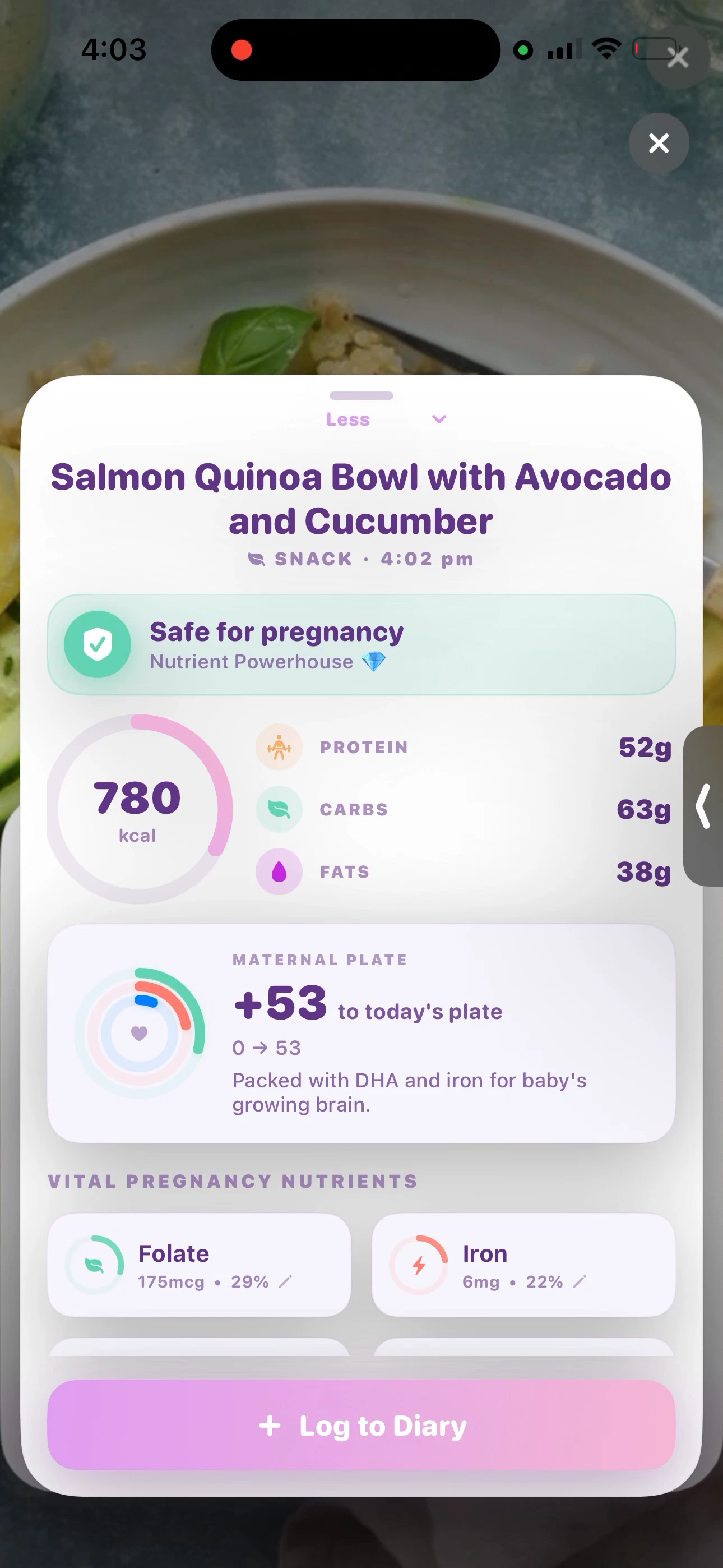
Track your iron intake in the PregnancyPlate AppYour next meal, a little less guesswork.
Scan your plate for pregnancy food-safety guidance and a nutrition breakdown. Keep your meals and nutrient progress in one place.
 Scan with your iPhone
to get the app
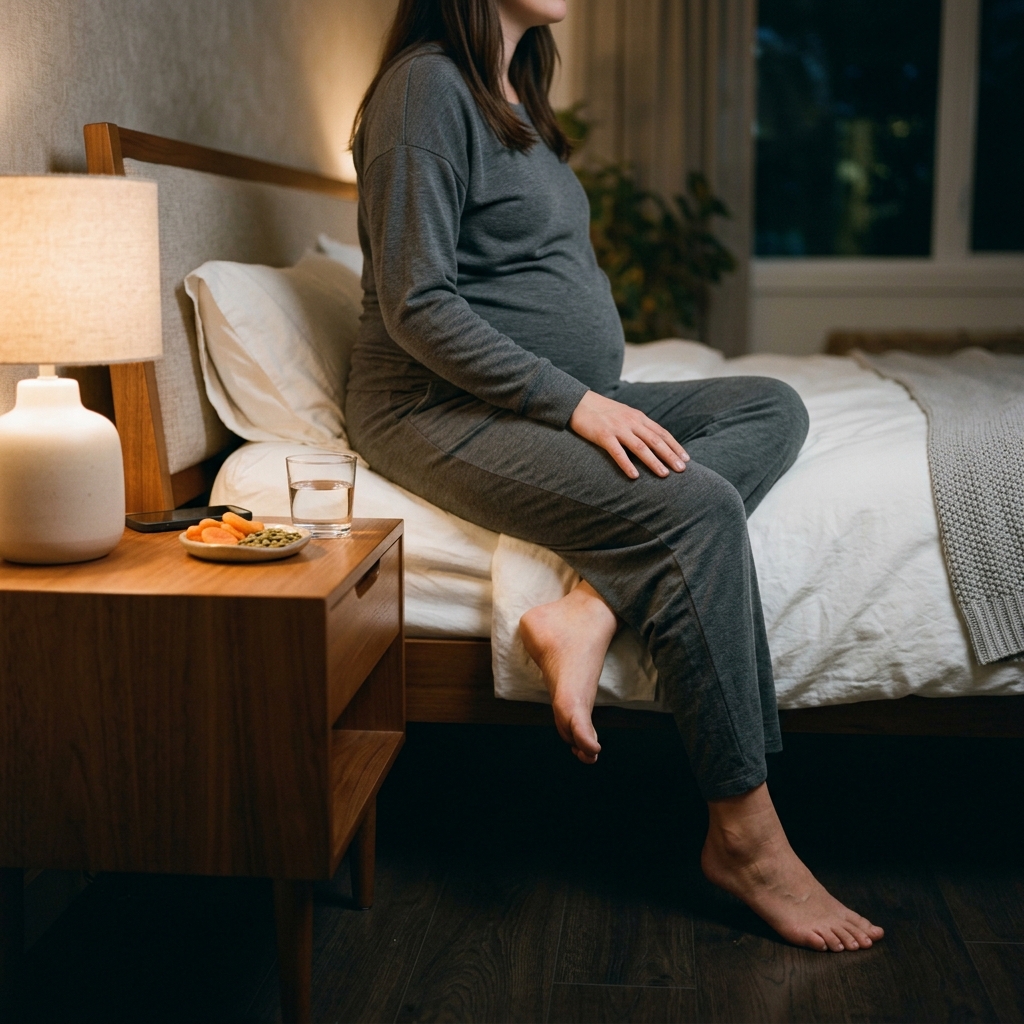
It usually starts as you settle down for the night. A crawling, fizzing, indescribable urge to move your legs that only moving relieves, and only briefly. Then it starts again.
Most women are told it is one of those pregnancy things. It often is, but there is a specific and testable cause behind a large share of cases, and it is worth knowing about because it is treatable.
What It Actually Is
Restless legs syndrome is a recognised neurological condition, not a circulation problem and not anxiety. The defining features are an overwhelming urge to move the legs, usually with an unpleasant sensation, which is worse at rest, worse in the evening, and temporarily relieved by movement.
It is common in pregnancy, with studies putting it at somewhere around one in five, and it typically worsens through the third trimester before easing rapidly after birth. For many women it disappears within days of delivery.
It matters beyond the discomfort because it wrecks sleep at exactly the point sleep is already difficult, and poor sleep in late pregnancy has knock-on effects on everything else.
The Iron Link
This is the part most people are never told.
Iron is needed to make dopamine, and dopamine signalling is central to restless legs. Low iron in the brain appears to be one of the main drivers, and pregnancy is a period of substantially increased iron demand with stores often already depleted.
The critical detail is which test to ask for. Ferritin measures your iron stores. Haemoglobin measures whether you are anaemic. You can have perfectly normal haemoglobin and still be running on empty stores, and in restless legs it is the stores that matter.
Worth knowing too that the ferritin level considered relevant for restless legs is higher than the standard anaemia threshold. Specialist guidance commonly discusses treating when ferritin sits below around 75 micrograms per litre, which is a level many people would be told is normal. So "your iron is fine" may mean "you are not anaemic" rather than "your stores are adequate".
Ask for a ferritin test specifically, and ask for the number rather than a verdict. Our iron in pregnancy guide covers the food side.
Folate Is the Other One
Less discussed and worth mentioning. Low folate has also been associated with restless legs in pregnancy, which is one reason it is more common in pregnancy than outside it.
Your prenatal supplies folic acid, so this is rarely the whole story, but food folate is worth having anyway: leafy greens, beans, lentils, asparagus, broccoli, fortified cereals. Our folate versus folic acid guide explains the difference between the two.
Getting Iron In Through Food
Supplements need a test first, but food iron is worth pushing regardless, and it is the part you control.
Heme iron absorbs several times better than plant iron, so red meat, dark poultry meat and oily fish do disproportionate work. A modest portion twice a week is more useful than a great deal of spinach.
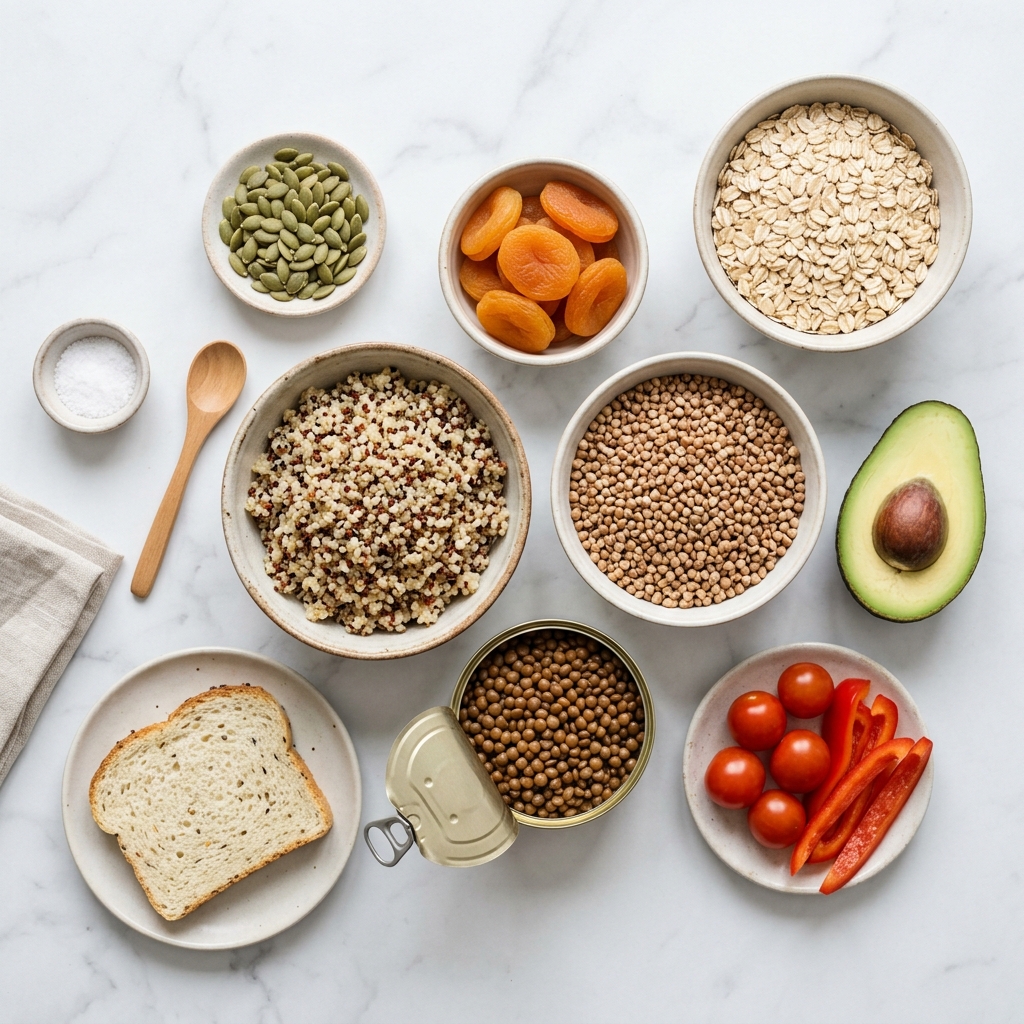
Plant sources need help. Lentils, beans, tofu, fortified cereals and dried apricots all count, but pair them with vitamin C in the same meal. Peppers, tomatoes, citrus or a glass of orange juice can multiply absorption considerably.
Keep tea and coffee an hour clear of iron-rich meals. The tannins bind iron and cut absorption sharply. This one matters twice over here, since caffeine is also a direct trigger.
Separate calcium from iron. They compete, so a large glass of milk with an iron-rich meal, or a calcium supplement taken alongside iron, reduces what you absorb.
None of this replaces correcting a genuine deficiency. It does mean that if your ferritin is borderline, the way you combine foods can shift things in the right direction over weeks.
What Makes It Worse
Caffeine. The most consistent trigger, and the easiest thing to change. It is worth cutting it entirely for a fortnight to see whether your symptoms shift, particularly anything after midday. The 200mg daily pregnancy limit still applies regardless, and our caffeine guide covers where it hides.
Sitting still for long periods, especially in the evening. Long car journeys and cinema seats are notorious.
Irregular sleep. Symptoms follow a daily rhythm, so an erratic bedtime makes them less predictable and harder to manage.
Some antihistamines, particularly older sedating ones sometimes taken for sleep or nausea. Worth mentioning to a pharmacist if you take anything regularly.
Dehydration, which also worsens the ordinary leg cramps that often arrive alongside. Our leg cramps guide covers those, and they are a different thing from restless legs despite frequently being confused.
Restless Legs in One Box
- Ask for ferritin, not just haemoglobin. Stores can be low with normal Hb.
- The threshold that matters is higher than the standard anaemia cutoff.
- Cut caffeine for two weeks and see. It is the most consistent trigger.
- It is not the same as leg cramps. Different cause, different fix.
- Most cases resolve within days of birth.
What Helps
Non-drug measures do most of the work, partly because several standard restless legs medications are not suitable in pregnancy.
Correct the iron if it is low, which is the single most effective intervention when deficiency is present. This needs a test first and supplementation guided by your midwife or GP, since taking iron you do not need is not harmless.
Moderate daily movement. A walk helps. Intense exercise late in the evening can make symptoms worse, so earlier is better.
Stretch your calves before bed, and again if symptoms wake you.
A warm bath, or alternating warm and cool. Genuinely helps some people and does nothing for others, but it is free to try.
Massage the legs, which is one of the few things a partner can usefully do at 11pm.
Compression stockings, which help some women, particularly if swelling is also present.
Keep bedtimes consistent. Unglamorous, and it makes the symptom pattern more predictable.
Magnesium gets recommended constantly. The evidence for it in restless legs specifically is thin, and it is more convincing for ordinary cramps. It is unlikely to hurt from food sources, but do not expect it to be the answer.
Restless Legs or Something Else?
Several third trimester complaints get lumped together and they need different responses, so it is worth separating them.
Restless legs is an urge to move with an unpleasant crawling sensation, worse at rest and in the evening, and relieved by moving. It is not painful as such.
Leg cramps are a sudden, sharp muscle spasm, usually in the calf, often waking you abruptly. Different cause, different management, and covered in our leg cramps guide.
Swelling is heaviness and puffiness that builds through the day, and hydration and elevation help rather than movement urges.
A clot is the one to rule out. Pain, redness, warmth or swelling in one leg, rather than both, needs urgent medical attention the same day. Restless legs is symmetrical and has no redness or heat.
You can have all of the first three at once, which is a fairly typical third trimester night, and they respond to different things.
When to Raise It
Worth mentioning to your midwife rather than enduring, particularly if it is affecting your sleep several nights a week.
Ask specifically for a ferritin level. If it comes back low, treating it may resolve the symptom entirely, and it also matters for the birth itself and for recovery afterwards.
Do not start iron supplements on your own without a test. Iron overload is a real thing, supplements commonly cause constipation which you almost certainly do not need on top of everything else, and unnecessary iron can interfere with absorbing other minerals.
And mention it if symptoms are severe, if they are in your arms as well as your legs, or if they persist well after the birth, since that suggests something other than a pregnancy-driven case.
The reassuring part is the timeline. For the large majority this ends with the pregnancy, often within a few days, and in the meantime it is one of the few third trimester complaints with a genuinely actionable cause behind it.
Clinical Sources & Research
This article is general information and does not replace medical advice. Do not start iron supplements without a blood test and guidance from your midwife or GP.
Meet the Editorial Team
The researchers and experts behind PregnancyPlate.

Fiza Izra
Founder & Tech Researcher
A UK-based mother of 3 with a background in tech and data synthesis, Fiza brings real-world experience navigating hyperemesis gravidarum and postnatal depression. She engineers complex clinical guidelines (NHS, ACOG) into accessible tools, ensuring rigorous fact-checking with deep empathy.

Emma Davies
Senior Nutrition Editor
A mum and writer, Emma runs our food safety desk. She is the one who rings the restaurant to ask how long the lettuce sits out, checks every claim against CDC, FDA and NHS guidance, and rewrites the answer until it is usable at 9pm in a drive-thru queue.
Make sense of every plate.
Scan your plate for pregnancy food-safety guidance and a nutrition breakdown. Keep your meals and nutrient progress in one place.
Scan with your iPhoneto get the app