Pregnancy Smoothie Recipes: 10 Smoothies for Nausea, Iron, Protein and Constipation
Ten easy pregnancy smoothie recipes for nausea, iron, protein and constipation, plus the iron and calcium catch and the ingredients to leave out.
In this article
Editorial note: This article is researched from official public health and pregnancy food safety guidance, then edited by the PregnancyPlate team for clarity. It is not medical advice. If you are worried about symptoms or a specific exposure, contact your midwife, GP or healthcare provider.
The Fast Answer: A homemade smoothie is one of the easiest ways to get fruit, protein and fiber in when eating feels hard, and a cold smoothie often stays down when nothing else will. Build it from pasteurized milk or yogurt, whole fruit and a protein source, skip raw eggs, unpasteurized juice and herbal add-ins, and know one small catch: calcium may blunt iron absorption a little, so an iron-focused smoothie is best made without milk.
Track your nutrition in seconds in the PregnancyPlate AppSome days in pregnancy, chewing feels like too much work. A smoothie gets around that. It's cold, which helps with nausea. It's fast, which helps with fatigue. And if you build it well, it carries more protein and fiber than most of the snacks you'd reach for instead.
I put these ten together around the problems pregnancy actually brings: nausea, low iron, not enough protein, constipation and heartburn. Each one takes about five minutes and a blender. Before the recipes, a few rules that make the difference between a smoothie that helps and one that's just a sugar spike.
The Smoothie Formula
Every smoothie below follows the same four-part pattern, and you can use it to improvise your own.
- A liquid base: pasteurized milk, soy milk, a fortified plant milk, or water. Milk and soy milk add protein and calcium.
- Whole fruit: fresh or frozen. Blending whole fruit keeps the fiber, which is what slows the sugar down.
- Protein: Greek yogurt, peanut butter, silken tofu, or a protein powder you've checked. Around 10 to 20 grams makes a smoothie filling enough to count as a snack.
- Fiber or fat: oats, chia, ground flaxseed, avocado or nut butter. This is what keeps you full past the next hour.
A smoothie that's only fruit and juice is the one to avoid. It goes down fast, lifts your blood sugar quickly, and leaves you hungry again soon after.
What to Leave Out
Unpasteurized juice. The FDA advises pregnant women to avoid juice that hasn't been pasteurized or treated, because it can carry bacteria like E. coli and Salmonella. Juice from a carton on a grocery store shelf is pasteurized unless the label says otherwise. Cold-pressed or raw juices usually carry a warning label. Our guide to smoothies at juice bars covers the same issue when you're buying rather than making.
Raw milk. The CDC lists pregnant women among the groups most at risk from the germs raw milk can carry. Use pasteurized milk and yogurt, which is everything sold in a regular grocery store.
Raw eggs. Some old-school protein shake recipes add a raw egg. Skip it.
Herbal and supplement add-ins. Spirulina, maca, adaptogen blends and herbal "boost" powders haven't been studied well in pregnancy. Leave them out unless your doctor has cleared them.
Protein powders you haven't checked. Many are fine, but some contain added caffeine, herbs or very high doses of vitamins. Our protein powder guide explains what to look for on the label.
Wash fresh fruit and greens before they go in the blender. Frozen fruit is fine and is what most smoothie shops use anyway.
The Iron and Calcium Catch
This is the detail most "iron smoothie" recipes miss.
Spinach is a popular way to sneak iron into a smoothie, and pairing it with vitamin C, from strawberries, kiwi or orange juice, helps your body absorb the plant form of iron. The catch is calcium. According to the NIH, calcium might reduce iron absorption when the two are eaten together, although the effect isn't firmly established and is small in a normal mixed diet. Milk and yogurt are rich in calcium.
So if iron is your main goal, for example because your midwife or doctor has flagged low iron, it costs nothing to make that smoothie with water or pasteurized orange juice instead of milk and have your dairy at another time of day. You need both nutrients, and keeping them apart is an easy win. Your iron requirement rises to 27mg a day in pregnancy, and our iron guide covers the foods that do the most work.
Ten Pregnancy Smoothie Recipes
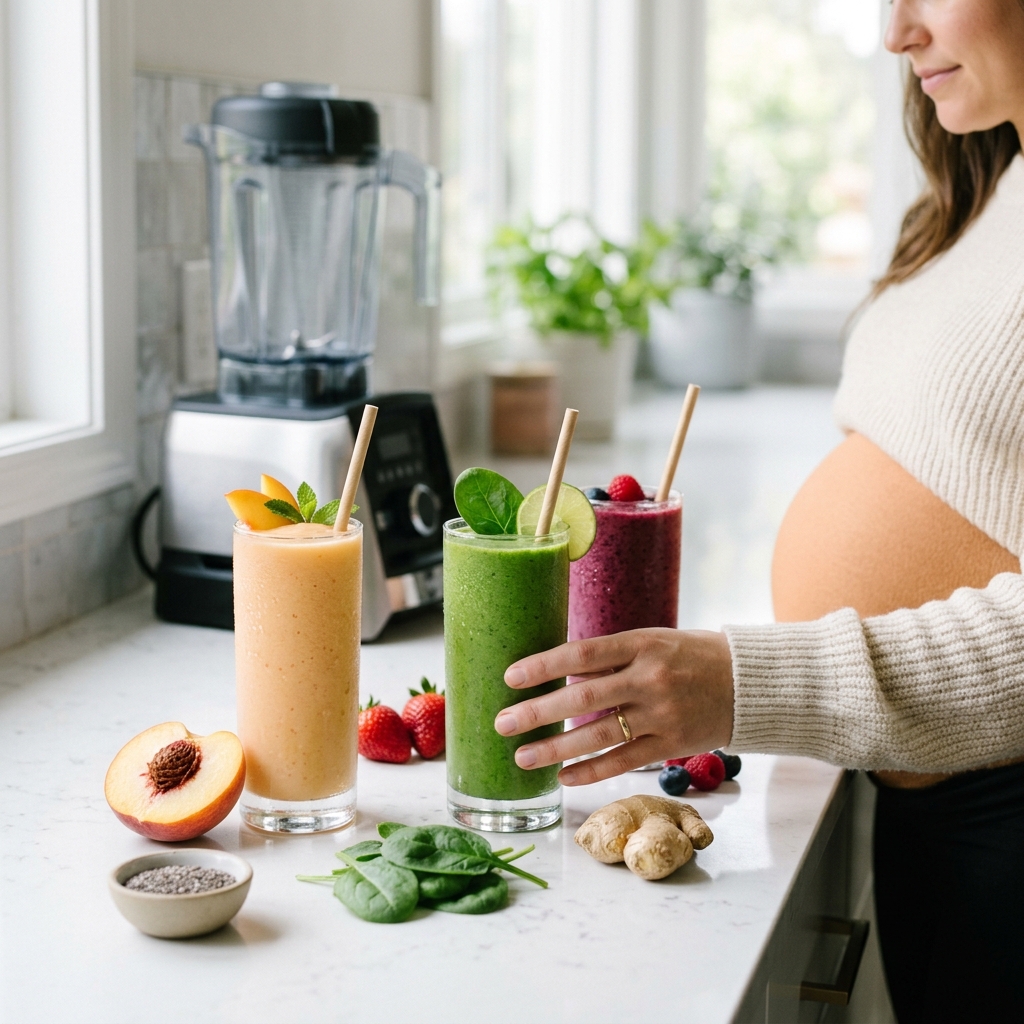
Each makes one generous glass. Blend until smooth, and add a splash more liquid if it's too thick.
1. Ginger peach (for nausea). 1 cup frozen peaches, ½ cup plain Greek yogurt, ½ cup milk and 1 teaspoon freshly grated ginger. Ginger is one of the nausea remedies ACOG suggests trying, and a cold, mild smoothie is often easier than solid food on a bad morning.
2. Banana oat (for heartburn). 1 banana, ¼ cup rolled oats, 1 cup milk, 1 tablespoon peanut butter and a pinch of cinnamon. Low in acid, filling, and gentle on reflux. Good as a late-afternoon snack when dinner is a while away.
3. Strawberry spinach orange (for iron). 1 big handful of baby spinach, 1 cup strawberries, ¾ cup pasteurized orange juice and a few ice cubes. Dairy-free on purpose, for the reason above. You won't taste the spinach.
4. Kiwi pear flax (for constipation). 2 peeled kiwis, 1 ripe pear, 1 tablespoon ground flaxseed and ¾ cup water or milk. Kiwi is one of the better-studied fruits for constipation, and flaxseed adds soluble fiber. Our fiber and constipation guide has the full list.
5. Chocolate peanut butter (for protein). 1 frozen banana, 1 tablespoon cocoa powder, 1 tablespoon peanut butter, ½ cup Greek yogurt and 1 cup milk. Tastes like dessert and carries a solid amount of protein. Cocoa contains a little caffeine, which is worth knowing if you're counting.
6. Mango lassi. 1 cup frozen mango, ¾ cup plain yogurt, ½ cup milk and a pinch of cardamom. Calcium and protein from the yogurt, and one of the most refreshing options on a hot day or a queasy one.
7. Blueberry chia. 1 cup blueberries, 1 tablespoon chia seeds, ½ banana and 1 cup milk. Let it sit for five minutes after blending so the chia thickens it. Chia brings fiber and a plant omega-3, though not the DHA your baby's brain needs most. Our omega-3 guide explains the difference.
8. Green avocado. ½ avocado, 1 handful of spinach, ½ banana, ½ cup pineapple and 1 cup milk or water. Creamy, with healthy fats and folate. And yes, pineapple is fine in normal amounts, as our pineapple guide explains.
9. Pumpkin pie. ½ cup canned pumpkin (plain pumpkin, not pie filling), 1 frozen banana, ½ cup Greek yogurt, ¾ cup milk and a pinch of cinnamon and nutmeg. A seasonal favorite, high in fiber and beta-carotene, which is the plant form of vitamin A that pregnancy guidance doesn't restrict.
10. Berry tofu (dairy-free protein). ½ cup silken tofu, 1 cup mixed berries, ¾ cup soy milk and a teaspoon of maple syrup if needed. Silken tofu blends completely smooth and adds plant protein without any taste of its own.
Smoothie Rules in One Box
- Pasteurized milk, yogurt and juice only.
- Whole fruit, not just juice, plus protein and fiber.
- Iron smoothies made without dairy, plus a vitamin C fruit.
- No raw eggs, herbal boosts or unchecked powders.
- Drink it fresh, or keep it in the fridge and finish it the same day.
Smoothies for Morning Sickness
Cold food smells less than hot food, and liquids are often easier than solids when your stomach is unsettled. A few things help:
- Use frozen fruit so the smoothie is properly cold without diluting it with ice.
- Sip it slowly over twenty minutes rather than drinking it in one go. ACOG's general advice for nausea is small amounts, often.
- Make it ahead on a good evening and keep it in the fridge for the morning, so you don't have to face the blender when you feel worst.
For more ideas built around the first trimester, our first trimester snacks guide has plenty of low-effort options.
Smoothies and Gestational Diabetes
Smoothies can work with gestational diabetes, but they need more care than most foods, because blending makes fruit sugar easier to absorb quickly.
- Keep the fruit to one portion, and favor berries over tropical fruit.
- Always add protein and fat: Greek yogurt, nut butter, chia or avocado.
- Skip juice and sweeteners entirely.
- Check your numbers the first time you try a new combination.
Your care team will set your targets, and our gestational diabetes meal plan shows how snacks fit into a full day.
Can a Smoothie Replace a Meal?
Occasionally, yes, especially on a bad nausea day when a smoothie is the only thing going down. To make it count as a meal, push the protein higher, add oats or nut butter for staying power, and aim for something closer to 400 calories than 200.
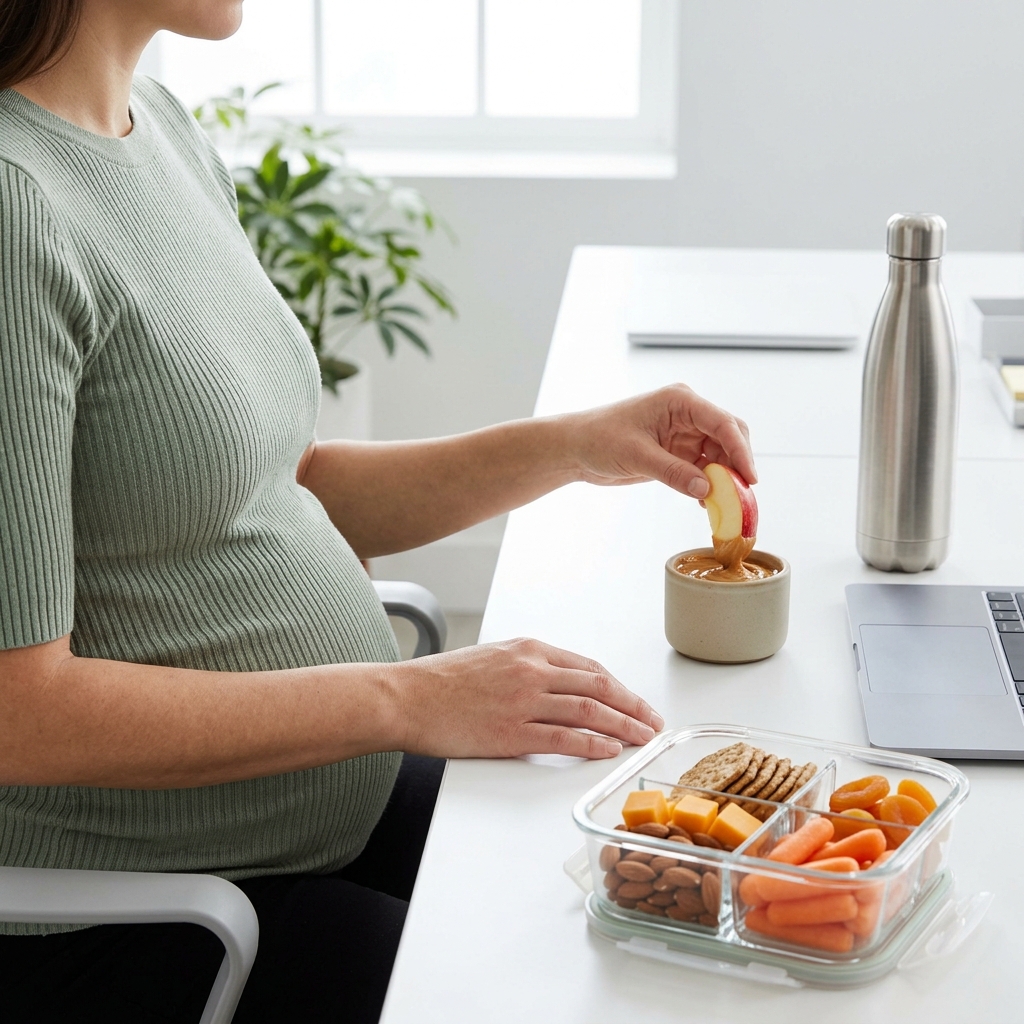
As a regular habit, though, real meals are better. Chewing helps you feel full, and a varied plate covers nutrients a smoothie tends to miss, like the iron in meat and beans and the DHA in fish. Our pregnancy snacks for work and quick pregnancy dinner ideas are the next step up when you're ready to eat again.
Clinical Sources & Research
This article is general information and does not replace advice from your doctor, midwife or dietitian. If you have gestational diabetes, a food allergy or another condition that affects your diet, follow the plan your care team has given you.
Meet the Editorial Team
The researchers and experts behind PregnancyPlate.

Fiza Izra
Founder & Tech Researcher
A UK-based mother of 3 with a background in tech and data synthesis, Fiza brings real-world experience navigating hyperemesis gravidarum and postnatal depression. She engineers complex clinical guidelines (NHS, ACOG) into accessible tools, ensuring rigorous fact-checking with deep empathy.

Emma Davies
Senior Nutrition Editor
A mum and writer, Emma runs our food safety desk. She is the one who rings the restaurant to ask how long the lettuce sits out, checks every claim against CDC, FDA and NHS guidance, and rewrites the answer until it is usable at 9pm in a drive-thru queue.