Pregnancy Snacks for Work: 15 Desk-Friendly Snacks for the 10am and 3pm Slumps
Fifteen pregnancy snacks for work that need no fridge, don't smell up the office, and steady your blood sugar, plus the 2-hour rule for anything perishable.
In this article
Editorial note: This article is researched from official public health and pregnancy food safety guidance, then edited by the PregnancyPlate team for clarity. It is not medical advice. If you are worried about symptoms or a specific exposure, contact your midwife, GP or healthcare provider.
The Fast Answer: Small, regular snacks are what keep a pregnant workday steady. The best desk snacks pair protein or fat with a carbohydrate, need no fridge, and don't smell. Keep a drawer stocked with nuts, whole-grain crackers, nut butter packets and dried apricots, use the office fridge or an ice pack for yogurt, cheese sticks and boiled eggs, and don't let anything perishable sit out of the fridge for more than 2 hours.
Track your nutrition in seconds in the PregnancyPlate AppA pregnant workday has two predictable low points. One arrives mid-morning, when breakfast has run out and lunch is still a meeting away. The other arrives mid-afternoon, when your blood sugar dips, your eyelids get heavy and the vending machine starts to look like a plan.
I built this list around those two moments, and around the practical limits of an office: no stove, a shared fridge if you're lucky, colleagues sitting close by, and maybe a pregnancy you haven't announced yet. Every snack below works at a desk.
Why Snacking at Work Matters More Now
Your energy needs rise, but not all at once. According to ACOG, you need no extra calories in the first trimester, about 340 extra a day in the second, and about 450 in the third. That is a snack or two, not a second lunch, which is exactly why well-chosen snacks do so much of the work.
An empty stomach makes nausea worse. ACOG's advice for morning sickness is to eat small amounts often rather than three big meals. A long gap between breakfast and lunch is one of the most common nausea triggers on a workday.
Blood sugar dips feel bigger. A snack that is all quick carbohydrate, like a cookie or a bag of pretzels, lifts you for half an hour and then drops you lower. Pairing it with protein or fat slows that curve down. Our guide to blood sugar crashes in pregnancy explains the mechanics.
The Formula: Two Parts, Every Time
Almost every good work snack is one item from each column:
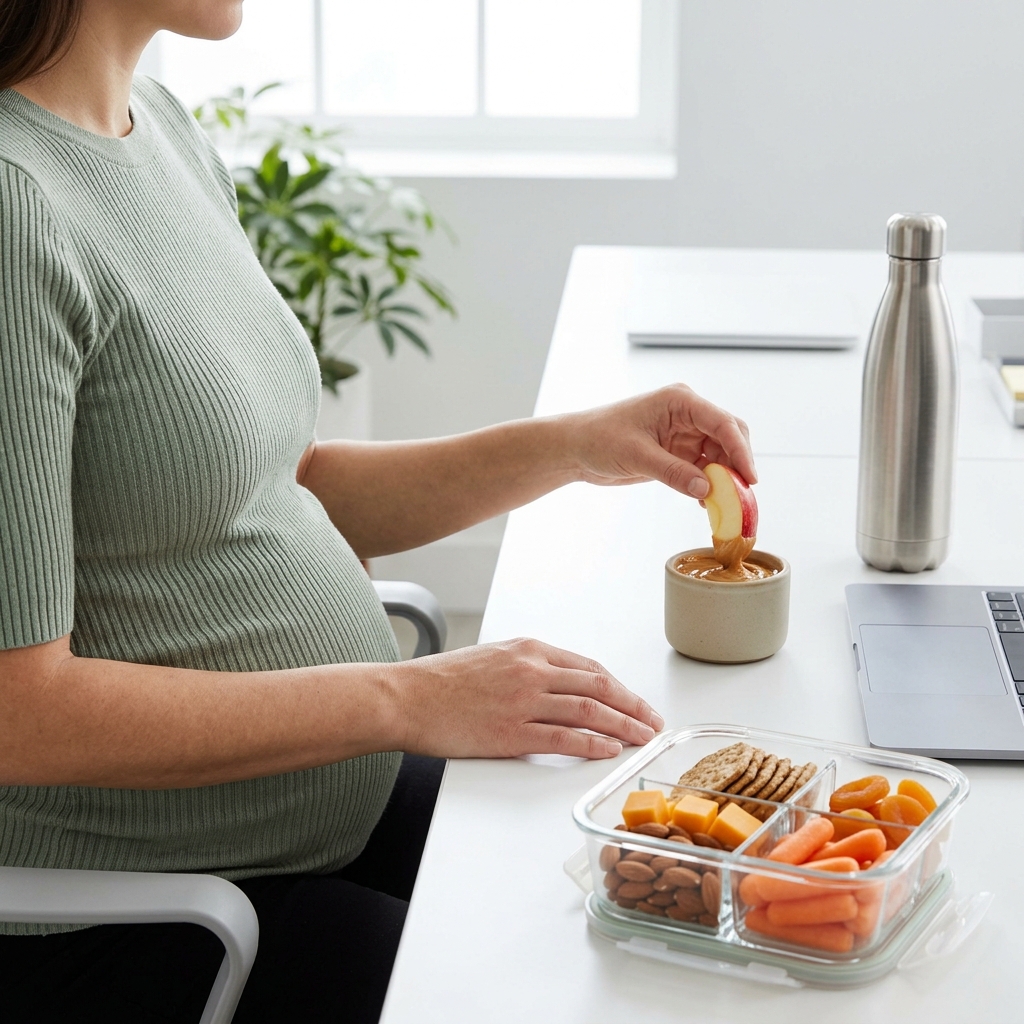
- Protein or fat: nuts, nut butter, cheese, Greek yogurt, a boiled egg, hummus, roasted chickpeas, edamame.
- Fiber-rich carbohydrate: fruit, whole-grain crackers, oatcakes, a small whole-wheat wrap, popcorn, vegetables.
An apple on its own is fine. An apple with a tablespoon of peanut butter will still be working at four o'clock.
The Desk Drawer: No Fridge Needed
These keep for weeks at room temperature, which makes them the backbone of the list.
1. Almonds or mixed nuts. About a quarter cup is a sensible portion. Protein, healthy fat and magnesium, and almost no smell.
2. Nut butter packets with whole-grain crackers. Single-serve packets stop the jar from becoming a spoon-in-hand afternoon, and they travel in a bag without leaking.
3. Roasted chickpeas. Crunchy, high in fiber and plant protein, and a good swap for chips when you want something salty.
4. Dried apricots or figs. A small handful adds iron and fiber, which helps with the constipation that pregnancy hormones bring. Pair them with a few nuts so the sugar doesn't hit all at once.
5. Shelf-stable milk or soy milk boxes. Easy to overlook. A small carton of UHT milk or fortified soy milk sits happily in a drawer until it's opened, and delivers calcium and protein in one go.
6. Whole fruit that travels. Apples, bananas, clementines and pears survive a bag and a desk. Wash them before eating, as you would at home.
7. Plain popcorn. A whole-grain snack with real volume, which helps when you want to graze through a long afternoon.
8. Oatcakes or rye crackers. Bland, filling and nausea-friendly. Keep a pack for the mornings when nothing else appeals.
The Fridge Shelf, or an Ice Pack
These need to stay cold. If your office fridge is reliable, use it. If not, an insulated lunch bag with two ice packs does the job for a working day.
9. Greek yogurt cups. Around 15 grams of protein in many single-serve cups, plus calcium. Commercial yogurt is made with pasteurized milk.
10. Cheese sticks or cubes. Hard cheeses like cheddar and pasteurized mozzarella sticks are fine. Skip soft fresh cheeses like queso fresco, which the FDA now advises pregnant women to avoid even when pasteurized.
11. Hard-boiled eggs. One large egg carries about 147mg of choline, a nutrient most pregnant women fall short on. Cook them until the yolk is firm, keep them cold, and eat them within a week. Our choline guide explains why it matters.
12. Hummus with vegetable sticks. Carrot, cucumber and bell pepper with a single-serve hummus pot. Fiber, plant protein and a lot of crunch.
13. Cottage cheese with fruit. One of the highest-protein snacks you can eat with a spoon. Cottage cheese sold in US grocery stores is pasteurized.
14. Edamame. Buy it frozen and shelled, let it thaw in your lunch bag by mid-morning, and eat it cold. Plant protein, folate and iron.
15. Leftover roasted vegetables or grains. Last night's sweet potato or quinoa makes a surprisingly good cold snack, as long as it went into the fridge promptly after dinner.
The 2-Hour Rule at Your Desk
This is the one food safety rule that matters most at work. The USDA's guidance is that perishable food shouldn't sit out of refrigeration for more than 2 hours, or more than 1 hour if it's above 90°F (32°C).
In practice, that means the yogurt you forgot on your desk after a meeting, or the cheese stick that rode around in a warm bag all morning, is one to throw away. Pregnancy makes you more vulnerable to Listeria, which the CDC describes as especially harmful in pregnancy, so "probably fine" isn't a good enough standard for dairy and eggs.
Everything in the desk drawer list above is exempt, which is a good reason to lean on it.
Snacks for a Shared Office, and a Secret Pregnancy
Smell matters twice at work. Your own nose may be on high alert in the first trimester, and the people around you notice strong smells too, which can be awkward if you haven't told anyone yet.
The quietest snacks are nuts, crackers, apples, cheese sticks and yogurt. The ones to save for home are hard-boiled eggs (the sulfur smell carries), tuna, and anything reheated in the office microwave.
If nausea hits in a meeting, a ginger chew or a couple of plain crackers are easy to have on hand without attracting attention. Our first trimester snacks guide has more options built for the worst weeks.
Office Food to Think Twice About
The snacks you bring are the easy part. The harder part is the food that appears at work: the catered lunch, the meeting platter, the birthday table.
Sandwich and deli platters. Cold deli meat is one of the foods pregnancy guidance flags for Listeria unless it's heated until steaming. A platter that has also been sitting out through a long meeting is past the 2-hour mark too. Our sandwich guide covers what's fine.
Cheese boards. Hard cheeses like cheddar and gouda are fine. Soft mold-ripened cheeses like brie and camembert, blue cheeses and queso fresco are the ones to skip unless they're cooked.
Sushi lunches. Cooked rolls like California rolls and tempura are fine. Raw fish is the part to pass on.
The birthday cake is fine. Baked cakes, cookies and brownies are all safe, and nobody needs to know why you only had a small slice.
The Caffeine Math at the Office
Office days run on coffee, so it's worth knowing the number. ACOG advises keeping caffeine below 200mg a day in pregnancy.
- A 12-ounce mug of regular brewed coffee typically has 113 to 247mg, according to the FDA. One large office mug can use up the whole day's allowance.
- A 12-ounce black tea is about 71mg, and green tea about 37mg.
- Dark chocolate adds a little, around 20mg an ounce, which is worth knowing if it's your 3pm habit.
- Energy drinks range from 41 to 246mg in 12 ounces and often contain other stimulants. They're the ones to skip.
That makes the afternoon coffee the easiest place to cut back. Swapping it for one of the snacks above does double duty. Our Starbucks pregnancy guide covers the caffeine in coffee shop drinks.
If You Have Gestational Diabetes
The two-part formula matters even more. Pair every carbohydrate with protein or fat, keep fruit portions modest, and favor nuts, cheese, eggs, Greek yogurt and vegetables with hummus. Your diabetes team or dietitian will set your specific targets, and our gestational diabetes meal plan shows how snacks fit into a full day.
Meetings, Commutes and Long Days
Eat before long meetings, not after. A snack fifteen minutes before a two-hour meeting is easier than trying to eat discreetly halfway through.
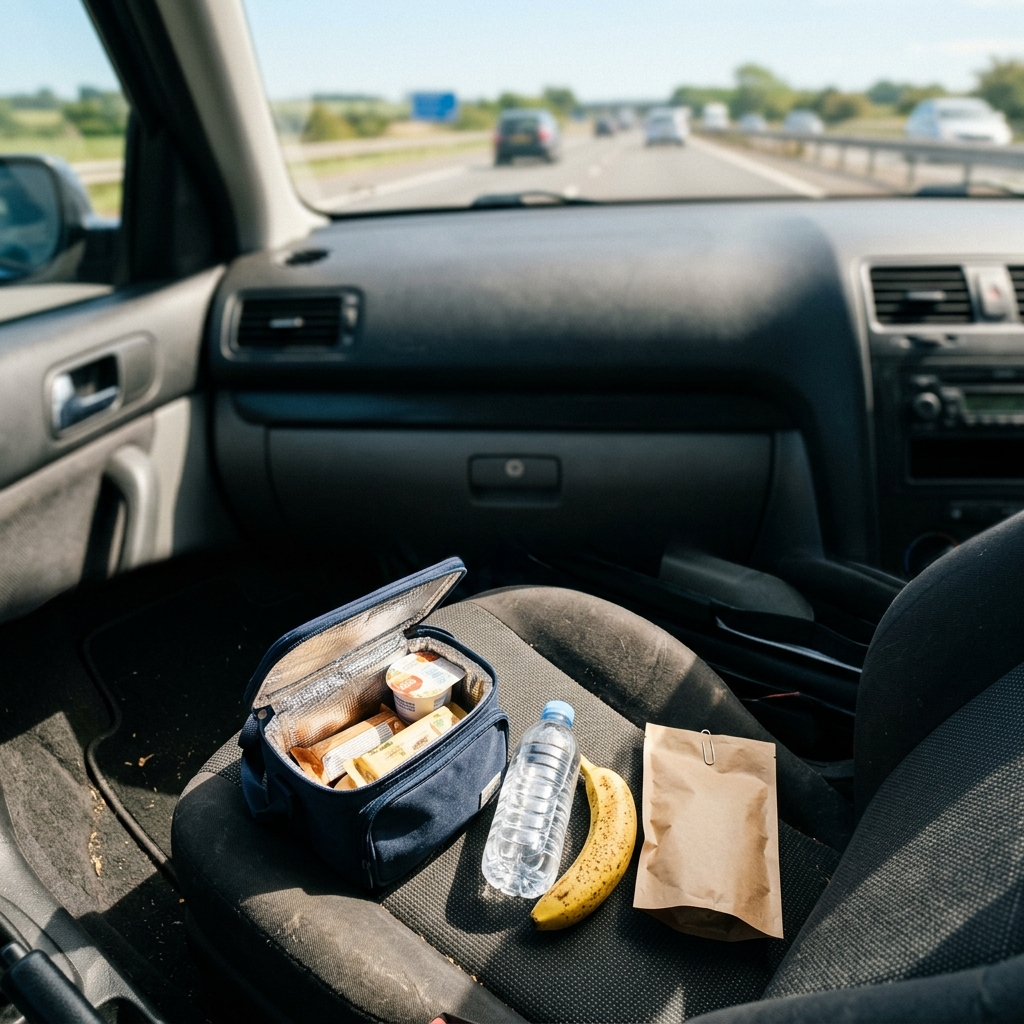
Keep a backup in your bag and your car. Only shelf-stable foods, since a car gets hot quickly. Nuts, crackers and a nut butter packet are enough to rescue a delayed commute.
Keep a water bottle on your desk. Thirst is easy to mistake for hunger, and mild dehydration makes fatigue and headaches worse. Our hydration guide covers how much to aim for.
A Week of Work Snacks
- Monday: Greek yogurt at 10am, apple and almonds at 3pm.
- Tuesday: Oatcakes and a cheese stick, then hummus and carrots.
- Wednesday: Banana and a nut butter packet, then roasted chickpeas and dried apricots.
- Thursday: Cottage cheese with berries, then a UHT milk box and crackers.
- Friday: Edamame, then popcorn and a clementine.
Pairing Snacks With Lunch
Snacks work best when lunch is doing its job too. If you haven't sorted that side of the workday yet, our pregnancy lunch ideas for work cover desk lunches, microwave meals and the ones to skip. For the hungry hours outside work, our pregnancy snacks list and midnight snack ideas pick up where this one leaves off.
Clinical Sources & Research
- ACOG: Nutrition During Pregnancy.
- ACOG: Morning Sickness: Nausea and Vomiting of Pregnancy.
- ACOG: Moderate Caffeine Consumption During Pregnancy.
- FDA: Spilling the Beans: How Much Caffeine Is Too Much?.
- USDA FSIS: "Danger Zone" (40°F to 140°F).
- FDA: People at Risk of Foodborne Illness.
- CDC: People at Increased Risk for Listeria Infection.
- NIH: Choline Fact Sheet for Health Professionals.
This article is general information and does not replace advice from your doctor, midwife or dietitian. If you have gestational diabetes or another condition that affects your diet, follow the plan your care team has given you.
Meet the Editorial Team
The researchers and experts behind PregnancyPlate.

Fiza Izra
Founder & Tech Researcher
A UK-based mother of 3 with a background in tech and data synthesis, Fiza brings real-world experience navigating hyperemesis gravidarum and postnatal depression. She engineers complex clinical guidelines (NHS, ACOG) into accessible tools, ensuring rigorous fact-checking with deep empathy.

Emma Davies
Senior Nutrition Editor
A mum and writer, Emma runs our food safety desk. She is the one who rings the restaurant to ask how long the lettuce sits out, checks every claim against CDC, FDA and NHS guidance, and rewrites the answer until it is usable at 9pm in a drive-thru queue.