Choline: The "Forgotten" Nutrient for Baby's Brain Development
Why this overlooked nutrient is just as important as folate - and how most pregnant women aren't getting enough. The complete guide to choline during pregnancy.
In this article
Editorial note: This article is researched from official public health and pregnancy food safety guidance, then edited by the PregnancyPlate team for clarity. It is not medical advice. If you are worried about symptoms or a specific exposure, contact your midwife, GP or healthcare provider.
You've probably heard of folate. Iron gets plenty of attention. Even omega-3s have become a pregnancy buzzword. But there's one nutrient that's absolutely critical for your baby's brain development - and most pregnant women have never even heard of it.
Meet choline: the forgotten nutrient that deserves a place at the top of your pregnancy nutrition list.
Research shows that adequate choline during pregnancy can boost your baby's cognitive function, memory, and attention span for life. Yet studies consistently find that over 90% of pregnant women don't meet the recommended intake. This guide will explain why choline matters so much, how much you need, and the best ways to get it.
What Is Choline?
Choline is an essential nutrient - meaning your body can't make enough of it on its own, so you need to get it from food. It's often grouped with B vitamins, though technically it's in its own category.
Choline was only recognised as an essential nutrient by the Institute of Medicine in 1998. That's remarkably recent in nutritional science, which partly explains why it's still flying under the radar for many healthcare providers and pregnant women alike.
What Does Choline Do?
Choline has several critical functions in the body:
- Brain development: Essential for building brain cell membranes and neural connections
- Memory and cognition: Crucial for the memory centre of the brain (hippocampus)
- Neural tube development: Works alongside folate to prevent neural tube defects
- Liver function: Helps transport fats from the liver
- Cell signalling: Produces acetylcholine, a vital neurotransmitter
During pregnancy, these functions become even more important - you're building an entire human nervous system from scratch.
Why Choline Is So Important During Pregnancy
Brain Architecture
Your baby's brain is developing at an astonishing rate during pregnancy. In the third trimester alone, the brain grows by about 260% in volume. Choline is essential for this process because it helps form the structural components of brain cells.
The hippocampus - the brain region responsible for memory and learning - is particularly dependent on choline. Studies in animals show that choline intake during pregnancy permanently affects offspring memory and cognitive function.
Neural Tube Development
You've heard that folate prevents neural tube defects like spina bifida. What's less widely known is that choline works alongside folate in this process. Research suggests that adequate choline may reduce neural tube defect risk even when folate levels are low.
Gene Expression (Epigenetics)
Choline is a methyl donor, meaning it helps control which genes are turned on and off in your developing baby. This process, called epigenetic programming, can affect your child's health outcomes for life - including their risk of chronic diseases later on.
Placental Function
The placenta needs choline to function properly. Adequate choline supports healthy blood vessel development in the placenta, which affects how efficiently nutrients and oxygen reach your baby.
The Research: What Science Says About Choline and Baby's Development
The evidence for choline's importance during pregnancy has grown significantly in recent years:
Cornell University Study (2018): Researchers found that pregnant women who consumed about twice the recommended choline intake had children with faster information processing speeds at 4, 7, 10, and 13 months of age. These benefits were sustained over time.
FASEB Journal Study (2012): Women with higher choline intake during pregnancy had children with better visual memory at age 7.
American Journal of Epidemiology (2009): Higher maternal choline intake was associated with better infant scores on memory tests at 10-12 months.
Boston University Study: Adequate choline during pregnancy may reduce the child's risk of schizophrenia and other mental health conditions by up to 40%.
The evidence is compelling: choline during pregnancy appears to give your baby a cognitive advantage that lasts well beyond infancy.
How Much Choline Do You Need?
The recommended daily intake of choline during pregnancy is:
- Pregnant women: 450mg per day
- Breastfeeding women: 550mg per day
- Non-pregnant adults: 425mg per day
Some researchers believe these recommendations are too conservative. The Cornell study mentioned above used 930mg daily - more than double the current recommendation - and found significant cognitive benefits.
The Problem: Most Women Aren't Getting Enough
Studies consistently show that:
- Only about 8-10% of pregnant women meet the current choline recommendations
- Average intake among pregnant women is around 300mg per day - well below the 450mg target
- Many prenatal vitamins contain little to no choline
This is a widespread nutritional gap that deserves much more attention.
Best Food Sources of Choline
The good news is that choline is found in many foods. The challenging news? The richest sources are foods that many people don't eat regularly.
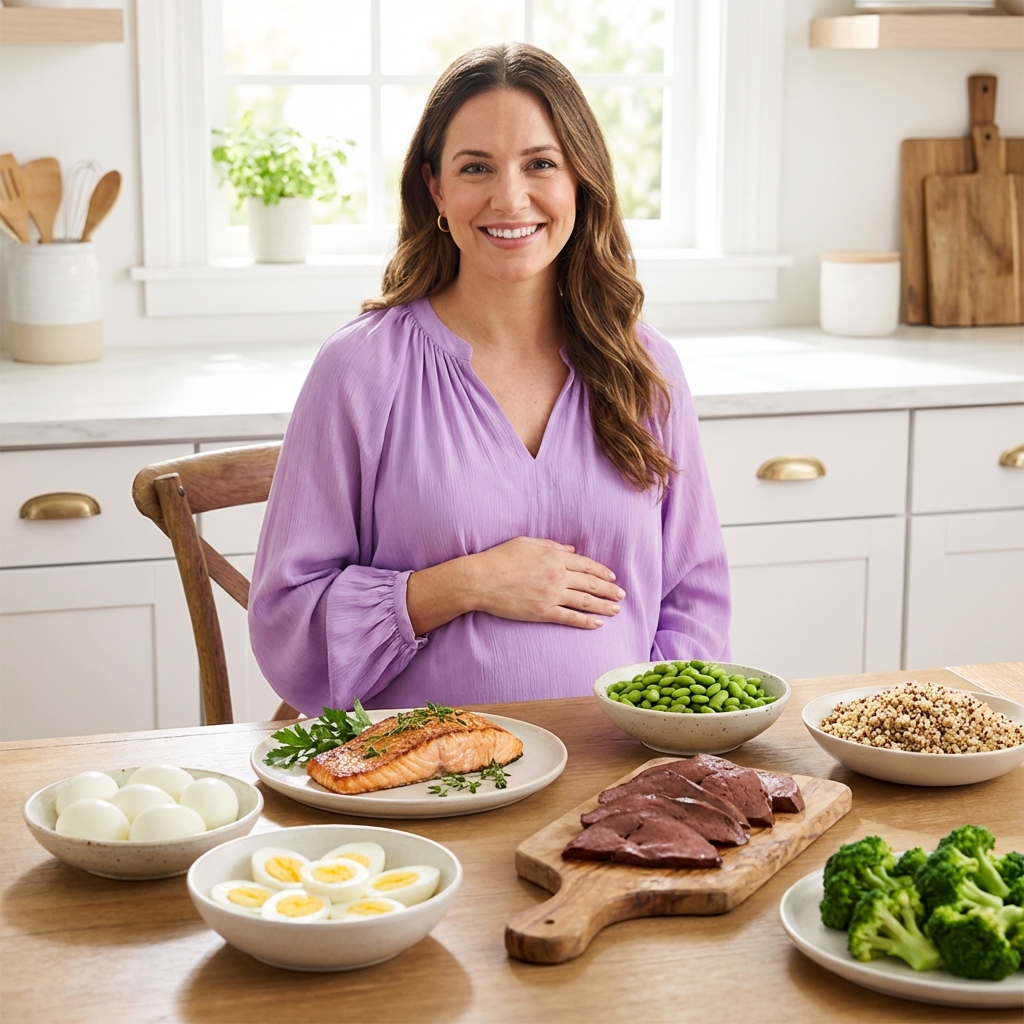
Top Choline-Rich Foods
- Beef liver (3 oz): 356mg
- Egg (1 large, whole): 147mg
- Beef steak (3 oz): 117mg
- Roasted soybeans (½ cup): 107mg
- Chicken breast (3 oz): 72mg
- Salmon (3 oz): 75mg
- Cod (3 oz): 71mg
- Shrimp (3 oz): 60mg
- Kidney beans (1 cup): 54mg
- Quinoa (1 cup cooked): 43mg
- Milk (1 cup): 38mg
- Broccoli (1 cup): 31mg
- Greek yoghurt (1 cup): 29mg
The Egg Advantage
Eggs are the standout choline source for most people. They're affordable, versatile, easy to prepare, and pack 147mg of choline per egg - mostly in the yolk.
Eating 2-3 eggs daily can provide nearly half your pregnancy choline requirement. This is one nutrient where eggs truly shine.
Liver: The Choline Champion
Beef liver is the single richest food source of choline, with 356mg in just 3 ounces. However, liver is also extremely high in vitamin A, which can be harmful in excess during pregnancy.
Recommendation: Limit liver to one small serving (2-3 oz) per week during pregnancy to get the choline benefits without vitamin A overload.
How to Meet Your Choline Needs: Practical Strategies
Sample Day: 450mg+ Choline
Sample Choline-Rich Day
Breakfast: 2 scrambled eggs: 294mg choline
Glass of milk: 38mg
Lunch: Chicken salad with quinoa: ~100mg choline
Broccoli side: 31mg
Dinner: Grilled salmon (4 oz): 100mg choline
Roasted Brussels sprouts: 32mg
Snack: Greek yoghurt: 29mg
Daily Total: ~624mg choline ✓
Tips for Boosting Choline Intake
- Eat eggs regularly - They're your easiest choline source. Aim for 1-2 eggs most days.
- Don't skip the yolk - Almost all the choline is in the yolk, not the white.
- Include fish 2-3 times weekly - Salmon, cod, and shrimp all contribute meaningfully to choline intake.
- Choose whole soy foods - Edamame, tofu, and roasted soybeans are good plant-based options.
- Add cruciferous vegetables - Broccoli, Brussels sprouts, and cauliflower contain modest amounts that add up.
- Consider liver occasionally - A small serving once a week provides a significant choline boost.
Choline for Vegetarians and Vegans
Meeting choline needs is more challenging on a plant-based diet, but it's possible:
Best Plant-Based Choline Sources
- Eggs (if you eat them): 147mg per egg
- Roasted soybeans: 107mg per half cup
- Tofu: 71mg per half cup (firm)
- Shiitake mushrooms: 58mg per cup (cooked)
- Kidney beans: 54mg per cup
- Quinoa: 43mg per cup
- Broccoli: 31mg per cup
Vegan Strategy
If you're fully vegan, reaching 450mg daily from food alone is difficult. You may need to:
- Eat multiple servings of soy products daily
- Include a variety of legumes and cruciferous vegetables
- Consider a choline supplement
Should You Take a Choline Supplement?
Given how difficult it is to reach 450mg from food alone, supplementation is worth considering.
Check Your Prenatal First
Many prenatal vitamins contain zero choline, or very small amounts (25-55mg). Check your label:
- Ideal: Look for a prenatal with 200-300mg choline
- Reality: You may need a separate choline supplement
Supplement Options
Choline supplements come in several forms:
- Choline bitartrate: Most common, affordable form
- Phosphatidylcholine: Well-absorbed, found in lecithin
- CDP-choline (Citicoline): More expensive, well-researched for brain health
- Alpha-GPC: Highly bioavailable, often used for cognitive support
For pregnancy, choline bitartrate or phosphatidylcholine are typically recommended. A supplement providing 200-300mg can help bridge the gap between what you eat and what you need.
Safety
Choline is generally considered safe up to 3,500mg per day (the "tolerable upper limit"). Meeting the 450mg pregnancy target, even with supplementation, is well within safe limits.
Frequently Asked Questions
Can you get too much choline?
The tolerable upper limit is 3,500mg per day. At normal dietary and supplemental levels, toxicity is very unlikely. Extremely high doses can cause fishy body odour, low blood pressure, and digestive issues.
When should I start focusing on choline?
Ideally, before conception - choline is important in the earliest weeks of pregnancy when the neural tube is forming. However, it's never too late to optimise your intake. Choline remains important throughout pregnancy, especially in the third trimester when brain growth accelerates.
Do prenatal vitamins contain choline?
Most don't, or contain very small amounts. Always check your label and consider a separate choline supplement if needed.
Is choline the same as cholesterol?
No, despite the similar names. Choline is an essential nutrient; cholesterol is a type of fat. They're completely different substances.
Can I get enough choline if I don't eat eggs?
It's more difficult but possible. You'll need to rely heavily on meat, fish, soy products, and possibly supplementation.
The Bottom Line
Choline is one of the most important - yet most overlooked - nutrients for pregnancy. It's essential for your baby's brain development, memory, and cognitive function. Yet over 90% of pregnant women don't get enough.
Key Takeaways:
- ✓ Choline is critical for brain development - especially the hippocampus (memory centre)
- ✓ The recommended intake during pregnancy is 450mg per day
- ✓ Eggs are your best friend - 2 eggs provide nearly 300mg of choline
- ✓ Most prenatal vitamins don't contain adequate choline
- ✓ Consider a separate choline supplement to bridge the gap
Don't let this "forgotten nutrient" fall off your radar. Making choline a priority could give your baby a cognitive advantage that lasts a lifetime.
Related Reading
See also: Folate vs Folic Acid: What Pregnant Women Need to Know, Omega-3 During Pregnancy, Protein Needs During Pregnancy, and Foods Pregnant Women Should Avoid.
Download PregnancyPlate to track your choline intake with personalised insights.
Disclaimer: This article is for informational purposes only. Always consult your healthcare provider about your dietary needs during pregnancy.
Meet the Editorial Team
The researchers and experts behind PregnancyPlate.

Fiza Izra
Founder & Tech Researcher
A UK-based mother of 3 with a background in tech and data synthesis, Fiza brings real-world experience navigating hyperemesis gravidarum and postnatal depression. She engineers complex clinical guidelines (NHS, ACOG) into accessible tools, ensuring rigorous fact-checking with deep empathy.

Emma Davies
Senior Nutrition Editor
A mum and writer, Emma runs our food safety desk. She is the one who rings the restaurant to ask how long the lettuce sits out, checks every claim against CDC, FDA and NHS guidance, and rewrites the answer until it is usable at 9pm in a drive-thru queue.