Omega-3 During Pregnancy: Why It Matters
The essential guide to omega-3 fatty acids during pregnancy: DHA vs EPA, how much you need, best food sources, supplement options, and the science behind baby brain development.
In this article
Editorial note: This article is researched from official public health and pregnancy food safety guidance, then edited by the PregnancyPlate team for clarity. It is not medical advice. If you are worried about symptoms or a specific exposure, contact your midwife, GP or healthcare provider.
Quick Answer
Omega-3 fatty acids - specifically DHA (docosahexaenoic acid) - are genuinely important during pregnancy. DHA is a primary building block of your baby's brain and eyes, with research showing it plays a fundamental role in neurological development. Pregnant women should aim for at least 200-300 mg of DHA per day, ideally through 2-3 servings of low-mercury fatty fish weekly or via supplements.
This guide covers everything you need to know: what omega-3s are, why DHA matters so much, the best food sources, mercury safety, and whether you need supplements.
What Are Omega-3 Fatty Acids?
Omega-3s are polyunsaturated fats classified as "essential" - meaning your body cannot produce them. You must get them from food or supplements. There are three main types:
🧬 The Three Omega-3s
- ALA (Alpha-Linolenic Acid): Found in plant foods (flaxseeds, walnuts, chia). Can convert to DHA but at very low rates (~5%)
- EPA (Eicosapentaenoic Acid): Found in fatty fish. Anti-inflammatory properties, supports cardiovascular health
- DHA (Docosahexaenoic Acid): The superstar for pregnancy. Primary structural component of brain and retina tissue
Key point: When we talk about omega-3s during pregnancy, we're primarily talking about DHA.
Why DHA Is Critical During Pregnancy
DHA makes up approximately 40% of the polyunsaturated fatty acids in the brain. During the third trimester and first two years of life, your baby's brain undergoes explosive growth - and DHA is essential for forming cell membranes in neural tissue.
🧠 What DHA Does for Your Baby
- Brain development: Improved cognitive development, attention, and processing speed
- Eye development: DHA is highly concentrated in the retina
- Reduced preterm birth: Cochrane review found 42% reduction in early preterm birth with omega-3 supplementation
- Lower low birth weight risk: 10% reduction with adequate omega-3 intake
Source: Cochrane Database of Systematic Reviews, 2018
A landmark study in The American Journal of Clinical Nutrition found that children whose mothers had higher DHA levels during pregnancy showed improved problem-solving abilities at 9 months of age.
How Much Omega-3 Do You Need?
Recommendations from leading health organisations:
📊 Daily Omega-3 Recommendations
| Organisation | Recommendation |
|---|---|
| WHO/FAO | At least 300 mg DHA/day |
| ACOG | 200-300 mg DHA/day minimum |
| EFSA | 250 mg DHA+EPA, plus 100-200 mg extra DHA |
Practical takeaway: Aim for at least 200-300 mg of DHA per day during pregnancy.
Best Food Sources of Omega-3 (DHA + EPA)
The most efficient way to get DHA and EPA is through fatty fish. Plant sources provide ALA but aren't reliable for meeting DHA needs.
Fatty Fish (Top Tier)
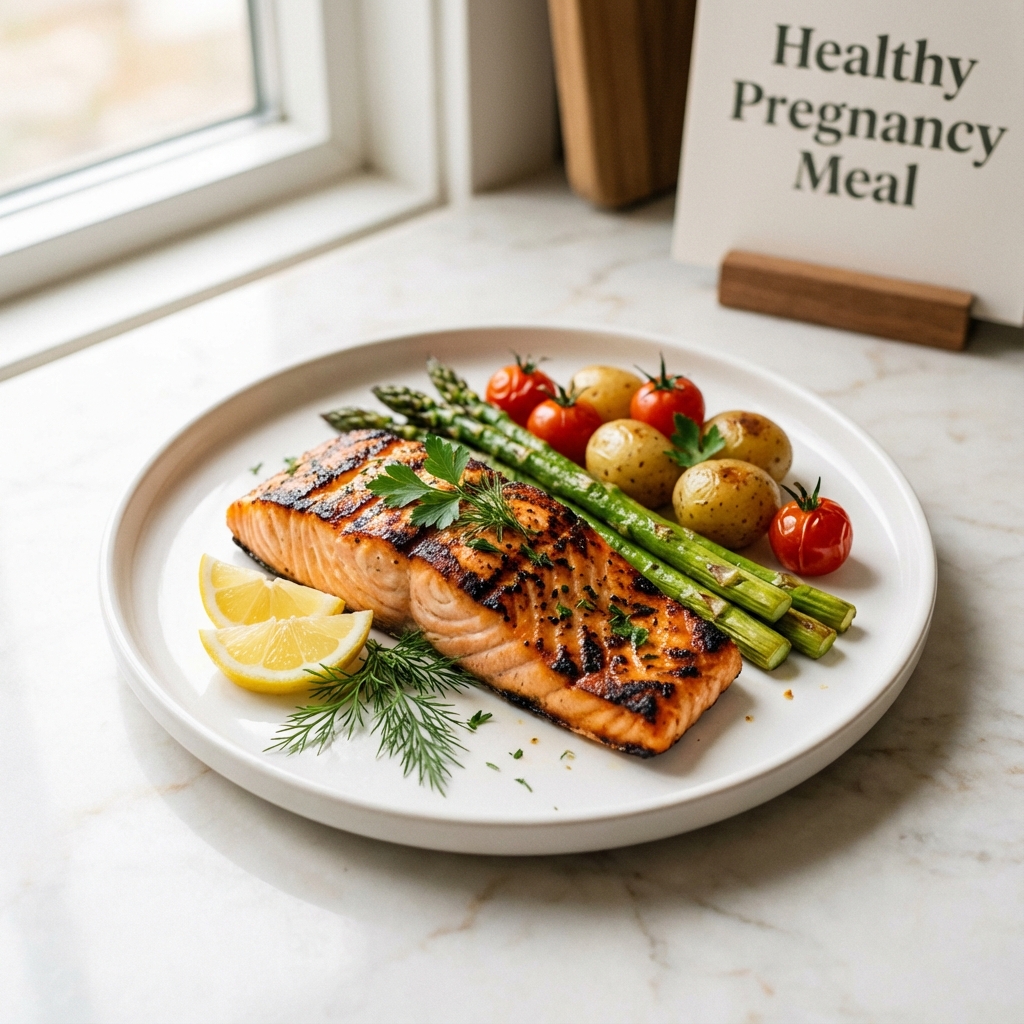
- Salmon (wild or farmed): 100g = 1,500–2,000 mg DHA+EPA - Excellent choice, low mercury
- Sardines: 100g = 1,400–1,800 mg - Very low mercury, eat with bones for calcium
- Anchovies: 100g = 1,200–1,500 mg - Small fish = low mercury
- Mackerel (Atlantic): 100g = 1,000–1,400 mg - Choose Atlantic over King mackerel
- Herring: 100g = 1,300–1,700 mg - Great smoked or pickled
- Trout (rainbow): 100g = 800–1,000 mg - Farm-raised often available
Two servings per week of low-mercury fatty fish can easily meet your omega-3 needs.
Plant Sources (ALA Only)
These provide ALA but conversion to DHA is too low to rely on solely:
- Flaxseeds (ground): 1 tbsp = 1,600 mg ALA
- Chia seeds: 1 tbsp = 1,700 mg ALA
- Walnuts: 30g = 2,500 mg ALA
- Hemp seeds: 1 tbsp = 1,000 mg ALA
Mercury Safety: Navigating Fish Choices
Mercury is a valid concern - but avoiding fish entirely is the wrong approach. The benefits of omega-3s generally outweigh mercury risks when you choose wisely.
✓ Fish to Enjoy Freely (Low Mercury)
- Salmon (wild and farmed)
- Sardines, Anchovies, Herring
- Trout, Pollock, Cod
- Shrimp, Tilapia
✗ Fish to Avoid During Pregnancy (High Mercury)
- Shark, Swordfish
- King mackerel, Tilefish
- Marlin, Bigeye tuna
- Orange roughy
Source: NHS and FDA guidelines
The NHS and FDA recommend pregnant women eat 2–3 servings (about 8–12 ounces) of low-mercury fish per week.
Omega-3 Supplements: When and What to Take
If you don't eat fish regularly - or at all - supplementation becomes important.
Who Should Consider Supplements?
- Vegetarians and vegans
- Women who dislike fish or have allergies
- Anyone not eating 2+ servings of fatty fish weekly
- Women with history of preterm birth (higher doses may be recommended)
Types of Supplements
- Fish oil: High DHA+EPA, widely available, affordable. May cause fishy burps.
- Algae oil: Vegan-friendly, sustainable, directly provides DHA. Often lower EPA.
- Cod liver oil: Contains vitamin A+D. Avoid high doses due to vitamin A.
- Krill oil: Good absorption, contains astaxanthin. Lower total omega-3 per capsule.
What to Look For
- At least 200-300 mg DHA per serving (check label - total omega-3 isn't the same as DHA)
- Third-party tested (IFOS, NSF, or USP certifications)
- Triglyceride form (better absorbed)
- No strong fishy smell (indicates freshness)
💡 Reducing Fishy Burps
- Take capsules with meals
- Freeze capsules before taking
- Choose enteric-coated formulas
- Try algae oil instead
Knowledge Check
🧠 Quick Quiz
Q: You're vegan and want to ensure adequate DHA for your baby. What's the best approach?
A: Supplement with algae-based DHA oil. Plant sources like flaxseeds provide ALA, but your body converts less than 5% to DHA. Algae is where fish get their DHA from originally - it's vegan and effective.
Common Questions
- Can I get enough from plant foods alone? Not really. Flaxseeds and walnuts provide ALA, but conversion to DHA is under 5%. Vegans should supplement with algae DHA.
- Will fish oil supplements make me burp fish? Some lower-quality ones can. Freeze capsules, take with food, or try algae oil.
- Is it possible to have too much omega-3? Very high doses may affect blood clotting. Stick to under 1,000 mg DHA+EPA combined unless advised by your doctor.
- Should I stop before delivery? Some practitioners recommend stopping high-dose supplements 2 weeks before due date. Discuss with your provider.
- Do omega-3s pass through breast milk? Yes! Continue adequate intake during breastfeeding to support ongoing brain development.
The Bottom Line
Omega-3 fatty acids - particularly DHA - are genuinely important during pregnancy. They support your baby's brain and eye development, may reduce preterm birth risk, and benefit maternal mental health. Aim for 2-3 servings of low-mercury fatty fish per week, or supplement with fish oil or algae-based DHA if fish isn't in your diet.
Every salmon fillet is a small investment in your baby's future brain development. Feed it well, and keep an eye on whether you are actually hitting your DHA target rather than assuming you are.
Related Reading
See also: Calcium in Pregnancy, Iron in Pregnancy, Is Salmon Safe in Pregnancy?, and Can I Eat Tuna While Pregnant?.
Download PregnancyPlate to track your omega-3 intake, check fish mercury levels instantly, and ensure you're meeting key nutrient targets throughout pregnancy.
Meet the Editorial Team
The researchers and experts behind PregnancyPlate.

Fiza Izra
Founder & Tech Researcher
A UK-based mother of 3 with a background in tech and data synthesis, Fiza brings real-world experience navigating hyperemesis gravidarum and postnatal depression. She engineers complex clinical guidelines (NHS, ACOG) into accessible tools, ensuring rigorous fact-checking with deep empathy.

Emma Davies
Senior Nutrition Editor
A mum and writer, Emma runs our food safety desk. She is the one who rings the restaurant to ask how long the lettuce sits out, checks every claim against CDC, FDA and NHS guidance, and rewrites the answer until it is usable at 9pm in a drive-thru queue.