Eating on a Long Journey While Pregnant: What to Pack and When to Stop
A warm car is a bad fridge, so pack shelf-stable food or bring a cool bag. Plus why stopping every two hours matters more than anything in the snack bag.
In this article
Editorial note: This article is researched from official public health and pregnancy food safety guidance, then edited by the PregnancyPlate team for clarity. It is not medical advice. If you are worried about symptoms or a specific exposure, contact your midwife, GP or healthcare provider.
The Fast Answer: Long journeys in pregnancy need a plan for three things, and only one of them is food. Pack shelf-stable snacks rather than anything chilled, because a warm car is the worst place to keep sandwiches or cold meat. Drink properly even though it means more stops, since dehydration worsens headaches and Braxton Hicks. And get out and move every two hours, because sitting still for hours raises clot risk, which matters more in pregnancy.
Track your nutrition in seconds in the PregnancyPlate AppSafety is step one. Nutrition helps your baby thrive.
Knowing a meal is safe does not tell you whether you are getting enough iron, folate, calcium and choline. PregnancyPlate tracks all of it from a photo of your plate.
- See nutrient progress
- Scan meals instantly
- Nourish with confidence
 Scan to download
Open with iPhone camera
Scan to download
Open with iPhone camera
A long drive is one of those situations where the usual pregnancy advice quietly stops applying. You cannot eat small and often if there is nowhere to stop, and the snacks that travel best are rarely the ones you would choose at home.
Here is what actually works over four or five hours in a car, starting with the thing most people get wrong.
The Warm Car Problem
A car is a bad fridge. On a mild day the inside of a parked car climbs well above room temperature within an hour, and even while driving a footwell or boot is warmer than a kitchen.
That matters because the foods pregnancy guidance already flags are the chilled, ready-to-eat ones. Sandwiches with cold meat, pre-dressed salads, soft cheese, hummus, yoghurt and anything mayonnaise-based are exactly the things that should not sit at warm temperatures for hours.
The two hour rule is the one to carry: perishable food should not sit out of refrigeration for more than two hours, and in genuinely hot weather that drops to one. Our leftovers guide has the detail.
So the simplest fix is not to bring chilled food at all, or to bring it properly cold.
What Travels Without a Cool Bag
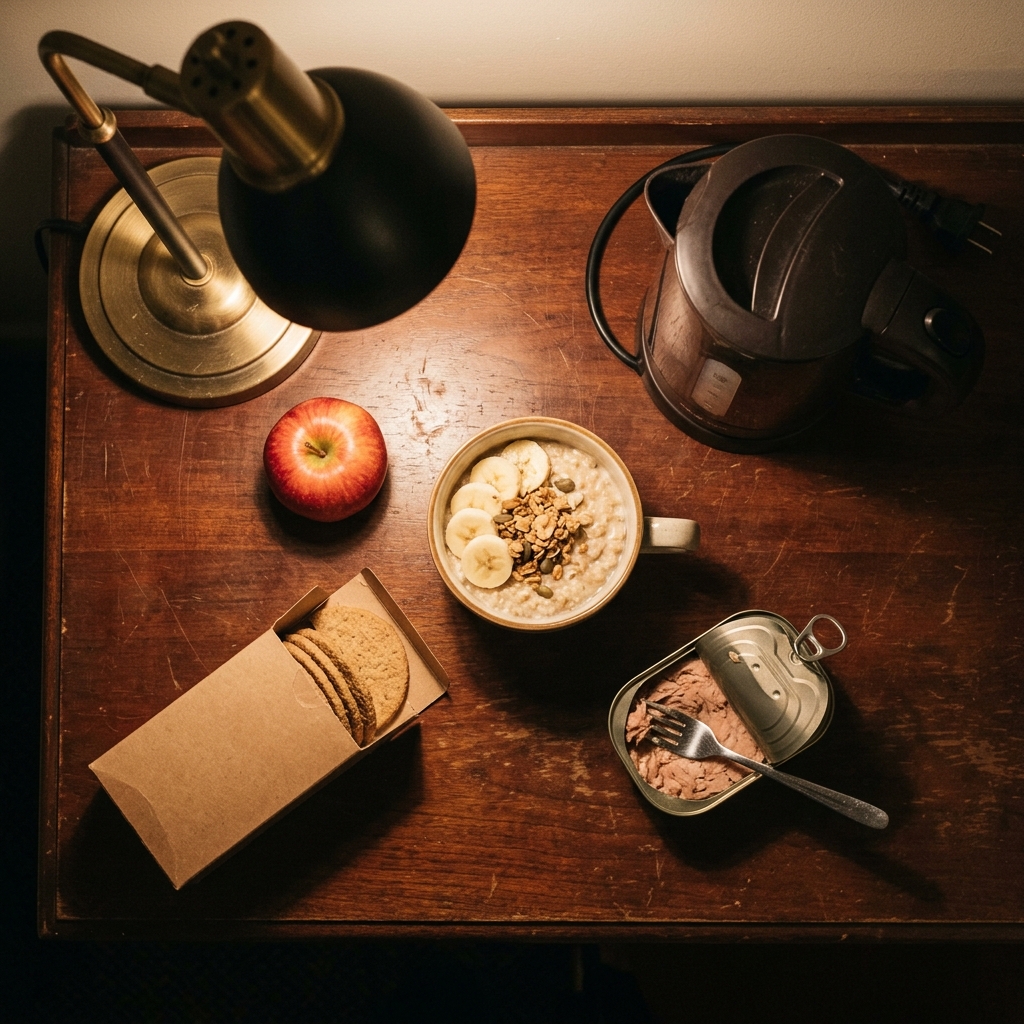
These keep for hours at car temperature with no concerns at all.
Nuts and seeds. Almonds, cashews, pumpkin seeds. Pumpkin seeds in particular bring iron and zinc, and pregnancy roughly doubles your iron requirement.
Oatcakes, crackers and rice cakes. Plain, dry and good for nausea.
Dried fruit. Apricots are a useful iron source, and dates and raisins travel indestructibly.
Nut butter sachets with crackers or a banana. Protein that needs no refrigeration.
Cereal bars and flapjacks. Check the sugar, but they are convenient and fine.
Whole fruit. Bananas, apples, satsumas. Wash them before you leave rather than in a service station.
Popcorn, breadsticks, pretzels. Plain, salty and easy when you feel queasy.
Hard cheese portions, which tolerate a few hours better than soft cheese, though a cool bag is still better.
The pattern: dry, sealed and shelf-stable. Nothing that would need a fridge at home.
If You Want Real Food, Bring a Cool Bag
A cool bag with two ice blocks changes what is possible, and it is the single most useful thing to pack.
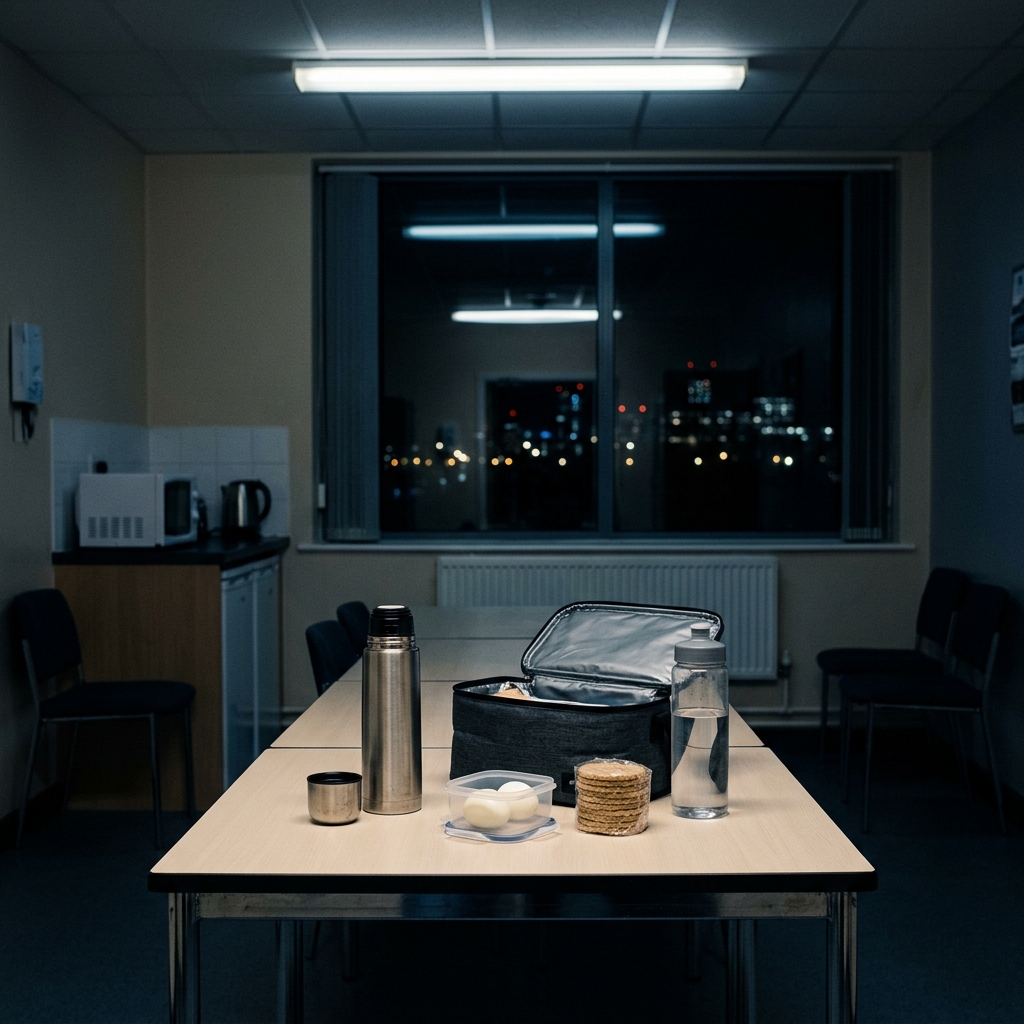
With one you can take a proper lunch: a wrap with cooked chicken, a pasta salad, boiled eggs, yoghurt, cut fruit, cheese. Keep it in the footwell rather than the boot, out of direct sun, and eat the chilled things in the first few hours rather than saving them for the end.
Our iron-rich lunch ideas and work lunch guide both transfer directly, since the constraints are similar.
What not to do is take chilled food without a cool bag and eat it four hours later. That is the one genuine risk on a long drive, and it is entirely avoidable.
Long Journeys in One Box
- Shelf-stable by default, cool bag if you want real food.
- Stop every two hours and walk for a few minutes.
- Drink properly. More stops is the price, not a reason to ration.
- Eat every two to three hours, not one big service station meal.
- Seatbelt under the bump, across the hips, strap between the breasts.
A Bag That Covers a Five Hour Drive
If you want a list to pack from rather than a set of principles.
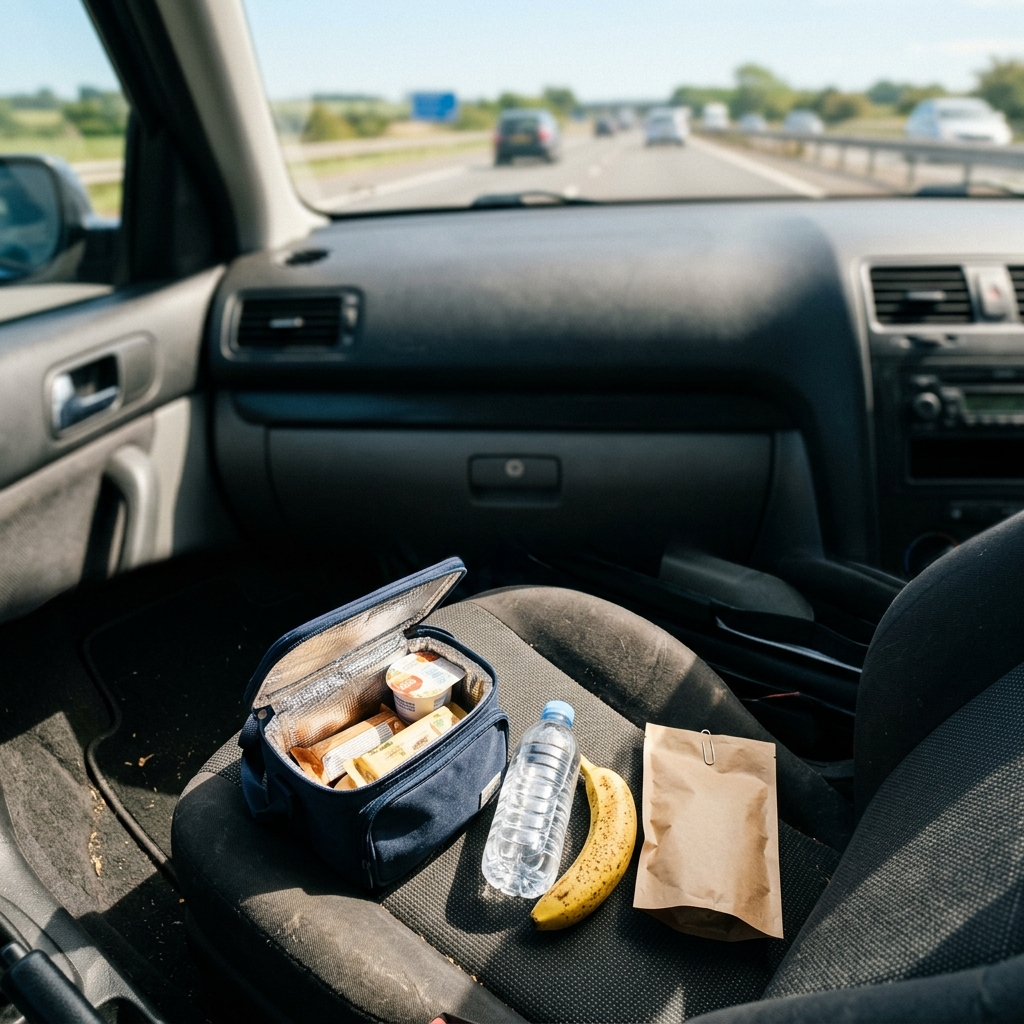
Within reach, not in the boot: a bottle of water, plain crackers or oatcakes, a banana, and a packet of nuts. These are the four things you will actually want between stops, and digging in the boot for them is not realistic.
In the cool bag: a wrap or sandwich made that morning, boiled eggs, cheese, cut fruit, yoghurt. Two ice blocks, and keep it in the footwell rather than the boot.
In the glovebox, permanently: a sealed packet of crackers and a cereal bar. Pregnancy hunger arrives without warning, and traffic does too.
Also worth having: hand gel, wet wipes, a carrier bag in case of sickness, and more tissues than you think.
That covers both the planning and the emergencies, and it takes about ten minutes the night before.
Moving, and Why It Is Not Optional
This is the part that matters more than the food, and it rarely appears in travel snack lists.
Pregnancy increases the tendency of blood to clot, which is a sensible adaptation for birth and an inconvenient one for long journeys. Sitting still for hours slows circulation in the legs, and the combination raises the risk of a deep vein thrombosis compared with not being pregnant.
The practical response is simple and effective. Stop every two hours, get out, and walk for a few minutes. In between, flex your ankles and circle your feet regularly while sitting. Keep drinking, because dehydration thickens the blood.
If you have been advised to wear compression stockings, a long journey is exactly when to use them. And if you develop pain, swelling, redness or heat in one calf, that needs medical attention the same day rather than a wait-and-see.
The same movement breaks help with the other things long drives cause: swollen feet, a stiff back and the general misery of being folded into a seat with a bump. Our swelling guide covers the rest.
Drinking, and the Toilet Problem
Most people drink less on a journey specifically to avoid stopping, which is the wrong trade.
Dehydration in pregnancy brings on headaches, makes Braxton Hicks contractions more frequent, worsens constipation and makes you feel considerably worse by the end of a drive. You are also stopping every two hours anyway for the movement, so the toilet stops are already built in.
Water is the main thing. If plain water tastes wrong, which is common, add lemon or squash. Keep a bottle within reach rather than in a bag in the boot, because out of sight genuinely means not drinking.
Caffeine counts towards your 200mg daily limit, and a large service station coffee can be most of that on its own. If you are driving and tired, that is worth planning around rather than discovering at the counter.
Service Stations and What to Order
You will end up stopping somewhere, so it helps to know the shape of it.
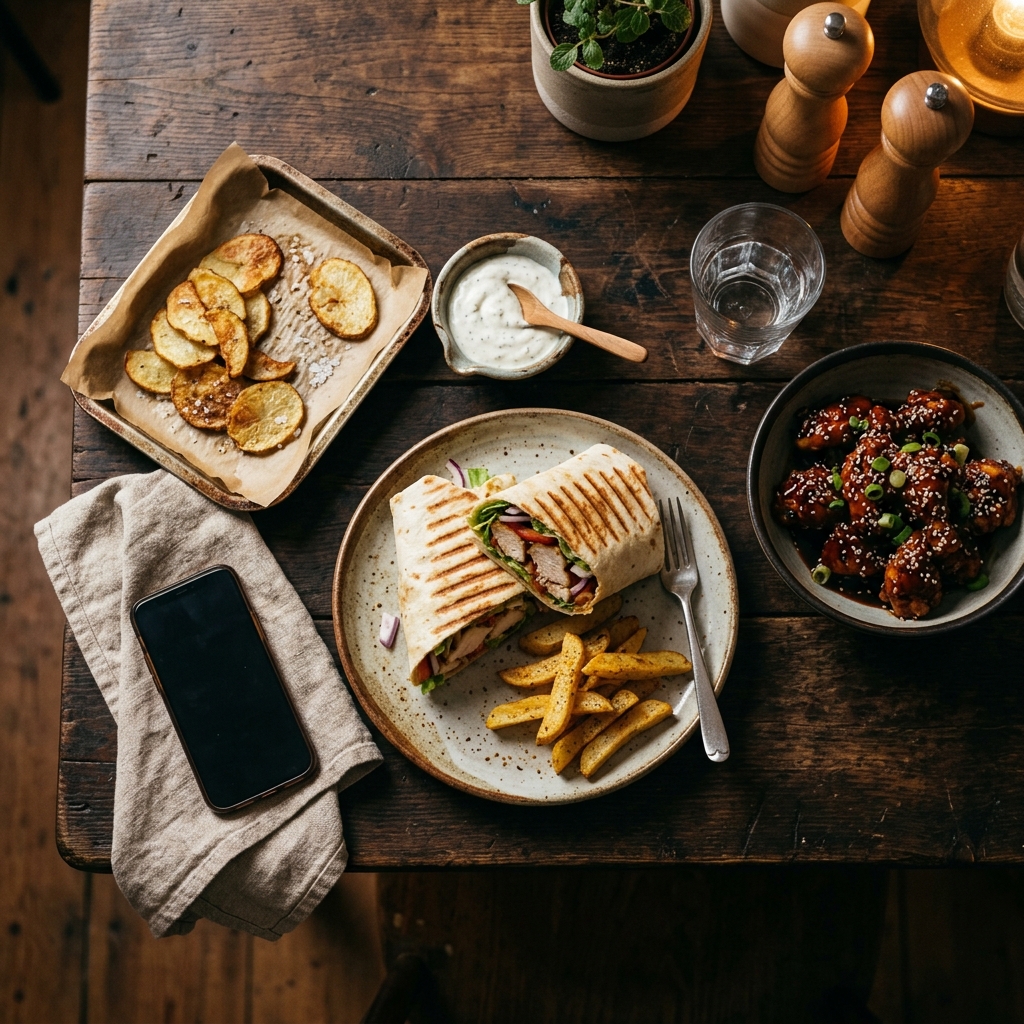
Hot food cooked to order is the safest category: a burger cooked through, hot chips, a toasted sandwich, a jacket potato. Hot and steaming is the test.
Pre-packed chilled sandwiches are fine if they have been properly refrigerated and are in date, which in a staffed shop they generally are. Check the date and that the fridge feels cold rather than ambient. Avoid any with pate, soft mould-ripened cheese or cold cured meat.
What to skip: anything from an unrefrigerated display that should be cold, sushi from a petrol station, and pre-dressed salads that look tired.
Our general eating out guide gives the four questions that work on any menu, and our takeaway guide covers drive-through orders.
Nausea in the Car
Travel sickness and pregnancy sickness stack, and the car makes both worse.
Keep something dry to hand. Plain crackers or oatcakes within arm's reach, not in the boot. An empty stomach makes nausea worse, and the gap between stops is when it builds.
Sit in the front if you can, look at the horizon, and keep a window or vent moving air. Reading or looking at a phone is reliably the worst thing.
Cold and plain beats warm and strong. Cold water, ice, plain crackers. Strong food smells in an enclosed car are a common trigger, so think twice about hot food eaten in the vehicle.
Ginger helps some people in food amounts, as a biscuit or a tea. If sickness is severe rather than inconvenient, our guide to eating with severe pregnancy sickness is the better starting point.
Timing the Day
A small amount of planning removes most of the discomfort.
Eat a proper meal before you leave rather than relying on finding something. Protein and slow carbohydrate hold far longer than a pastry at a petrol station.
Eat every two to three hours on the road, in small amounts, rather than one large meal. Big meals in a seated position are a direct route to heartburn, which our heartburn guide explains worsens as the baby takes up more room.
Plan the long leg for the morning if you can. Nausea is often worse early, but fatigue and swelling are reliably worse by late afternoon.
Keep the seatbelt correct. The lap strap goes under the bump across your hips, never across it, and the diagonal strap sits between your breasts and to the side of the bump.
If the journey is to an airport rather than a destination, our eating abroad guide picks up from there, and our grocery list covers stocking up before you go.
Clinical Sources & Research
This article is general information and does not replace advice from your midwife, GP or obstetrician. Seek medical advice the same day for pain, swelling, redness or heat in one calf, and discuss long journeys with your midwife if you have a history of clots or a high-risk pregnancy.
Meet the Editorial Team
The researchers and experts behind PregnancyPlate.

Fiza Izra
Founder & Tech Researcher
A UK-based mother of 3 with a background in tech and data synthesis, Fiza brings real-world experience navigating hyperemesis gravidarum and postnatal depression. She engineers complex clinical guidelines (NHS, ACOG) into accessible tools, ensuring rigorous fact-checking with deep empathy.

Emma Davies
Senior Nutrition Editor
A mum and writer, Emma runs our food safety desk. She is the one who rings the restaurant to ask how long the lettuce sits out, checks every claim against CDC, FDA and NHS guidance, and rewrites the answer until it is usable at 9pm in a drive-thru queue.