Eating Out While Pregnant: The Four Questions That Work on Any Menu
You do not need a guide for every restaurant. Four questions cover almost any menu, and the risk sits in cold ready-to-eat food rather than anything from the grill.
In this article
Editorial note: This article is researched from official public health and pregnancy food safety guidance, then edited by the PregnancyPlate team for clarity. It is not medical advice. If you are worried about symptoms or a specific exposure, contact your midwife, GP or healthcare provider.
The Fast Answer: You don't need a list of every restaurant. Four questions cover almost any menu: is it cooked through, has it been sitting, is anything raw or cured, and is the cheese soft. Hot food cooked to order is nearly always fine. The risks cluster in chilled ready-to-eat things: cold cured meat, soft cheese, raw fish, pre-made salads and anything held warm rather than hot. Learn the pattern once and you can order anywhere.
Track your nutrition in seconds in the PregnancyPlate AppSafety is step one. Nutrition helps your baby thrive.
Knowing a meal is safe does not tell you whether you are getting enough iron, folate, calcium and choline. PregnancyPlate tracks all of it from a photo of your plate.
- See nutrient progress
- Scan meals instantly
- Nourish with confidence
 Scan to download
Open with iPhone camera
Scan to download
Open with iPhone camera
Eating out in pregnancy usually starts with searching the restaurant's name and hoping someone has written about it. That works, and we've written a lot of those guides. But the underlying logic barely changes from one place to the next.
Once you can see the pattern, the menu stops being a test.
The Four Questions
Run any dish through these and you'll get the right answer almost every time.
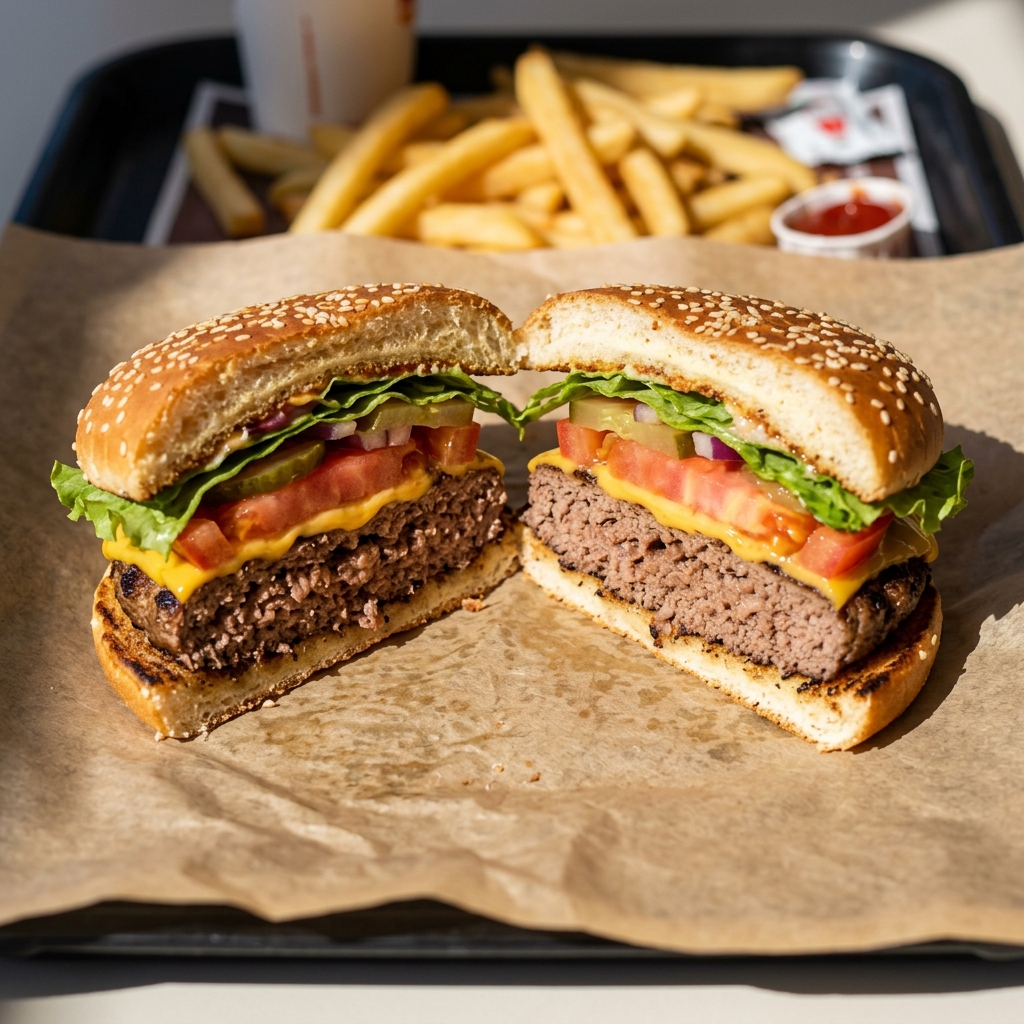
1. Is it cooked through? Heat is what makes food safe. Chicken and anything minced needs to reach 75°C (165°F), whole cuts of beef and lamb are safe from a true medium upwards, and fish should be opaque and flake apart. Pink burgers, rare steak and undercooked chicken are the things to send back.
2. Has it been sitting? Cooked food is safe while it's hot and becomes a problem as it cools. That covers buffet trays, hot counters, shared starters going cold on the table, and delivery that took forty minutes. Steaming is the test.
3. Is anything raw or cured? Raw fish, raw shellfish, cold cured meats like salami and prosciutto, cold-smoked salmon and raw egg sauces are the recurring names on every avoid list. All of them are fine cooked.
4. Is the cheese soft or blue? Hard cheeses are low risk. Soft pasteurised cheeses like mozzarella and feta are fine. Mould-ripened and blue cheeses are where UK and US advice part company.
Why Cold Food Is the Recurring Theme
It seems backwards until you know the mechanism.
Most food poisoning bacteria stop multiplying in a fridge. Listeria doesn't. It grows slowly at refrigerator temperatures, which is exactly why pregnancy guidance singles out chilled ready-to-eat foods rather than hot ones.
Pregnant women are around ten times more likely to develop listeriosis than the general population, and it can affect a baby even when the mother feels only mildly unwell. That combination of higher susceptibility and serious consequences is why the advice looks disproportionate compared with ordinary food safety.
So the mental shortcut is: hot food, ordered fresh, is your friend. Cold, pre-made and sitting is where to slow down.
By Type of Restaurant
The same four questions, applied to the places people actually go.
| Type | The main thing to watch | Easy order |
|---|---|---|
| Burger and fast food | Burgers cooked through, no pink | Ask for well done. Chicken and fish items are cooked through as standard. |
| Sandwich and sub shops | Cold cured meats and deli slices | Toasted or heated until steaming. Our sandwich guide covers it. |
| Steakhouse | Doneness, and prime rib roasted rare | Say medium-well. See our steakhouse guide. |
| Diner and breakfast | Runny eggs and hollandaise | Over hard or scrambled well. Our diner guide has the detail. |
| Sushi and Japanese | Raw fish | Cooked rolls, tempura, teriyaki. Our sushi guide sorts them. |
| Seafood | Raw bar and cold-smoked fish | Anything cooked. Most shellfish is low mercury and encouraged. |
| Italian and pizza | Cured meat toppings and soft cheese | Cooked on a pizza is fine. Our pepperoni guide explains why. |
| Mexican | Fresh white cheeses and ceviche | Ask about queso fresco. Our Mexican guide covers it. |
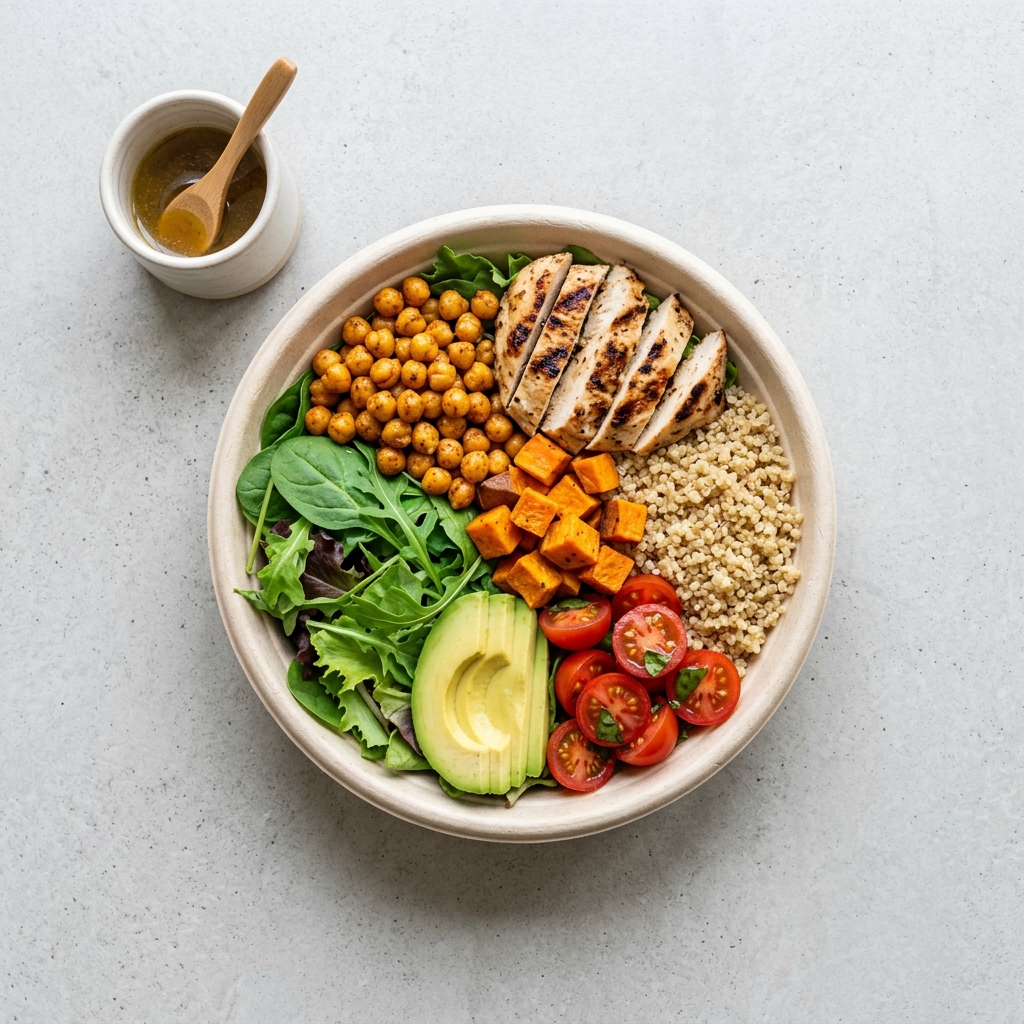
| Salad and bowl chains | Cold line turnover | Go at busy times. Our salad chain guide explains. |
| Buffets and hot counters | Holding time | Take what is steaming. Our buffet guide has the rules. |
| Coffee shops | Caffeine, not food | Keep the daily total under 200mg. See our coffee guide. |
Eating Out in One Box
- Hot, cooked to order, steaming. That covers most menus.
- Cold and pre-made is where the risk sits, not the grill.
- Two asks: meat cooked through, and what is in the cheese.
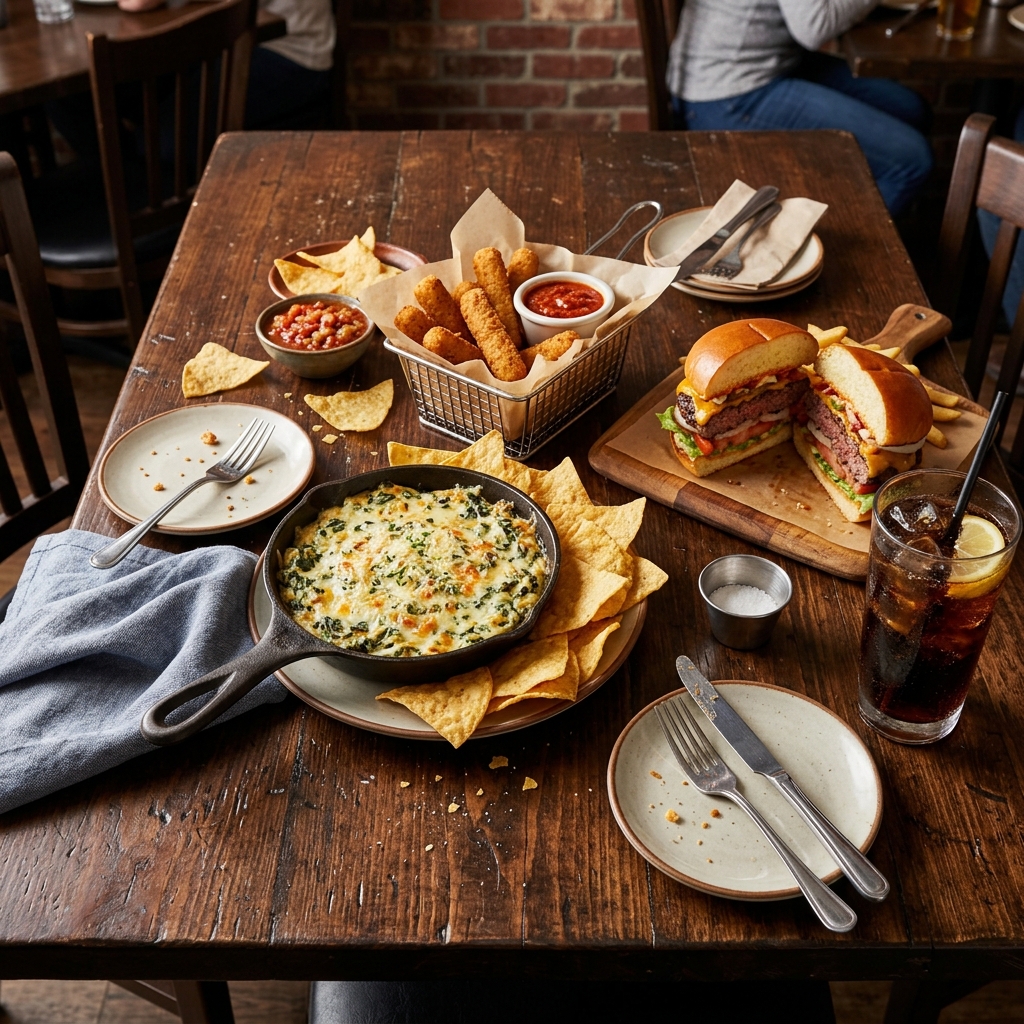
- Eat shared starters early, while they are still hot.
- Caffeine and salt affect how you feel more than safety does.
The Foods That Appear on Every Avoid List
Worth learning once, because the same dozen items account for nearly all the warnings.
Raw or undercooked meat and poultry, including rare burgers and pink chicken. Cooking solves it.
Raw fish and shellfish, including sushi with raw fish, oysters, ceviche and rare seared tuna.
Cold cured meats, like salami, prosciutto, chorizo and pepperoni eaten cold. All fine cooked on a pizza or in a sauce.
Cold-smoked fish, which has never been cooked despite tasting as though it has. Fine in a hot dish.
Mould-ripened and blue cheeses, like brie, camembert, gorgonzola and blue cheese dressing, where UK advice is stricter than US advice.
Unpasteurised anything, including raw milk cheese and fresh-squeezed juice.
Raw egg sauces, like some aiolis, hollandaise and house-made dressings.
Raw sprouts, where bacteria can grow inside the seed beyond the reach of washing.
High-mercury fish, a short list of large predators: shark, swordfish, king mackerel, marlin and bigeye tuna.
That is the whole list. Everything else on a normal menu comes down to whether it is cooked and whether it has been sitting.
The UK and US Split
Worth knowing if you read advice from both, because it causes a lot of confusion.
Two areas genuinely differ. Runny eggs are considered safe in the UK when the eggs carry the British Lion mark, because those flocks are vaccinated against salmonella. There is no equivalent scheme in the US, so American guidance says cook eggs until firm.
Mould-ripened and blue cheeses are treated as acceptable in the US when made from pasteurised milk, while UK guidance advises avoiding them uncooked regardless, because of how those cheeses are made.
Neither position is wrong. They reflect different food systems. If you are reading conflicting advice, check which country wrote it, and when in doubt the stricter version costs you very little.
How to Ask Without Making It Awkward
The questions are routine for kitchens. It's only awkward if you decide it is.
"Well done, no pink, please." Covers burgers and mince.
"Medium-well." Covers steak.
"Over hard." Covers eggs.
"Is this cheese pasteurised?" Staff usually know, and if nobody does, treat that as a no and pick something else.
"Could I have that without the cured meat?" Easier than asking them to cook it.
Adding "I'm pregnant" removes the need for any further explanation and tends to get a helpful response rather than an eye roll. You do not owe anyone that information, but it is the fastest route to a straightforward answer.
If an answer comes back vague, order something else rather than pushing. There's always another dish.
What About the Things You Cannot See?
A fair worry, and worth being proportionate about.
You can't inspect a kitchen, check a fridge temperature or watch who washed their hands. What you can do is choose places with good hygiene ratings, which are public in the UK and often displayed in the US, and order the categories of food where the cooking step does the work for you.
Beyond that, the risk of any single restaurant meal is genuinely low. Listeria infections in pregnancy are uncommon, and most traced cases come back to specific high-risk foods rather than to ordinary cooked restaurant meals. Eating out sensibly for nine months is not a gamble.
What's more likely to affect you is the salt, the portion sizes and the timing, which is why so many of our guides spend as much time on heartburn and swelling as on bacteria.
The Comfort Side, Which Matters More Often
In practice, most restaurant meals in pregnancy go wrong for reasons that have nothing to do with safety.
Salt. Restaurant food is seasoned to be eaten immediately, which means a lot of sodium. In the second half of pregnancy that shows up as swollen feet and fingers the same evening. Water alongside genuinely helps, and our swelling guide covers the rest.
Heartburn. Fried food, rich sauces, large portions and late meals are the four biggest triggers, and they describe most restaurant dinners. Eating earlier and staying upright afterwards does more than avoiding any single ingredient. Our heartburn guide ranks them.
Smell. In the first trimester, the restaurant itself can be the problem before you have ordered. Sitting away from the kitchen, ordering ahead for collection, or choosing somewhere with plainer food are all reasonable adjustments rather than defeats.
Portion size. By the third trimester there is less room. Starters as mains, or boxing half at the start, works better than struggling through a plate.
Delivery and Takeaway Are a Different Problem
Ordering in changes one variable, and it is the one that matters most.
Food cooked in a restaurant and eaten there arrives hot. The same food in a padded bag on the back of a scooter spends twenty to forty minutes cooling into the range where bacteria multiply. Nothing about the cooking changed, but the clock started when it left the kitchen, not when it reached your door.
So eat delivery promptly rather than leaving it while you finish something, and reheat anything lukewarm until it is steaming rather than warm. Rice deserves particular care, since it should be cooled fast and kept no more than a day before a single reheat.
The dishes that travel worst are the ones with a cold element added at the end: salads, garnishes and creamy sauces. Ordering those on the side, or skipping them, is a small change that removes most of the difference between eating in and ordering in. Our takeaway safety guide covers this in more depth, and our fakeaway guide is the version where you cook it yourself and the question disappears entirely.
If You Have Already Eaten Something
This is the most common reason people search at eleven at night, so it deserves a clear answer.
In most cases nothing happens. A single exposure to a higher-risk food is unlikely to cause illness, and worrying retrospectively does not change the odds.
What's worth doing is knowing the signs. Vomiting, diarrhoea, stomach cramps or fever in the following days are worth attention. Fever with flu-like aches is the one to act on rather than wait out, because listeria can appear days or even weeks later and needs testing rather than time. Mention what you ate when you call, since it changes what your team looks for.
Our food poisoning in pregnancy guide has the symptom timelines and the thresholds for calling, and our guides on unpasteurised cheese and undercooked chicken deal with the two specific panics people have most often.
The wider point is that pregnancy is nine months long and eating out is part of normal life. Ask two questions, favour hot food ordered fresh, and go to the restaurant.
Clinical Sources & Research
This article is general information and does not replace advice from your midwife, GP or obstetrician. If you develop a fever or flu-like symptoms after eating something you are unsure about, contact your maternity team rather than waiting.
Meet the Editorial Team
The researchers and experts behind PregnancyPlate.

Fiza Izra
Founder & Tech Researcher
A UK-based mother of 3 with a background in tech and data synthesis, Fiza brings real-world experience navigating hyperemesis gravidarum and postnatal depression. She engineers complex clinical guidelines (NHS, ACOG) into accessible tools, ensuring rigorous fact-checking with deep empathy.

Emma Davies
Senior Nutrition Editor
A mum and writer, Emma runs our food safety desk. She is the one who rings the restaurant to ask how long the lettuce sits out, checks every claim against CDC, FDA and NHS guidance, and rewrites the answer until it is usable at 9pm in a drive-thru queue.