Pregnancy-Safe Charcuterie Board: What to Heat, What to Swap and What to Pile On
How to build a charcuterie board you can eat while pregnant: crisped prosciutto and salami, baked brie, the cheeses that are fine cold, and how long a party board can safely sit out.
In this article
Editorial note: This article is researched from official public health and pregnancy food safety guidance, then edited by the PregnancyPlate team for clarity. It is not medical advice. If you are worried about symptoms or a specific exposure, contact your midwife, GP or healthcare provider.
Quick Verdict: You can have a charcuterie board while pregnant if you change two things. The cured meats (salami, prosciutto, pepperoni, chorizo) go on warm and crisped, not cold, and the soft cheeses like brie go on baked. Hard pasteurized cheeses, crackers, fruit, nuts, olives, jam and honey can stay exactly as they are.
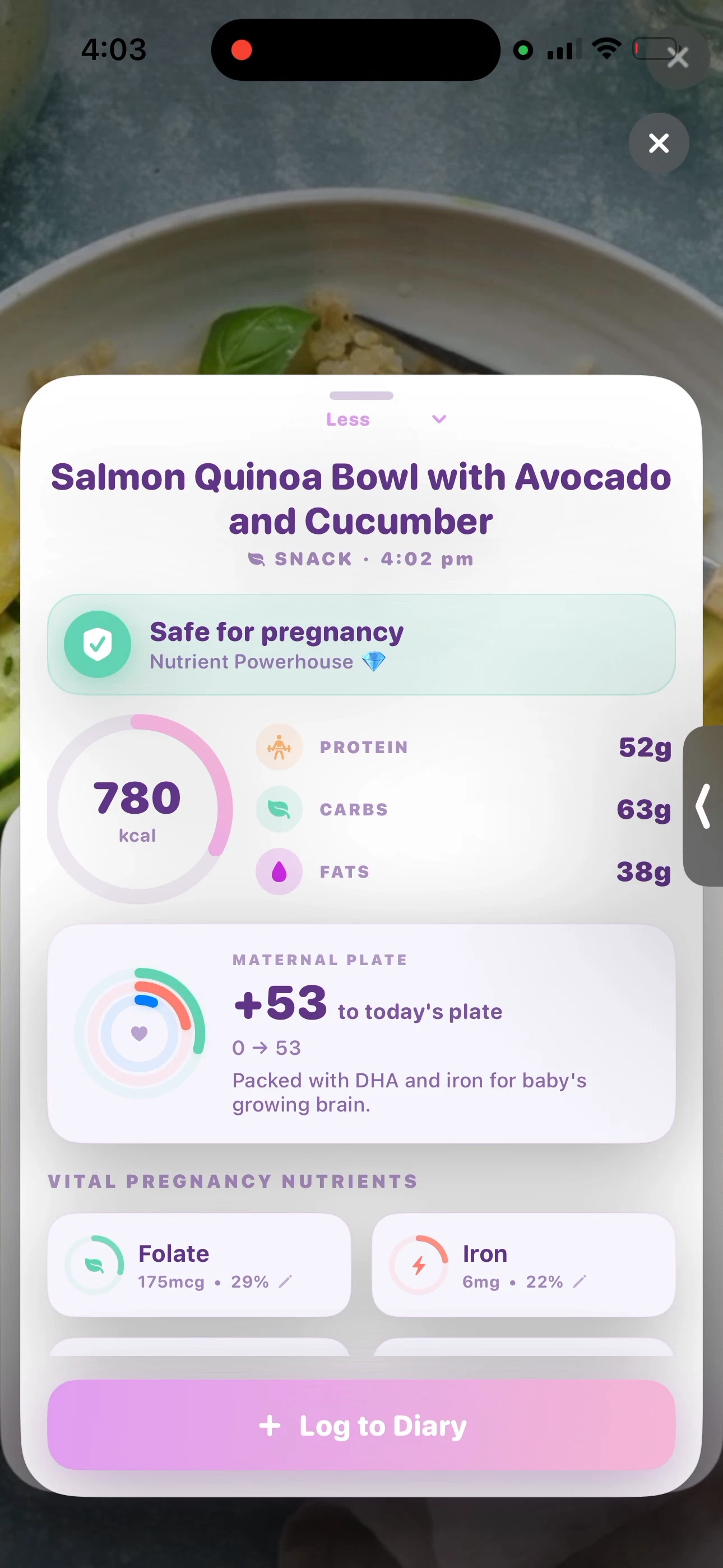
Check party foods in PregnancyPlateYour next meal, a little less guesswork.
Scan your plate for pregnancy food-safety guidance and a nutrition breakdown. Keep your meals and nutrient progress in one place.
 Scan with your iPhone
to get the app
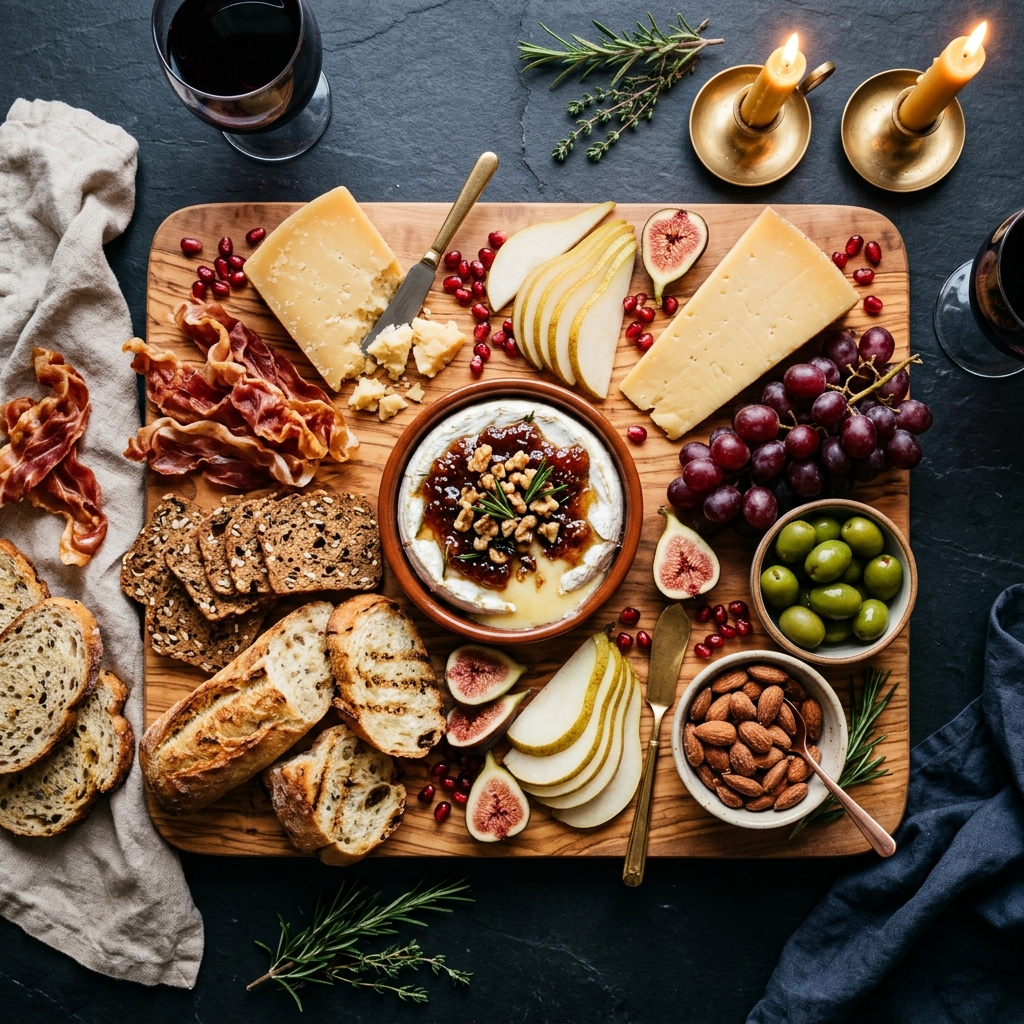
Charcuterie boards are everywhere from now until New Year's: Friendsgiving, office parties, the board your sister-in-law brings to every family gathering. And they're built almost entirely from the foods on pregnancy "be careful" lists. Cold salami, prosciutto, soft cheese, maybe a pot of pâté or some smoked salmon.
The good news is that a board is just a collection of separate foods, so you don't have to skip it. You can rebuild it. Here's how to put one together step by step, whether you're hosting or bringing one along, so that everything on it is something you can eat.
Why the Classic Board Is a Problem
The concern is Listeria, a bacterium that pregnant women are far more likely to get seriously ill from than other healthy adults. Unlike most bacteria, it can keep growing slowly in the fridge. That makes ready-to-eat foods that are stored cold and eaten without heating the riskiest group, and a traditional board is full of them.
The CDC's advice for pregnant women is to avoid unheated deli meats and fermented or dry sausages, and to eat them only when reheated to 165°F or until steaming hot. Cured meats also aren't cooked during curing, and the UK's NHS points out a small risk of toxoplasmosis from cured meat as well. Heat deals with both.
Step 1: Build the Cheese Corner First
Cheese is the anchor of the board, and most of it is fine cold.
- Put out freely: pasteurized hard and firm cheeses such as aged cheddar, Gouda, Manchego, Swiss, Monterey Jack and Colby. They're dry and dense, which makes them a poor home for bacteria.
- Also fine cold, if pasteurized: mozzarella balls, feta, cream cheese, a Boursin-style herbed spread and string cheese. The CDC lists pasteurized cream cheese, feta and mozzarella among its safer choices.
- Check the label: some well-known imported cheeses, including traditional Parmigiano Reggiano, Gruyère and Comté, are made with raw milk. The CDC advises pregnant women to avoid cheese made with unpasteurized milk unless it's heated. The NHS is more relaxed about hard cheeses specifically, so if you love one, it's worth asking your provider. The easy route is a domestic, pasteurized version.
- Leave off the cold board: queso fresco and other fresh Latin-style cheeses. The CDC advises avoiding these unheated even when they're pasteurized.
Step 2: Bake the Soft Cheese
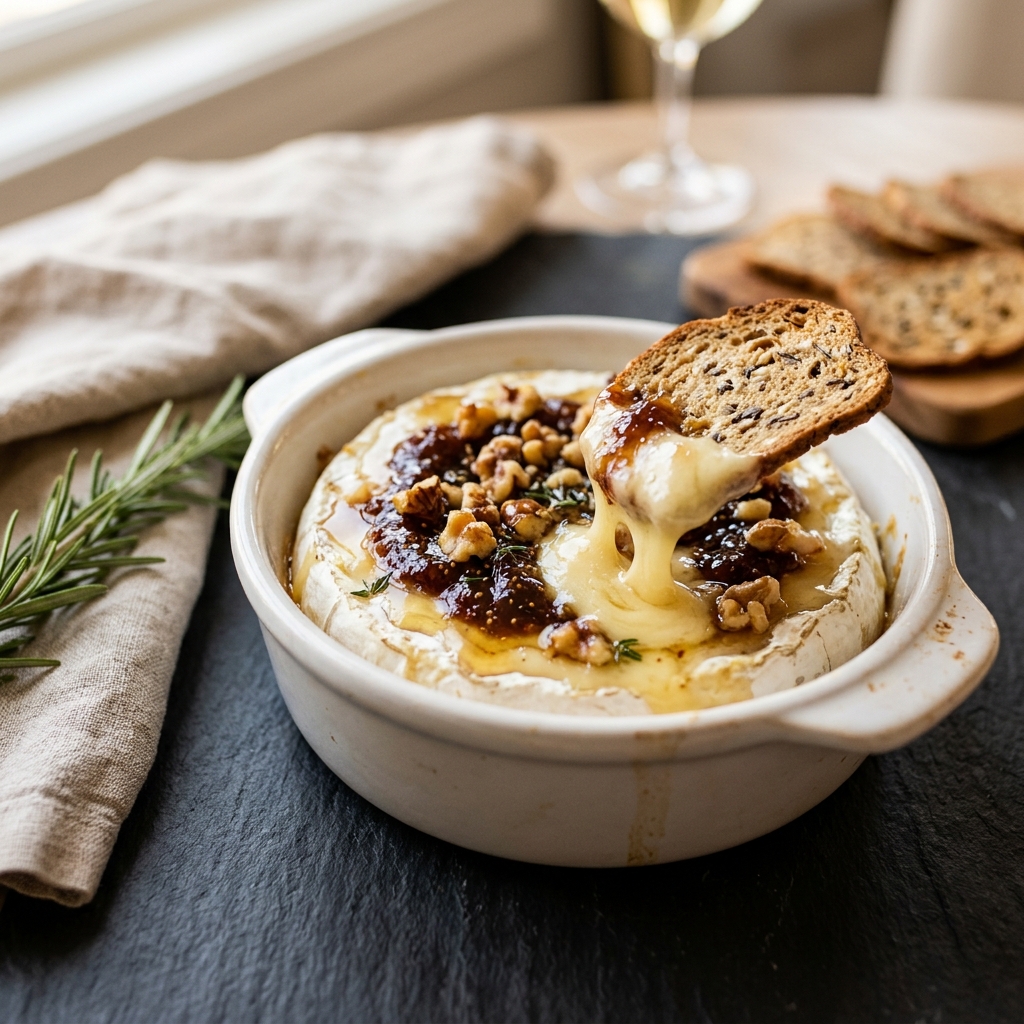
Brie, Camembert and soft blue cheese hold a lot of moisture, which gives Listeria room to multiply, so these belong on the board hot. That's no sacrifice, because a baked brie is the best thing on any board.
Score the top of a wheel of brie, add a spoon of fig jam or a drizzle of honey and some chopped walnuts, and bake it until it's soft and molten all the way to the center. Put it in the middle of the board in its baking dish with crackers or sliced baguette for scooping. Eat it while it's hot rather than going back for it an hour later. Our brie guide explains why the rind isn't the problem people think it is.
Step 3: Make the Meat Warm and Crispy
This is the step that changes the most, and it's the one that people end up liking better than the original.
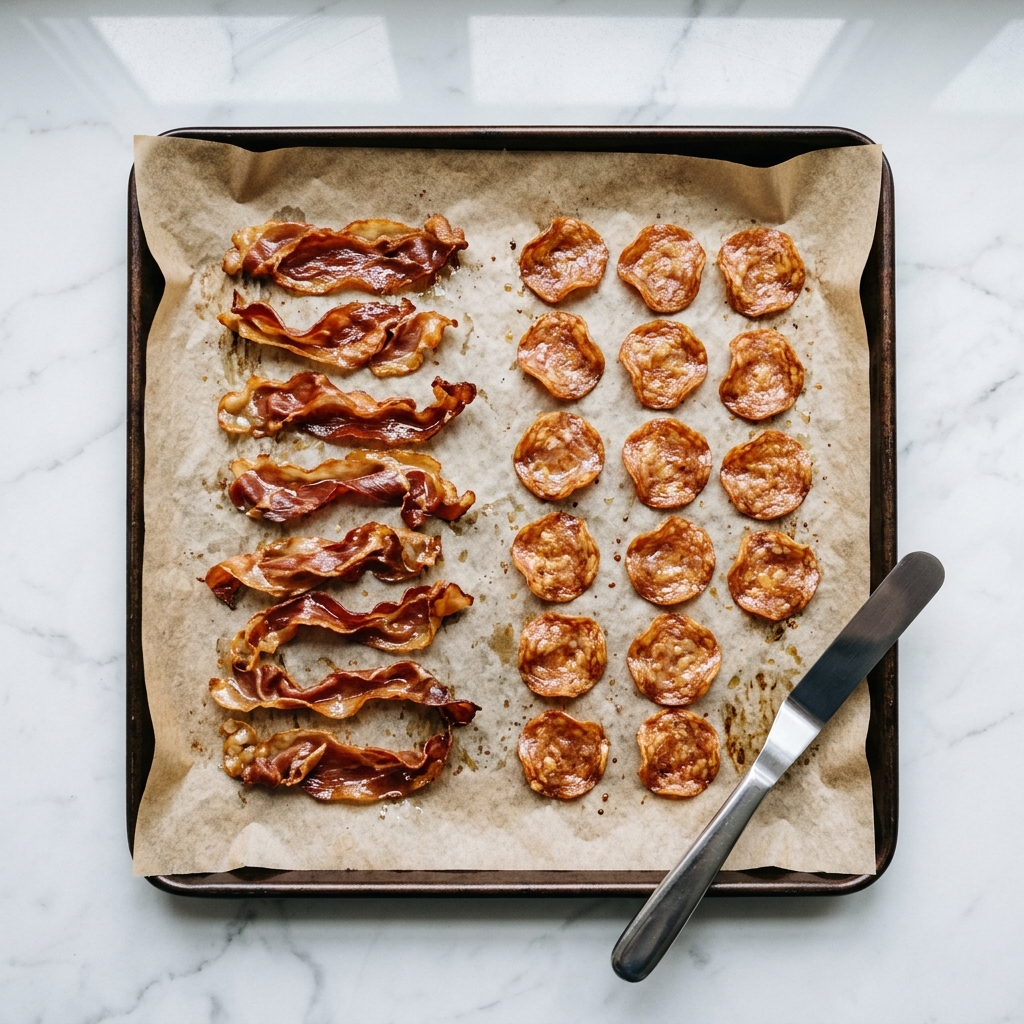
- Prosciutto crisps. Lay slices flat on a lined baking sheet and bake at 400°F for about 8 to 12 minutes until they're crisp and brittle. They shatter like bacon and taste great broken over the baked brie.
- Salami and pepperoni chips. Bake slices the same way, or fry them in a dry pan until they sizzle and curl at the edges. Small pepperoni slices crisp in the microwave between paper towels in about a minute.
- Warm chorizo. Slice it thickly and fry it until it's sizzling hot and has released its red oil. Serve it in a small dish with toothpicks.
- Hot bites. Fully cooked cocktail sausages, meatballs or slices of smoked sausage, heated until steaming and kept in a small warm dish on the side.
Crisped cured meat should be eaten soon after it's cooked, like any cooked meat. Make it last, just before guests arrive. Our pepperoni guide goes into the heating rule in more detail.
Step 4: Spreads, Dips and Seafood
- Pâté: the CDC advises skipping refrigerated pâté and meat spreads. Shelf-stable pâté in a sealed jar or can, the kind that doesn't need refrigerating before it's opened, is the safer choice.
- Smoked salmon: refrigerated smoked fish is on the CDC's avoid list unless it's cooked into a dish. A baked smoked salmon dip, served hot, works. So does shelf-stable smoked salmon in a sealed pouch or can. Our smoked salmon guide covers the details.
- Shrimp: fully cooked shrimp is fine. Keep it on ice and eat it within the 2-hour window.
- Everything else: hummus, store-bought dips made with pasteurized dairy, mustard, chutney, fig jam, pepper jelly and honey are all fine. Honey is only off-limits for babies under a year, not for pregnant women, as our honey guide explains.
Step 5: Fill the Gaps
The fillers are the safest part of the board and the part that makes it look generous: crackers, sliced baguette, breadsticks, almonds, pistachios, walnuts, olives, cornichons, dried apricots, dates and squares of dark chocolate. Fresh fruit like grapes, apple and pear slices, figs and pomegranate seeds adds color. Just wash it before it goes on the board, and slice apples and pears last so they don't brown.
Nutritionally, a board built this way isn't bad at all. The cheese brings calcium (pregnant women need 1,000 mg a day), the nuts bring healthy fats and fiber, and the fruit brings vitamin C. The cured meats are very salty, so a handful of crisps goes a long way.
The Swap List
| Instead of | Put out |
|---|---|
| Cold salami or pepperoni | Salami chips, baked or pan-fried until sizzling |
| Cold prosciutto | Prosciutto crisps from the oven |
| Sliced chorizo | Pan-fried chorizo, served warm |
| Cold brie or Camembert | Baked brie with jam and nuts |
| Raw-milk Gruyère or Comté | Pasteurized Swiss or Gouda |
| Refrigerated pâté | Shelf-stable pâté, or a white bean dip |
| Cold smoked salmon | Hot baked smoked salmon dip |
| Queso fresco | Feta or mozzarella pearls (pasteurized) |
Serving It at a Party
Even a perfectly built board becomes a problem if it sits out all evening. The USDA's limit for perishable food at room temperature is 2 hours, cut to 1 hour once it's warmer than 90°F.
- Serve it in rounds. Put out half, keep the rest in the fridge, and swap in fresh food after an hour or so rather than topping up the old board.
- Keep the warm things warm. Baked brie and hot meats are best eaten soon after they come out. A small warming dish or a second batch helps.
- Fill your plate early. At someone else's party, the first 30 minutes are the best time to eat from a board. After that, you don't know how long it's been out.
- At a board you didn't make, stick to the crackers, fruit, nuts, olives and hard cheese, and pass on the cold meats and soft cheese. That's still a decent plate.
Hosting a holiday meal as well? The rest of the holiday table is in our Christmas food guide, and our Thanksgiving guide covers the turkey, stuffing and pie.
Sources
If you've already eaten something from a board and you're worried, don't panic. Listeria infection is rare, and our guide to what to do if you accidentally ate unpasteurized cheese walks through the next steps. Call your provider if you develop a fever, aches or an upset stomach in the weeks afterward, and mention what you ate.
Meet the Editorial Team
The researchers and experts behind PregnancyPlate.

Fiza Izra
Founder & Tech Researcher
A UK-based mother of 3 with a background in tech and data synthesis, Fiza brings real-world experience navigating hyperemesis gravidarum and postnatal depression. She engineers complex clinical guidelines (NHS, ACOG) into accessible tools, ensuring rigorous fact-checking with deep empathy.

Emma Davies
Senior Nutrition Editor
A mum and writer, Emma runs our food safety desk. She is the one who rings the restaurant to ask how long the lettuce sits out, checks every claim against CDC, FDA and NHS guidance, and rewrites the answer until it is usable at 9pm in a drive-thru queue.
Make sense of every plate.
Scan your plate for pregnancy food-safety guidance and a nutrition breakdown. Keep your meals and nutrient progress in one place.
Scan with your iPhoneto get the app