Pregnancy Food Myths: 12 Things You Were Told You Can't Eat, Fact-Checked
Eating for two, no coffee, no fish, no soft cheese, no pineapple: twelve pregnancy food myths checked against ACOG, FDA, CDC and AAP guidance, and what's actually true.
In this article
Editorial note: This article is researched from official public health and pregnancy food safety guidance, then edited by the PregnancyPlate team for clarity. It is not medical advice. If you are worried about symptoms or a specific exposure, contact your midwife, GP or healthcare provider.
The Short Version: Of the twelve most common pregnancy food warnings, eight are false, three are half true, and "eating for two" is mostly false: you need only about 340 to 450 extra calories a day later in pregnancy. You can have coffee in moderation, low-mercury fish, pasteurized soft cheese, pineapple, spicy food, honey and peanuts. The real rules are about raw and undercooked food, unpasteurized dairy, cold deli meat, caffeine and alcohol.
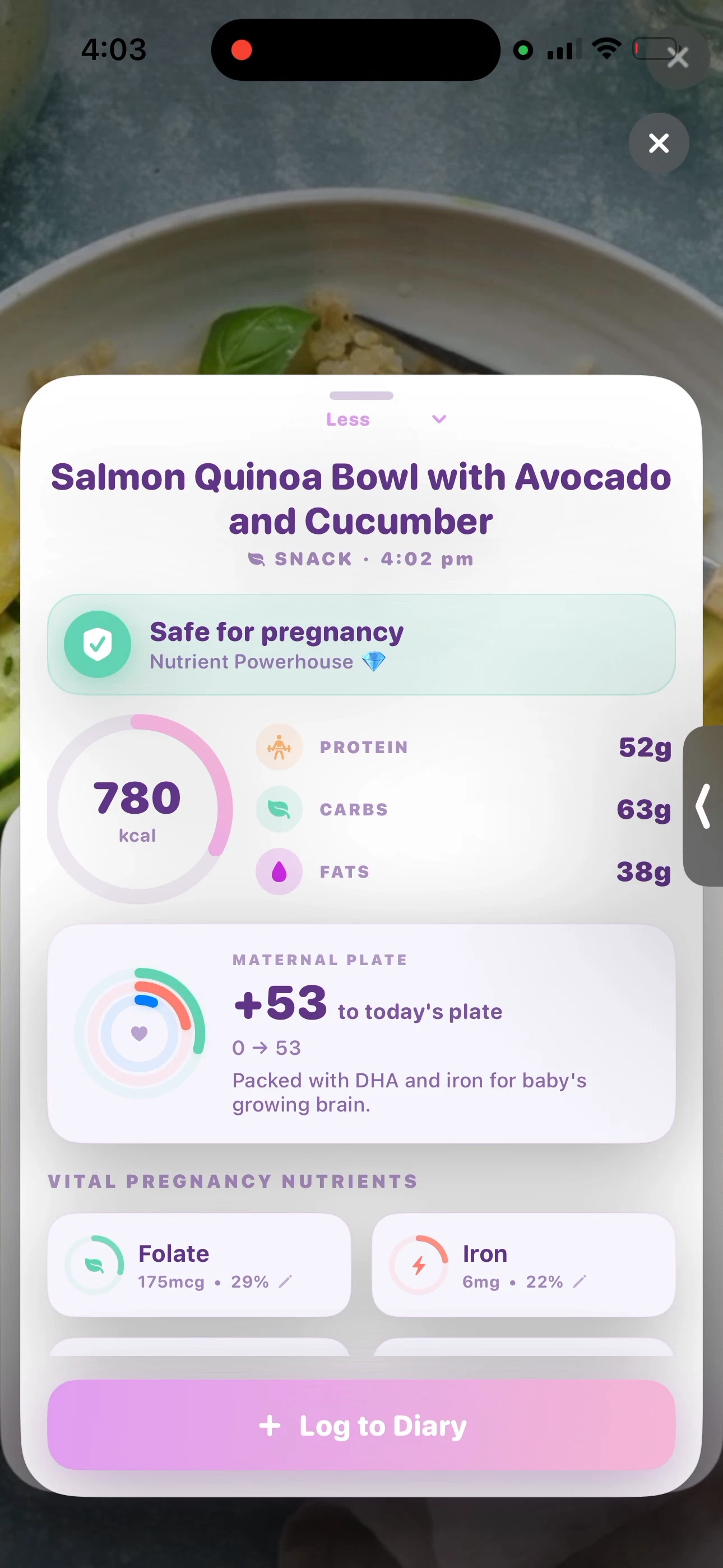
Unsure about a food? Scan it in PregnancyPlateYour next meal, a little less guesswork.
Scan your plate for pregnancy food-safety guidance and a nutrition breakdown. Keep your meals and nutrient progress in one place.
 Scan with your iPhone
to get the app
Every pregnant woman gets handed a list. Some of it comes from a doctor, some from a group chat, and a surprising amount from a relative who was pregnant in 1987. The trouble is that the list mixes real rules with old wives' tales, and it's hard to tell which is which when you're tired and just want to know whether you can have the pineapple.
So I went through the twelve food warnings we hear about most and checked each one against current guidance from ACOG, the FDA, the CDC and the American Academy of Pediatrics. Some are true, some are half true, and a few are simply wrong.
Myth 1: "You're eating for two now"
Mostly false. You're feeding two, but not doubling up. ACOG says that in the first trimester you usually need no extra calories at all. In the second trimester you need about 340 extra calories a day, and in the third trimester about 450. That's roughly a sandwich, or a yogurt and a handful of nuts, not a second dinner.
What does go up a lot is your need for certain nutrients, like iron, folate and protein. So it's less "eat twice as much" and more "make what you eat count." Our calorie guide by trimester goes into the numbers.
Myth 2: "You have to give up coffee completely"
False. ACOG says moderate caffeine, meaning less than 200 mg a day, doesn't cause miscarriage or preterm birth. That's about one 12-ounce cup of coffee. The catch is that caffeine hides in tea, soda, chocolate and coffee shop drinks, so it's easy to go over without noticing. Our caffeine guide shows how to add it up.
Myth 3: "Fish is off the menu"
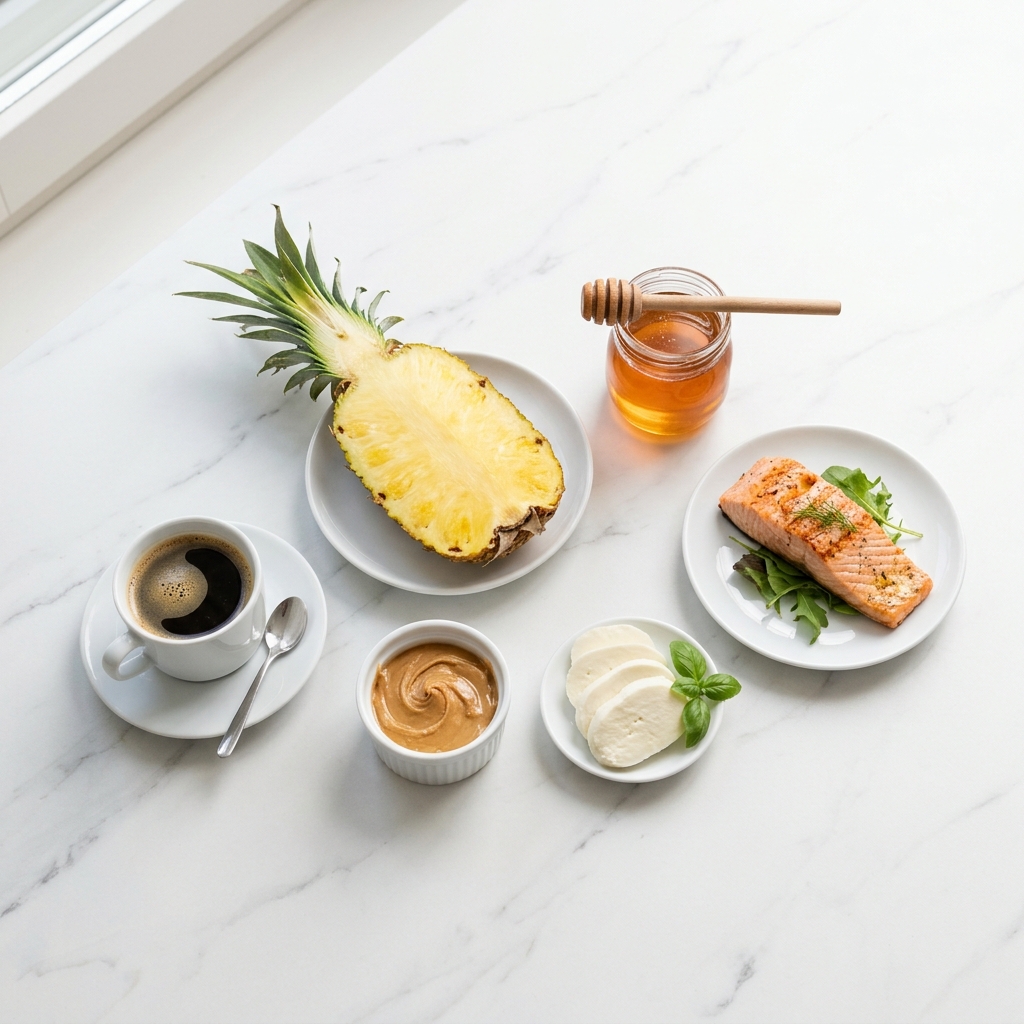
False, and this one matters. The FDA and EPA actually encourage pregnant women to eat 8 to 12 ounces a week of low-mercury fish, like salmon, shrimp, cod, tilapia and canned light tuna, because fish provides nutrients that support your baby's brain development. The fish to avoid are the high-mercury ones (king mackerel, marlin, orange roughy, shark, swordfish, tilefish from the Gulf of Mexico and bigeye tuna) and anything raw or undercooked. Our tuna guide covers the mercury details.
Myth 4: "All soft cheese is banned"
Half true. The real issue is pasteurization, not softness. The CDC lists cottage cheese, cream cheese, string cheese, feta and mozzarella made with pasteurized milk among the safer choices. The exceptions are queso fresco and similar fresh cheeses, which the FDA says to avoid unless they're heated to 165°F even when pasteurized, and soft mold-ripened and blue cheeses like brie and Gorgonzola, which we suggest eating only when baked until bubbling hot. Our pregnancy cheese guide sorts dozens of cheeses.
Myth 5: "Cut the rind off brie and it's fine"
False. This one sounds sensible, which is why it spreads. But the concern with brie isn't the rind, it's the soft, moist inside, which is where Listeria can grow. Removing the rind doesn't change that. Baking the whole brie until it's bubbling hot does. Our brie guide explains why.
Myth 6: "Pineapple can cause a miscarriage"
False. This myth is everywhere, and it's based on bromelain, an enzyme in pineapple. There's no evidence that eating pineapple in normal food amounts causes miscarriage or brings on labor. Enjoy it. If it gives you heartburn, that's the more likely downside. Our pineapple guide walks through where the myth came from.
Myth 7: "Spicy food will hurt the baby, or start labor"
False on both counts. Spicy food is safe for your baby. The real effect is on you: spicy meals are a common trigger for heartburn and indigestion, especially later in pregnancy. And despite the popular late-pregnancy curry, there's no good evidence that spicy food brings on labor. Our spicy food guide has more.
Myth 8: "Honey is dangerous in pregnancy"
False. The honey warning is real, but it's for babies under one year old, whose gut can't yet handle the bacteria that cause infant botulism. Your adult digestive system handles those bacteria fine, so honey doesn't put you or your baby at risk. Honey in your tea or on your yogurt is safe. Our honey guide explains the difference.
Myth 9: "Avoid peanuts so your baby doesn't develop an allergy"
False. This was common advice decades ago, but it hasn't held up. A 2019 clinical report from the American Academy of Pediatrics found that avoiding peanuts and other allergens during pregnancy doesn't protect babies from developing allergies, and a 2024 review notes that international guidelines now discourage avoidance diets. Unless you're allergic yourself, peanut butter is a useful source of protein in pregnancy.
Myth 10: "Deli meat is banned for nine months"
Half true. Cold deli meat is a genuine Listeria risk, and the CDC advises pregnant women not to eat it straight from the fridge. But the same guidance says deli meat, cold cuts and hot dogs are fine when heated to 165°F or until steaming hot. A toasted sub or a hot turkey melt is fine. Our deli meat guide and Subway guide show how that works in practice.
Myth 11: "Sushi is completely off limits"
Half true. The FDA advises pregnant women to avoid raw or undercooked fish, so sashimi and raw-fish rolls are out. But plenty of sushi doesn't contain raw fish at all: California rolls, cooked shrimp, eel, tempura rolls and vegetable rolls are all fine. The honest rule is "no raw fish," not "no sushi." Our sushi guide lists what to order.
Myth 12: "Herbal tea is safe because it's natural"
False, in the other direction. This is the one myth that makes people less careful rather than more. Most everyday herbal teas, like peppermint, ginger and rooibos, are fine. But "natural" doesn't mean safe. The NIH says large amounts of licorice root during pregnancy are unsafe, and some herbs in specialty blends are traditionally used to bring on periods or labor. Our safe teas for pregnancy guide sorts them into drink, limit and avoid.
The Rules That Actually Matter
Strip away the myths, and the real pregnancy food rules are shorter than most people think:
- Choose pasteurized milk, cheese and juice.
- Cook meat, poultry, eggs and fish properly, and heat cold cuts until steaming.
- Skip raw fish and shellfish, and the handful of high-mercury fish.
- Keep caffeine under 200 mg a day, and skip alcohol entirely.
- Don't leave perishable food out for more than 2 hours.
Everything else is mostly about eating a varied diet you can actually face. If you're ever unsure about a specific food, our eating out guide has four questions that work on any menu.
| Myth | Verdict |
|---|---|
| Eating for two | Mostly false: +340 to 450 calories later on |
| No coffee at all | False: under 200 mg a day |
| No fish | False: 8 to 12 oz of low-mercury fish a week |
| No soft cheese | Half true: pasteurized is mostly fine |
| Cutting brie rind makes it safe | False: bake it instead |
| Pineapple causes miscarriage | False |
| Spicy food harms baby or starts labor | False |
| Honey is dangerous | False: the warning is for babies |
| Avoid peanuts to prevent allergies | False |
| No deli meat | Half true: fine heated until steaming |
| No sushi | Half true: no raw fish |
| Herbal tea is always safe | False: some herbs to avoid |
Clinical Sources & Research
- ACOG: How Much Weight Should I Gain During Pregnancy?.
- ACOG: How Much Coffee Can I Drink While I'm Pregnant?.
- FDA and EPA: Advice About Eating Fish.
- CDC: Preventing Listeria Infection.
- FDA: Queso Fresco-type Cheeses Consumer Guidance.
- FDA: Meat, Poultry and Seafood (Food Safety for Moms-to-Be).
- American Academy of Pediatrics: The Effects of Early Nutritional Interventions on the Development of Atopic Disease (2019).
- Food Allergy Risk: A Comprehensive Review of Maternal Interventions for Food Allergy Prevention (2024).
- NIH National Center for Complementary and Integrative Health: Licorice Root.
We fact-check every claim against official guidance, but this article is general information, not personal medical advice. Your doctor or midwife knows your history, so check with them about anything specific to you.
Meet the Editorial Team
The researchers and experts behind PregnancyPlate.

Fiza Izra
Founder & Tech Researcher
A UK-based mother of 3 with a background in tech and data synthesis, Fiza brings real-world experience navigating hyperemesis gravidarum and postnatal depression. She engineers complex clinical guidelines (NHS, ACOG) into accessible tools, ensuring rigorous fact-checking with deep empathy.

Emma Davies
Senior Nutrition Editor
A mum and writer, Emma runs our food safety desk. She is the one who rings the restaurant to ask how long the lettuce sits out, checks every claim against CDC, FDA and NHS guidance, and rewrites the answer until it is usable at 9pm in a drive-thru queue.
Make sense of every plate.
Scan your plate for pregnancy food-safety guidance and a nutrition breakdown. Keep your meals and nutrient progress in one place.
Scan with your iPhoneto get the app