Is Texas Roadhouse Safe During Pregnancy? Steak Doneness, Prime Rib and What to Order
One word settles it: medium-well. Why rare steak is out, why prime rib is the awkward one, and why a steakhouse is one of the best iron meals available.
In this article
Editorial note: This article is researched from official public health and pregnancy food safety guidance, then edited by the PregnancyPlate team for clarity. It is not medical advice. If you are worried about symptoms or a specific exposure, contact your midwife, GP or healthcare provider.
The Fast Answer: Texas Roadhouse works well in pregnancy, and the whole thing turns on one word you say to the server. Order your steak medium-well or well done. Rare and medium-rare leave the centre below the temperature that makes meat safe in pregnancy, and prime rib is usually cooked rare to medium-rare by design. Ribs, grilled chicken, the rolls and the sides are all fine, and steak is one of the best iron sources you can order.
Track your iron and protein in the PregnancyPlate AppSafety is step one. Nutrition helps your baby thrive.
Knowing a meal is safe does not tell you whether you are getting enough iron, folate, calcium and choline. PregnancyPlate tracks all of it from a photo of your plate.
- See nutrient progress
- Scan meals instantly
- Nourish with confidence
 Scan to download
Open with iPhone camera
Scan to download
Open with iPhone camera
A steakhouse is one of the few restaurants where the pregnancy question is genuinely about the main event rather than a sauce or a garnish. How you order your steak is the whole decision.
It's also one of the better meals you can eat while pregnant, once that decision is made, because red meat carries the form of iron your body absorbs best.
How to Order Your Steak
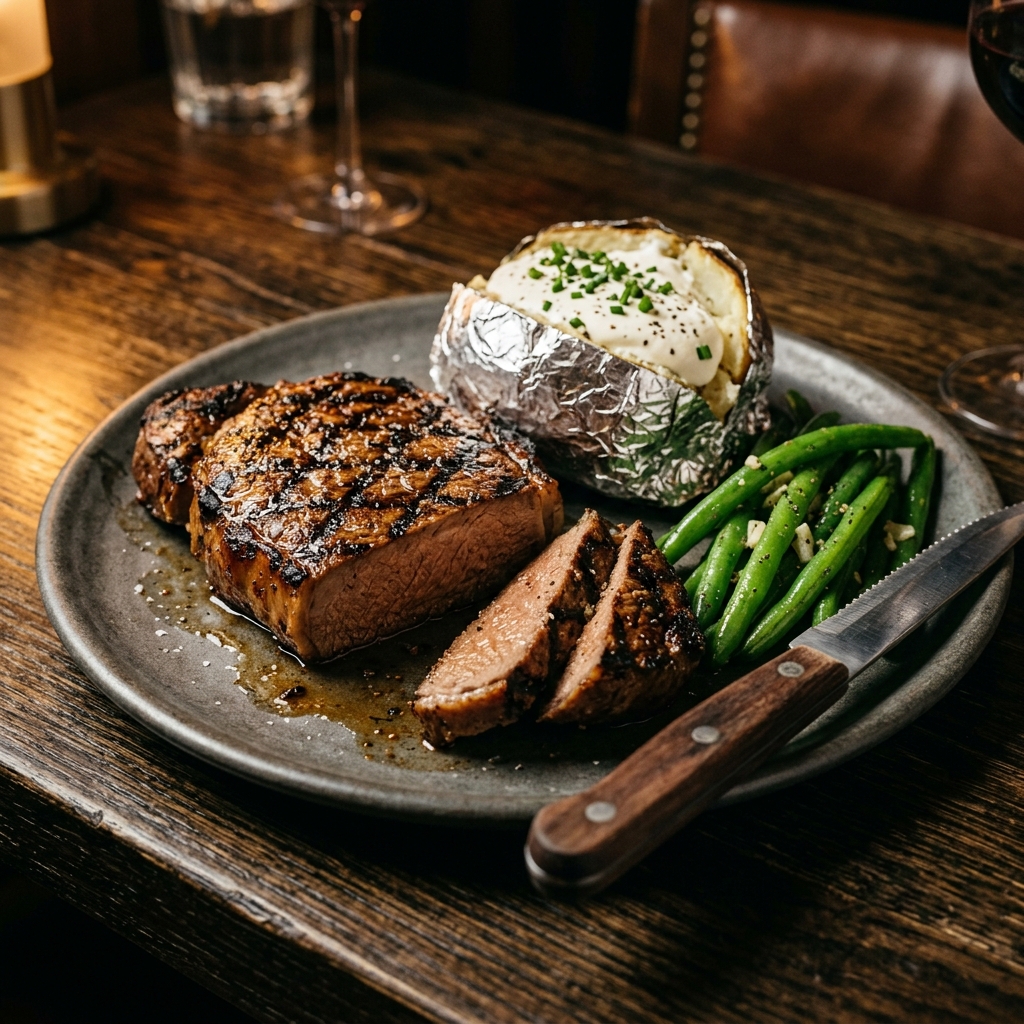
Steak doneness is measured by the temperature at the centre, and the safety line sits higher than most people order.
| Doneness | Centre temperature | In pregnancy |
|---|---|---|
| Rare | around 52°C (125°F) | No |
| Medium rare | around 57°C (135°F) | No |
| Medium | around 63°C (145°F) | The US safety minimum for whole cuts, with a rest |
| Medium well | around 68°C (155°F) | A comfortable choice |
| Well done | 71°C (160°F) and above | Safest, and what UK advice points to |
US guidance puts the safe minimum for whole cuts of beef at 63°C (145°F) followed by a three minute rest, which is roughly a true medium. UK advice in pregnancy is stricter and simply says meat should be cooked through with no pink, which lands at medium-well or beyond.
Given that restaurant doneness varies by a few degrees either way depending on how busy the grill is, medium-well is the sensible order. It keeps you clear of the line without drying the steak out the way well done can.
If it arrives redder than you asked for, send it back. Steakhouses deal with this constantly and it takes a few minutes on the grill.
Why Steak Is Different From a Burger
Worth understanding, because it explains why the rules are not the same for every piece of beef.
On a whole cut of steak, bacteria sit on the outside surface. Searing the outside kills them, which is why a rare steak is a lower risk proposition than a rare burger for the general population.
Mince is different. Grinding mixes the surface all the way through the meat, so a burger has to be cooked right through every time. That applies to any burger on the menu here, and to the country fried steak only in the sense that it's cooked through anyway.
Pregnancy adds a second reason on top of bacteria: toxoplasmosis, a parasite that can be present within the muscle of the meat rather than only on its surface. Thorough cooking deals with it, and this is the main reason pregnancy guidance is stricter about pink meat than general food safety advice is.
What to Say, Word for Word
People skip the request because it feels fussy. It takes four seconds and servers hear it constantly.
"Medium well, please, I'm pregnant" is all it needs. If you'd rather not explain, "medium well, no pink" does the same job. For prime rib, the useful question is "is there any way to get that cooked through, or would you suggest something off the grill instead?", which gives the server an easy answer either way.
When it arrives, cut into the thickest part before you start. You're looking for the centre to be brown or faintly pink rather than red, and for the juices to run clear rather than bloody. If it isn't right, saying so immediately is far easier than eating around it.
Worth knowing: asking for a steak well done at a steakhouse occasionally gets a raised eyebrow from other diners, never from the kitchen. Pregnancy is one of the most common reasons people order it that way.
Prime Rib and the Cuts to Think About
A few items need more than a doneness request.
Prime rib is slow roasted as a whole joint, usually to rare or medium-rare, then sliced and held. You can't simply order it medium-well without the kitchen searing a slice to order, and a slice cooked further at the last minute is not the same as a joint cooked through. Ask what they can do, and if the answer is vague, choose a cut from the grill instead.
T-bone and porterhouse are large cuts with bone running through them, and the meat closest to the bone cooks more slowly. Order those medium-well rather than medium so the area by the bone isn't left pink.
Filet is thick and is often served rarer by default than other cuts. Be specific rather than assuming.
Ribeye and sirloin are the easiest to get right, since they cook evenly and stay juicy at medium-well.
Ribs, grilled chicken, pulled pork and country fried steak are all cooked through as standard, so they need no special request.
Texas Roadhouse in One Box
- Say medium-well when you order. That single word covers it.
- Prime rib is the awkward one, because it's roasted rare by design.
- Burgers always cooked through, since mince is different from steak.
- Ask about blue cheese on salads and dressings.
- Steak is excellent iron, which is the reason to be here.
The Salad, the Dressing and the Blue Cheese
The one item that isn't about temperature.
Blue cheese is a mould-ripened cheese, and UK guidance advises avoiding soft mould-ripened and blue cheeses in pregnancy unless they're cooked until steaming, even when pasteurised. US advice is more relaxed and treats blue cheese made from pasteurised milk as acceptable.
In practice, crumbled blue cheese on a salad and blue cheese dressing are both easy to swap. Ranch, honey mustard, Italian and vinaigrettes are all straightforward. If you want to keep the blue cheese, ask whether it's made with pasteurised milk, which in the US it almost always is. Our pregnancy cheese guide sets out both positions, and if you've already eaten some and are worrying, our guide to accidentally eating unpasteurised cheese is the calm version.
The rest of the salad is raw leaves, so the usual applies: fine fresh, not if it's been sitting. Our restaurant lettuce guide covers that side.
Rolls, Sides and the Rest of the Table
Straightforward, and mostly a question of how you'll feel later.
The rolls and cinnamon butter are fine. They're also unlimited, arrive before the food, and are very easy to fill up on while you're hungry. Having a couple with the meal rather than four before it is the difference between enjoying the steak and feeling uncomfortable all evening.
Baked potato, mashed potato, green beans, corn and fries are all fine. Green beans are usually cooked with bacon, which is cooked through.
Peanuts, where a location still puts them on the table, are safe in pregnancy. The old advice about avoiding peanuts to prevent allergies in the baby was withdrawn years ago. Unless you have a peanut allergy yourself, they're not a problem.
Margaritas and beer are the obvious no. Most locations do a decent lemonade or a soda, and asking for a mocktail without alcohol is a normal request.
Sodium, Heartburn and the Evening After
Safety is settled by the doneness question. Comfort is where the rest of the choices are.
Sodium. Seasoned steak, salted butter, fries and a starter can add up to a very large amount of salt in one sitting. In the second half of pregnancy that often shows up the same night as swollen feet and fingers. Our swelling guide covers what helps, and water with the meal genuinely does.
Heartburn. A large, fatty, late meal is close to the worst combination once the baby is taking up room. Eating earlier, choosing a smaller cut, and staying upright for an hour afterwards all help more than avoiding any single food. Our heartburn guide ranks the triggers.
Portion size. The smaller sirloin with two sides is usually a better pregnancy meal than a large cut you can't finish, particularly in the third trimester when there's less room. Boxing half at the start rather than the end works well.
Why This Is Actually a Good Pregnancy Meal
Once the steak is cooked through, this menu does more nutritional work than most restaurant food.
Iron. Beef contains heme iron, the form your body absorbs several times more efficiently than iron from plants. Pregnancy roughly doubles your iron requirement to around 27mg a day, and low iron is the most common deficiency in pregnancy. Our iron guide explains the difference.
Protein and zinc. A modest steak covers a large share of a day's protein, and zinc supports tissue growth.
Vitamin C alongside it. A side salad or anything tomato-based helps you absorb iron from the rest of the plate, and costs nothing to add.
If you've been told your ferritin is low, a properly cooked steak is one of the more effective things you can eat, and it's worth knowing that while you're reading the menu.
Leftovers and Taking Half Home
Steakhouse portions mean leftovers, and cooked beef keeps well if it's handled quickly.
Get it into the fridge within two hours, eat it within two days, and reheat once until steaming hot rather than just warm. Cold cooked steak from the fridge is fine if it was chilled promptly, the same as any cooked meat.
The one thing not to do is leave the box in a warm car while you go on somewhere else. Our leftovers guide has the timings, and if you're worried you've eaten something undercooked, our food poisoning in pregnancy guide covers the symptoms worth acting on.
The summary is short. Say medium-well, skip the prime rib unless they can cook it through, be casual about the blue cheese, and enjoy what is genuinely one of the better iron meals available to you.
Clinical Sources & Research
This article is general information and does not replace advice from your midwife, GP or obstetrician. Menus and preparation vary by location. If you develop a fever or flu-like symptoms after eating undercooked meat, contact your maternity team.
Meet the Editorial Team
The researchers and experts behind PregnancyPlate.

Fiza Izra
Founder & Tech Researcher
A UK-based mother of 3 with a background in tech and data synthesis, Fiza brings real-world experience navigating hyperemesis gravidarum and postnatal depression. She engineers complex clinical guidelines (NHS, ACOG) into accessible tools, ensuring rigorous fact-checking with deep empathy.

Emma Davies
Senior Nutrition Editor
A mum and writer, Emma runs our food safety desk. She is the one who rings the restaurant to ask how long the lettuce sits out, checks every claim against CDC, FDA and NHS guidance, and rewrites the answer until it is usable at 9pm in a drive-thru queue.