Pregnancy Fakeaway: 10 Takeaway Favourites Made Safe at Home
Raw egg sauces, undercooked meat and food sitting in a delivery bag all vanish when you cook it yourself. Ten fakeaway dinners, most faster than a driver.
In this article
Editorial note: This article is researched from official public health and pregnancy food safety guidance, then edited by the PregnancyPlate team for clarity. It is not medical advice. If you are worried about symptoms or a specific exposure, contact your midwife, GP or healthcare provider.
The Fast Answer: The things that make takeaway risky in pregnancy are mostly fixable at home: food sitting in a delivery bag, raw egg sauces, undercooked meat and raw garnishes. Cook the same food yourself and every one of those disappears, along with most of the salt. Ten fakeaway versions below, all pregnancy-safe by design, most of them faster than waiting for a driver.
Track your nutrition in seconds in the PregnancyPlate AppSafety is step one. Nutrition helps your baby thrive.
Knowing a meal is safe does not tell you whether you are getting enough iron, folate, calcium and choline. PregnancyPlate tracks all of it from a photo of your plate.
- See nutrient progress
- Scan meals instantly
- Nourish with confidence
 Scan to download
Open with iPhone camera
Scan to download
Open with iPhone camera
There's a particular Friday feeling in pregnancy where you want a takeaway and then spend ten minutes reading a menu wondering which half of it you're allowed.
Ordering in is fine, and our takeaway safety guide goes through how to do it. This is the other answer: cook the same thing at home, where the safety questions simply don't come up.
What Actually Goes Wrong With Takeaway
Worth naming, because it tells you what to fix.
Time and temperature. Food is cooked, boxed, and then sits. It waits for a driver, rides across town, and arrives warm rather than hot. Warm is the temperature bacteria like. Nothing at home spends forty minutes in a padded bag.
Raw egg sauces. Garlic mayo, aioli, some Caesar dressings and some chilli mayos can be made with raw egg. At home you control the jar.
Undercooked meat. Burgers cooked pink, chicken rushed on a busy grill, rare steak in a stir fry. At home you can check.
Raw garnishes. Shredded salad, raw bean sprouts, coriander added by hand at the end. Raw sprouts in particular are one to avoid in pregnancy because bacteria can get inside the seed, where washing can't reach.
Salt and sugar. Not a safety issue, but takeaway carries a lot of both, and salt makes third trimester swelling noticeably worse.
Every one of those is solved by the same thing: you cooking it, and eating it straight away.
Ten Fakeaway Dinners
Each of these replaces a takeaway order and removes its specific pregnancy problem.
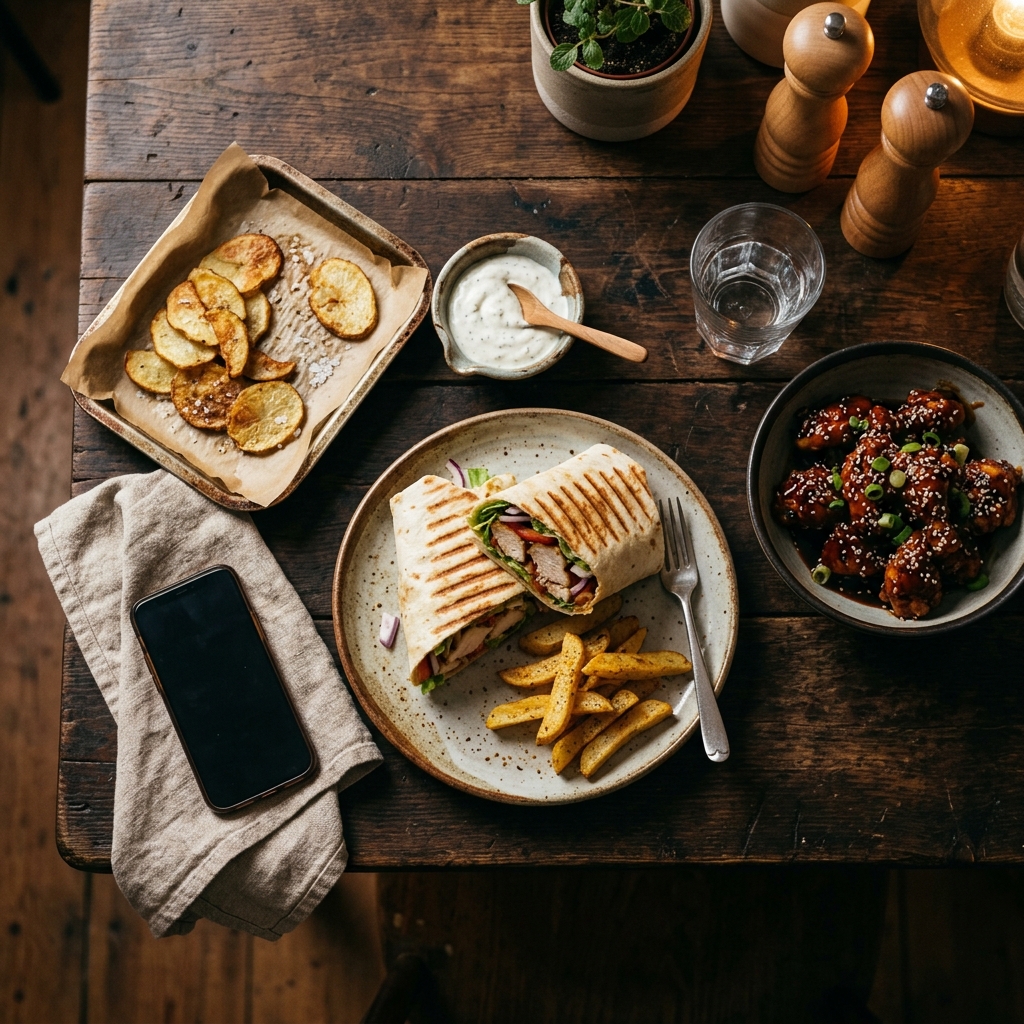
Sticky orange chicken. Chicken thigh pieces tossed in cornflour, air fried or oven baked, then coated in a sauce of orange juice, soy, honey, garlic and ginger. Replaces the Chinese order, and thigh meat brings more iron than breast.
Chicken katsu curry. Breadcrumbed chicken baked until it reaches 75°C (165°F), with a mild sauce of onion, carrot, curry powder and stock. The takeaway version's risk is the frying and holding; baking removes it.
Beef and broccoli stir fry. Thin strips of frying steak cooked right through, with broccoli, garlic and a light soy and oyster sauce. Heme iron plus vitamin C in one pan, which is the best iron combination there is.
Doner-style chicken kebab. Spiced chicken thighs roasted and sliced, in warm flatbread with salad you've washed yourself, and a garlic yoghurt sauce made from plain yoghurt rather than mayonnaise. That single swap removes the raw egg question entirely.
Fish and chips. Cod or haddock fillets, breadcrumbed and oven baked, with oven chips and mushy peas. Cooked white fish is encouraged in pregnancy, and baking keeps the fat down for heartburn.
Homemade pizza. Shop-bought base, passata, mozzarella and whatever else you fancy. Any cheese and cured meat gets cooked in the oven, which makes toppings like pepperoni and prosciutto perfectly fine.
Chicken tikka masala. Yoghurt-marinated chicken, grilled or air fried, in a tomato and cream sauce. The marinade yoghurt is cooked, so there's no issue there.
Pad Thai. Rice noodles, prawns or chicken, tamarind and fish sauce, with the egg scrambled through until fully set and bean sprouts cooked in rather than raw on top. Those two changes make a dish that's otherwise a question mark straightforward.
Burrito bowl. Cooked seasoned chicken or beans, rice, sweetcorn, grated cheese, salsa and guacamole. Guacamole is fine in pregnancy, which our guacamole guide covers, and skipping the sour cream from an open tub in a takeaway is one less thing to think about.
Smash burgers. Beef mince pressed thin and cooked all the way through, which is easy with thin patties, with cheese, pickles and a burger sauce made from mayonnaise from a sealed jar. Minced beef must be cooked through, and thin patties make that almost automatic.
The Four Fakeaway Swaps
- Yoghurt sauce instead of garlic mayo or aioli.
- Thin patties and thigh meat, which cook through reliably.
- Cook the sprouts and the egg, never raw on top.
- Wash your own salad, and add it at the table.
The Sauces Worth Making Once
Most fakeaway flavour lives in the sauce, and three cover almost everything.
Garlic yoghurt. Plain yoghurt, crushed garlic, lemon, salt. Kebabs, wraps, curries, roast vegetables. Keeps three days.
Sticky soy glaze. Soy sauce, honey, rice vinegar, garlic, ginger, a spoon of cornflour. Chicken, beef, tofu, noodles. Use low-salt soy if swelling is bothering you.
Quick curry base. Onion, garlic, ginger, curry powder and tinned tomatoes, blitzed smooth. Freezes in portions and turns anything into a curry.
Make them on a good day and the fakeaway version becomes a fifteen minute job rather than a project, which matters when the whole point is that you're too tired to cook.
The Fakeaway Cupboard
None of this works if the ingredients aren't in. A small standing stock covers every dish above.
Cupboard: soy sauce, honey, rice vinegar, cornflour, curry powder, tinned tomatoes, coconut milk, rice noodles, passata, oven chips.
Fridge: plain yoghurt, garlic, ginger, lemons, mozzarella, mayonnaise from a sealed jar.
Freezer: chicken thighs, beef mince, white fish fillets, raw prawns, pizza bases, flatbreads, peas.
That list is roughly the price of two delivery orders and covers about a month of them.
A Twenty Minute Version
If you want the shortest possible route from tired to fed, this is it.
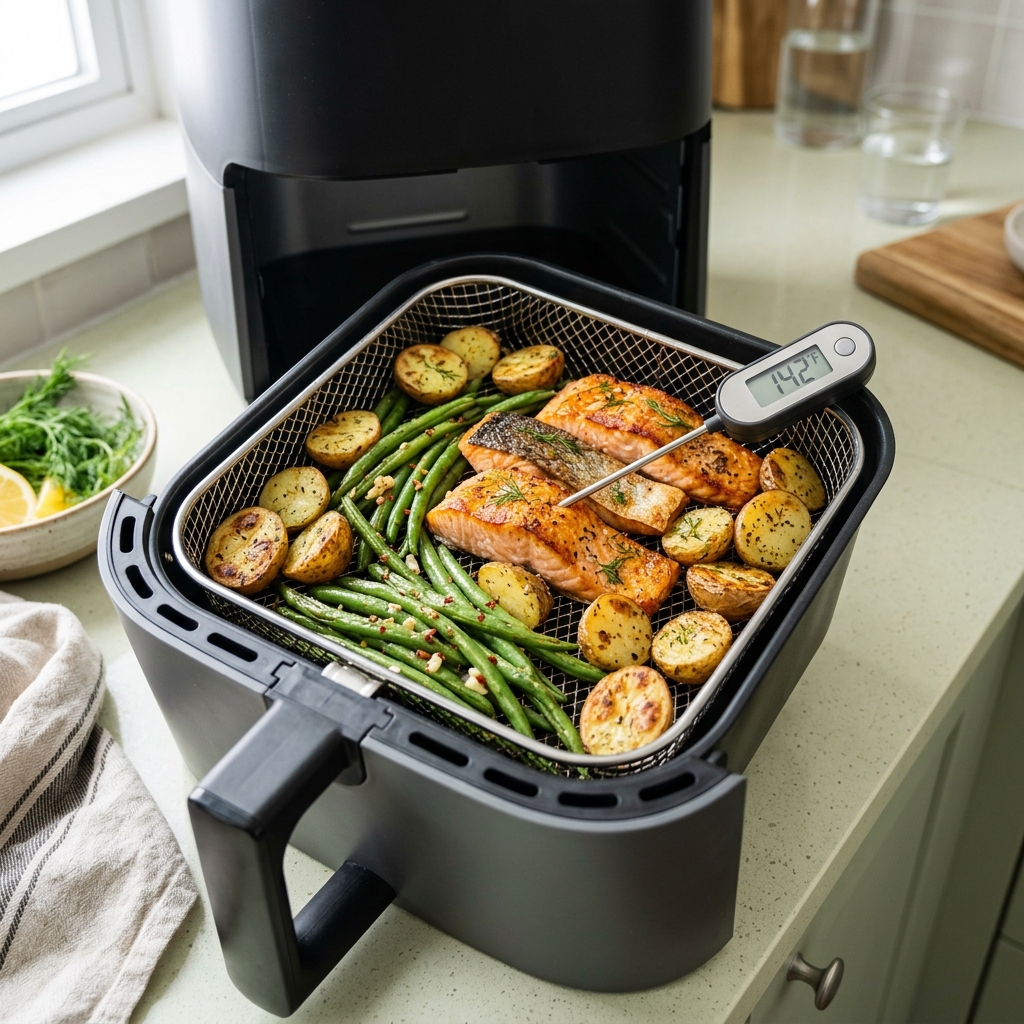
Put breadcrumbed chicken or a fish fillet in the air fryer or oven. While it cooks, warm a flatbread, stir together garlic yoghurt, and open a bag of salad you've washed. Slice the chicken, pile everything into the bread, and eat it standing up if that's what tonight is.
It takes about as long as the delivery app takes to confirm the order, and it costs a fraction of one. That's the whole argument for fakeaway in pregnancy, beyond the safety part.
Going through the takeaway menus people ask us about most, the pattern was consistent: the dish was almost never the problem. It was the sauce on top, the salad added at the end, or how long the box had been closed. All three vanish the moment you make it yourself.
The Bits That Still Need Care at Home
Cooking it yourself removes most risks, not all of them.
Cook minced meat and chicken right through. No pink, juices clear, and ideally 75°C (165°F) at the thickest point. A cheap probe thermometer ends the guessing.
Rice needs cooling fast. If you're making fried rice from yesterday's rice, it should have been cooled quickly and kept in the fridge no more than a day, then reheated once until piping hot.
Prawns should be pink and opaque all the way through, with no grey translucent centre.
Wash salad and herbs you're adding raw, and skip raw sprouts altogether.
Check cheese labels once. Most soft cheese in the supermarket is pasteurised, and anything going into a hot oven is fine regardless. Our cheese guide has the full list.
Fakeaway When You Feel Awful
Most fakeaway advice assumes you want to cook. Pregnancy often means you don't, and the reason matters.
If it's nausea, the barrier is usually smell rather than effort. Oven and air fryer versions produce far less lingering cooking smell than frying, and getting someone else to cook while you leave the room is a completely legitimate strategy. Milder options like katsu, fish and chips or a plain burrito bowl tend to go down better than anything heavily spiced.
If it's exhaustion, cut the job in half rather than abandoning it. Shop-bought pizza base, a jar of curry sauce, pre-cooked rice pouches and frozen breaded fish are all fine. A fakeaway made with shortcuts is still hotter, fresher and less salty than the delivered version.
If it's heartburn, the home version is already the better option, because you can bake instead of deep fry and keep portions smaller. Eating two to three hours before bed does more than any ingredient swap.
Why This Is Worth the Effort
Beyond the safety side, fakeaway solves two pregnancy problems at once.
Salt. Restaurant and delivery food is seasoned to be eaten immediately and to taste good cold, which means a lot of salt. Cooking at home typically cuts it dramatically, and by the third trimester that shows up in how your feet and hands feel at the end of the day. Our swelling guide explains the link.
Iron and protein. The fakeaway versions above are built around chicken thigh, beef, prawns, beans and lentils, so they quietly do more nutritional work than the versions they replace.
And there's the ordinary point that you can eat it hot, at the table, the moment it's ready, rather than watching a map for twenty minutes.
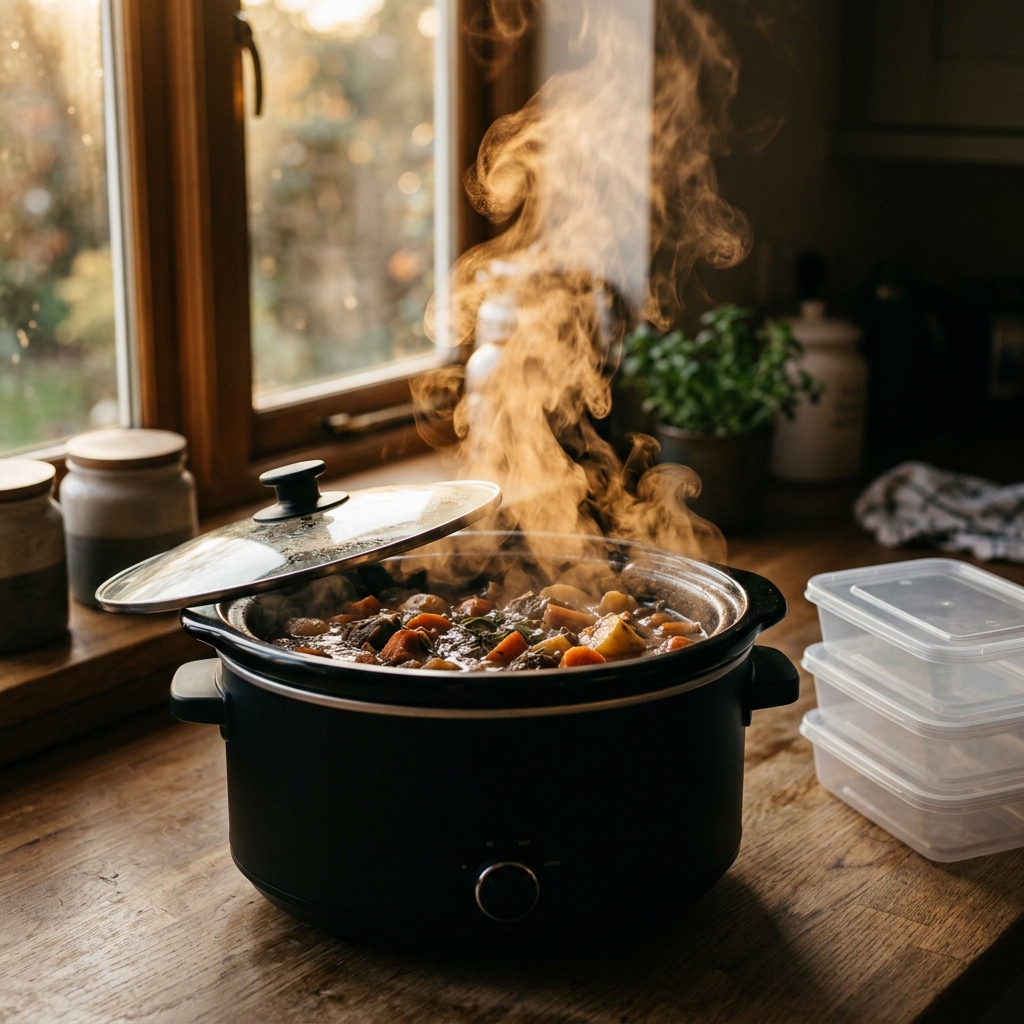
If tonight isn't a cooking night at all, that's completely fine. Our quick pregnancy dinners are faster again, the air fryer guide covers the fifteen minute versions, and a slow cooker batch from the weekend beats both.
Clinical Sources & Research
This article is general information and does not replace advice from your midwife, GP or dietitian.
Meet the Editorial Team
The researchers and experts behind PregnancyPlate.

Fiza Izra
Founder & Tech Researcher
A UK-based mother of 3 with a background in tech and data synthesis, Fiza brings real-world experience navigating hyperemesis gravidarum and postnatal depression. She engineers complex clinical guidelines (NHS, ACOG) into accessible tools, ensuring rigorous fact-checking with deep empathy.

Emma Davies
Senior Nutrition Editor
A mum and writer, Emma runs our food safety desk. She is the one who rings the restaurant to ask how long the lettuce sits out, checks every claim against CDC, FDA and NHS guidance, and rewrites the answer until it is usable at 9pm in a drive-thru queue.