Lazy Pregnancy Meals: What to Eat When You're Too Tired to Cook
Low-effort pregnancy meals sorted by how much energy you have left, from no-cook plates to 5-minute microwave bowls and one-pan dinners, plus the pantry and freezer stash that makes them possible.
In this article
Editorial note: This article is researched from official public health and pregnancy food safety guidance, then edited by the PregnancyPlate team for clarity. It is not medical advice. If you are worried about symptoms or a specific exposure, contact your midwife, GP or healthcare provider.
The Lazy Rule: A meal doesn't have to be cooked to count. If the plate has a protein, a fiber-rich carb and one fruit or vegetable, it's a proper pregnancy meal, even if it took two minutes and came out of a can, a pouch or the freezer. Below, the ideas are sorted by how much energy you have left tonight.
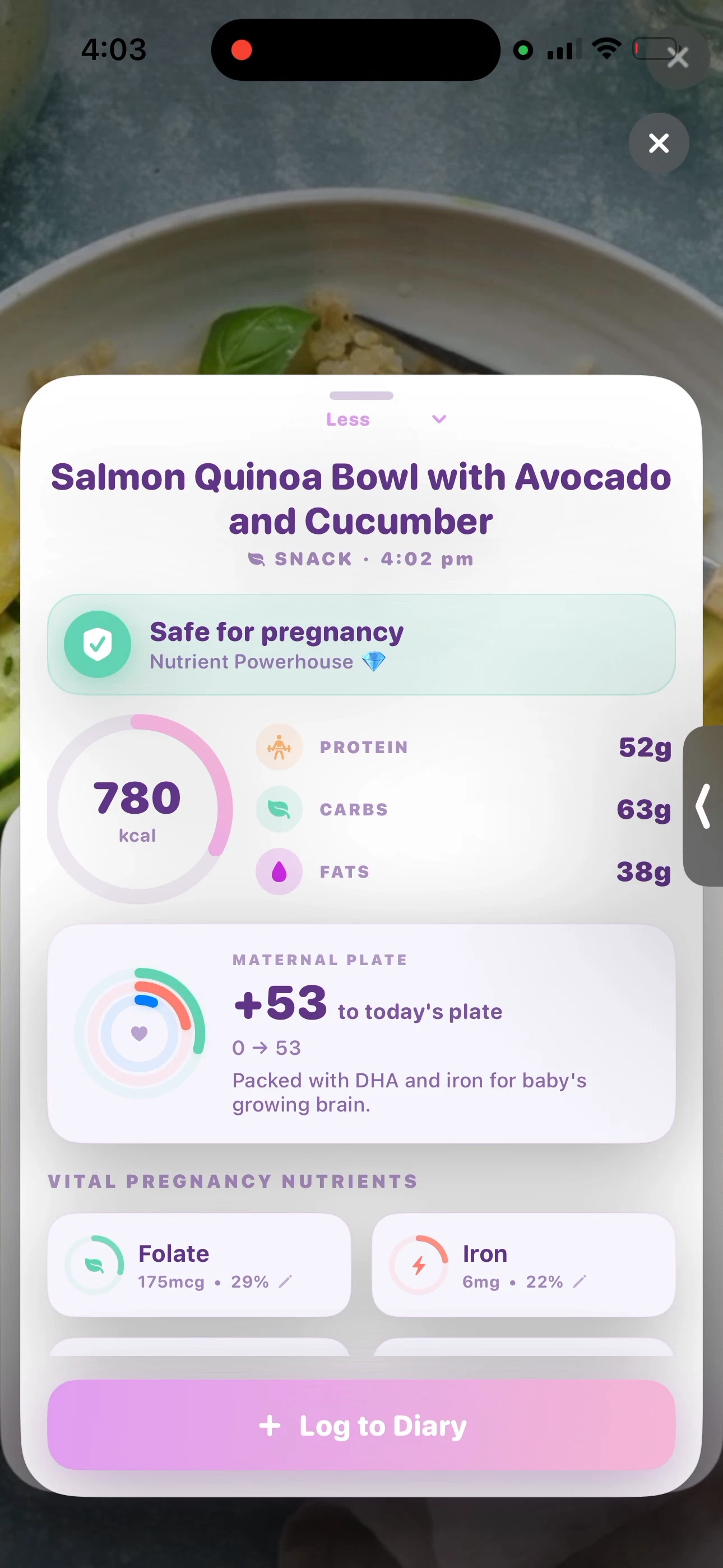
Log your low-effort meals in PregnancyPlateYour next meal, a little less guesswork.
Scan your plate for pregnancy food-safety guidance and a nutrition breakdown. Keep your meals and nutrient progress in one place.
 Scan with your iPhone
to get the app
Some evenings in pregnancy, even boiling water feels like too much to ask. In the first trimester the tiredness can be bone-deep, and by the third your back, your feet and your stomach all vote against standing at the stove. On those nights a "lazy" dinner isn't a failure. It's a sensible plan.
The trick is knowing which shortcuts still add up to a real meal, and which few pregnancy food rules still apply when nothing is getting cooked. So pick the level that matches how you feel right now, and choose a meal from it.
What Turns a Shortcut Into a Meal
Crackers on their own are a snack. Crackers with cheese, a handful of cherry tomatoes and an apple are lunch. The difference is three building blocks:
- A protein: eggs, Greek yogurt, cottage cheese, hard cheese, canned fish, canned beans, lentils, hummus, peanut butter or a hot rotisserie chicken.
- A carb with some fiber: whole-grain bread, tortillas, crackers, oats, microwave rice, potatoes or pasta.
- Something colorful: any fruit, baby carrots, cherry tomatoes, a bagged salad or frozen vegetables.
Protein is the one that tends to go missing on tired days, and it's the one that keeps you full longest. Most pregnant women need around 71 grams a day, which our guide to protein in pregnancy breaks down by food.
Level 1: You Can't Face the Stove
No heat, no pans, nothing to wash except a plate. These are assembly jobs.
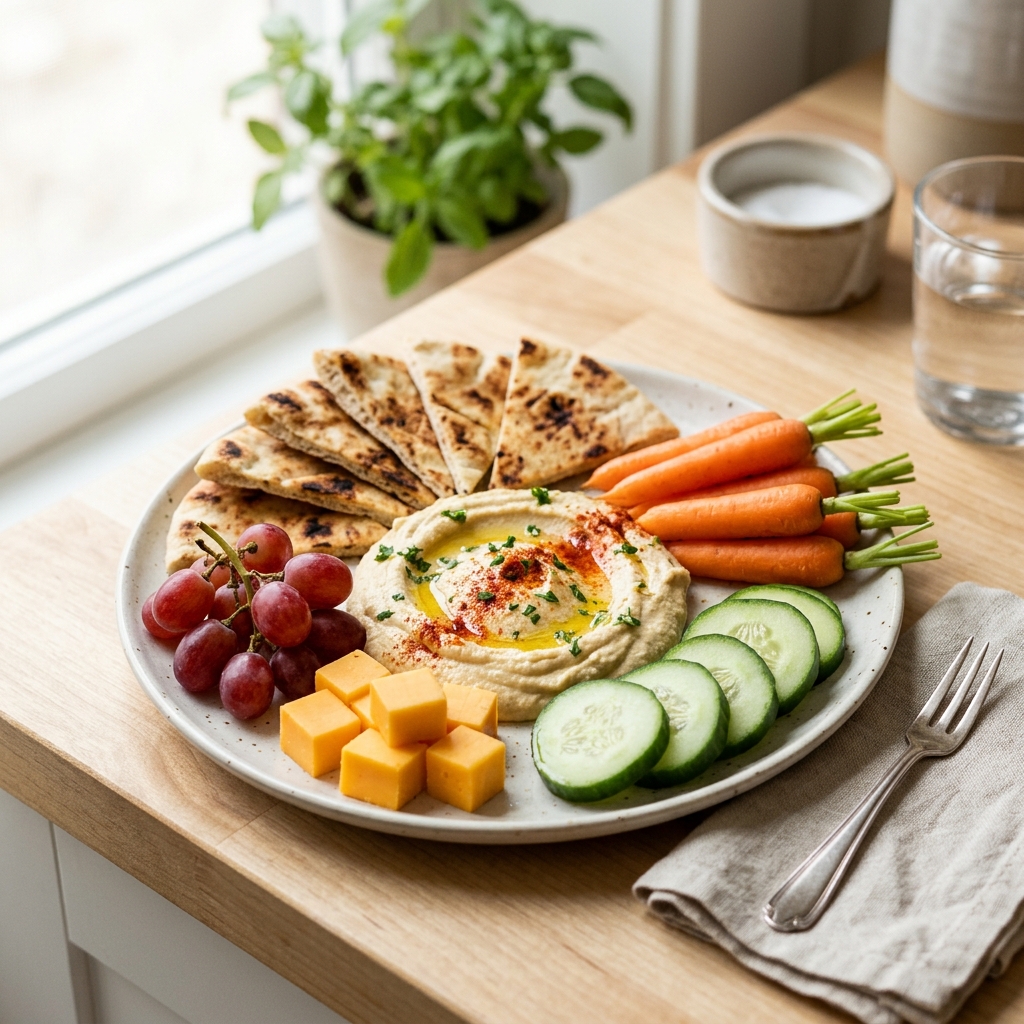
- The snack-plate dinner. Hummus, whole-grain pita or crackers, baby carrots, cucumber slices, cubes of cheddar and a handful of grapes. It sounds like a kid's lunchbox. It's also a balanced meal.
- The yogurt bowl. Plain Greek yogurt, berries, a spoon of peanut butter and some granola. A single-serve cup of plain Greek yogurt has roughly 15 grams of protein before you add anything.
- The canned fish wrap. Mash canned salmon or canned light tuna with mayo and a squeeze of lemon, then roll it in a tortilla with a handful of spinach. The FDA lists both as "Best Choices" for pregnancy, at 2 to 3 servings a week. Albacore is a "Good Choice," so keep that one to once a week.
- The cottage cheese bowl. Cottage cheese with cherry tomatoes, cucumber, black pepper and a pinch of everything bagel seasoning, with crackers on the side. Or go sweet with pineapple and cinnamon.
- The peanut butter roll-up. Spread a tortilla with peanut butter, lay a banana on it and roll it up. Have a glass of milk with it and you've covered all three building blocks.
- The chickpea smash sandwich. Mash a drained can of chickpeas with mayo, mustard, salt and pepper, and pile it onto whole-grain bread. Some chopped celery or pickles add crunch if you can be bothered.
- Last night's overnight oats. Five minutes before bed (oats, milk, chia seeds, fruit, into a jar, into the fridge) buys you a breakfast or lunch with zero effort the next day.
One catch with no-cook food: because nothing gets heated, this is where the pregnancy rules matter most. Cold deli meat, refrigerated smoked salmon, premade deli salads from the store and raw sprouts are the four to leave out of your zero-effort plates. Our deli meat guide explains why the deli counter is the main problem.
Level 2: You Can Press a Microwave Button
About five minutes, one bowl, no real cooking skill needed.
- The loaded potato. Prick a potato, microwave it for 5 to 8 minutes depending on its size, turning it halfway through, then split it and pile on warmed canned black beans, salsa, shredded cheddar and a spoon of plain Greek yogurt.
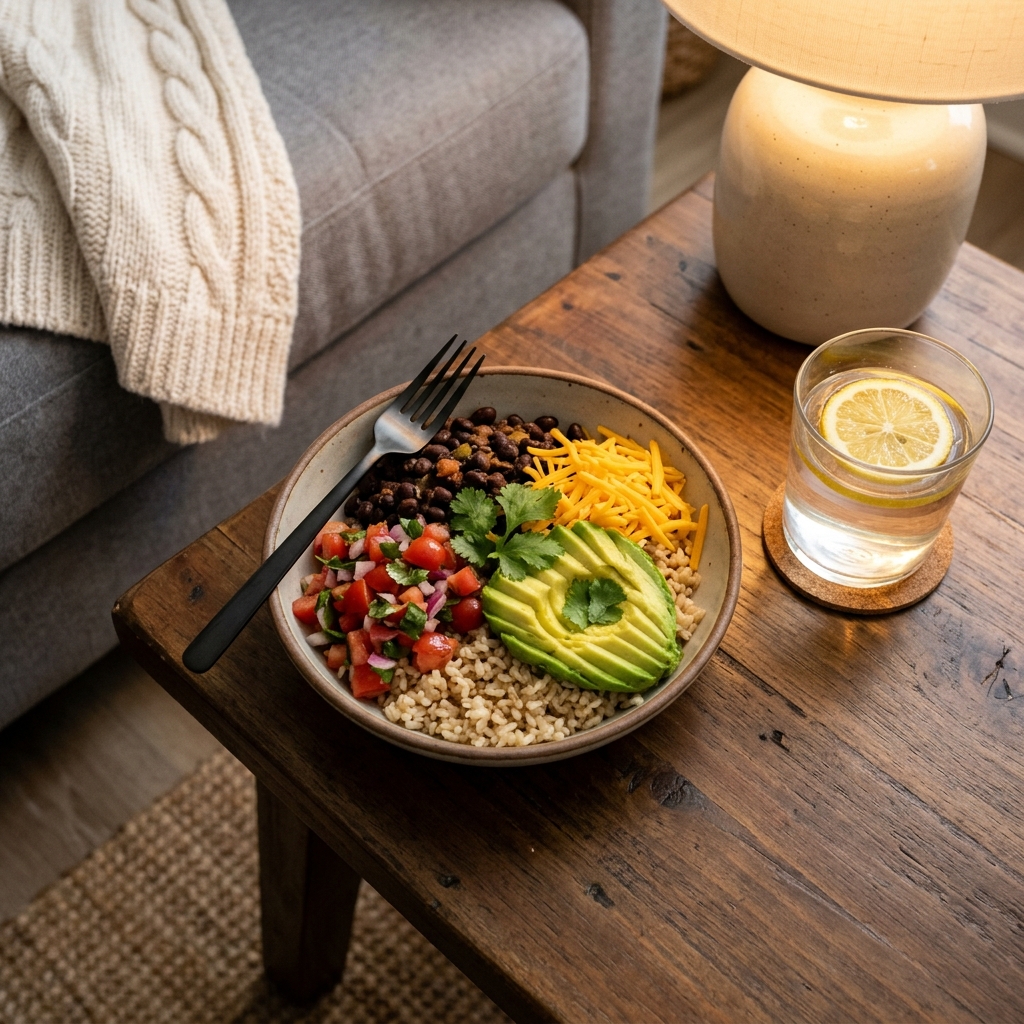
- The pouch burrito bowl. A microwave rice pouch, a can of pinto or black beans, salsa, cheese and sliced avocado if you have one. Heat the rice and beans together and top it cold.
- Mug eggs on toast. Whisk two eggs in a mug with a splash of milk and microwave them in 30-second bursts, stirring in between, until there's nothing wet left. The FDA's advice is that scrambled eggs shouldn't be runny.
- Instant ramen, upgraded. Cook the noodles with a handful of frozen peas or shelled edamame, crack in an egg and keep it on the heat until the egg is completely set. Using half the seasoning packet cuts the salt a lot.
- The frozen meal, plus one. Frozen meals are fine. Just heat them following the package directions, stir halfway if it says to, and let them stand for the time it gives so the middle catches up with the edges. Then add the "plus one": a bagged salad, a piece of fruit or a yogurt, because most frozen meals are light on vegetables or protein.
Level 3: You've Got 15 Minutes and One Pan
The most effort this list asks for. Still no chopping boards to speak of.
- Bean and cheese quesadillas. Tortilla, mashed canned beans, pasteurized Monterey Jack or cheddar and a handful of spinach, folded and crisped in a dry pan for a few minutes a side. Salsa and Greek yogurt for dipping.
- The rotisserie chicken plate. Buy the chicken hot, tear off what you want, and serve it with a microwave rice pouch and a bagged salad kit. Get the rest into the fridge within 2 hours. Our cold chicken guide covers eating the leftovers the next day.
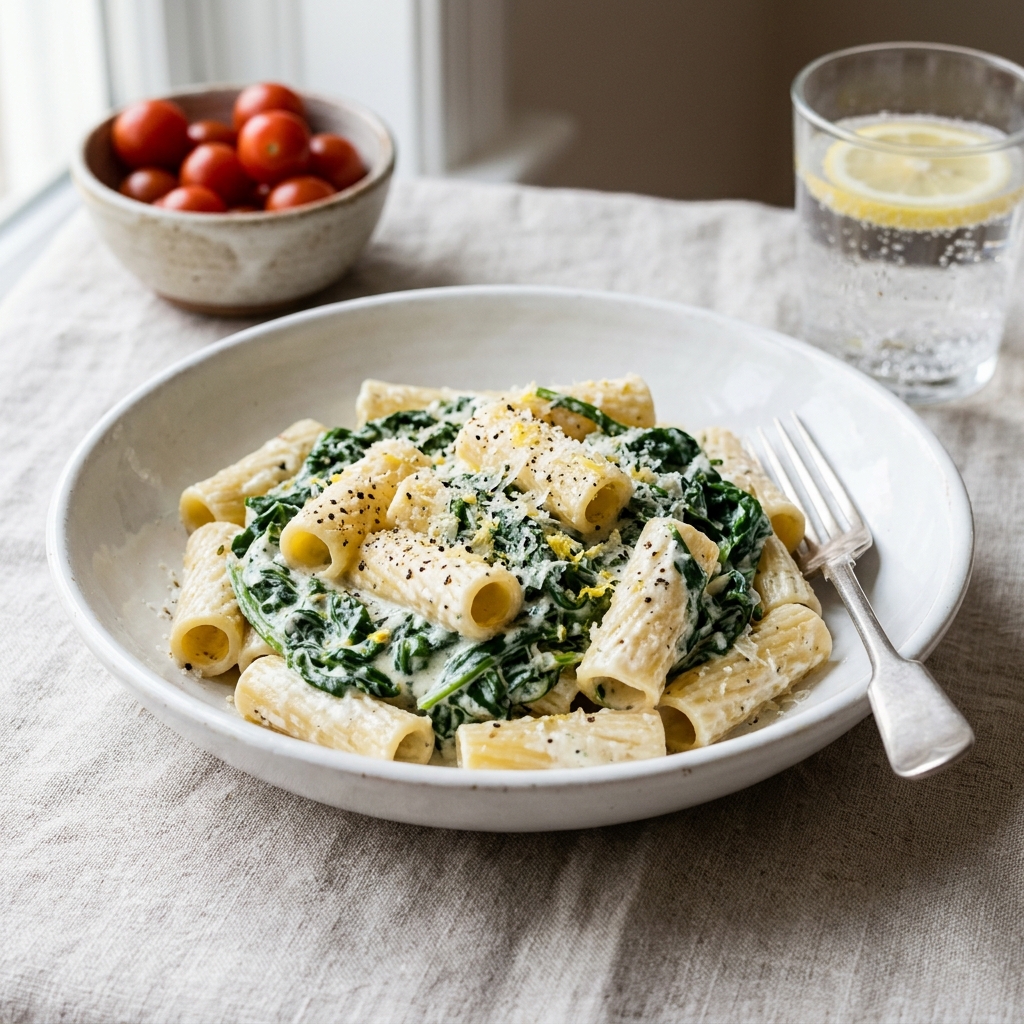
- Tortellini with spinach. Frozen or refrigerated cheese tortellini, boiled for a few minutes, drained, then tossed with jarred marinara and a couple of handfuls of bagged spinach that wilts in the heat.
- Lazy egg fried rice. Heat a rice pouch and a cup of frozen mixed vegetables in a pan with a little oil, push it to one side, scramble two eggs in the gap until fully set, then stir it all together with soy sauce.
- Soup and a grilled cheese. A can of lentil or minestrone soup heated until it's bubbling, with a grilled cheese sandwich made in the same few minutes. The lentils bring protein and iron.
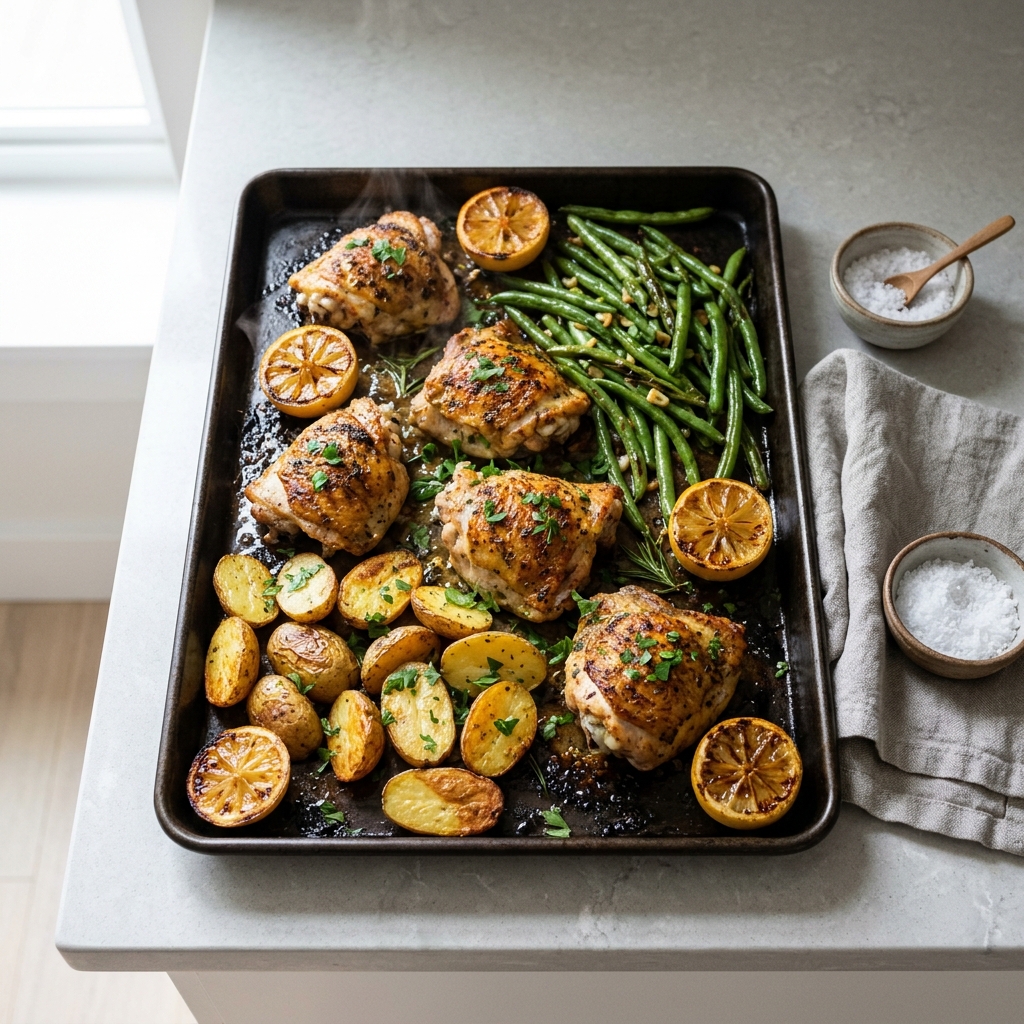
If you can manage five minutes of chopping and then leave the oven to do the rest, our pregnancy sheet pan dinners are the next step up. Or let a slow cooker do the work while you lie down.
When It's Not About Being Tired
Sometimes the problem isn't energy. It's that hot food smells unbearable, or that a full plate just doesn't fit anymore.
On nauseous days, Level 1 is often the easiest place to start. Cold and room-temperature food gives off much less smell than a hot pan, which is why so many people find a plate of crackers and cheese easier than a cooked dinner. Small amounts, eaten often, tend to go down better than one big meal. Our list of foods for first-trimester nausea has more ideas.
In the third trimester, when heartburn and a squashed stomach make big dinners miserable, split any of these meals in two and eat the second half a couple of hours later. Our third trimester dinner ideas are built around that.
With gestational diabetes, the three-building-blocks rule still works, but the carb portion matters more. The protein and fiber help slow down how fast the carbs hit your bloodstream, so don't skip them. Your dietitian can tell you how much rice, bread or potato fits in a meal for you, and our gestational diabetes diet guide covers the basics.
The Lazy Stash
Every meal above comes from a short list of things that keep. Stock these once and there's always something to eat without a plan.
| Pantry | Fridge | Freezer |
|---|---|---|
| Canned salmon and light tuna | Eggs | Mixed vegetables, peas, edamame |
| Canned beans, chickpeas and lentil soup | Plain Greek yogurt and cottage cheese | Cheese tortellini |
| Microwave rice pouches | Hummus | Berries and mango for smoothies |
| Oats and granola | Cheddar or another hard cheese | Whole-grain bread (toast it from frozen) |
| Peanut butter | Baby carrots and cherry tomatoes | Two or three frozen meals you actually like |
| Whole-grain crackers and tortillas | Bagged salad and fruit | Your own freezer meals, if you've made any |
| Jarred marinara and salsa | Milk |
If you're in a nesting mood with energy to spare, our list of freezer meals to make before the baby arrives turns a good afternoon into a month of Level 2 dinners. And if a store run is easier than a list, our Trader Joe's and Costco guides point out the shortcuts worth buying.
Three Rules That Don't Get Lazy
- Cold deli meats, hot dogs and refrigerated smoked fish need heating. The CDC's advice is to heat them to 165°F, or until steaming hot. If you're too tired to do that, pick a different protein tonight.
- Frozen vegetables are meant to be cooked. Most packages say to cook before eating, so don't stir them into a cold salad straight from the bag. Heat them until steaming.
- The 2-hour clock still runs. The USDA says perishable food shouldn't sit out for more than 2 hours, or 1 hour when it's above 90°F. That includes a takeout box you fell asleep next to on the couch.
Nobody is handing out points for cooking from scratch while growing a person. Feeding yourself something with protein, some fiber and a bit of color is the whole job, and a can opener counts as a kitchen tool.
Sources
If you're so tired that you can't eat at all, or you're struggling to keep food down, tell your doctor or midwife. Extreme exhaustion and severe nausea are both worth mentioning at your next appointment.
Meet the Editorial Team
The researchers and experts behind PregnancyPlate.

Fiza Izra
Founder & Tech Researcher
A UK-based mother of 3 with a background in tech and data synthesis, Fiza brings real-world experience navigating hyperemesis gravidarum and postnatal depression. She engineers complex clinical guidelines (NHS, ACOG) into accessible tools, ensuring rigorous fact-checking with deep empathy.

Emma Davies
Senior Nutrition Editor
A mum and writer, Emma runs our food safety desk. She is the one who rings the restaurant to ask how long the lettuce sits out, checks every claim against CDC, FDA and NHS guidance, and rewrites the answer until it is usable at 9pm in a drive-thru queue.
Make sense of every plate.
Scan your plate for pregnancy food-safety guidance and a nutrition breakdown. Keep your meals and nutrient progress in one place.
Scan with your iPhoneto get the app